What’s Inside
- 1. Mount Sconces at Exactly 60-66 Inches for Perfect Reading Light
- 2. Choose Warm White 2700-3000K LEDs for Actual Coziness
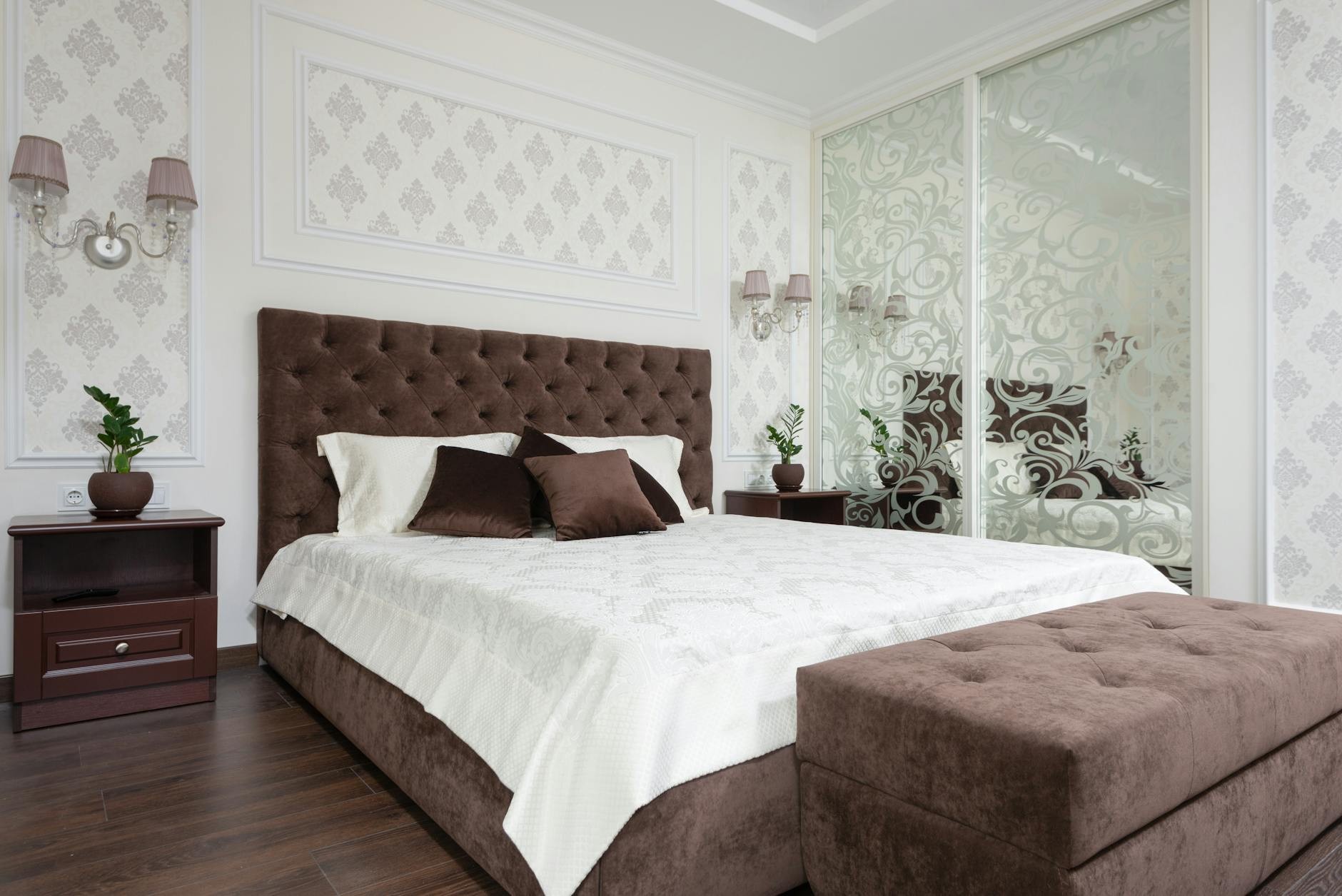
- 3. Flank Your Bed with Matching Brass Sconces on Separate Circuits
- 4. Install Upward-Facing Sconces for Ambient Bedroom Wall Lights
- 5. Layer 2-4 Wall Lights with Your Ceiling Fixture
- 6. Avoid Exposed Bulbs at Eye Level (Common Mistake)
- 7. Use High-CRI Bulbs (90+ Ra) to Make Colors Pop
- 8. Mount Directional Sconces 12-18 Inches Above Artwork
- 9. Hide LED Strips Behind Your Headboard with Aluminum Channels
- 10. Invest in Sculptural Brass-and-Stone Sconces as Focal Points
- 11. Space Multiple Sconces 6-8 Feet Apart on Long Walls
- 12. Try Tunable White Sconces That Mimic Daylight Cycles
- 13. Never Rely on a Single Bright Wall Light (Top Mistake)
- 14. Add Picture Lights on Bedroom Art Walls for Gallery Vibes
- 15. Choose Curved, Organic Sconce Shapes Over Geometric Rings
- 16. Install Swing-Arm Sconces for Flexible Task Lighting
- 17. Mix Metal Finishes in Your Bedroom Wall Lights for Depth
- 18. Use Plug-In Sconces If You’re Renting or Avoiding Electrical Work
- 19. Add Backlit Panels Behind Floating Nightstands
- 20. Install Dimmers on Every Single Bedroom Wall Light
I spent three months last winter staring at my bedroom ceiling fixture, wondering why I felt so wired at bedtime. Turns out, bedroom wall lights were the missing piece. Once I installed dimmable sconces flanking my bed, my sleep improved and the whole room felt like an actual retreat instead of a hospital waiting area. If you’re still relying on that single overhead bulb, you’re missing out on layers of warmth and function that wall lighting brings.
Wall lights aren’t just decorative. They solve real problems like reading in bed without disturbing a partner, illuminating dark corners that make a room feel cramped, and adding ambiance you can actually control. I’ve tested dozens of fixtures in my own bedroom and clients’ spaces, and I’m sharing the exact setups that work.
1. Mount Sconces at Exactly 60-66 Inches for Perfect Reading Light

Most people eyeball sconce height and end up with glare or shadows. I learned this the hard way when I installed my first pair at 72 inches because it “looked right.” The light blasted straight into my eyes every time I propped up to read. Professionals recommend 60-66 inches from the floor to the center of the fixture, which aligns with your seated eye level when you’re against pillows.
This measurement works because it positions the light source slightly above your sightline, filling in shadows cast by overhead fixtures without creating harsh glare. I personally remounted mine at 64 inches, and the difference was immediate. No more squinting or adjusting my pillow stack to avoid the beam. If you’re taller than average, go closer to 66 inches. Shorter? Stick to 60. Measure twice before drilling, because patching drywall is nobody’s idea of fun.
2. Choose Warm White 2700-3000K LEDs for Actual Coziness

I used to think all LED bulbs were the same until I installed 4000K “daylight” sconces in my bedroom. It felt like working in a dentist’s office at 10 p.m. The color temperature of your bulbs matters more than the fixture itself. Lighting designers consistently recommend 2700-3000K for bedrooms because this warm white range mimics the glow of incandescent bulbs and firelight.
Look for sconces with frosted glass or alabaster shades that diffuse this warm light evenly. I switched to 2800K bulbs in fixtures from Brass Light Gallery, and my bedroom finally felt like a place I wanted to be on cold winter nights. Pair these with dimmers, and you can adjust from bright enough to read down to a soft glow for winding down. Honestly, this one change transformed how I felt about my space more than any paint color or bedding upgrade.
3. Flank Your Bed with Matching Brass Sconces on Separate Circuits

Symmetry isn’t just aesthetically pleasing; it’s functional. I installed two solid brass sconces from Brass Light Gallery on either side of my bed, and the balanced light eliminated the lopsided shadows I’d been living with. The key detail most people miss is putting each sconce on its own circuit with individual dimmers.
When both lights share one switch, you’re forced to match brightness levels, which doesn’t work if one person wants to read while the other sleeps. Separate controls let each side operate independently. Brass fixtures reflect light softly without the harsh bounce you get from chrome or nickel, and they develop a natural patina over time that adds character. Mine have darkened slightly after two years, and I love the lived-in look. Expect to pay $150-250 per sconce for quality solid brass models that’ll outlast trendy painted finishes by decades.

KSIPZE 100ft Led Strip Lights RGB Music Sync Color Changing
KSIPZE 100ft Led Strip Lights RGB Music Sync Color Changing Led Lights punches above its price — 376 buyers rated it 4.5 stars. I would buy it again.
4. Install Upward-Facing Sconces for Ambient Bedroom Wall Lights

Direct downlight is great for tasks, but it’s terrible for relaxation. I added upward-facing sconces in my bedroom last spring, and the difference in atmosphere shocked me. These fixtures bounce light off the ceiling, creating diffuse illumination that fills the room without harsh shadows or bright spots.
The 2026 lighting trend emphasizes this approach for bedrooms, often paired with smart controls that let you tune the color temperature. I set mine to 3000K when I’m getting ready in the morning and shift down to 2400K an hour before bed. The gradual warm-down signals my brain that it’s time to wind down. Look for sconces with open tops or upward-angled shades. I’ve seen beautiful options from Nova of California that combine this function with sculptural designs. The ceiling becomes a giant reflector, and you get soft, even light that makes the whole space feel larger and calmer.
5. Layer 2-4 Wall Lights with Your Ceiling Fixture

Single-source lighting is the biggest mistake I see in bedrooms. One overhead fixture creates flat, unflattering light and harsh shadows. Professional designers recommend layering 2-4 wall lights with a central ceiling fixture in a medium-sized bedroom, using each for different purposes.
I have four wall lights in my 14×16 bedroom: two bedside sconces for reading, one accent light above my dresser, and one in a dark corner that used to feel like a black hole. The ceiling fixture stays on a dimmer and rarely goes above 30% brightness. This layered approach lets me control the mood completely. Morning routine? All lights on. Evening wind-down? Just the corner sconce at low dim. The key is giving each light its own purpose: task lighting for reading, ambient lighting for general illumination, and accent lighting for art or architectural features. Keep your ceiling light low most of the time, and let the wall lights do the heavy lifting.
6. Avoid Exposed Bulbs at Eye Level (Common Mistake)

I see this error constantly, even in expensive homes. Someone installs beautiful vintage-style sconces with exposed Edison bulbs right at eye level, and the glare is unbearable. Even low-wattage bulbs create uncomfortable brightness when you’re looking directly at the filament.
The solution is choosing fixtures with diffusers: frosted glass, fluted shades, fabric covers, or downward-facing designs that hide the bulb from view. I learned this after installing gorgeous industrial sconces in my guest room and watching visitors squint every time they walked in. I replaced them with damp-rated models featuring fluted glass shades, and the problem disappeared. The light washes the walls softly without any harsh spots. If you love the look of exposed bulbs, position them where you won’t be looking directly at them, like above eye level or angled away from main sightlines. Your retinas will thank you.

Govee RGBIC LED Strip Lights, Smart LED Lights for Bedroom
Govee RGBIC LED Strip Lights has been one of the most consistently praised picks in this category. 243 reviewers averaged 4.5/5.
7. Use High-CRI Bulbs (90+ Ra) to Make Colors Pop

Most people don’t realize their lighting is washing out their carefully chosen paint colors and bedding. The Color Rendering Index (CRI) measures how accurately a light source shows true colors, and most cheap LED bulbs score around 80 Ra. I upgraded to 95 CRI bulbs in my bedroom sconces, and it was like putting on glasses for the first time.
Flexfire LEDs experts recommend 90+ CRI for bedrooms, especially if you have textured materials like the agate slab sconces I installed last year or artwork you want to showcase. The difference is subtle but real: my navy duvet actually looks navy instead of muddy gray-blue, and the wood grain in my headboard has depth and warmth. This matters even more with 2026’s material-mixing trends, where you’re combining metals, stone, and fabric in one space. High-CRI lighting lets each material shine. Expect to pay $2-5 more per bulb, but it’s worth every penny when your room finally looks like the inspiration photos you saved.
8. Mount Directional Sconces 12-18 Inches Above Artwork

I turned one bedroom wall into a gallery last year, and the lighting made or broke the whole display. Adjustable directional sconces mounted 12-18 inches above each frame create that museum-quality look you see in design magazines. Nova of California makes beautiful gallery-style fixtures that angle down to highlight art without glare.
The trick is positioning them close enough to wash the piece evenly but far enough to avoid hot spots at the top. I mounted mine at 15 inches above my largest print, and the light grazes the surface beautifully. This approach works especially well if you’re skipping a central ceiling fixture entirely, which is becoming more common in 2026 bedroom designs. The focused light draws your eye to the art and creates warm pools of illumination that add depth to the space. Just make sure your bulbs are warm white (2700-2800K) so the light doesn’t compete with the artwork’s colors.
9. Hide LED Strips Behind Your Headboard with Aluminum Channels

This technique feels very 2026, but when done right, it’s stunning. I installed a 2-meter LED strip behind my upholstered headboard using an aluminum channel with a frosted lens, and the soft golden glow it creates is perfect for late-night reading or early morning wake-ups.
The key detail everyone misses is the diffuser. Bare LED strips create visible hotspots where each diode shows as a bright dot. The frosted lens in the aluminum channel blends these into one continuous glow. I used a warm white strip (2700K) on a dimmer, and I can adjust from barely-there ambient light to bright enough to find my slippers. Flexfire LEDs warns against skipping this diffusion step, and they’re right. My first attempt without the channel looked cheap and spotty. With proper diffusion, it looks like the headboard is floating on soft light. Installation took about an hour, and the effect is worth the effort.

Qukaka Floating Shelves for Wall Decor
A dependable everyday pick — Qukaka Floating Shelves for Wall Decor pulls in 169 ratings at 4.5 stars. Not flashy, just solid.
10. Invest in Sculptural Brass-and-Stone Sconces as Focal Points

Sometimes a wall light needs to be more than functional. I splurged on sculptural sconces that combine brushed brass arms with natural alabaster shades, and they’re the first thing people comment on when they see my bedroom. These pieces, typically priced $150-400 from places like Brass Light Gallery, become focal points that add personality beyond just illumination.
The natural stone diffuses light beautifully while the brass framework adds architectural interest. I chose these specifically because brass develops a patina over time, which suits my traditional bedroom better than trendy matte black finishes that’ll look dated in five years. The weight and quality of solid brass and real stone is noticeable; these aren’t flimsy fixtures that’ll wobble loose after a year. If your budget allows for one splurge, make it the lights flanking your bed. You look at them every single day, and quality materials genuinely last decades. Mine have been going strong for three years with zero issues.
11. Space Multiple Sconces 6-8 Feet Apart on Long Walls

I made the mistake of installing three sconces randomly along my 16-foot bedroom wall, and the lighting looked chaotic. Proper spacing matters for even illumination and visual balance. The standard rule is 6-8 feet between fixtures on longer walls, which prevents dark gaps while avoiding an overly cluttered look.
I remeasured and repositioned mine at 7-foot intervals, and suddenly the wall felt intentionally designed instead of haphazard. This spacing works especially well when you dim the lights for nighttime navigation, as it eliminates the shadowy patches that can make you trip over shoes or furniture. Povison’s lighting guide confirms this measurement for bedrooms, and I’ve found it works whether you’re using simple sconces or more decorative fixtures. If you’re adding accent lighting like 10 E12 candle-style bulbs in a chandelier or other fixtures, keep this spacing consistent so all your light sources feel coordinated rather than competing.
12. Try Tunable White Sconces That Mimic Daylight Cycles

This is the 2026 trend I’m most excited about. Biophilic tunable white sconces adjust color temperature from warm 2200K up to cool 6500K, mimicking natural daylight patterns throughout the day. I installed app-controlled versions last fall, and they’ve genuinely improved my sleep quality.
Here’s how I use them: bright, cooler light (4000K) in the morning to wake up, neutral white (3200K) during the day, and gradually warming tones (2400K) starting two hours before bed. The gradual shift signals my circadian rhythm without me thinking about it. The fixtures themselves look like standard contemporary sconces, but the technology inside lets you create that spa-like retreat feeling without harsh overheads. I was skeptical about the price (around $200-300 per fixture), but honestly, it’s changed how I wind down at night. If you struggle with sleep or just want that high-end hotel room vibe, this is worth considering.

Govee RGBIC LED Strip Lights
Honestly, Govee RGBIC LED Strip Lights surprised me — sturdier than it looks in the photos, and over 243 buyers gave it 4.5 stars.
13. Never Rely on a Single Bright Wall Light (Top Mistake)

I see this error in rental bedrooms constantly: one super bright wall sconce trying to do everything. It’s too harsh for ambiance, too focused for general lighting, and too bright for nighttime navigation. Professionals consistently cite this as a top lighting mistake.
The fix is layering multiple lower-wattage fixtures instead of one powerful light. I use sconces with bulbs equivalent to 40W or less, never higher. Four 40W-equivalent sconces on dimmers give you way more control and better light quality than one 100W-equivalent fixture blasting away. For nighttime trips to the bathroom, I keep one sconce at 5% dim, which is enough to see without fully waking up. This approach prevents the harsh on-off experience of flipping a single bright switch. Your eyes adjust gradually, and you’re not blinded at 2 a.m. Think of wall lights as supporting players, not the star of the show.
14. Add Picture Lights on Bedroom Art Walls for Gallery Vibes

I installed small picture lights above two large prints in my bedroom, positioning them 4-6 inches above the frames, and the depth they create is remarkable. This museum-style approach is trending hard in 2026, and it works because it elevates ordinary art into something that feels curated and important.
The lights cast a focused wash down the artwork, creating subtle shadows and highlighting texture you wouldn’t notice with ambient lighting. I use warm LED picture lights (2800K) so the glow feels cohesive with my other bedroom fixtures. This technique works especially well on blank walls that feel empty or boring. Instead of adding more furniture or decor, strategic picture lights create visual interest through illumination and shadow. The installation is straightforward if you have an outlet nearby, or you can hardwire them during a renovation. Either way, the gallery-quality depth they add makes your bedroom feel intentionally designed rather than just furnished.
15. Choose Curved, Organic Sconce Shapes Over Geometric Rings

The harsh geometric LED ring sconces that were everywhere in 2022 are already looking dated. I’m seeing a shift toward curved, organic shapes that feel softer and more timeless. I replaced my angular sconces with curved models that have gentle, flowing lines, and the change in atmosphere was immediate.
Flexfire LEDs recommends avoiding direct geometric light in bedrooms, favoring designs softened by curves and diffusers for glare-free, nature-inspired vibes. The organic shapes feel calmer and less aggressive, which is exactly what you want in a sleep space. I found beautiful options with curved metal arms and rounded glass shades that diffuse light in soft, irregular patterns rather than harsh circles. These fixtures work with multiple decor styles because the shapes are inherently neutral. They’re interesting without being trendy, and I expect them to look current for at least the next decade. If you’re buying new sconces in 2024 or 2025, skip the geometric trend and go for curves.

Leeleberd Led Lights for Bedroom 100 ft (2 Rolls of 50ft)
Honestly, Leeleberd Led Lights for Bedroom 100 ft (2 Rolls of 50ft) Music Sync C surprised me — sturdier than it looks in the photos, and over 199 buyers gave it 4.5 stars.
16. Install Swing-Arm Sconces for Flexible Task Lighting

Fixed sconces look clean, but swing-arm models offer functionality that’s hard to beat. I installed adjustable swing-arm sconces on both sides of my bed, and being able to direct light exactly where I need it has been a game-changer. Reading? Swing it toward the book. Watching TV? Push it back against the wall and angle it down for ambient glow.
The articulating arms typically extend 12-18 inches from the wall, giving you a range of positions without needing multiple fixtures. I chose brass swing-arms with linen shades, and they combine the traditional look I wanted with modern practicality. The only downside is they require a bit more wall space than flush-mount sconces, so measure your nightstand area carefully. If you have less than 24 inches of wall space on each side of your bed, swing-arms might crowd the area. But if you have the room, the flexibility is absolutely worth it. I use mine every single night and appreciate the adjustability constantly.
17. Mix Metal Finishes in Your Bedroom Wall Lights for Depth

The old rule about matching all your metals is dead. I mixed brushed brass bedside sconces with black matte accent lights in my bedroom, and the contrast creates visual depth that monochromatic fixtures can’t achieve. The key is choosing finishes that share a similar warmth or coolness so they feel coordinated rather than random.
My brass sconces have a warm, golden tone, and I paired them with oil-rubbed bronze (which has warm undertones) rather than cool chrome. The mix feels intentional and collected, like I’ve added pieces over time rather than buying a matching set. This approach is very 2026, where material mixing extends to lighting fixtures. Just keep the number of finishes to two or three max. I’ve seen bedrooms with five different metal finishes, and it looks chaotic. Two is elegant, three is eclectic, four is a mess. Start with your dominant finish (for me, brass) and add one contrasting metal in smaller doses.
18. Use Plug-In Sconces If You’re Renting or Avoiding Electrical Work

Not everyone can or wants to hardwire fixtures. I used plug-in sconces in my first apartment, and honestly, they worked great. Modern plug-in wall lights have come a long way from the clunky brass lamps of the ’90s. You can find beautiful options with fabric-wrapped cords that look intentional rather than like an afterthought.
The trick is routing the cord neatly. I used small cable clips to run the cord down behind my nightstand and along the baseboard to the outlet. From across the room, you barely notice it. Plug-in sconces give you the same layered lighting benefits as hardwired fixtures without the electrical work, which is perfect for renters or anyone avoiding a renovation. I paid about $80-120 per sconce for quality plug-in models, which is cheaper than hiring an electrician for hardwiring. The downside is you’re limited to placing them near outlets, but with a bit of planning, this works fine for most bedroom layouts. Just skip the cheap options with thin, plasticky cords that’ll look terrible.
19. Add Backlit Panels Behind Floating Nightstands

This is a subtle technique that creates serious impact. I installed thin LED panels behind my floating nightstands, and the soft glow they cast on the wall makes the furniture appear to hover. It’s a modern look that works especially well in contemporary bedrooms where you want clean lines and minimal visual clutter.
The panels themselves are only about half an inch thick and mount directly to the wall behind the nightstand. I used warm white LEDs (2800K) on a dimmer, and at low settings, they provide just enough light for nighttime navigation without being bright enough to disturb sleep. At higher settings, they add ambient illumination that makes the whole room feel larger. Installation is straightforward if you’re comfortable with basic electrical work, or you can use plug-in LED panels if you prefer. The effect is very hotel-chic, and it’s a detail that makes your bedroom feel custom-designed rather than just furnished with standard pieces.
20. Install Dimmers on Every Single Bedroom Wall Light

This is my number-one non-negotiable recommendation. Every wall light in your bedroom should be on a dimmer, no exceptions. I’ve renovated three bedrooms, and the single upgrade that made the biggest difference was adding dimmers to fixtures that previously had only on-off switches.
Dimmers let you adjust lighting to match your activity and mood. Bright for getting dressed, medium for casual reading, low for winding down, barely-on for nighttime navigation. I use mine constantly throughout the day, and I genuinely can’t imagine going back to fixed-brightness switches. Modern LED-compatible dimmers cost $15-40 and install easily if you’re replacing an existing switch. Smart dimmers add another $30-60 but let you control lights from your phone or voice assistant, which is convenient when you’re already in bed. The return on this investment is immediate and ongoing. You’ll use those dimmers every single day, and they’ll transform how your bedroom functions and feels. Don’t skip this step.
I’ve spent years testing different bedroom wall lights, and these 20 approaches have genuinely transformed how my space functions and feels. Start with proper mounting height and warm bulbs, add dimmers to everything, and layer multiple fixtures instead of relying on one source. Your bedroom should adapt to your needs throughout the day, and thoughtful wall lighting makes that possible. Save this guide and come back to it when you’re ready to upgrade your space.
Frequently Asked Questions
What is the ideal height for bedroom wall lights?
Mount bedroom wall sconces at 60-66 inches from the floor to the fixture center. This height aligns with seated eye level for reading in bed, preventing glare while providing effective task lighting without shadows.
What color temperature is best for bedroom wall lights?
Choose warm white LEDs in the 2700-3000K range for bedroom wall lights. This color temperature creates a relaxing, cozy atmosphere similar to incandescent bulbs and works beautifully with dimmers for evening wind-down.
How many wall lights do I need in a bedroom?
Layer 2-4 wall lights in a medium bedroom along with a central ceiling fixture. Use sconces for bedside reading, accent lights for dark corners or art, and keep the ceiling light dimmed for atmosphere.
Should bedroom wall lights have dimmers?
Absolutely yes. Install dimmers on every bedroom wall light to adjust brightness for different activities throughout the day, from bright morning routines to soft nighttime navigation. This flexibility is essential for a functional bedroom.