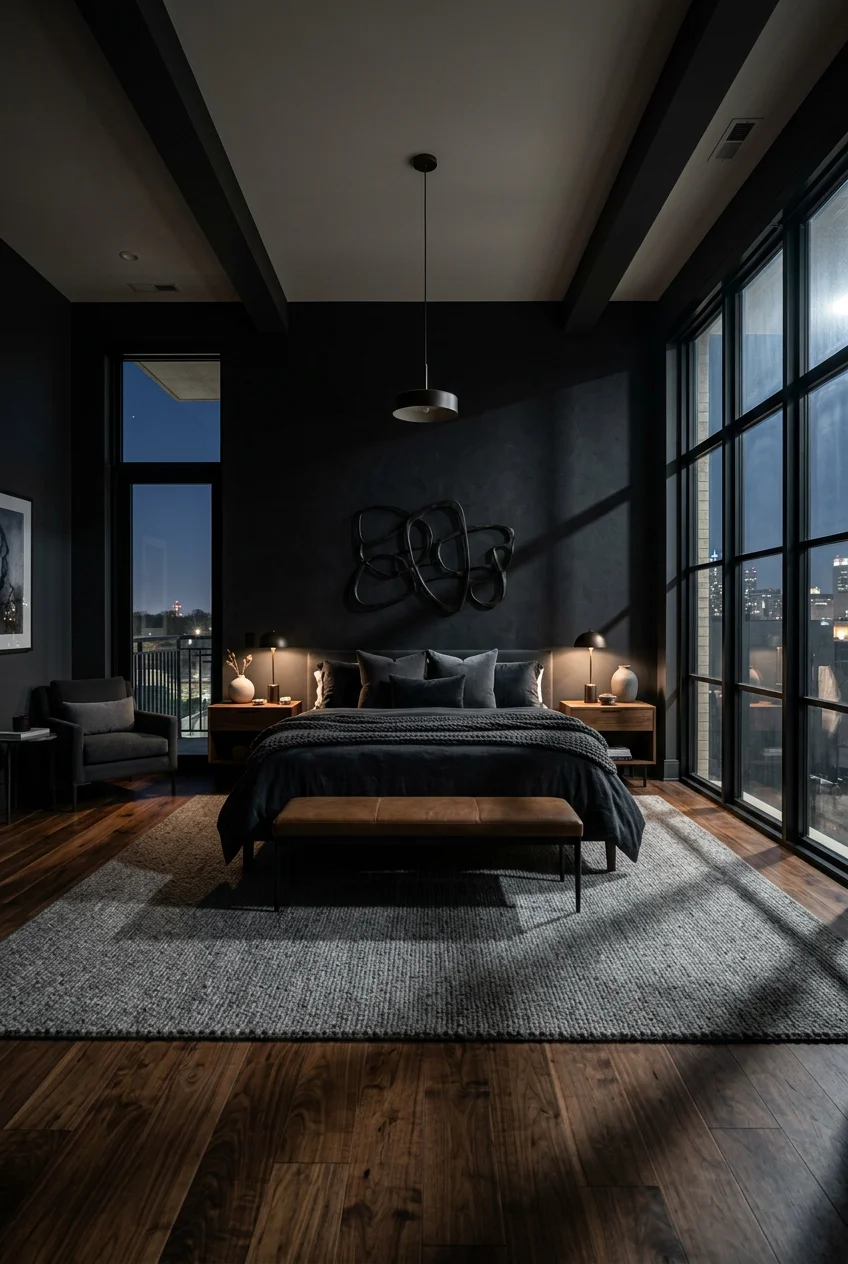
What’s Inside
- Color-Drenched Walls for a Cohesive Dark Bedroom Aesthetic
- Layered Ambient Lighting Instead of Harsh Overheads
- Heavy Tactile Textures to Prevent Flatness
- Smart Bulbs for Circadian Rhythm Control
- Proper Velvet Blackout Curtains for a Dark Bedroom Aesthetic
- Warm Walnut Furniture to Anchor the Space
- The Right Rug Size for Queen Beds
- Brass and Copper Hardware for Subtle Reflection
- Strategic Mirror Placement to Bounce Light
- Oversized Velvet Headboards as a Focal Point
- Real Greenery to Soften the Aesthetic
- Textured Dark Wallpaper for Depth
- Painting the Ceiling a Lighter Tone
- Strategic Pops of Rust or Mustard
- Proportionate Furniture Sizing for Walkways
- Matte Black Switch Plates and Outlet Covers
- Low-Profile Bed Frames to Ground the Room
- Scent Layering with Amber and Cedar
- Ditch the TV for a Hidden Projector
Last November, I tried to create a dark bedroom and ended up with a room that felt like a damp interrogation cell. I painted my walls a flat black I bought on clearance at Walmart for $14 a gallon, slapped up some cheap plastic blinds, and called it a day. The result was miserable. The room smelled like cheap chemicals for weeks, and the flat paint showed every single fingerprint. It was cold, flat, and completely uninviting. I realized that a true dark bedroom requires strategy, not just a bucket of dark paint. It’s about balancing light absorption with rich textures and warm undertones. I stripped the room back to the studs and started over, doing actual research on light reflectance values and textile weights. I spent six months testing different setups, returning rugs that looked like bath mats, and patching drywall after failed sconce installations. Learned that the hard way. Here’s exactly how I built a moody, comfortable space that actually feels like a high-end retreat instead of a teenager’s angsty basement.
1. Color-Drenched Walls for a Cohesive Dark Bedroom Aesthetic

When I first attempted this, I only painted one accent wall behind my bed. It looked disjointed, like I ran out of paint halfway through the project. For a proper dark look, you’re going to need to color-drench the room. This means painting all four walls, the baseboards, and the trim in the exact same deep hue. I used Farrow & Ball’s Hague Blue, which costs a painful $145 per gallon at my local boutique hardware store, but the depth of pigment is entirely different from standard mixing bases. The color shifts from a rich navy in the morning to a near-black charcoal at night. Leaving the trim stark white creates a harsh boundary that chops up the wall space. Painting everything the same color blurs the edges of the room, creating an illusion of depth. I used a 2-inch Purdy angled brush ($16.98 at Home Depot) to cut in the corners. The finish makes the space feel intentionally designed.
2. Layered Ambient Lighting Instead of Harsh Overheads

Relying on a single ceiling fixture is the fastest way to ruin a moody room. The light casts terrible downward shadows that make you look exhausted. I completely stopped using my overhead light. Instead, I installed a layered lighting scheme using three different sources at different heights. First, I put Govee 16.4ft LED strip lights ($19.99 on Amazon) under the lip of my floating nightstands. They cast a soft, diffused glow directly onto the floor, helping me navigate the room at 2 AM without waking my partner. For reading, I mounted two Target Threshold brass wall sconces ($45 each) about 30 inches above the mattress. Finally, I keep a frosted glass table lamp on my dresser for ambient warmth. The trick is keeping all bulbs at a 2700K color temperature. Anything higher than 3000K looks like a hospital waiting room and destroys the cozy atmosphere.
3. Heavy Tactile Textures to Prevent Flatness

A dark room with flat fabrics looks dull. Because you aren’t relying on bright colors, you have to use texture. I learned this when I bought a shiny polyester comforter that made the room look cheap. I swapped it for West Elm Belgian Flax Linen sheets ($220 for a queen set). The matte texture of the linen absorbs light and feels heavy against the skin. At the foot of the bed, I folded a Target Casaluna chunky knit wool blanket ($79). The thick woven loops contrast perfectly with the smooth linen. I also added two 20×20 inch velvet pillow covers from H&M Home ($14.99 each) in deep forest green. Mixing linen, chunky wool, and smooth velvet gives the eye something to focus on, preventing the dark walls from feeling like a black hole.

HYMOKEGE Queen Comforter Set Seersucker 7 Pieces
HYMOKEGE Queen Comforter Set Seersucker 7 Pieces has been one of the most consistently praised picks in this category. 92 reviewers averaged 4.5/5.
4. Smart Bulbs for Circadian Rhythm Control

Waking up in a dark room can be brutal in winter. My alarm used to jolt me awake in pitch blackness, leaving me groggy for hours. I fixed this by installing a Philips Hue A19 starter kit ($99 at Best Buy). I put the smart bulbs in my bedside sconces. Using the app, I programmed a wake-up routine. Starting at 6:00 AM, the bulbs turn on at 1 percent brightness with a deep orange hue. Over thirty minutes, they slowly transition to a brighter, warm white, mimicking a natural sunrise. At night, I have the system set to automatically dim to 30 percent at 9:00 PM. It forces me to wind down and signals it’s time to stop looking at screens. It’s a functional addition that makes living in a dark space practical.
5. Proper Velvet Blackout Curtains for a Dark Bedroom Aesthetic

Flimsy window treatments are a massive mistake in a dark bedroom. I initially bought cheap blackout panels from a discount store, but light still bled around the edges, creating a glowing halo that drove me crazy. I eventually invested in NICETOWN velvet blackout panels ($42.99 per 52×96 inch panel on Amazon). The heavy velvet material blocks nearly all the streetlights outside my window. To hang them correctly, I bought a 1-inch thick matte black curtain rod and mounted it 6 inches above the window frame. I also extended the rod 10 inches past the window on either side. When the curtains are closed, the thick fabric overlaps the wall completely, eliminating light leaks. The velvet’s matte finish perfectly complements the moody, shadowed corners of the room.
6. Warm Walnut Furniture to Anchor the Space

When your walls are dark, buying black furniture is a trap. I bought a matching black MDF dresser and nightstand set off Wayfair, and the room immediately felt like a teenager’s goth phase. The furniture completely disappeared into the walls, leaving the room looking empty. I sold the set on Facebook Marketplace and bought an Article Taiga walnut bed frame ($999). The rich, warm undertones of the dark walnut wood provide a necessary contrast to the charcoal walls. I paired the bed with a vintage mid-century teak dresser I found at a local antique mall for $350. The amber tones in the wood warm up the cool undertones of the dark paint. Solid wood furniture with visible grain patterns stops the room from feeling like a sterile box.

Wood Phone Docking Station for Men
Wood Phone Docking Station for Men – 360° Rotating Nightstand Organize punches above its price — 29 buyers rated it 4.5 stars. I would buy it again.
7. The Right Rug Size for Queen Beds

Most people buy rugs that are entirely too small for their bedrooms. I made this mistake last year when I bought a 5×7 foot rug for my queen bed. It barely reached the edges of the nightstands and looked like a glorified bath mat floating in the middle of the floor. For a standard 60×80 inch queen bed, you strictly need an 8×10 foot area rug. I bought a Ruggable Kamran Hazel rug ($399). An 8×10 rug extends exactly 24 inches beyond the sides and the foot of the bed. The larger size visually anchors the bed, making the furniture feel intentional. I placed the rug perpendicular to the bed, pulling it down so the nightstands sit directly on the hard floor. You might also like: 15 Stunning Modern Bedroom Lighting to Transform Your Space
8. Brass and Copper Hardware for Subtle Reflection

Dark rooms absorb light, so you need small, strategic elements to reflect it back. I swapped out all the cheap, brushed nickel hardware in my bedroom for warm metallics. The silver tones of nickel and chrome look too clinical against dark paint. I went to CB2 and bought six round brass knobs ($6.95 each) for my closet doors, and matching brass pulls for my teak dresser. The golden tones of the brass catch the warm 2700K light from my bedside sconces, creating tiny glowing focal points around the room. It breaks up the heavy blocks of dark color. I also bought a small, hammered copper tray ($24 at Target) for my nightstand. The textured copper reflects the LED strip lighting beautifully, preventing the aesthetic from feeling overly heavy. You might also like: 20 Charming Bedroom Ceiling Lighting You Haven’t Thought Of
9. Strategic Mirror Placement to Bounce Light

Mirrors are functional tools for manipulating light in a moody space. If you just hang a mirror wherever there’s empty wall space, you’re wasting its potential. I placed a large, 3×5 foot arched floor mirror directly opposite my single, east-facing window. I bought the Anthropologie Gleaming Primrose mirror dupe from Costco for $149 last spring. By placing it opposite the window, it catches the morning sunlight and bounces it deep into the darkest corners of the room. I also placed a small, 18-inch round mirror ($35 at Target) above my dresser, angled slightly to reflect the light from my bedside sconce. This simple trick reduces the visual weight of the dark walls and makes the 12×12 foot room feel significantly larger. You might also like: 20 Cozy Cozy Minimalist Bedroom for Every Budget

50×70 Inch Rust Throw Blanket – Soft & Fluffy Fleece
A dependable everyday pick — 50×70 Inch Rust Throw Blanket – Soft & Fluffy Fleece pulls in 11 ratings at 4.5 stars. Not flashy, just solid.
10. Oversized Velvet Headboards as a Focal Point

A standard wooden headboard gets completely lost against dark walls. You need something with volume and texture to serve as the visual anchor for the room. I upgraded to an oversized, channel-tufted velvet headboard from Wayfair’s Kelly Clarkson Home line ($215). It’s 55 inches tall, which is about 15 inches taller than a standard headboard. The deep mustard yellow velvet provides a striking contrast against my dark blue walls. More importantly, it’s incredibly functional. I read in bed every night, and leaning against a hard wooden slat or a cold wall is miserable. The thick upholstered velvet provides a soft backrest. The channel tufting creates vertical lines of shadow and light, adding architectural interest to a wall that otherwise has none.
11. Real Greenery to Soften the Aesthetic

Dark rooms can easily feel stagnant or lifeless. To counteract this, I always incorporate living plants. I used to buy expensive plants like fiddle leaf figs, but I killed a $60 one from a local nursery within two months because my dark bedroom didn’t provide enough bright light. I switched to low-light tolerant trailing plants. I bought a 6-inch Golden Pothos from Trader Joe’s for $8.99 and placed it on the top shelf of my bookshelf. The vibrant green leaves pop aggressively against the dark charcoal paint. I water it with exactly 1/2 cup of water every Sunday, and it thrives despite the moody lighting. The visual contrast of bright green against a near-black wall instantly makes the space feel fresh.
12. Textured Dark Wallpaper for Depth

Paint is great, but wallpaper adds a layer of sophistication that flat paint simply can’t achieve. I used a dark wallpaper on the wall behind my bed to create a subtle feature area. I chose a Milton & King geometric navy wallpaper ($145 per roll). It has a very faint metallic bronze line running through the pattern. I strongly advise against cheap peel-and-stick wallpaper. I tried a $30 roll from Amazon once, and it shrank on the wall, leaving ugly white gaps between the panels. The Milton & King paper is a traditional paste-the-wall product. I bought Roman PRO-543 wallpaper adhesive ($11.98 at Lowe’s) and rolled it directly onto the drywall. It hasn’t bubbled in over a year.

Amazon Basics Bedroom Closet Organizer with 5-Fabric
If you want something that just works, Amazon Basics Bedroom Closet Organizer with 5-Fabric Storage Drawers f is a safe bet (41 reviews, 4.5 stars).
13. Painting the Ceiling a Lighter Tone

Ignoring the ceiling is the biggest missed opportunity in bedroom design. Most people leave it stark builder-grade white, which creates a jarring contrast against dark walls. I didn’t want to paint my ceiling the exact same dark blue as my walls because my ceilings are only 8 feet high, and I worried it would feel like a cave. Instead, I took my wall color swatch to Home Depot and asked them to mix a batch of Behr Marquee Satin Enamel ($58 per gallon) at 50 percent lighter tint. The result is a soft, medium grayish-blue. Painting the ceiling was physically awful. However, the result was entirely worth the pain. The slightly lighter tone draws the eye up without breaking the moody atmosphere, and the satin sheen subtly reflects ambient light.
14. Strategic Pops of Rust or Mustard

A room that is 100 percent dark blue, black, or charcoal is visually exhausting. You need a contrasting color to give your eyes a break. I use rust orange and mustard yellow because they sit opposite dark blues and greens on the color wheel. I bought a Crate & Barrel mustard velvet pillow cover ($39.95) for the center of my bed, and a rust-colored ceramic vase ($18 at Target) for my dresser. These highly saturated items act like visual punctuation marks. They stop the dark colors from blurring together into a muddy mess. It’s a cheap way to refresh the room. Just keep the bright colors limited to two or three small items. If you add too much, you lose the dark aesthetic entirely.
15. Proportionate Furniture Sizing for Walkways

When I first moved into my current house, I tried to cram a massive, heavy wooden king-sized sleigh bed into my 12×12 bedroom. It was a disaster. I had barely 8 inches of walking space at the foot of the bed, and I constantly bruised my shins on the corners trying to get to the closet. I downsized to a sleek queen bed and bought two slim IKEA Hemnes nightstands ($99 each). They are only 18 inches wide, which leaves me a full 24 inches of clearance on either side of the bed. This negative space is crucial. A dark room needs physical breathing room to feel luxurious. Always measure your floor plan and ensure you have at least 18 to 24 inches of clear walking path around every piece of furniture.

AMADA HOMEFURNISHING Floating Shelves
A dependable everyday pick — AMADA HOMEFURNISHING Floating Shelves pulls in 114 ratings at 4.5 stars. Not flashy, just solid.
16. Matte Black Switch Plates and Outlet Covers

This is the cheapest, fastest upgrade you can make, and it drastically improves the look of a dark room. When you paint your walls a deep charcoal or navy, leaving the standard white plastic light switch plates looks terrible. They stand out like bright white pimples on your beautifully moody walls. I went to Lowe’s and bought ten Leviton matte black wall plates ($3.48 each). The matte black finish blends seamlessly into the dark paint, effectively making the ugly utility outlets disappear. I also swapped out the cheap plastic light switches themselves for black rocker switches ($4.98 each). It’s a tiny detail that most people overlook, but it’s the difference between a room that looks DIYed and a room that looks professionally finished.
17. Low-Profile Bed Frames to Ground the Room

Tall, bulky bed frames dominate the visual space in a bedroom. I used to have a cheap metal frame that required a box spring, putting my mattress a full 30 inches off the floor. It made the room feel top-heavy, and the metal frame squeaked every time I turned over. I saved up and bought The Bed by Thuma ($1,095 for a queen). It’s a low-profile platform bed made of solid repurposed wood. The frame sits just 13 inches off the ground, and I don’t use a box spring. Lowering the bed closer to the floor completely changed the proportions of the room. It leaves more empty wall space above the headboard, which makes the 8-foot ceilings feel much taller. Grounding the heaviest piece of furniture low to the floor makes the dark aesthetic feel relaxed.
18. Scent Layering with Amber and Cedar

Aesthetic isn’t just visual. The way a room smells dictates how it feels. Burning a sickly sweet, fruity candle in a dark, moody bedroom creates a confusing sensory clash. It’s like playing circus music in a fine dining restaurant. I strictly use woody, earthy scents that match the visual weight of the room. My staple is the P.F. Candle Co. Teakwood & Tobacco 7.2 oz soy candle ($24 at Whole Foods). It smells like leather, black pepper, and cedar. I light it about an hour before I plan to go to sleep. I also keep a small linen sachet filled with dried cedar shavings ($8 for a pack of three on Amazon) tucked into my pillowcases. Matching your room’s fragrance to its dark visual tone completes the cozy experience.
19. Ditch the TV for a Hidden Projector

Nothing ruins a carefully curated dark wall faster than a massive, shiny black plastic rectangle hanging in the middle of it. I used to have a 50-inch TV mounted opposite my bed, and the reflection of the window on the dead screen drove me insane. The messy cords dangling down the wall ruined the clean aesthetic. I took the TV down, patched the drywall, and bought an Anker Nebula Capsule projector ($299 on Amazon). It’s the size of a soda can. I keep it hidden on my bookshelf. When I want to watch a movie in bed, I just point it at the blank wall above my dresser. When the movie is over, I turn it off, and my wall goes back to being a beautifully blank, moody expanse of color.
Building a dark bedroom takes patience, and you’ll probably buy the wrong paint color at least once. I certainly did. But if you focus on rich textures, layered warm lighting, and proportionate furniture, you can create a space that feels incredibly safe and luxurious. Don’t rush the process, and skip the cheap, shiny fabrics. If you found these tips helpful for planning your own moody retreat, save this post to your bedroom inspiration board on Pinterest so you can reference the exact paint colors and product dimensions when you’re ready to start your project.
Frequently Asked Questions
What paint colors work best for a dark bedroom aesthetic?
Skip flat black. Instead, choose deep, complex hues like charcoal gray, navy blue, deep forest green, or rich burgundy. These colors shift with the light and provide a much warmer, more sophisticated base for your room than a stark black.
How do you light a dark bedroom without harsh overheads?
Layer your lighting. Use warm 2700K LED strip lights under nightstands, brass wall sconces for reading, and a small table lamp on your dresser. This creates a cozy, diffused glow rather than the harsh downward shadows of ceiling fixtures.
What kind of curtains fit a dark bedroom aesthetic?
Heavy velvet blackout curtains are ideal. They block out streetlights, provide thermal insulation, and add a rich, tactile texture that complements dark walls. Hang them high and wide to make your windows appear larger.
Should I buy black furniture for a dark bedroom?
No, black furniture will disappear against dark walls. Instead, choose warm wood tones like walnut or teak. The natural grain and amber undertones provide necessary contrast and keep the room from feeling like a sterile box.

1 thought on “19 Aesthetic Dark Bedroom Worth Trying”