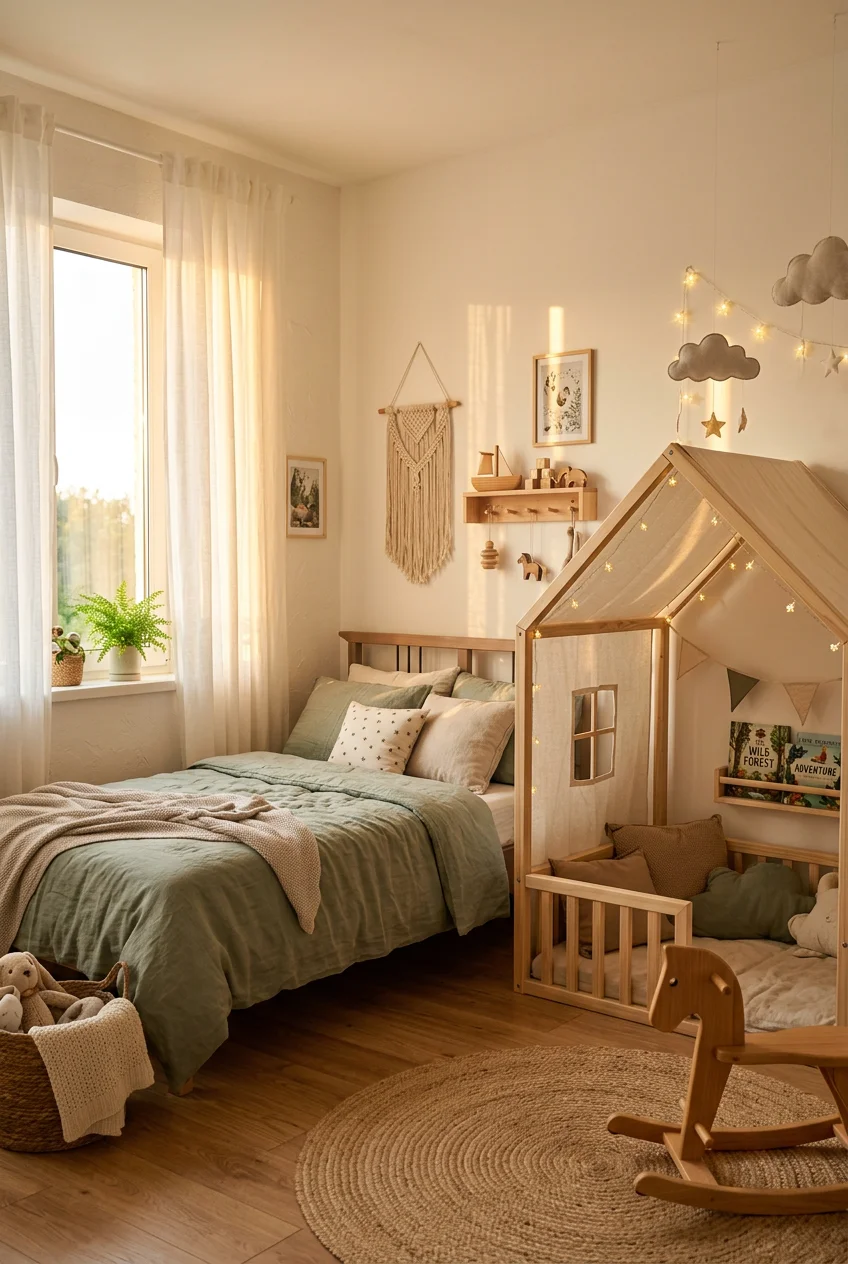
What’s Inside
- Anchor with Machine-Washable Rugs
- Swap to Biophilic Color Palettes
- Invest in Modular Play Couches
- Layer Child-Safe Lighting
- Use the IKEA Trofast System for Toys
- Commit to a 60/40 Neutral Split
- Utilize Removable Wall Decals
- Introduce a Montessori Floor Bed
- Pick Semi-Gloss Paint for Durability
- Build a Sensory-Friendly Calm Corner
- Offer Pre-Approved Choices
- Install Wall-Mounted Art Rails
- Add Multi-Purpose Floor Poufs
- Anchor Every Single Piece of Furniture
- Size Up to a Small Double Bed
- Use Blackout Curtains for Better Sleep
- Ditch the Open Bookshelves
- Choose Natural Wood Over Painted MDF
- Keep the Closet Floor Completely Clear
Last October, I spent three hours scraping cheap vinyl paw prints off drywall with a butter knife at 2 AM. The adhesive smelled awful, and my fingers were blistered. I’d just finished a heavily themed kids’ bedroom for my youngest, only for him to declare he was terrified of dogs weeks later. That disaster completely changed how I approach kids’ rooms. You can’t just buy a matching set from Target. The plastic bins crack, primary colors trigger meltdowns, and the bedding looks dated in a month. I’ve spent four years styling bedrooms that actually work for families, making every expensive mistake possible. You need materials that survive a toddler’s wrath and a teenager’s apathy. Let’s look at the actual mechanics of a functional room. Here are nineteen practical updates that last longer than your kid’s current cartoon fixation.
1. Anchor with Machine-Washable Rugs

The floor is the biggest trap in kids’ rooms. I bought a thick wool rug from West Elm for $400, and it was ruined by grape juice in a week. The stain never came out. I switched to the Revival Rugs Stripe Washable Rug. It costs $149 for a 5×8 size, and the low-pile texture hides crushed goldfish crackers. When it gets gross, I fold it up and shove it in my washing machine with regular Tide. The edges curl slightly after the fourth wash, which is annoying, but it beats paying for professional cleaning. Skip the fluffy shag rugs. They trap Lego pieces like a magnet. You need something you can sanitize on a Tuesday. You don’t want to be on your hands and knees scrubbing carpet at midnight. Trust me.
2. Swap to Biophilic Color Palettes

Bright primary colors are a massive mistake. I painted a client’s nursery fire-engine red for a firehouse theme, and her toddler stopped sleeping entirely. We repainted it a month later. Now, I strictly use earthy tones like sage green or terracotta. I grab a gallon of Behr Premium Plus in Desert Sage from Home Depot for about $35. It covers evenly and creates a calming atmosphere that helps kids wind down. Bring in natural textures to match. A basic bamboo shade from Walmart ($24.98) adds warmth without looking heavy. I buy my organic snacks at Trader Joe’s, and I treat room design the same way: keep it natural. Plus, earth tones hide minor scuffs much better than bright whites or harsh yellows. It’s a win for everybody.
3. Invest in Modular Play Couches

Standard armchairs in a kid’s room just become expensive laundry baskets. You need furniture that functions as a play surface. I bought the Milliard Kids Modular Sofa off Amazon for $115. It comes vacuum-sealed and takes two days to expand, which frustrated my kids. Once puffed up, it became the most used item in the house. They build forts and fold it out for sleepovers. The microsuede cover zips off, and I wash it cold. If you’ve got a larger budget, the Nugget couch ($269) has firmer foam that holds up better. Either way, modular foam seating prevents kids from dragging your living room cushions down the hall. I used to yell at them for ruining my good sofa. Giving them their own dedicated cushions stopped the arguments. Took me years to figure out.

Govee RGBIC LED Strip Lights, Smart LED Lights for Bedroom
A dependable everyday pick — Govee RGBIC LED Strip Lights pulls in 243 ratings at 4.5 stars. Not flashy, just solid.
4. Layer Child-Safe Lighting

Relying on a single harsh overhead light ruins a bedtime routine. You need layered lighting to signal that the day is ending. I start with a soft ambient ceiling fixture like a cloud-shaped LED light from VAXLAMP ($179). The crucial piece is the Hatch Rest Baby Sound Machine Night Light. It retails for $69.99 at Target. I program it from my phone so it turns red at 7 PM for bedtime, and green at 6:30 AM when they can leave the room. The speaker quality isn’t amazing. It sounds tinny on the highest volume. However, the color-coding feature actually keeps my toddler in bed. Before I bought this, he woke me up at 5 AM daily. I also keep a small amber reading light clipped to his headboard. It provides just enough light for books without waking him up fully.
5. Use the IKEA Trofast System for Toys

Toy boxes are a terrible storage solution. Kids dump everything out just to find one dinosaur, leaving a massive pile on the rug. I ripped out a heavy toy chest and replaced it with the IKEA Trofast system. The wooden frame costs $50, and the plastic bins range from $5 to $15. Because the bins slide out on rails, my kids can pull out just the Lego bin and slide it back. The pine frames are unfinished, so they show greasy fingerprints if you don’t seal them. I spent an afternoon rubbing a $14 can of Minwax polycrylic over the wood. It’s not the most glamorous look, but it actually functions. The bins are light enough for a toddler. You can even label the front of the bins with a piece of masking tape. It helps them learn where everything belongs.
6. Commit to a 60/40 Neutral Split

A room entirely covered in a specific theme feels claustrophobic and dates incredibly fast. I follow a strict 60/40 rule. Sixty percent of the room needs to be completely neutral. I use Sherwin-Williams Alabaster ($45 a gallon) for the walls and buy plain maple furniture. The remaining forty percent is where you add color through sheets and art. When my daughter had a Frozen phase, I didn’t paint ice castles. I bought a $22 Elsa duvet cover from Target and a $12 throw pillow. Six months later, when she decided she only liked horses, I just swapped the bedding. You’ll save hundreds of dollars if you keep the foundation of the room boring. It allows the space to grow with their changing personalities. You won’t have to do a full renovation every single year.

Yieach Bedside Shelf for Dorm Bed,Rv
If you want something that just works, Yieach Bedside Shelf for Dorm Bed is a safe bet (94 reviews, 4.5 stars).
7. Utilize Removable Wall Decals

Wallpapering a kid’s room is a massive gamble. I spent a weekend wrestling with a $150 roll of dinosaur wallpaper from Spoonflower, only to have it start peeling because my walls were slightly textured. Instead of wallpaper, I use removable wall decals. You can buy a pack of 50 watercolor dot decals from Etsy for $24. You peel them off the backing and stick them randomly across one accent wall. It takes twenty minutes and looks custom. When the kid tries to peel one off, you just heat it slightly with a hair dryer and pull. No scraping, no drywall damage, and no lasting commitment to a pattern they will outgrow by the first grade. It’s the cheapest way to add personality to a blank wall. Plus, you can change the layout whenever you get bored. You might also like: 20 Stunning Small Bedroom Wall Decor That Actually Work
8. Introduce a Montessori Floor Bed

Transitioning a toddler to a standard twin bed usually results in them falling out. I skipped the toddler bed entirely and bought a wooden house-frame floor bed from BusyWood on Etsy for $285. It sits directly on the floor, which aligns with Montessori principles of giving kids independence. They crawl in and out without help, and there’s zero fall risk. The raw pine frame smells strongly of fresh wood initially, taking a few days to air out. I paired it with an 8-inch memory foam mattress from Zinus ($119 on Amazon). Making the bed is slightly annoying because I’ve got to bend down to the floor, but the safety aspect makes the backache worth it. The house frame structure also gives you a great place to string up some cheap fairy lights. It makes the bed feel like a cozy little fort. You might also like: 20 Brilliant DIY Bedroom Wall Decor for Every Budget
9. Pick Semi-Gloss Paint for Durability

Don’t use flat or matte paint in a kid’s room. I made this mistake in my hallway. My son dragged a dirty plastic truck along the wall, and when I wiped the scuff mark with a wet sponge, the flat paint rubbed right off. You need a semi-gloss or satin finish. I buy Benjamin Moore Regal Select in a satin finish (around $70 a gallon). It costs more upfront, but it creates a hard surface. When somebody draws on the wall with a crayon, you scrub it with a damp cloth and Dawn dish soap, and the paint won’t budge. I buy my heavy-duty cleaning sponges at Whole Foods, and they work perfectly here. It reflects a bit more light than matte paint, but the durability is non-negotiable. It saves you from repainting the entire room every spring. You might also like: 20 Cozy Cozy Minimalist Bedroom for Every Budget

50×70 Inch Rust Throw Blanket – Soft & Fluffy Fleece
If you want something that just works, 50×70 Inch Rust Throw Blanket – Soft & Fluffy Fleece is a safe bet (11 reviews, 4.5 stars).
10. Build a Sensory-Friendly Calm Corner

Every kid needs a physical space to decompress that isn’t their bed. I dedicate one corner of the room specifically for sensory regulation. I hung a cheap cotton canopy from Amazon ($35) from the ceiling and placed a Big Joe bean bag chair ($49 at Walmart) underneath it. I filled a small $12 woven basket from Target with heavy board books. When my youngest is overstimulated after a loud grocery run to Costco, he automatically goes to that corner and pulls the canopy shut. The Big Joe bean bags lose their shape after six months, so you’ll need to buy a $20 bag of refill beans eventually, but the setup effectively stops tantrums before they escalate. It gives them a safe place to regulate their own emotions. I even use it myself sometimes when I need a quiet minute.
11. Offer Pre-Approved Choices

If you ask a four-year-old how they want to decorate their room, you’ll end up with neon green walls and a ceiling covered in plastic glow-in-the-dark stars that get stuck in the vacuum. You’ve got to involve them, but you must control the inventory. I give my kids pre-approved choices. I’ll pull up three different sets of cotton sheets on the Pottery Barn Kids website (around $79 a set) that match the color palette, and I let them pick the winner. They feel ownership over the space, but I don’t look at a hideous cartoon bedspread. It’s an illusion of control that saves everyone a lot of arguments. You get a cohesive design, and they feel like they made the final decision. It’s the ultimate parenting hack.
12. Install Wall-Mounted Art Rails

Kids produce a staggering amount of paper clutter. If you don’t contain it, their bedroom surfaces will be buried under crumpled coloring pages. I stopped taping things to the walls because it ruins the paint. Instead, I use the IKEA FINTORP rail system, technically meant for kitchen utensils. The black metal rail costs $10, and a pack of clips is $5. I mount it horizontally on a blank wall. My kids clip up their own artwork whenever they want. It utilizes vertical space and keeps dresser tops clean. The clips are slightly stiff for toddler fingers to squeeze, but it creates a rotating gallery wall that costs under twenty dollars. It stops the endless pile of school papers from taking over the entire house. You can swap the art out weekly.
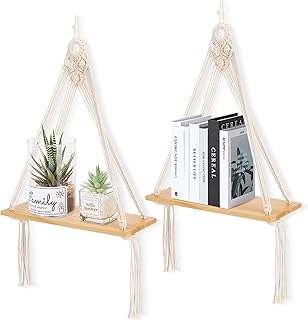
Sunkaioo Macrame Wall Hanging Shelf Set of 2
Sunkaioo Macrame Wall Hanging Shelf Set of 2 punches above its price — 300 buyers rated it 4.5 stars. I would buy it again.
13. Add Multi-Purpose Floor Poufs

Hard wooden chairs are useless in a kid’s room. They just throw their clothes on them. I prefer large floor cushions for seating. I bought a faux leather Moroccan pouf from Amazon for $55. It arrived unstuffed, which I didn’t realize. I ended up stuffing it with three old bed pillows and a bunch of outgrown winter coats. It’s incredibly heavy now, but it functions perfectly. My kids use it as a seat at their low play table and a soft landing pad when they jump off the bed. The faux leather wipes clean with a baby wipe, and it looks significantly more stylish than a plastic toddler chair. When they outgrow it, I can just move it into the living room as a footrest. It’s a versatile piece of furniture.
14. Anchor Every Single Piece of Furniture

I can’t emphasize this enough. You’ve got to anchor the furniture. I watched my toddler pull out the bottom drawer of his dresser to use as a step, and the entire heavy wooden unit tipped forward. I caught it just in time, but it terrified me. Now, every single piece of furniture gets bolted to the drywall studs. The IKEA Billy Bookcase ($49) is notorious for being top-heavy. I use heavy-duty metal L-brackets from Home Depot ($4 for a pack) instead of the flimsy plastic straps. You’ll need a stud finder and a drill, but you can patch a drywall hole with a $6 tub of spackle. You can’t fix a crushed child. Do not skip this step. It takes an extra twenty minutes but provides complete peace of mind.
15. Size Up to a Small Double Bed

Buying a standard twin bed is often a short-sighted purchase. By the time my oldest hit middle school, his feet were hanging off the mattress. If you’ve got the square footage, I highly recommend buying a full-size bed from the start. I bought a Zinus metal platform bed frame in a full size for $105 off Amazon. It gives them room to grow, and more importantly, it gives you a comfortable place to lie down when reading bedtime stories. Squeezing next to a restless toddler on a narrow twin mattress is miserable when you’re trying to read. A basic full-size cotton sheet set at Target is $35 instead of $25. But you won’t have to buy a whole new bed frame. It’s a larger upfront cost that pays off eventually. Plus, they won’t outgrow the length before they leave for college.

Mkono Macrame Hanging Shelves Boho Wall Decor Set of 2
If you want something that just works, Mkono Macrame Hanging Shelves Boho Wall Decor Set of 2 Rustic Wood Flo is a safe bet (2 reviews, 4.5 stars).
16. Use Blackout Curtains for Better Sleep

The sun is your worst enemy at 5:30 AM on a Saturday. Flimsy decorative curtains are useless. You need industrial-strength blackout curtains if you want your kids to sleep past dawn. I bought the Eclipse Kendall Blackout Curtains from Walmart for $14.98 per panel. They have a thick, rubbery backing that completely blocks the light. The fabric is incredibly stiff and looks like a shower curtain right out of the package, so I had to steam them heavily. I hung them high and wide on a wrap-around curtain rod ($22 at Target) so the fabric sits flush against the wall. It turns the room into a dark cave, which is exactly what you need for a decent nap schedule. Don’t bother with the light-filtering options. They just let the morning sun wake everyone up, defeating the whole purpose.
17. Ditch the Open Bookshelves

Standard deep bookshelves don’t work for picture books. Kids shove the books in haphazardly, tearing the pages, or they pull all of them out onto the floor. I got rid of our traditional bookshelf and installed four acrylic floating ledges from Amazon ($29 for a set of four). I mounted them on the wall behind the bedroom door. These ledges display the books face-out. Kids choose books based on the cover art, not the spine. The acrylic is clear, so it doesn’t add visual weight. I rotate the selection every Sunday night before my grocery run at Kroger. It keeps the books off the floor and makes the room look intentionally styled instead of cluttered. Plus, the plastic ledges are easy to wipe down with a microfiber cloth. It’s a massive upgrade from a standard dusty bookcase.
18. Choose Natural Wood Over Painted MDF

I used to buy cheap, white-painted MDF furniture for kids’ rooms because it looked clean. But MDF chips easily, and once the white veneer peels off, it looks like garbage. The sharp corners show wear instantly. Now, I prioritize natural wood pieces. I’d rather sand down a thrifted pine dresser than buy cheap particleboard. I picked up a solid pine dresser from a thrift store for $40 and sanded it down. Wood hides dents and scratches because they blend into the grain. If a piece gets truly ruined, you can just sand it and restain it. You can’t do that with particleboard. Solid wood is heavier to move, but it grounds the room and brings in that calming biophilic element I mentioned earlier. It’s worth the extra effort to find real wood. You’ll keep it for decades instead of throwing it in a dumpster.
19. Keep the Closet Floor Completely Clear

The closet floor is a black hole where missing shoes and dirty socks go to die. If you put bins on the floor of a kid’s closet, they will just throw trash on top of them. I implemented a strict clear floor rule in my kids’ closets. I installed an adjustable Elfa shelving system from The Container Store. It was a splurge at $180, but it mounts entirely to the wall. The lowest shelf sits eighteen inches off the ground. This means I can run the vacuum straight into the closet without moving anything. It forces my kids to actually put their shoes on a designated shelf, rather than kicking them into the dark abyss. It takes away the hiding spot for dirty laundry and broken toys. You’ll actually be able to see the baseboards again.
Kids’ room decor shouldn’t require a second mortgage. It’s about creating a space that handles spilled juice, rotating obsessions, and the sheer volume of plastic toys. Start small. Swap out the harsh lighting, anchor the heavy dressers, and maybe tackle that terrifying closet floor this weekend. I’ve learned the hard way that practical durability always beats a perfectly styled, fragile theme. If you found these honest tips helpful, save this post to your Pinterest board for your next weekend project. You’ll thank yourself when you aren’t scraping stickers off the wall at midnight. Let’s make these rooms functional again.
Frequently Asked Questions
How do I choose kids bedroom decor they won’t outgrow?
Stick to a 60/40 rule. Keep 60% of the room neutral with warm white walls and natural wood furniture. Use the remaining 40% for easily swappable items like duvet covers, throw pillows, and removable wall decals.
What is the best paint finish for a kids room?
Always use a semi-gloss or satin finish for kids bedroom decor. Flat or matte paints rub off when you try to wipe away scuff marks. A satin finish allows you to scrub crayon marks with dish soap without damaging the drywall.
How can I organize toys without using a toy box?
Skip the deep toy chests where things get lost. Instead, use a modular bin system like the IKEA Trofast. The shallow, slide-out bins keep toys organized at eye level and make it easier for kids to clean up independently.
What type of rug is best for a child’s bedroom?
Opt for a low-pile, machine-washable rug. Kids spill drinks and crush snacks into the floor constantly. A washable rug allows you to throw the entire thing into the washing machine, saving you from expensive professional carpet cleaning bills.

1 thought on “19 Kids Bedroom Decor Worth Trying”