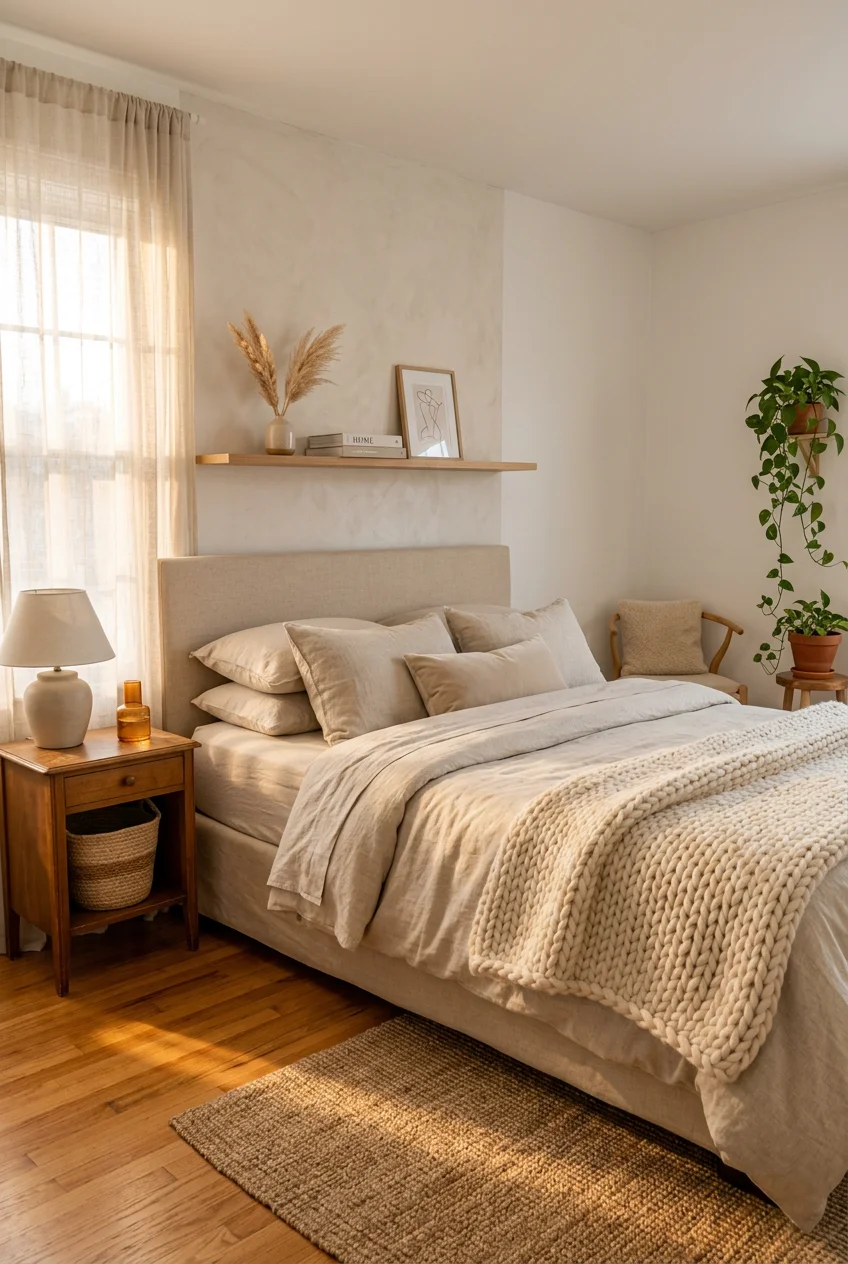
What’s Inside
- Master Layered Bedding for a Cozy Bedroom Aesthetic
- Dial in Your Color Temperature for Warm Lighting
- Anchor the Space with a Properly Sized Area Rug
- Bring in Low-Maintenance Biophilic Elements
- Choose an Earthy, Heritage-Inspired Color Palette
- Layer Window Treatments for Insulation and Mood
- Prioritize Tactile Textures in Soft Furnishings
- Optimize Your Bed Placement Against a Solid Wall
- Install Strategic Soundproofing for True Serenity
- Curate a Soothing Scent Profile
- Practice Warm Minimalism with Smart Storage
- Add Authentic Personal Touches Through Art
- Upgrade to a Substantial Mattress Topper
- Scale Your Nightstands Correctly
- Hide LED Strip Lighting Behind the Headboard
- Swap to a Solid-Core Door for Noise Reduction
- Replace Generic Hardware for Instant Character
- Keep Fresh Botanicals on the Nightstand for a Cozy Bedroom Aesthetic
Last November, I stood shivering in my own room at 2 AM, staring at stark white walls and a single flat sheet. I wanted a cozy bedroom aesthetic, but my space felt like a hospital ward. The air was cold. The echo was loud. I spent weeks trying to fix it with random throw pillows, which just made my bed look like a messy laundry pile. Creating a functional space requires specific, methodical changes to your lighting, textiles, and layout. I learned that the hard way after wasting money on cheap fixes that didn’t work. Let’s break down exactly how to fix a cold, uninviting room using precise measurements and specific materials.
1. Master Layered Bedding for a Cozy Bedroom Aesthetic

I tried sleeping under a single heavy quilt for years. It’s stiff, and I’d wake up sweating. The secret to a comfortable bed is strategic layering. You start with a high-quality fitted sheet. I use a Brooklinen organic cotton fitted sheet ($109 for a queen). It breathes well during the summer. Next, add a flat sheet, then your duvet. Interior designer Ruben Gutierrez suggests stuffing two duvet inserts inside one cover for maximum fullness. I tested this by shoving two cheap $45 Costco down-alternative inserts into my linen cover. The volume difference is massive. It gives the bed that thick, hotel-like appearance. Finally, fold a textured quilt at the foot of the bed. I use a waffle weave coverlet from Piglet in Bed ($120). This setup adds physical weight without trapping too much heat. The multiple layers trap small pockets of air, which regulates your body temperature better than one massive blanket.
2. Dial in Your Color Temperature for Warm Lighting

Harsh overhead lighting ruins a room instantly. Three years ago, I bought 5000K daylight bulbs for my ceiling fixture. My room looked like a 7-Eleven at midnight. It’s awful. You need a soft, ambient glow from multiple light sources. Check your lightbulbs right now. You want a color temperature between 2700K and 3000K for a soft, amber glow. For bedside lamps, I go even lower to 2200K. I use GE Relax LED bulbs ($14.99 for a 4-pack) in every lamp. You also need to spread the light around the room. I keep a Vintage Mushroom Table Lamp ($45 from Target) on my nightstand. The frosted glass shade diffuses the bulb perfectly so it won’t blind you when you turn it on in the dark. Skip the ceiling light entirely after 8 PM. Relying on two or three small lamps around the perimeter of the room reduces eye strain and signals to your brain that it’s time to sleep.
3. Anchor the Space with a Properly Sized Area Rug

A common mistake is buying a rug that’s way too small. I bought a 5×7 rug for my queen bed once. It barely peeked out from the sides, and I constantly tripped on the binding when getting out of bed. For a queen-sized bed, you need a minimum 6×9 foot rug. An 8×10 foot rug is much better. If you own a king bed, 8×10 is the absolute minimum, but 9×12 is ideal. You must position the rug so it extends at least 18 to 24 inches beyond the sides and foot of the bed. This gives you a soft landing pad for your feet every morning. I use a Safavieh chunky jute rug ($189 for the 8×10 size). Jute adds a rough, organic texture that contrasts nicely with soft cotton bedding. It also provides excellent sound dampening. Bare floors bounce sound waves around, making a room feel hollow. A thick rug absorbs that echo immediately.

Bedsure GentleSoft White Throw Blanket for Couch
Bedsure GentleSoft White Throw Blanket for Couch – Cozy Soft Fleece Su has been one of the most consistently praised picks in this category. 238 reviewers averaged 4.5/5.
4. Bring in Low-Maintenance Biophilic Elements

Adding living plants to your room improves air quality and adds visual softness to hard corners. I’m not a natural gardener. Last spring, I bought a delicate maidenhair fern from Sprouts. It died in four days because my room lacks humidity. I switched to low-maintenance options that survive on neglect. I keep a Costa Farms snake plant in a 6-inch ceramic pot ($24.99) in the corner away from the window. Snake plants thrive in low light and only need water every few weeks. I also keep a trailing golden pothos on my tall dresser. The green leaves break up the straight, rigid lines of my furniture. Biophilic design also includes natural materials. I swapped my metal bed frame for a solid oak headboard. The wood grain adds visual warmth that painted metal simply can’t replicate. Mixing living plants with raw wood tones grounds the space and makes it feel less like a box of drywall.
5. Choose an Earthy, Heritage-Inspired Color Palette

Stark white walls and cool gray floors dominated design for a decade. Those colors feel clinical. I recently repainted my walls because the bright white gave me a headache on sunny mornings. I switched to warm neutrals. Colors like creamy taupe, clay-toned beige, and chalky off-white absorb light rather than reflecting it aggressively. I used Farrow & Ball French Gray ($130 per gallon). Despite the name, it pulls as a soft, smoky green in natural light. If you want a darker, cocooning atmosphere, look into deep burgundy or inky blue. Dark walls blur the boundaries of the room at night, making the space feel intimate. You don’t have to paint the entire room. You can introduce these earthy tones through your textiles. A rust-colored linen throw or olive green velvet pillow covers will warm up a plain room without the commitment of painting. The goal is to mimic colors found in nature. You might also like: 20 Cozy Bedroom Wall Art You Need to See
6. Layer Window Treatments for Insulation and Mood

Curtains do more than block the sun. They insulate the room and absorb street noise. I used to rely on cheap plastic blinds. They let in a terrible streetlamp glare and rattled every time the AC kicked on. Now, I layer my window treatments. I start with simple white sheer panels against the glass to diffuse harsh daylight. Then, I hang heavy, thermal-lined drapes over them. I use Half Price Drapes velvet curtains ($89 per 50×96 inch panel). The thick velvet physically blocks cold drafts in the winter. You must hang your curtain rod correctly. I mount my rod just two inches below the ceiling line and extend it ten inches past the window frame on each side. This forces your eye upward, making the ceiling look taller. A few years ago, I bought a flimsy tension rod at Walmart. It collapsed and hit me on the head at 3 AM. Buy a solid metal rod and drill it into the wall studs. You might also like: 18 Aesthetic Green Bedroom for Every Budget

50×70 Inch Rust Throw Blanket – Soft & Fluffy Fleece
50×70 Inch Rust Throw Blanket – Soft & Fluffy Fleece punches above its price — 13 buyers rated it 4.5 stars. I would buy it again.
7. Prioritize Tactile Textures in Soft Furnishings

A room with only smooth, flat surfaces feels cold. You need physical texture. When you walk into the room, your brain registers the softness of the fabrics before you even touch them. I mix distinct textures on purpose. I use smooth percale sheets, a bumpy waffle-knit blanket, and a faux fur throw. I bought the Pottery Barn ruched faux fur throw ($149, 50×60 inches) last December. It weighs about five pounds. That slight physical weight across your legs is incredibly grounding when you’re trying to fall asleep. Avoid matching all your fabrics. If your headboard is velvet, don’t use velvet pillows. The lack of contrast makes the bed look flat. Instead, pair a velvet headboard with rough linen shams and a chunky wool knit blanket. The friction between the different materials creates shadow and depth. I keep a woven seagrass basket ($35 at Target) next to the nightstand to hold extra blankets, which adds another layer of rough texture.
8. Optimize Your Bed Placement Against a Solid Wall

Where you put your bed dictates how the entire room functions. For two years in my old apartment, I placed my bed directly under a large window. It’s a terrible layout. The glass radiated freezing cold air onto my head all winter. I also couldn’t reach the window latch without crawling across the mattress. You need to position your bed against a solid wall. Ideally, you want a clear view of the bedroom door from the mattress, but you shouldn’t be directly in the line of sight when someone walks by in the hallway. This layout creates a subconscious feeling of security. I currently use the Thuma The Bed frame ($1,095 for a queen). It features a low profile and a padded headboard that sits flush against the drywall. You also need to leave at least 24 to 30 inches of walking space on both sides of the bed. Shoving one side against a wall makes changing the fitted sheet a miserable chore. You might also like: 19 Cozy Aesthetic Bedroom Ideas You Need to See
9. Install Strategic Soundproofing for True Serenity

Noise pollution ruins sleep. You can’t relax if you hear the television blaring in the living room or cars driving by outside. I live near a busy intersection, so I had to find ways to muffle the traffic. Heavy textiles like thick rugs and velvet curtains absorb a lot of ambient echo. But the biggest difference comes from sealing the gaps around your door. Most interior doors feature a massive one-inch gap at the bottom. I installed a Suptikes heavy-duty silicone door sweep ($14.99 on Amazon). It features an adhesive backing and sticks directly to the bottom of the door. It blocks the hallway light from shining in and cuts the household noise in half. I also added foam weatherstripping ($8 at Home Depot) inside the door jamb. When the door clicks shut, it seals completely. It takes ten minutes to install, and it instantly makes the room feel like an isolated, quiet bunker.

Ultra Soft Cozy Faux Fur Throw Blanket
Ultra Soft Cozy Faux Fur Throw Blanket has been one of the most consistently praised picks in this category. 1 reviewers averaged 4.5/5.
10. Curate a Soothing Scent Profile

Smell is the fastest way to change how a room feels. I used to buy cheap, synthetic wall plug-ins. They smelled like artificial candy and gave me sinus headaches. Now, I use natural scents. I keep a Vitruvi stone essential oil diffuser ($123) on my dresser. The matte ceramic finish looks like a piece of pottery, not a plastic appliance. I fill it with water and add ten drops of pure lavender or cedarwood oil. I usually buy my essential oils at Whole Foods. Their 365 brand is about $8 for a 0.5 oz bottle. I turn the diffuser on thirty minutes before I get into bed. The subtle scent signals my brain that the day is over. If you prefer candles, avoid paraffin wax. Look for soy or beeswax candles with cotton wicks. I burn a Diptyque Baies candle ($74 for 6.5 oz) on weekends. It’s expensive, but a single candle lasts me six months because I only burn it for an hour at a time.
11. Practice Warm Minimalism with Smart Storage

Clutter creates visual noise. You can’t feel cozy if you’re staring at a pile of unpaid bills and a stack of clean laundry on a chair. However, a totally empty room feels hostile. The solution is warm minimalism. You keep your meaningful decor out, but you aggressively hide the functional clutter. I use the IKEA Malm under-bed storage boxes ($50 for a two-pack). They roll out easily, and I use them to hide my winter sweaters, extra sheets, and random electronics. Your nightstand surface should only hold a lamp, a book, and a glass of water. Everything else goes in a drawer. I used to own a beautiful, open-shelf nightstand. It looked great in photos, but in reality, it just became a dusty shelf for my lip balm, tangled phone chargers, and hair ties. Buy furniture with closed drawers. Hiding the mess instantly lowers your heart rate when you walk into the room.
12. Add Authentic Personal Touches Through Art

Generic mass-produced art makes a bedroom look like a corporate hotel. I bought a giant, generic abstract canvas from a big box store years ago. It meant nothing to me, and I hated looking at it. Your bedroom should reflect your actual life. I swapped that canvas for a gallery wall of vintage botanical prints and black-and-white photos from a trip to Oregon. I buy digital downloads from Juniper Print Shop ($20 per file). I print them at a local shop and put them in cheap thrifted frames. This adds authentic character. Don’t overcrowd the walls. Leave some negative space so your eyes have a place to rest. I also keep a small, tarnished brass tray on my dresser that belonged to my grandmother. I use it to hold my daily jewelry. These small, specific objects make the space feel collected over time rather than purchased all at once from a catalog.

COOVA Faux Fur Throw Blanket for Couch
COOVA Faux Fur Throw Blanket for Couch has been one of the most consistently praised picks in this category. 12 reviewers averaged 4.5/5.
13. Upgrade to a Substantial Mattress Topper

You can buy the most beautiful linens in the world, but if your mattress feels like a concrete slab, your room isn’t cozy. I slept on a rock-hard spring mattress for three years because I couldn’t afford to replace it. My hips ached every morning. I finally bought a Tempur-Pedic 3-inch Supreme mattress topper ($299 for a queen). It completely changed the bed. A thick topper adds visible height to the mattress, which makes the bed look more inviting and plush. It also provides pressure relief. If you sleep hot, skip the memory foam and buy a thick down-alternative baffle-box topper. I bought a Parachute down alternative mattress pad ($149) for my guest room. It features a 100% cotton shell that stays cool while adding a thick layer of fluff. Securing a thick topper under a deep-pocket fitted sheet is the easiest way to fake a luxury hotel bed.
14. Scale Your Nightstands Correctly

Proportion matters. A massive king-sized bed looks ridiculous next to a tiny, spindly side table. I made this mistake in my first house. I used a 15-inch wide round stool as a nightstand next to a bulky upholstered bed. Every time I reached for my water glass, I knocked my phone onto the floor. You need surface area. A proper nightstand should be between 24 and 30 inches wide. It should also sit roughly level with the top of your mattress. If your mattress is 25 inches off the floor, your nightstand should be 24 to 26 inches tall. I use the West Elm Mid-Century nightstand ($349, 18 inches wide). It’s slightly narrow, but the closed drawers make up for it. Having a substantial piece of furniture on either side of the bed visually anchors the mattress and provides a sturdy base for your heavy table lamps.
15. Hide LED Strip Lighting Behind the Headboard

Ambient backlighting creates a moody, relaxed atmosphere. I hate turning on bright lamps if I wake up at 4 AM to get a drink of water. I installed a strip of Govee 16.4ft LED lights ($17.99 on Amazon) directly onto the back of my wooden headboard. They plug into the wall, and I control them with an app on my phone. I set them to a dim, warm orange color. The light washes up the wall behind the bed, creating a soft halo effect. It provides enough light to see the floor, but it won’t shine directly into your eyes. Make sure you buy the warm white or RGB strips, not the stark daylight white. Stick the strip about two inches below the top edge of the headboard so the individual LED bulbs aren’t visible. You only want to see the glow, not the hardware.

Bedsure GentleSoft Sage Green Throw Blanket for Couch
Bedsure GentleSoft Sage Green Throw Blanket for Couch – Checkered Cute punches above its price — 98 buyers rated it 4.5 stars. I would buy it again.
16. Swap to a Solid-Core Door for Noise Reduction

Most builder-grade homes use hollow-core interior doors. They’re basically two thin sheets of wood veneer glued over cardboard. They offer zero sound insulation. I could hear the television from the living room perfectly clearly through my closed bedroom door. If you own your home, replacing your bedroom door is a massive upgrade. I bought a Masonite solid core interior door ($185 at Home Depot). A solid core door is filled with heavy composite wood. It weighs about three times as much as a hollow door. When you close it, you hear a satisfying, heavy thud. It blocks a significant amount of household noise. You will need a friend to help you hang it because of the weight, but the silence is worth the effort. It makes the bedroom feel like a separate, private wing of the house rather than just another room off the hallway.
17. Replace Generic Hardware for Instant Character

Standard furniture often comes with cheap, flimsy drawer pulls. I bought a basic six-drawer dresser from a big box store. The factory-installed silver knobs felt like hollow plastic and rattled when I opened the drawers. I unscrewed them and threw them away. I replaced them with solid unlacquered brass cabinet knobs from Rejuvenation ($14 each). Unlacquered brass develops a dark, mottled patina over time from the oils on your hands. The heavy metal feels cold and substantial when you grab it. Upgrading the hardware takes ten minutes and requires only a screwdriver. It improves a cheap piece of furniture, making it look custom and expensive. You can find unique vintage hardware on Etsy or at local antique stores. Just make sure you measure the distance between the drill holes if you’re buying drawer pulls with two screws.
18. Keep Fresh Botanicals on the Nightstand for a Cozy Bedroom Aesthetic

You don’t need a massive floral arrangement to make a room feel special. I keep a small glass bud vase on my nightstand. Every week, I buy a cheap bundle of silver dollar eucalyptus ($4.99 at Trader Joe’s) or a small bunch of chamomile flowers from Kroger. I cut two or three stems and put them in the vase. The eucalyptus leaves release a faint, clean scent, and the green stems add a tiny pop of color next to my alarm clock. It costs almost nothing, but it forces me to keep my nightstand clear of trash and clutter. When I see fresh stems on the table, it makes the whole room feel cared for. I change the water every three days. If you own pets, make sure you check the ASPCA website to ensure the flowers you buy aren’t toxic to cats or dogs. Lilies, for example, are highly poisonous to cats and should never enter your house.
I’ve tested all these methods in my own home, and they genuinely work. You don’t have to do everything this weekend. Start with your lighting and your bedding, as they make the biggest immediate impact. I’d love to hear how you style your space, so be sure to pin this article for your next weekend project.
Frequently Asked Questions
How do I make my bedroom feel cozier?
Layer your lighting with 2700K bulbs, add tactile textures like chunky knits, and anchor the space with a large area rug. Soft, organic materials reduce echo and add visual warmth.
What colors are best for a cozy bedroom aesthetic?
Warm neutrals like creamy taupes, clay, and chalky off-whites work best. Deep burgundy or inky blue can also create a moody, intimate atmosphere that promotes relaxation at night.
How many light sources should a bedroom have?
Avoid harsh overhead lighting. Rely on two to three small lamps around the room’s perimeter to reduce eye strain. Use bulbs between 2700K and 3000K for a soft, amber glow.
What is the best rug size for a queen bed?
You need a minimum 6×9 foot rug, but an 8×10 foot rug is ideal. It should extend 18 to 24 inches beyond the sides and foot of the bed for a soft landing.
