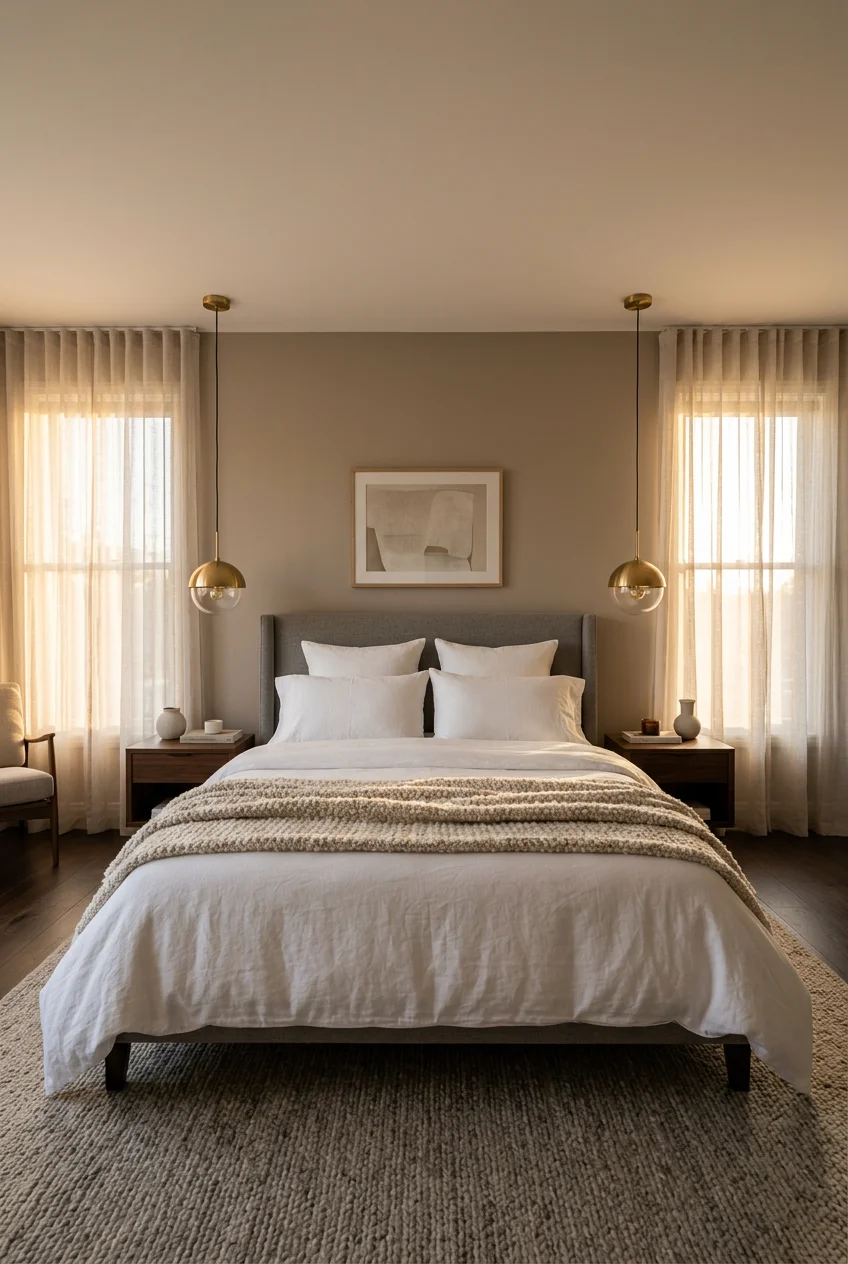
What’s Inside
- The 24-To-36-Inch Bedside Placement Rule
- Layered Lighting With Tunable Smart Dimmers
- The 2700K Warm LED Mandate
- The Room Addition Formula For Sizing
- Sculptural Plaster And Ceramic Forms
- Wabi-Sabi Rattan Textures
- Adjustable Swing-Arm Pendants
- The 84-Inch Floor Clearance Rule
- Plug-In Cord Kits For Renters
- Clustered Mini Pendants
- Budget-Friendly Brass Fixtures
- Warm Metallic Finishes
- The Cardboard Cutout Trick
- Smart Bulb Integration
- Wall-Mounted Sconces As Faux Pendants
- Mixing Weaves And Textures
- Asymmetrical Bedside Placement
- Tinted And Smoked Glass
- Oversized Fabric Drum Shades
- Minimalist Linear Pendants
Most people hang a single, glaring glass dome in the center of their ceiling and wonder why their room feels like a police interrogation chamber. Nailing pendant lighting in bedroom spaces requires exact math and intentional placement. It isn’t just about picking something shiny. You’ve got to account for cord drops, bulb temperatures, and nightstand clearance. If you ignore the measurements, you’ll end up with a fixture that either blinds you in bed or blocks your view across the room. If you only try one idea from this list, make it #9. Plug-in cord kits bypass electrical work entirely and fix awkward lighting placements in an afternoon. Trust me on this.
Skip this if your bedroom ceilings are under 8 feet tall and you refuse to use plug-in options. Low ceilings simply lack the vertical drop required for traditional hanging fixtures. You’re better off sticking to flush mounts or wall sconces.
1. The 24-To-36-Inch Bedside Placement Rule

Most people hang bedside fixtures way too high. The optimal placement for task lighting is hanging the pendant exactly 24 to 36 inches above the nightstand surface. If your nightstand is 24 inches tall, the bottom rim of your pendant needs to sit between 48 and 60 inches from the floor. Interior designer Rebecca Stanley notes that positioning the lampshade just below eye level directs light onto your reading material rather than burning your retinas. Best for: avid nighttime readers. The catch: tall headboards make this math difficult. If your headboard exceeds 55 inches in height, a low-hanging pendant looks visually cramped and disproportionate.
2. Layered Lighting With Tunable Smart Dimmers

Relying on a single overhead pendant is a massive mistake. A functional bedroom requires layered lighting. Install smart dimmers on all pendant lights to control the exact lumen output. Brands like Lutron offer smart dimmer switches (typically in the mid-range budget) that sync with tunable LEDs. These LEDs shift color temperature from a crisp 4000K daylight down to a warm 2700K evening tone. This shift supports natural circadian rhythms. Buying smart dimmers in bulk at Costco saves cash on large renovation projects. Best for: tech-savvy homes. The catch: smart dimmers require a neutral wire in your wall box. Older homes rarely possess this specific wiring setup.
3. The 2700K Warm LED Mandate

Bulb temperature dictates the entire mood of a room. Installing cool, blue-toned bulbs in a sleeping space disrupts sleep patterns and makes the room feel sterile. You need warm LED bulbs with a color temperature strictly between 2700K and 3000K for all bedroom fixtures. You can easily grab a basic 4-pack of warm LED bulbs while wandering the aisles at Target. Look for bulbs pushing at least 800 lumens (equivalent to a 60-watt incandescent) for reading. The catch: very warm 2700K lighting alters color perception. Matching navy blue and black clothing in your closet becomes nearly impossible under this yellow-toned light.

Govee RGBIC LED Strip Lights, Smart LED Lights for Bedroom
Govee RGBIC LED Strip Lights has been one of the most consistently praised picks in this category. 252 reviewers averaged 4.5/5.
4. The Room Addition Formula For Sizing

Guessing the size of a central pendant usually results in a fixture that looks like a tiny floating dot. Apply the room addition rule for accurate scaling. Add the room’s length and width in feet. That sum equals your ideal pendant diameter in inches. A standard 10×12 foot room requires a central pendant measuring exactly 22 inches in diameter. When hanging fixtures on either side of the bed, scale them to the mattress width. The catch: this mathematical formula fails completely in rooms with vaulted or angled ceilings. High ceilings swallow standard-sized fixtures, requiring you to size up by at least 20 percent.
5. Sculptural Plaster And Ceramic Forms

The 2026 design forecast leans heavily into sculptural frames and organic shapes. Instead of generic glass globes, look for fixtures featuring curved frames around glowing orbs. Materials like raw ceramic, heavy plaster, and carved alabaster act as functional art installations. A 10-pound plaster dome creates a heavy, grounded focal point above a bed. The catch: solid plaster and ceramic fixtures are incredibly heavy. You can’t just screw them into standard drywall. They require reinforced steel ceiling boxes anchored directly to the joists to prevent them from ripping out of the ceiling and crashing onto your mattress.
6. Wabi-Sabi Rattan Textures

Natural materials diffuse harsh light beautifully. Woven fabrics, raw 1/2-inch bamboo strips, and rattan create a warm, textured glow that softens a bedroom. The wabi-sabi style rattan pendant light from Homeyfad (typically under $100) offers a tranquil, nature-inspired aesthetic. The woven gaps cast intricate shadow patterns across the ceiling and walls. Best for: coastal or bohemian aesthetics. The catch: dusting a woven rattan fixture is a complete nightmare. Dust settles into the hundreds of tiny crevices, requiring a vacuum brush attachment and a lot of patience to clean properly. You might also like: 15 Cozy Bedroom Accessories Ideas You’ll Love

KSIPZE 100ft Led Strip Lights RGB Music Sync Color Changing
If you want something that just works, KSIPZE 100ft Led Strip Lights RGB Music Sync Color Changing Led Lights is a safe bet (394 reviews, 4.5 stars).
7. Adjustable Swing-Arm Pendants

Static pendants limit your furniture layout. Adjustable swing-arm pendant lamps offer flexibility for reading nooks or tight corners. Brands like Aeyee and Lucia Living manufacture models like the Carmen Swing Arm Pendant Lamp (budget to mid-range). These feature a 360-degree rotatable arm and an adjustable 12-inch drop height. The catch: mechanical joints and swing arms wear out over time. If you adjust the arm daily, the tension bolts eventually loosen, causing the heavy metal shade to droop downward. You might also like: 17 Country Teen Bedroom That Actually Work
8. The 84-Inch Floor Clearance Rule

Hanging a central pendant too low is a structural hazard. If the fixture sits in a walking path or at the foot of the bed, you need exactly 84 inches (7 feet) of clearance from the floor to the bottom rim of the shade. This prevents tall people from smashing their heads into a glass globe. The catch: this strict clearance rule severely limits your options in standard-height homes. You’re often forced to choose semi-flush mounts rather than dramatic, long-cord statement pieces. You might also like: 17 Cozy Bedroom Decor Worth Trying
9. Plug-In Cord Kits For Renters

Hardwiring requires an electrician, permits, and patching drywall. Plug-in cord kits bypass this entirely. You can buy a 15-foot portable cord kit with an in-line switch from Etsy (often under $50). Pair it with an L-bracket mounted to the wall or swag it from a simple ceiling hook. Best for: renters. The catch: visible cords are unavoidable. Unless you paint the cord to match the wall or hide it behind a curtain panel, you must accept the slightly industrial look of an exposed wire.

Govee RGBIC LED Strip Lights
Govee RGBIC LED Strip Lights is sturdier in person than the photos suggest — over 252 buyers gave it 4.5 stars.
10. Clustered Mini Pendants

A single tiny pendant over a massive king-size bed looks ridiculous. Grouping multiple smaller fixtures creates a substantial focal point. Arrange two or three mini pendants exactly 24 to 30 inches apart (center-to-center) over a wide headboard. Mixing different shapes or staggering the drop heights by 2 to 4 inches adds architectural interest. The catch: hanging a cluster requires either a massive, expensive ceiling canopy plate to hide the wires or cutting three separate electrical boxes into your drywall.
11. Budget-Friendly Brass Fixtures

High-design lighting doesn’t require a luxury budget. Brands like SwiftBeacon offer the Vintage Luxe Brass Pendant (around the $45 to $60 range). These budget-friendly options provide the sleek, mid-century aesthetic without the massive price tag. You can achieve a sophisticated look for less than the cost of a weekly Walmart grocery run. The catch: cheap brass plating often has a yellow or slightly green undertone. It lacks the deep, rich patina of solid, unlacquered brass and will eventually pit or flake in humid environments.
12. Warm Metallic Finishes

Polished chrome is out. Warm metallic finishes dominate the 2026 design landscape. Brushed brass, aged copper, and warm bronze add instant sophistication. The Copper Marble Pendant Light from Orniture (mid-range pricing) features powder-coated copper paired with a 2-inch slab of real marble. Best for: dark, moody bedrooms. The catch: real copper and unlacquered brass tarnish quickly. Oils from your fingers will leave dark, permanent spots on the finish if you touch the shade while changing the bulb.

upsimples Floating Shelves for Wall
upsimples Floating Shelves for Wall has been one of the most consistently praised picks in this category. 47 reviewers averaged 4.5/5.
13. The Cardboard Cutout Trick

Eyeballing dimensions online is a guaranteed way to buy the wrong size. Before committing to a hardwired installation, cut a cardboard box to the exact height and diameter of your chosen fixture. Have someone hold this 3D mockup against the ceiling. This physical representation shows you exactly how much visual weight the piece carries. The catch: this process is tedious. It requires precise measuring, cutting, and taping, and you look slightly ridiculous holding a taped-up shipping box over your bed.
14. Smart Bulb Integration

Modern lighting requires smart integration. Installing Wi-Fi-enabled bulbs gives you complete control over your bedroom environment. You can set schedules to slowly fade the lights up over 30 minutes in the morning, mimicking a sunrise. Don’t rely on the generic bulbs hanging in the Kroger hardware aisle. Invest in a dedicated smart ecosystem. The catch: smart bulbs reset to full brightness when the Wi-Fi drops or the power flickers. Waking up at 3 AM to a glaring 100-percent bright room is a harsh reality of smart home tech.
15. Wall-Mounted Sconces As Faux Pendants

If ceiling access is impossible, wall-mounted sconces that mimic the downward drop of a pendant are the next best thing. These fixtures mount directly to the wall but feature a long, arched arm that drops a shade down to the 48-inch mark above the floor. Best for: tiny bedrooms with limited floor space. The catch: hardwiring a wall sconce requires drilling into the studs and fishing wire through the wall cavity. It causes permanent drywall damage that you must patch if you ever rearrange the furniture.

AMADA HOMEFURNISHING Floating Shelves
AMADA HOMEFURNISHING Floating Shelves has been one of the most consistently praised picks in this category. 117 reviewers averaged 4.5/5.
16. Mixing Weaves And Textures

Matching your lighting perfectly to your furniture is an outdated concept. Mixing textures creates depth. Pair a smooth, matte black metal rod with a slub-linen drum shade. Combine a raw bamboo weave with a polished nickel canopy. Selecting materials requires balance. Choosing lighting shouldn’t feel like grabbing random vitamins at the Sprouts checkout. It needs intentionality. The catch: mixing too many textures quickly devolves into a chaotic, messy aesthetic. If you mix rattan, brass, glass, and linen in the same room, it looks like a disorganized thrift store haul.
17. Asymmetrical Bedside Placement

Symmetry is safe, but asymmetry is striking. Instead of matching pendants on both sides of the bed, hang one bold, 18-inch pendant on the left side and place a heavy, structural table lamp on the right nightstand. It works exceptionally well in rooms where the bed isn’t perfectly centered on the wall. The catch: this layout drives symmetry-loving people absolutely crazy. If you need visual balance to feel calm in your space, an asymmetrical lighting plan will constantly irritate you.
18. Tinted And Smoked Glass

Clear glass globes expose the harsh filament of the bulb, creating terrible glare when you look up from bed. Tinted, smoked, or frosted glass diffuses this light into a soft, ambient glow. A solid glass fixture often costs more than a month of weekly Whole Foods runs, but the diffusion is worth the price. The catch: dark, smoked glass shows every single speck of dust and every fingerprint. You must wipe it down weekly with glass cleaner and a microfiber cloth.
19. Oversized Fabric Drum Shades

For large primary suites, small fixtures get lost in the negative space. Oversized fabric drum shades, measuring 30 to 36 inches across, fill the vertical void. Look for shades with a bottom acrylic or linen diffuser panel. A massive white linen shade provides soft, shadow-free illumination across the entire room. Best for: large primary suites. The catch: a 36-inch drum shade dominates the visual field. If your ceilings are under 9 feet, an oversized shade makes the room feel claustrophobic and top-heavy.
20. Minimalist Linear Pendants

Linear pendants feature a single, sleek metal bar suspended by two thin cables. These fixtures look incredibly modern and architectural. Hanging a 40-inch linear LED bar horizontally above a wide headboard replaces traditional bedside lamps entirely. Finding the perfect minimalist piece is like hunting for that one discontinued seasonal snack at Trader Joe’s. It takes effort to find the right proportions. Learned that the hard way. The catch: linear pendants cast very directional light. They illuminate the wall and the bed perfectly but leave the rest of the room in complete shadows, making them terrible for general room illumination.
How we chose these ideas: We evaluated these lighting strategies based on renter-friendliness, overall cost, installation effort, and visual impact. The focus remained on accessible materials, realistic ceiling heights, and practical functionality rather than purely theoretical design concepts.
Upgrading your bedroom lighting fundamentally changes how the space functions. Stop settling for builder-grade flush mounts and harsh bulbs. Pin this list for your next weekend project, measure your ceiling drop carefully, and choose a fixture that actually works for your nightly routine. No exaggeration.
Frequently Asked Questions
How high should I hang pendent lighting in bedroom spaces?
For bedside task lighting, hang the pendant so the bottom rim sits 24 to 36 inches above your nightstand surface. For central room pendants, ensure there is at least 84 inches of clearance from the floor to the bottom of the fixture.
Can I install bedroom pendants if I rent?
Yes. Plug-in cord kits allow you to hang pendants using simple ceiling hooks and L-brackets. This completely bypasses the need for hardwiring, electrical permits, and permanent drywall damage.
What is the best bulb temperature for a bedroom?
Always use warm LED bulbs with a color temperature between 2700K and 3000K. This range creates a cozy, restful atmosphere, whereas cooler bulbs (4000K and above) mimic daylight and disrupt sleep patterns.
How do I choose the right size pendant for my room?
Use the room addition formula: add your room’s length and width in feet. That sum equals the ideal pendant diameter in inches. For a 10×12 foot room, look for a 22-inch central pendant.
