What’s Inside
- Start Your Plant Decor Bedroom with Biophilic Basics
- Invest in Sculptural Statement Plants
- Master the Rule of Three Grouping
- Choose Oxygen-Releasing Night Workers
- Utilize Low-Light Champions in Dark Corners
- Build a Plant Decor Bedroom with Hanging Greenery
- Use the Power of Scent with Valerian
- Avoid the Decorative Pot Overwatering Mistake
- Match Light Reality, Not Pinterest Aesthetics
- Don’t Neglect Dusting Your Foliage
- Soften the Room with Feng Shui Principles
- Integrate Discreet Grow Lights for Health
- Ground Your Space with Natural Planters
- Rotate Your Plants 90 Degrees Weekly
- Introduce Moody Foliage for Visual Contrast
- Propagate Cuttings in Glass on Your Nightstand
- Trail Vines Across Your Bedroom Bookshelves
- Select Pet-Safe Foliage for Peace of Mind
I killed three expensive ferns before I realized my room isn’t a greenhouse. Setting up a plant decor bedroom takes more than just grabbing the prettiest leaves you see at Whole Foods on a Tuesday. Last October, I bought a $45 Maidenhair fern, shoved it in a dark corner, and watched it turn into brown confetti within a week. Turns out, plants need actual light and drainage, not just good vibes. If you’re tired of tossing dead foliage, here are the specific, structural rules I use to keep my bedroom greenery alive and styled right.
1. Start Your Plant Decor Bedroom with Biophilic Basics

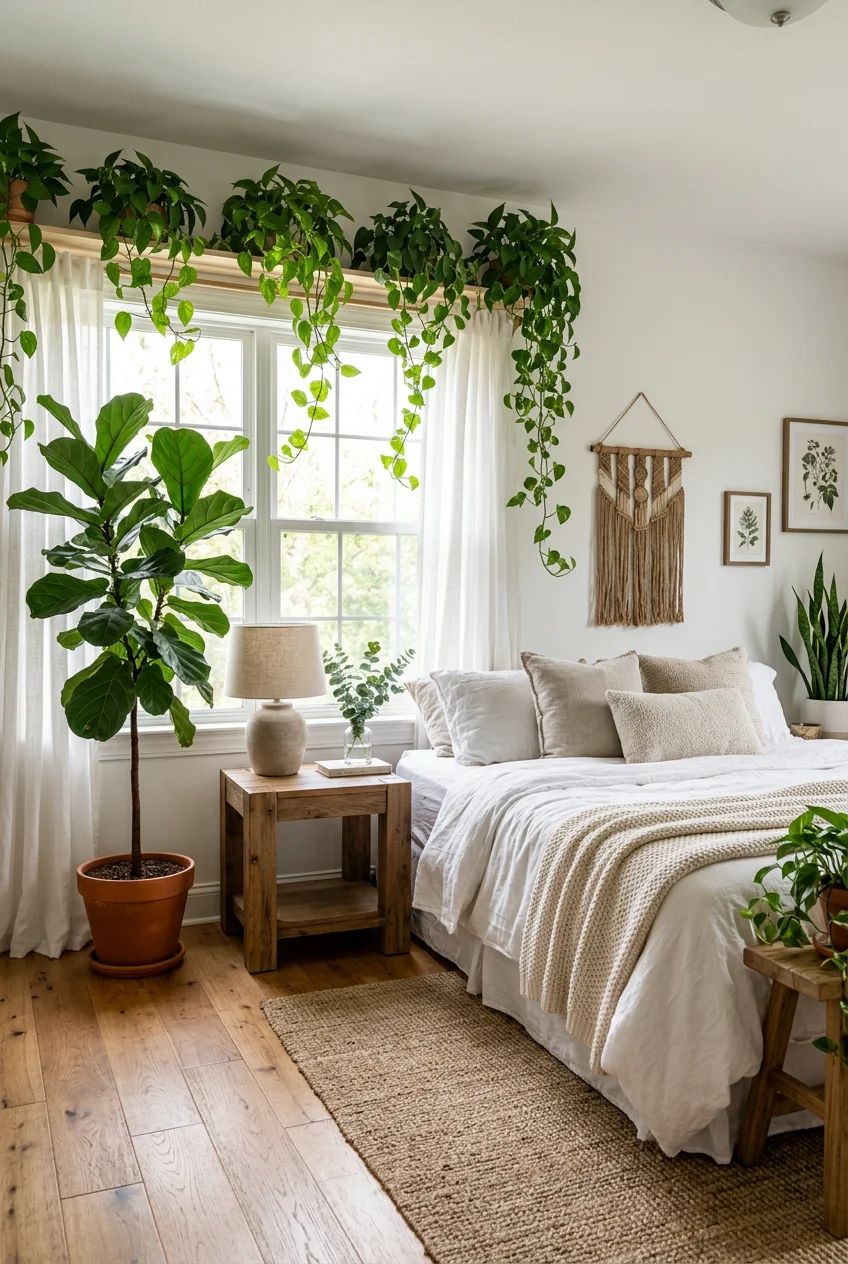
Biophilic design is huge right now, connecting indoor spaces directly to nature. I don’t mean just shoving a plant on a dresser. It’s about layering natural materials like raw wood, thick wool, and breathable linen with your greenery. Last winter, my room felt sterile even with five plants. I fixed it by swapping my synthetic rug for a chunky jute one from Target ($89.99, 5×7 size) and adding a muddy green linen duvet. The earthy palette of ochre and clay grounds those bright greens. When you pair a rough, woven texture with the smooth leaves of a Rubber Plant, the contrast creates a real sanctuary. I learned the hard way that a shiny white ceramic pot on a glass table looks clinical. I place plants on matte wood surfaces instead. This tactile approach changes how the room feels, making the air seem relaxed, like a shaded forest floor.
2. Invest in Sculptural Statement Plants

Stop cluttering your floor with tiny pots you’ll inevitably forget to water. Focus on fewer, larger plants. Architectural forms define a space way better than a chaotic cluster. A mature Fiddle Leaf Fig or Monstera Deliciosa acts as living art, adding height to a dead corner. I bought a massive Monstera from Costco last spring for $59.99. It came in a 10-inch nursery pot and filled the awkward empty space beside my wardrobe perfectly. These large pieces usually run $50 to $200, but the impact is worth it. The broad, split leaves catch the morning light and cast dramatic shadows. I used to buy $4 succulents because they were cheap, but they just looked like clutter. One large, structural plant anchors the room. Just make sure you have the floor space. A 5-foot Fiddle Leaf needs a three-foot radius so the leaves aren’t crushed against the wall.
3. Master the Rule of Three Grouping

If you want multiple plants in one spot, don’t line them up like soldiers. Curate groupings based on similar light and watering needs. The ‘Rule of Three’ is a classic styling trick: arrange plants at three distinct levels—floor, mid-level, and eye or shelf level. This adds depth without looking messy. In my room, I set a 3-foot tall Snake Plant on the floor, placed a medium Peace Lily on a $14.50 wooden stool from Walmart, and put a trailing Golden Pothos on a floating shelf above them. I tried grouping three floor plants together once; it was just a tripping hazard. Grouping plants with identical care needs saves time, too. When I grab my watering can, I know all three prefer their top two inches of soil to dry out before getting soaked.
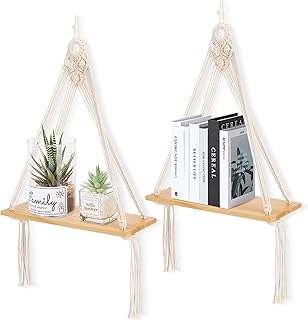
Sunkaioo Macrame Wall Hanging Shelf Set of 2
A dependable everyday pick — Sunkaioo Macrame Wall Hanging Shelf Set of 2 pulls in 305 ratings at 4.5 stars. Not flashy, just solid.
4. Choose Oxygen-Releasing Night Workers

Most plants release carbon dioxide at night, but some do the opposite. If you want better air quality while you sleep, pick plants that perform CAM photosynthesis. They absorb CO2 and release oxygen overnight. Snake Plants and Aloe Vera are excellent, functional choices. I picked up a 6-inch potted Aloe Vera at Trader Joe’s for $7.99 last month. It sits right by my bed. It has thick, serrated leaves that hold water, so I only water it every three weeks. Before I knew about CAM, I kept a massive Boston Fern by my headboard. It dropped dry leaflets everywhere and required constant misting, making my sheets feel damp. Switching to a dry-climate, oxygen-producing plant solved that mess. Plus, if you burn yourself on a curling iron, you’ve got fresh aloe gel two feet away. Trust me.
5. Utilize Low-Light Champions in Dark Corners

Most bedrooms don’t have floor-to-ceiling windows. If your light is limited, you need plants that actually survive the shadows. The ZZ Plant is basically indestructible. It handles low light and inconsistent watering like a champ. I found a 4-inch ZZ Plant at Sprouts for $9.99, and it lives on a bookshelf with almost zero direct sunlight. Its waxy, dark green leaves reflect ambient light, looking healthy even in the gloom. I tried forcing a sun-loving succulent to live on that same shelf two years ago. Within a month, it stretched out, turned pale, and rotted. You can’t negotiate with a plant’s biology. If you have a north-facing window or a blocked corner, skip the fussy tropicals. Buy a ZZ Plant, water it once a month, and let it be.
6. Build a Plant Decor Bedroom with Hanging Greenery

When you run out of floor and shelf space, look to the ceiling. Hanging plants are a great way to grow your collection without losing square footage. I use basic cotton macramé hangers—you can get a three-pack on Amazon for $15.99. I installed heavy-duty ceiling hooks near my east-facing window and clustered three at staggered heights. I put a trailing Pothos in the highest one, an English Ivy in the middle, and a String of Pearls in the lowest. The vines cascade down, creating a lush canopy. I’ll admit, watering them is annoying. I used to stand on a chair and water them in place, which always dripped muddy water onto my rug. Now, I use pots with attached saucers or take them down to water them in the shower. You might also like: 18 Teen Girls Bedroom Ideas You Need to See

Mkono Macrame Hanging Shelves Boho Wall Decor Set of 2
A dependable everyday pick — Mkono Macrame Hanging Shelves Boho Wall Decor Set of 2 Rustic Wood Flo pulls in 21 ratings at 4.5 stars. Not flashy, just solid.
7. Use the Power of Scent with Valerian

Visuals aren’t the only way plants impact a space. If you struggle to wind down, try growing a Valerian plant. Most people know Valerian root as a supplement, but the living plant produces small pink and white flowers with a sweet scent. Inhaling this aroma helps you sleep better. I bought a packet of Valerian seeds at a local nursery for $3.50 and grew them in a 6-inch terracotta pot. It sits on my sunniest windowsill since it needs six hours of direct sun. Right before bed, I rub the leaves between my fingers. The friction releases the plant’s oils. It’s a totally different experience than a synthetic room spray. Just be aware the roots smell pretty pungent if you disturb the soil, so stick to brushing the foliage. You might also like: 20 Small Guest Bedroom You Need to See
8. Avoid the Decorative Pot Overwatering Mistake

The fastest way to kill a bedroom plant is drowning it in a cute, hole-less pot. Overwatering causes root rot, which suffocates the plant. I ruined a $35 Calathea last year by planting it directly into a gorgeous, glazed ceramic bowl. Water pooled at the bottom, the soil turned into a swamp, and the plant collapsed in a week. Now, I never plant directly into decorative containers. I keep my plants in cheap, plastic nursery pots with drainage holes. I buy a stack of ten 6-inch plastic pots at Kroger for $4.99 and drop them inside the decorative outer pot. When it’s time to water, I pull the plastic pot out, soak it in the sink, and let it drain completely. Always let the top two inches of soil dry out. Stick your finger in the dirt; don’t guess. You might also like: 18 DIY Bedroom Decor Worth Trying
9. Match Light Reality, Not Pinterest Aesthetics

It’s tempting to put a Fiddle Leaf Fig in a dark corner because it looks perfect there. Don’t do it. A healthy plant will always look better than a dying one in a ‘perfect’ spot. You have to match the plant to the actual light, not your mood board. ‘Low-light tolerant’ isn’t the same as ‘no light required.’ I used to guess how much light a corner got, but human eyes are terrible at measuring intensity. I finally downloaded a light meter app. I use Photone (the basic version is free, though I paid $5.99 for the LED add-on). My phone read a dismal 20 foot-candles in my corner. Ferns need at least 100. I had to pivot and use a cast-iron plant instead. Prioritizing biological needs over decor saves money and prevents frustration.

Mkono Macrame Wall Hanging Shelf 3 Tier Wood Floating
If you want something that just works, Mkono Macrame Wall Hanging Shelf 3 Tier Wood Floating Shelves with Cut is a safe bet (336 reviews, 4.5 stars).
10. Don’t Neglect Dusting Your Foliage

Dust is the silent killer of indoor plant aesthetics. Whether your plants are real or fake, a layer of grey dust makes them look dull. Real plants actually suffer physically because dust blocks their pores, reducing photosynthesis. I spend ten minutes every Sunday wiping down my broad-leaf plants. I use a damp microfiber cloth (a 12-pack is $11.99 at Target) and gently support the underside of the leaf while wiping the top. For my artificial plants, a cloth isn’t enough. Every three months, I take my faux olive tree outside and spray it down with water and a few drops of Dawn dish soap. Before I started this, my faux plants looked dated and cheap. Keeping leaves glossy maintains the illusion of life and keeps your bedroom looking crisp.
11. Soften the Room with Feng Shui Principles

You don’t have to believe in energy flow to appreciate the visual impact of Feng Shui. It prefers plants with soft, rounded leaves over spiky or thorny ones. Rounded leaves promote calming Yin energy, while sharp points create harsh, aggressive energy. I used to keep a large, spiky Yucca plant right next to my bedside table. Every time I reached for my phone in the dark, I’d get stabbed by a rigid leaf. It was visually aggressive and physically annoying. I swapped it for a Jade Plant. I found a beautiful, mature Jade in an 8-inch pot at Whole Foods for $24.99. Its thick, coin-shaped leaves symbolize growth, and the rounded silhouette softened the hard angles of my nightstand. Save the cacti for your office; keep bedroom foliage smooth and safe to brush against.
12. Integrate Discreet Grow Lights for Health

Most bedrooms lack the 10 to 12 hours of natural light plants need to thrive. If your windows are small or face north, your plants are likely just surviving, not growing. A smart trick is integrating a full-spectrum grow light into your decor. I refuse to use those cheap, purple-tinted clamp lights that make a room look like a dorm. I invested in a Soltech Aspect pendant light. It costs $149.99 for the small version—not cheap—but it looks like a sleek, modern, matte-black pendant lamp. It emits a warm white light that acts as a standard room lamp while outputting the exact spectrum plants need. I hung it above a cluster of Philodendrons. It provides necessary illumination without ruining the aesthetic. If you’re spending money on houseplants, keeping them alive is a logical investment.

Macrame Wall Hanging Shelf
A dependable everyday pick — Macrame Wall Hanging Shelf – Boho Shelves Bedroom Decor | Macrame Wall pulls in 275 ratings at 4.5 stars. Not flashy, just solid.
13. Ground Your Space with Natural Planters

The container is just as important as the plant. To keep things grounded, complement your greenery with planters made from natural, earthy materials. Flimsy plastic nursery pots are fine for the inside, but the outer sleeve needs texture. Woven seagrass baskets, raw terracotta, and unglazed ceramic in neutral tones like sage green or natural stone are trending for a reason. I bought a set of three woven belly baskets on Amazon for $22.50. I lined the bottoms with plastic saucers and dropped my potted ferns inside. The tan color of the dried seagrass makes the green fronds pop. I used to buy cheap, glossy teal plastic pots, thinking they added color. In reality, they distracted from the foliage and looked childish. Sticking to earthy textures lets the plant shapes remain the focal point.
14. Rotate Your Plants 90 Degrees Weekly

Plants naturally reach for the light. If you leave a plant in the same position for months, it’ll grow lopsided, leaning toward the window while the back loses its leaves. To keep your decor fresh and ensure even growth, rotate your pots. I rotate every plant in my bedroom 90 degrees clockwise every Sunday during my watering routine. It takes thirty seconds, but it forces the plant to distribute energy evenly. You also need to account for seasonal light shifts. Last November, I noticed my Ficus Audrey was dropping leaves. The winter sun wasn’t reaching its spot anymore. I had to physically drag its heavy 12-inch pot three feet closer to the south-facing window. I bought a $15.99 rolling plant caddy from Home Depot to make this easier.
15. Introduce Moody Foliage for Visual Contrast

An all-green room can quickly turn into a flat jungle. To add sophistication, introduce plants with bold, dark color palettes and unexpected textures. I look for varieties with deep burgundy, purple, or silver-toned leaves. A Calathea Makoyana, or Peacock Plant, is perfect for this. I picked up a 6-inch pot at a boutique shop for $28.00. The leaves are pale green with dark brushstrokes on top, but the undersides are a striking, deep purple. When the light hits it, the room gets a subtle injection of moody color. I used to only buy bright, lime-green tropicals, but they all blended together. Placing a dark burgundy Rubber Plant next to a bright green Pothos creates necessary contrast. The dark foliage breaks up the monotony and makes the lighter plants look even brighter.

ANROYE 2 Tier Macrame Boho Wall Hanging Shelf
ANROYE 2 Tier Macrame Boho Wall Hanging Shelf has been one of the most consistently praised picks in this category. 351 reviewers averaged 4.5/5.
16. Propagate Cuttings in Glass on Your Nightstand

You don’t always need massive pots to make an impact. Water propagation is a beautiful way to add delicate touches of greenery to small surfaces. I take cuttings from my larger Pothos and root them in water. Instead of ugly plastic cups, I use clear glass vessels. I bought a set of four simple, cylindrical glass vases at Walmart for $11.94. I fill them with tap water—let it sit for 24 hours first so the chlorine evaporates—and drop a single cutting into each. I line them up on my nightstand. The clear glass lets you watch the white roots slowly spiral and grow. I made the mistake of using colored glass once, but the water got murky and algae grew before I noticed. Clear glass forces you to see when the water gets cloudy so you can change it weekly.
17. Trail Vines Across Your Bedroom Bookshelves

Bedroom bookshelves often end up looking blocky and rigid, stuffed with square spines and heavy boxes. Adding trailing vines is the easiest way to break up those hard horizontal lines. I use Heartleaf Philodendrons because they grow fast and drape beautifully. I bought an 8-inch hanging basket of Philodendron from Sprouts for $16.99. I removed the plastic hanger, placed the pot on the top shelf, and gently wove the long vines down through my books. You have to be careful not to pinch the stems under heavy objects. I once crushed a main vine under a heavy hardcover book, and the entire lower half of the plant yellowed and died. Now, I use small, clear command hooks ($4.50 for a pack) attached to the back of the shelf to guide the vines exactly where I want them.
18. Select Pet-Safe Foliage for Peace of Mind

If you have a cat or dog, your plant choices carry serious consequences. Many popular houseplants, including Monsteras, Pothos, and Snake Plants, are toxic to pets. I learned this during a stressful midnight vet visit after my cat gnawed on a Dieffenbachia leaf. The vet bill was $250, and I immediately tossed the plant. No exaggeration. Now, I strictly vet every plant that enters my bedroom. Peperomias are my go-to safe option. They’re non-toxic and come in dozens of textures. I recently bought a Watermelon Peperomia in a 4-inch pot from Trader Joe’s for $6.99. It has silver and green striped leaves that look like tiny watermelons. Even if a plant is safe, a cat digging in the dirt makes a mess. I cover the topsoil of my floor plants with heavy river rocks to stop the digging.
Creating a plant decor bedroom isn’t about buying a dozen random pots and hoping for the best. It’s about matching the right foliage to your specific light and styling them intentionally. I’ve killed my fair share of expensive ferns, but these methods changed everything. If you found these tips helpful, pin this article to your bedroom styling board so you can reference the light and watering rules later.
Frequently Asked Questions
What plants release oxygen at night for better sleep?
Plants that perform CAM photosynthesis, like the Snake Plant and Aloe Vera, absorb carbon dioxide and release oxygen overnight. This makes them highly functional choices for improving bedroom air quality while you sleep.
How do I keep plants alive in a dark bedroom?
You can’t force sun-loving plants to survive in the dark. Opt for low-light champions like the ZZ Plant or Golden Pothos. Alternatively, install a full-spectrum pendant grow light to provide the necessary 10-12 hours of illumination.
Should I plant directly into decorative pots?
No, this is a common mistake that causes root rot. Always keep your plant in a cheap plastic nursery pot with drainage holes, and simply drop that plastic pot into your decorative outer container.
How often should I rotate my bedroom plants?
You need to rotate your pots 90 degrees clockwise every week. Plants naturally reach for their light source, and weekly rotation ensures even, upright growth instead of lopsided, leaning stems.
