What’s Inside
- Master the 2/3 Sizing Rule for Bedroom Decor Paintings
- Nail the 6-to-12 Inch Vertical Gap
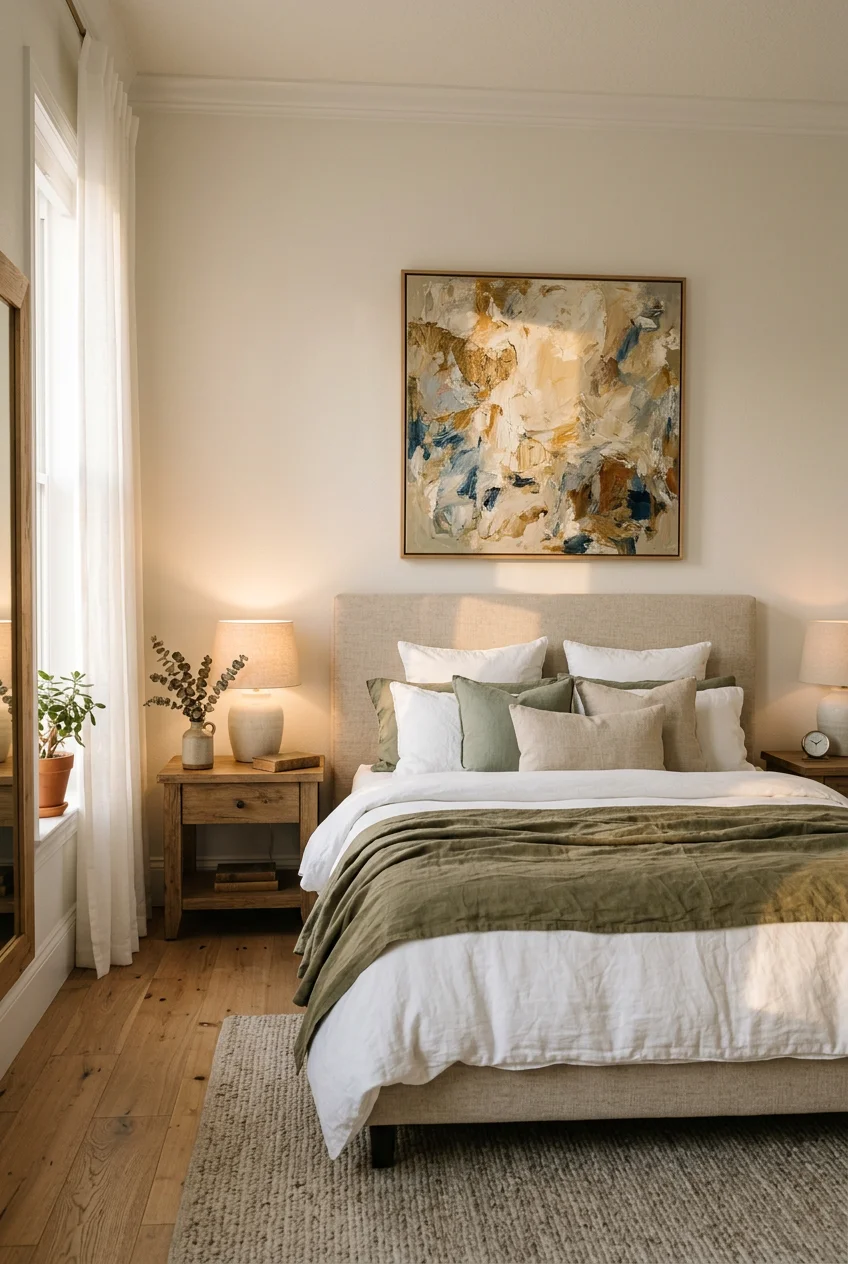
- Commit to One Massive Oversized Canvas
- Ditch the Heavy Glass for Gallery-Wrapped Canvas
- Stick to a Calming, Muted Color Palette
- Swap Paint for Woven Textile Art
- Map Out Gallery Walls on the Floor First
- Upgrade to Solid Wood or Metal Frames
- Embrace Thick, Vintage-Inspired Frames
- Hunt for Original Art on Etsy
- Use Curated Retailers for Foolproof Pairings
- Leave Some Walls Completely Bare
- Lean Your Art Instead of Hanging It
- Blend Bedroom Decor Paintings with Functional Mirrors
- Turn Personal Photos into Custom Art
- Mix Frame Finishes for a Collected Look
- Source Budget-Friendly Digital Downloads
- Anchor Floating Shelves with Layered Art
- Match Art Scale to the Room’s Ceiling Height
Most folks hang their bedroom art way too high, leaving the room feeling like a sterile waiting area. It’s the most common design trap out there. You spend hours picking the perfect piece, only to float it near the ceiling where it loses all connection to the bed. If you only try one idea from this list, make it #3. Here’s why: a single, oversized canvas anchors a room immediately, skips all the complex gallery-wall math, and makes a basic bed setup look custom.
Skip this guide if you live in a strict dorm where you can’t use anything stronger than sticky putty, or if your bedroom walls are heavily textured plaster that rejects nails and adhesive. These strategies require a bit of commitment, proper hardware, or at least a solid surface to lean heavy frames against.
1. Master the 2/3 Sizing Rule for Bedroom Decor Paintings

When hanging art above your headboard, the math matters more than the motif. A tiny 8×10 frame floating alone above a massive king mattress looks ridiculous. You need the artwork’s total width to span roughly two-thirds of your bed’s width. That’s 60 to 80 percent of the visual space. Above a standard 60-inch wide queen bed, your art setup should hit between 34 and 45 inches wide. For an 80-inch wide king bed, aim for a span between 40 and 64 inches. This keeps the art from looking disconnected from the furniture. You can do this with one large piece or a series of three smaller frames spaced a few inches apart. Don’t eyeball this. Grab a measuring tape and mark the dimensions with painter’s tape first. If you need cheap filler frames to hit that width, you can grab basic sets at Target or Walmart for a budget-friendly price. The catch: finding a single piece that hits that 45-inch or 64-inch sweet spot is tough and often requires custom framing.
Best for: beginners who need a foolproof mathematical formula.
2. Nail the 6-to-12 Inch Vertical Gap

Height placement ruins more bedrooms than bad color choices. You want the bottom edge of your art exactly 6 to 12 inches above the headboard. This creates a cohesive unit with your bed. When you hang art higher than 12 inches, it stops relating to the bed and starts floating awkwardly on the drywall. It looks like it belongs to the ceiling, not the sleeping area. If you don’t have a headboard, measure 6 to 12 inches above the top of your propped-up pillows. This lower placement grounds the room and makes the ceiling feel higher. Most people hang these way too high and wonder why the room feels off. The catch: if you have a massive, oversized headboard that eats up most of the wall, squeezing art into a 6-inch gap makes the wall look cramped and top-heavy.
3. Commit to One Massive Oversized Canvas

A major trend for 2026 is ditching cluttered gallery walls for a single, large-scale piece above the bed. It creates a powerful focal point. Consider a horizontal canvas that stretches nearly the full width of your bed. A 48 by 30 inch or a 60 by 24 inch canvas works perfectly for a king bed. It needs only one or two heavy-duty nails and makes an immediate statement. The visual impact of one giant abstract landscape or moody charcoal sketch brings a boutique hotel vibe to a basic room without feeling busy. The catch: oversized art comes with oversized shipping fees, and getting a 60-inch canvas up a narrow apartment stairwell is a total nightmare.
Best for: minimalists who hate dusting multiple picture frames.

Bedsure GentleSoft White Throw Blanket for Couch
Bedsure GentleSoft White Throw Blanket for Couch – Cozy Soft Fleece Su punches above its price — 24 buyers rated it 4.5 stars. The kind of pick people reorder.
4. Ditch the Heavy Glass for Gallery-Wrapped Canvas

Hanging heavy glass directly over your face while you sleep is a bad idea. For safety and a softer look, choose gallery-wrapped canvas prints instead of traditional glass-pane frames. Glass is heavy, catches harsh glare from lamps, and poses a risk of shattering during a door slam or minor tremor. Canvas prints are lighter and absorb light rather than reflecting it, which keeps the room feeling soft. Brands like Itz Art produce excellent canvas options often made with non-toxic, water-based latex inks, which is exactly what you want near your pillows. The rough texture of raw canvas also adds a nice tactile element to flat drywall. The catch: canvas lacks the polished, expensive gleam of a crisp white mat and glass, sometimes making it look a bit casual.
5. Stick to a Calming, Muted Color Palette

Your bedroom is for sleeping, not a neon rave. Select artwork with soft, neutral tones like warm beige, pale pastels, muted grays, or earthy colors such as terracotta and sage green. These hues help lower your heart rate. Brands like Minted offer massive selections of art prints in these schemes, and you can often customize the colorways to match your duvet. Skip the high-contrast black-and-white photography or aggressive primary colors right above the bed. They command too much attention and stimulate the brain when you’re trying to wind down. The catch: an entirely beige-on-beige room quickly crosses the line from calming to boring if you don’t vary your textures. You might also like: 17 Small Guest Bedroom Ideas That Actually Work
6. Swap Paint for Woven Textile Art

Integrate woven fabric wall hangings or macramé for a softer approach. This is a massive 2026 trend. Fabric pieces in earthy tones instantly soften a room and add interest without the hard, rigid lines of square frames. The texture of thick wool, raw cotton, or woven jute brings physical warmth to cold, flat walls. You can find incredible, large-scale woven pieces that span 40 inches wide, perfectly satisfying the 2/3 sizing rule over a queen bed. It breaks up the monotony of standard prints and adds a bohemian, relaxed edge. The catch: woven textiles are dust magnets and require regular vacuuming with an upholstery attachment, making them annoying for allergy sufferers. You might also like: 20 Aesthetic Girly Bedroom You Need to See

YUFLINX 16’’White Floating Shelves for Wall Set of 4
YUFLINX 16’’White Floating Shelves for Wall Set of 4 is sturdier in person than the photos suggest — over 658 buyers gave it 4.5 stars.
7. Map Out Gallery Walls on the Floor First

If you insist on multiple pieces, you must plan your layout on the floor first. Never start hammering nails and hoping for the best. Clear a space on your rug, lay out your frames, and play with the arrangement until it feels balanced. Maintain consistent spacing of 2 to 5 inches between each frame. Any closer, and it looks cluttered. Any further apart, and the pieces lose their connection. Mix different sizes and orientations, but force a unifying element like a consistent color palette or an identical frame style to keep it from looking like a thrift store explosion. The catch: measuring and transferring a floor layout to a vertical wall requires intense precision, a level, and a lot of patience. You might also like: 15 Cozy Bedroom Accessories Ideas You’ll Love
8. Upgrade to Solid Wood or Metal Frames

Skip the cheap, flimsy plastic frames that warp after a year. Choose frames made from solid wood or metal. Natural wood frames, like raw pine or warm walnut, offer versatility and bring an organic smell and texture into the room. Matte black or crisp white metal frames suit modern, clean-lined styles perfectly. If your bedroom gets a lot of natural sunlight, you must prioritize frames with UV-resistant glazing to protect your artwork from fading. You can often grab a basic, decent-quality frame in the home goods aisle for a budget to mid-range price. The catch: solid wood frames are heavy, requiring proper drywall anchors instead of simple picture-hanging hooks.
9. Embrace Thick, Vintage-Inspired Frames

Move away from delicate, minimalist frames and embrace thicker, sometimes matted, vintage-style ones. These chunky, ornate borders add instant character and depth, especially in rooms with richer textures or busier wallpapers. It’s a significant design shift for 2026. A heavy, carved wood frame makes even a cheap digital download look like an expensive heirloom. You can often find these at antique stores, or you can buy modern reproductions that mimic the look without the musty smell. The catch: thick frames eat up a lot of wall real estate, meaning the actual artwork inside needs to be smaller to fit the overall footprint.
Best for: historic homes or traditional, moody bedroom designs.

Tenmiro Led Lights for Bedroom 100ft (2 Rolls of 50ft)
Tenmiro Led Lights for Bedroom 100ft (2 Rolls of 50ft) Music Sync Colo has been one of the most consistently praised picks in this category. 786 reviewers averaged 4.5/5.
10. Hunt for Original Art on Etsy

For unique pieces, dig into Etsy for original paintings and handmade artwork. You can find diverse styles, from aggressive abstract bursts of color to quiet, detailed wildlife sketches. Buying original art means you won’t walk into a friend’s house and see the exact same mass-produced print hanging over their bed. Prices vary wildly, from budget-friendly small sketches to mid-range large canvases, allowing you to find a true one-of-a-kind statement piece that fits your budget. The catch: sifting through the millions of listings on Etsy takes hours of dedicated scrolling to find high-quality pieces hidden among the junk.
11. Use Curated Retailers for Foolproof Pairings

If scrolling through thousands of independent artists overwhelms you, utilize online art retailers for curated collections. Brands like Artfully Walls offer pre-designed gallery walls and fine art prints that are already styled to look good together. This makes it easy to find pieces that complement your decor and create a serene ambiance without second-guessing your design skills. For example, their Dahlia Field by Christine Chitnis print typically ranges from $64 to $96 depending on the size and framing options. The catch: curated retailers charge a premium for doing the styling work, making this a pricier route than sourcing individual pieces yourself.
Best for: busy professionals who want a styled look without the effort.
12. Leave Some Walls Completely Bare

Don’t feel compelled to hang a canvas on every single blank wall. An uncluttered, relaxing sanctuary requires empty space to let the eye rest. If you have a massive piece of art over the bed, leave the wall opposite the bed completely bare. This prevents the room from overstimulating your senses when you’re trying to sleep. Blank drywall acts as a palate cleanser between your furniture and your decor. The catch: bare walls offer zero hiding spots for bad paint jobs, drywall seams, or random scuff marks.

upsimples Floating Shelves for Wall
A dependable everyday pick — upsimples Floating Shelves for Wall pulls in 47 ratings at 4.5 stars. Not flashy, just solid.
13. Lean Your Art Instead of Hanging It

Break traditional hanging rules by propping, leaning, or even stacking artwork on shelves, dressers, or a sturdy headboard ledge. This creates a relaxed, unstructured feel that looks effortlessly stylish. It also offers the ultimate flexibility to rearrange pieces as your style evolves or your mood changes. Pair a large leaning canvas with a small $6 eucalyptus bundle from Trader Joe’s in a ceramic vase for a perfectly styled dresser top. The catch: leaning art is highly susceptible to getting knocked over by pets, slamming doors, or clumsy hands reaching for a light switch in the dark.
Best for: renters who are strictly forbidden from drilling holes in the walls.
14. Blend Bedroom Decor Paintings with Functional Mirrors

Consider artwork that serves a dual purpose. Decorative mirrors with ornate, artistic frames act as functional art. A beautifully framed mirror reflects light, making small bedrooms feel significantly more spacious, while the frame itself provides the decorative impact of a painting. You can mix a large mirror into a gallery wall or lean it against the wall next to a large canvas. The catch: mirrors reflect exactly what is opposite them, so if your room is messy, you just doubled the visual clutter.
15. Turn Personal Photos into Custom Art

Transform cherished memories into high-quality prints. Minted offers custom art options that allow you to turn favorite photographs into personalized wall art. They offer cool silhouette styles, standard prints, foil-pressed details, or letterpress printing. This deeply personalizes your space and tells your unique story without looking like a messy corkboard of snapshots. The catch: you need high-resolution, professionally lit photos for this to look good; a blurry cell phone picture blown up to 16×20 inches looks terrible.

Govee RGBIC LED Strip Lights, Smart LED Lights for Bedroom
If you want something that just works, Govee RGBIC LED Strip Lights is a safe bet (251 reviews, 4.5 stars).
16. Mix Frame Finishes for a Collected Look

Stop buying matching sets of black frames. A room looks much more expensive and collected over time when you mix frame finishes. Try pairing a warm brass frame with a raw oak frame and a matte black frame. This prevents the wall from looking like a cheap display aisle at a big-box store. You can easily pick up a variety of finishes while grocery shopping at places like Kroger or Sprouts, which often have surprisingly decent seasonal home sections, or grab basics at Target. The catch: mixing finishes requires a careful eye; too many different metals and woods in one small space looks chaotic and accidental rather than curated.
17. Source Budget-Friendly Digital Downloads

You don’t need to spend hundreds on prints. Buy high-resolution digital downloads from independent artists online for a few dollars. Then, send the files to a local printer or the Costco photo center for high-quality, large-scale printing on matte paper. This is the cheapest way to get massive art pieces for a fraction of the retail cost. You can swap the prints out seasonally without feeling guilty about the cost. The catch: you still have to source, purchase, and assemble the frame yourself, which often ends up costing more than the print.
Best for: tight budgets and frequent decorators.
18. Anchor Floating Shelves with Layered Art

Install a simple floating shelf above your bed or dresser and use it strictly for layered art. Place a large 16×20 inch frame in the back, and overlap it slightly with a smaller 8×10 inch frame in the front. This creates a deep, three-dimensional look that flat wall hanging can’t achieve. You can mix in small potted plants or candles from Whole Foods to break up the hard edges of the frames. The catch: floating shelves require heavy-duty drywall anchors and precise leveling, or everything will slowly slide off the edge.
19. Match Art Scale to the Room’s Ceiling Height

Your ceiling height dictates your art orientation. If you have low, 8-foot ceilings, lean heavily into vertically oriented bedroom decor paintings. Tall, narrow art draws the eye upward, faking the illusion of height. Conversely, if you have soaring 10-foot ceilings, horizontal pieces help ground the space and keep it from feeling like a cavern. The catch: a tall, vertical piece hung alone above a wide king bed looks unbalanced and weirdly skinny; you have to group vertical pieces together to satisfy the 2/3 width rule.
How we chose these ideas: we evaluated these styling methods based on strict renter-friendliness, overall cost flexibility, and immediate visual impact. The focus remained on accessible materials and achievable layouts rather than high-end custom gallery installations.
Nailing your bedroom art setup doesn’t require an interior design degree, just a measuring tape and a bit of restraint. Stop floating tiny frames near the ceiling and start treating your art like it actually belongs with your furniture. Pin these layout rules for your next weekend project, and save this guide before you accidentally buy another frame that’s entirely the wrong size.
Frequently Asked Questions
How wide should bedroom decor paintings be above a bed?
Artwork should span roughly two-thirds (60-80%) of the bed’s width. For a 60-inch queen bed, aim for 34 to 45 inches of total art width. For an 80-inch king bed, look for pieces between 40 and 64 inches wide.
How high above the headboard should I hang art?
Hang the bottom edge of your frame exactly 6 to 12 inches above the top of your headboard. This keeps the artwork visually connected to the bed rather than floating awkwardly near the ceiling.
Is it safe to hang heavy glass frames over a bed?
It’s generally safer to avoid heavy glass directly over where you sleep. Opt for gallery-wrapped canvas prints or lightweight acrylic glazing instead to eliminate the risk of shattering during an earthquake or a slammed door.
What are the best colors for bedroom wall art?
Stick to calming, muted tones like warm beige, terracotta, pale pastels, and sage green. Avoid high-contrast black-and-white or aggressive primary colors, as they stimulate the brain and make it harder to wind down at night.
