What’s Inside
- Paint the Ceiling a Warm Neutral
- Opt for Low-Profile Storage Beds
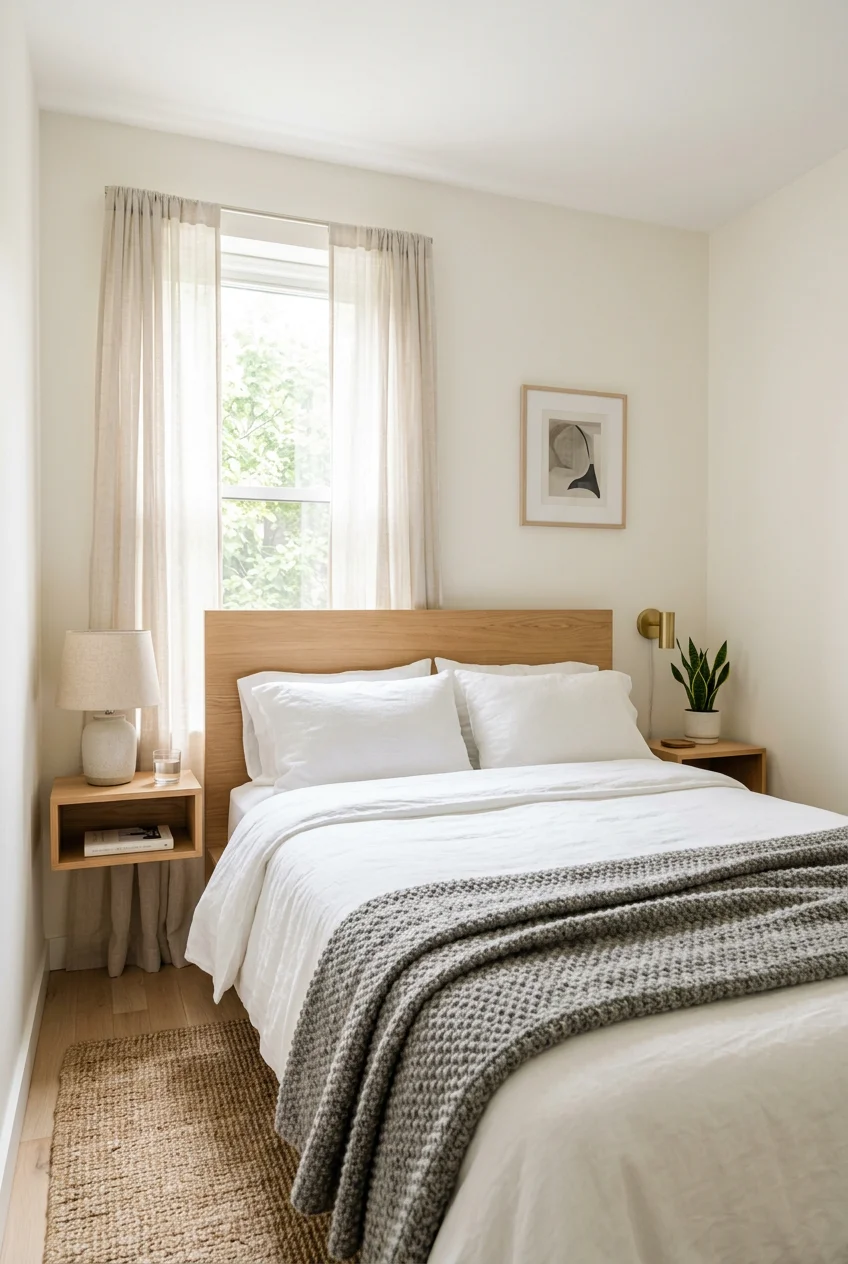
- Install Floating Nightstands
- Layer Hardwired Wall Lighting
- Maximize Vertical Pegboard Systems
- Choose Slim, Vertical Dressers
- Position Mirrors Strategically
- Layer Natural Textiles
- Swap Drapes for Roman Blinds
- Use Multifunctional End-of-Bed Seating
- Stick to Low-Contrast Color Schemes
- Try a Dark Accent Wall Behind the Bed
- Curate Displays for Softer Minimalism
- Loft the Bed for Ultimate Space Saving
- Install Sliding Closet Doors
- Anchor with an Oversized Area Rug
- Use Clear Acrylic Furniture Accents
- Cut Between-the-Studs Wall Niches
Most people shove a massive, dark wood bed frame into a 10×10 room and wonder why their shins are permanently bruised. Decorating a tiny sleeping space is a headache. Finding small bedroom ideas that actually work takes ruthless editing and a few visual tricks. You can’t just shrink regular furniture and hope for the best. Every piece has to justify the floor space it consumes. If you only try one idea from this list, make it #2. A low-profile storage bed reclaims dead floor space while tricking the eye into thinking your ceiling is a foot higher than it is. Trust me.
Skip this list if your bedroom is larger than 12×12 feet or if you have a massive walk-in closet. These strategies are for tight quarters, awkward apartment layouts, and spaces where every square inch has to earn its keep.
1. Paint the Ceiling a Warm Neutral

Ditch the hospital white. Warm minimalism is taking over, shifting toward creamy whites, sandy beiges, and muted olives. Benjamin Moore’s White Dove OC-17 (usually $50-$80 a gallon) is a solid pick. It has subtle yellow and gray undertones that brighten a room without feeling like a sterile clinic. A common mistake is leaving the ceiling flat white while painting the walls. Paint your ceiling the exact same warm neutral as your walls. This blurs the boundary lines where the wall ends and the ceiling begins, making the room look taller. Eliminating that harsh contrast line expands the footprint. The catch: dark rooms with no natural light look murky with warm whites, so you’ll need good LED lighting to keep the paint from looking dingy.
2. Opt for Low-Profile Storage Beds

Bulky bed frames are the enemy. They eat up visual space and physical square footage. A low-slung platform bed is the fix. It drops the weight of the room, making standard 8-foot ceilings feel much higher. West Elm’s Pivot Storage Bed Frame (around $1,300 to $1,600) packs massive drawers into a sleek profile. Keep the frame and mattress under 60 cm for the best effect. You get the storage of a dresser without losing extra floor space. Best for: Rooms with no closet space. The catch: low beds are a pain to get out of if you have bad knees or back problems.
3. Install Floating Nightstands

Floor space is your most valuable currency. Traditional bedside tables waste it. Floating nightstands clear the floor, which tricks your brain into seeing more room. The Urbansize Floating Bedside Drawer on Etsy runs around $120 to $140 and holds a phone, a 4 oz glass of water, and a book. If you’re on a budget, a basic floating shelf from Target (under $20) does the job. Keeping the floor clear makes vacuuming easier, too. The catch: you can’t hide clutter in a tiny floating drawer, so you have to keep your bedside tidy.

Bedsure GentleSoft White Throw Blanket for Couch
A dependable everyday pick — Bedsure GentleSoft White Throw Blanket for Couch – Cozy Soft Fleece Su pulls in 24 ratings at 4.5 stars. Not flashy, just solid.
4. Layer Hardwired Wall Lighting

Relying on that single dome light creates harsh shadows that shrink the room. You need layers. Install wall sconces on both sides of the bed. The hard-wired swing-arm lamp from onefortythree (around $90-$110) frees up your nightstand. Use warm white LED bulbs in the 2200-2700K range. Anything cooler looks like a dentist’s office. Layering light adds depth and makes the room feel larger. Best for: A permanent, high-end hotel look. The catch: hardwiring requires an electrician, adding a hidden labor cost to your budget.
5. Maximize Vertical Pegboard Systems

When floor space runs out, go up. Vertical storage is non-negotiable. The IKEA SKÅDIS pegboard system (usually $15-$50) is modular. Mount it next to the bed to hold glasses, a 6-inch charging cable, and a small light. It acts as a zero-footprint nightstand. Most people just hang art, but functional wall storage makes a tiny room livable. You can move hooks and trays exactly where you need them. The catch: pegboards can look like a messy workshop if you don’t keep the items organized.
6. Choose Slim, Vertical Dressers

Wide, low dressers are space hogs. You need a narrow, tall dresser that stays under 30 inches wide. Wayfair and Pottery Barn carry slim lingerie chests that work for clothing in tight spots. A standard 5-drawer tallboy gives you the same storage as a wide dresser but takes up half the wall. This leaves room for a chair or just empty space to let the room breathe. The catch: tall dressers are a tipping hazard. You must anchor them to wall studs, which is a hassle if you have crumbling plaster. I learned that the hard way.

QEEIG Floating Shelves for Wall Bathroom Shelf Bedroom
QEEIG Floating Shelves for Wall Bathroom Shelf Bedroom Kitchen Living punches above its price — 46 buyers rated it 4.5 stars. The kind of pick people reorder.
7. Position Mirrors Strategically

Slapping a mirror on a dark wall does nothing. To amplify light, put a large mirror directly opposite your window. This bounces natural light back and reflects the view, acting like a fake second window. A cheap 60×20 inch full-length mirror from Walmart (under $30) leaning against the wall draws the eye upward. It’s an easy optical trick. The catch: if your window faces a brick wall or a messy yard, you’re just duplicating a bad view. You might also like: 17 Small Room Ideas Bedroom for Every Budget
8. Layer Natural Textiles

Small spaces feel sterile when you strip away furniture. Add warmth through textures. Mix a chunky knit cotton throw over linen sheets. Natural materials like light oak, rattan, and stone keep the room feeling soft. Avoid high-gloss synthetics that look cheap under artificial light. Heavy textures absorb sound, too, helping a tiny room feel cozy instead of echoey. Best for: Cold, north-facing rooms. The catch: high-quality linen and wool cost more than polyester blends and require careful washing.
9. Swap Drapes for Roman Blinds

Thick, puddle-length curtains swallow small rooms. They intrude on the floor plan and block corners. Roman blinds are the smarter alternative. They sit flush inside the window frame for a clean look without eating up floor space. If you insist on drapes, hang ultra-lightweight fabric from the very top of the ceiling to the floor to fake a taller wall. The catch: custom Roman blinds are pricey, and cheap versions rarely fit apartment windows perfectly. You might also like: 20 Farmhouse Bedroom Decor You Need to See

YUFLINX 16’’White Floating Shelves for Wall Set of 4
A dependable everyday pick — YUFLINX 16’’White Floating Shelves for Wall Set of 4 pulls in 658 ratings at 4.5 stars. Not flashy, just solid.
10. Use Multifunctional End-of-Bed Seating

Every piece of furniture in a small room must do two jobs. A bench at the foot of the bed is useless unless it opens. The Catania Bouclé Storage Bench (roughly $300-$400) gives you a seat for putting on shoes plus a hidden compartment for sweaters or extra blankets. It caps the bed beautifully while hiding bulky items. The catch: you need at least 36 inches of clearance between the bed and the wall to use a storage bench, which many tiny rooms don’t have. You might also like: 17 Cozy Farmhouse Bedroom Ideas That Actually Work
11. Stick to Low-Contrast Color Schemes

High-contrast paint and busy patterns chop a small room into tiny, chaotic pieces. Keep your wall color, trim, and large furniture in the same tonal family. If you have sandy walls, stick to light oak or ash furniture. Avoid dark mahogany or espresso; dark furniture acts like a black hole in a tight space. Blending the tones makes the edges of the furniture disappear. The catch: monochromatic rooms can get boring. You have to use varied textures to keep the space from looking flat.
12. Try a Dark Accent Wall Behind the Bed

Yes, light colors make rooms feel bigger. But painting the wall behind your bed a moody color creates a deep optical illusion. It makes that wall recede, adding depth. Sherwin-Williams’ Raisin or Benjamin Moore’s Silhouette AF-655 turns the bed area into a focal point. It anchors the room without shrinking the footprint. Best for: Bedrooms used strictly for sleeping, where a cocoon vibe is the goal. The catch: dark paint needs three coats, and priming over it when you move out is a headache.

JARLINK Over The Door Organizer Storage
JARLINK Over The Door Organizer Storage punches above its price — 46 buyers rated it 4.5 stars. The kind of pick people reorder.
13. Curate Displays for Softer Minimalism

Clutter is magnified in a small bedroom. The current trend of softer minimalism means keeping surfaces clear but showing off a few high-impact pieces. Ditch the gallery wall of 15 tiny frames. Hang one large piece instead. Use the Wooden Circle Wall Shelf from Urban Outfitters (around $100-$140) to display exactly three items: a plant, a 6 oz candle, and a clock. Give your objects room to breathe. The catch: maintaining this look takes daily discipline. One sweatshirt on a chair ruins the aesthetic.
14. Loft the Bed for Ultimate Space Saving

If your room is under 100 square feet, a standard bed kills the layout. Lofting the bed reclaims the footprint underneath. You can fit a desk, a chair, or a row of dressers under your mattress. The IKEA VITVAL loft bed (under $300) gives you a new functional zone. It essentially doubles your usable space. The catch: climbing a ladder at 3 AM gets old, and loft beds make changing sheets a nightmare.
15. Install Sliding Closet Doors

Standard swinging doors require a massive radius of empty floor space just to open. In a tight bedroom, that dead zone is unacceptable. Swap your closet doors for sliding bypass doors or a pocket door if you’re renovating. It improves traffic flow and lets you place furniture closer to the closet. Best for: Awkward, narrow layouts where the foot of the bed touches the closet. The catch: sliding bypass doors mean you can only access half your wardrobe at a time.

Amazon Basics Bedroom Closet Organizer with 5-Fabric
If you want something that just works, Amazon Basics Bedroom Closet Organizer with 5-Fabric Storage Drawers f is a safe bet (41 reviews, 4.5 stars).
16. Anchor with an Oversized Area Rug

Most people buy a tiny 5×7 rug, shove it at the foot of the bed, and call it a day. This chops the floor in half and makes the room look puny. You need an 8×10 rug. Slip it two-thirds of the way under the bed so it extends on the sides and the foot. This anchors the room and makes the floor plan feel larger. A low-pile washable option from Ruggable (around $200-$300) works well. The catch: maneuvering a massive rug under a heavy bed in a tiny room is a sweaty, frustrating job.
17. Use Clear Acrylic Furniture Accents

Solid wood or metal furniture blocks your line of sight. Clear acrylic furniture tricks the brain into ignoring it, making the room feel less crowded. Swap a bulky desk chair for a clear acrylic one from CB2 (around $150-$250). It provides the same function but carries zero visual weight. It’s a classic designer trick for airy, open spaces. The catch: clear acrylic scratches easily and shows every fingerprint, so you’ll be wiping it down constantly.
18. Cut Between-the-Studs Wall Niches

Your walls hide about 3.5 inches of hollow, wasted space. Cut into it. Recessed wall niches give you shelving that doesn’t protrude into the room. You can grab drywall saws and supplies from Home Depot for under $50. Use the niche next to the bed for books or above the dresser for perfumes. Best for: Homeowners comfortable with minor demolition and drywall work. The catch: you cannot do this on exterior walls due to insulation, and hitting a hidden electrical wire will ruin your weekend.
How we chose these ideas: We looked at strategies based on their strict adherence to small-footprint constraints, visual impact, and realistic budgets. We prioritized solutions that reclaim floor space or use optical illusions to change room proportions.
Small bedrooms force you to be intentional. You can’t just dump a matching bedroom set in the room. Pick two or three of these tricks—like the low-profile bed or the Roman blinds—and start there. Pin this list for your next weekend project, and stop letting a tiny floor plan dictate your design.
Frequently Asked Questions
What colors make a small main bedroom look bigger?
Warm neutrals like creamy whites, sandy beiges, and soft taupes reflect light and make walls recede. Painting the ceiling the exact same color as the walls blurs the boundary lines, making the room feel taller and more expansive.
How do you maximize storage in a small bedroom?
Utilize vertical space with tall, narrow dressers and wall-mounted pegboards. Swap standard beds for low-profile frames with integrated under-bed drawers. Every piece of furniture, like end-of-bed benches, should offer hidden storage compartments.
Where should you place a mirror in a small bedroom?
Position a large, framed mirror directly opposite the primary window. This bounces natural light back into the room and reflects the outdoor view, creating the optical illusion of a second window and a much larger space.
Are dark walls a bad idea for small bedrooms?
Not necessarily. While light colors expand a room, painting a single dark accent wall behind the bed creates depth. The dark color makes that specific wall recede visually, creating a cozy focal point without shrinking the entire footprint.
