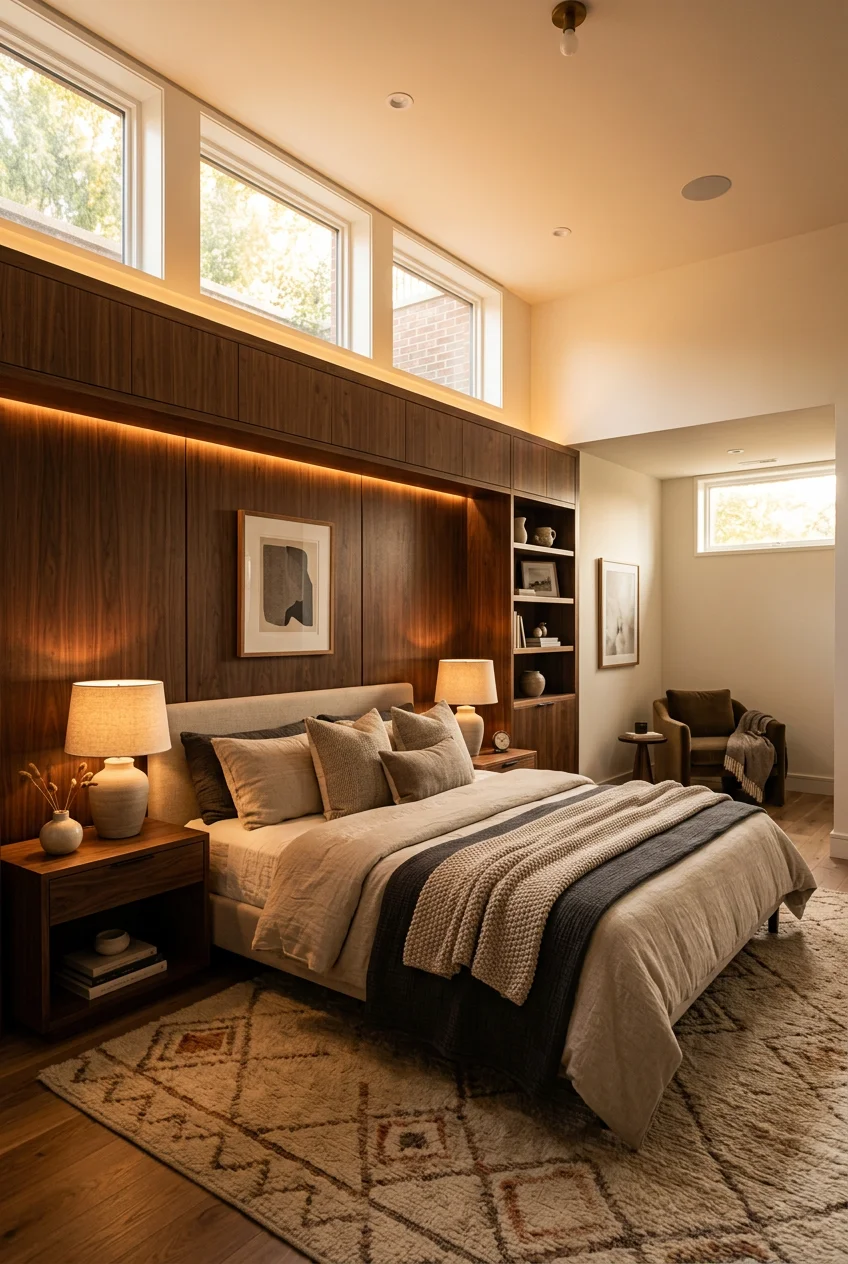
What’s Inside
- Prioritize Egress Window Compliance for Safety
- Combat Moisture with a High-Capacity Dehumidifier
- Optimize Air Quality with a HEPA Air Purifier
- Implement Layered Lighting for Brightness
- Choose Warm, Light-Reflecting Paint Colors
- Select a Universally Comfortable Medium-Firm Mattress
- Anchor the Space with a Thick 8×10 Area Rug
- Add Heavy Thermal Blackout Curtains
- Provide Extra Blankets in a Visible Wicker Basket
- Install Floating Nightstands to Save Floor Space
- Set Up a Dedicated Luggage Rack
- Use a Tall Headboard to Create Visual Height
- Add a Full-Length Floor Mirror
- Incorporate Live Low-Light Plants
- Stock a Bedside Carafe and Glasses
- Upgrade to High-Quality Cotton Percale Sheets
- Provide a White Noise Machine
Most folks dump a lumpy futon in the corner by the water heater and call it a guest bedroom. It’s a recipe for visitors waking up smelling like damp cardboard. Creating a proper subterranean retreat takes strategy, not just leftovers. You’re dealing with zero natural light, cold concrete, and weird furnace clanking. Addressing these issues makes the space feel intentional. If you only try one thing here, pick #2. Controlling moisture keeps the room from feeling like a dungeon before you even buy a bed. It took me years to learn that.
Skip this list if your basement floods or lacks an egress window. You can’t decorate your way out of standing water or code violations. Fix the structural stuff before you hunt for throw pillows.
1. Prioritize Egress Window Compliance for Safety

Every basement bedroom needs an emergency exit. The International Residential Code mandates a net opening of 5.7 square feet, at least 24 inches high and 20 inches wide. The sill can’t sit more than 44 inches from the floor. Casement windows work best because they swing out, creating a wide opening even in tight wells. You’ll find standard sizes at Home Depot for $300 to $600. This isn’t just about safety. A proper window lets in real light, instantly killing the cave vibes. Most people ignore this, slap up drywall, and wonder why the room feels illegal. The psychological shift from a solid wall to a view of the outside is massive.
The catch: installing one in concrete requires heavy digging, which can easily cost thousands in labor.
2. Combat Moisture with a High-Capacity Dehumidifier

Basements naturally pull moisture from the soil. Ignoring this is a classic mistake that guarantees musty linens within a week. A high-capacity dehumidifier is non-negotiable. The Midea Cube is a solid pick for $259 to $400. It packs a 34-pint tank and handles up to 4,500 square feet. For smaller rooms, the Waykar PD160B runs cooler. Aim for 40 to 50 percent humidity. Emptying the tank takes two minutes and changes the whole room. The air goes from heavy and damp to crisp. You can grab these at Walmart or local hardware stores. Don’t waste cash on those tiny absorber tubs. They don’t pull enough water to make a dent. Trust me.
Best for: older homes with damp foundations or poor grading.
The catch: the compressor hum bothers light sleepers, so run it mostly while guests are awake.
3. Optimize Air Quality with a HEPA Air Purifier

Moisture isn’t the only ghost down there. Basements trap dust, mold, and fumes from stored paint. A purifier with HEPA and activated carbon filters grabs those particles before your guests breathe them. The Levoit Core 400S, usually $150 to $600, covers 403 square feet. It uses H13 filtration and a thick carbon layer to eat odors. For larger spaces, the Blueair Blue Pure 211i Max catches 99.99 percent of particles down to 0.1 microns. Running one makes the room smell neutral. Nobody wants to sleep in a space that smells like furnace exhaust and old gym bags.
The catch: replacement filters cost about $50 every six months, a frustrating maintenance cost just to keep the air breathable.

Bedsure GentleSoft Sage Green Throw Blanket for Couch
If you want something that just works, Bedsure GentleSoft Sage Green Throw Blanket for Couch – Checkered Cute is a safe bet (98 reviews, 4.5 stars).
4. Implement Layered Lighting for Brightness

Since natural light is scarce, relying on one flush-mount ceiling light is a rookie mistake. It casts harsh shadows that make the ceiling feel lower. You need to layer your light. Combine overhead LEDs, table lamps on nightstands, and plug-in sconces. Stick to warm bulbs around 2700K. Cool white bulbs turn a basement into a sterile hospital room. Target’s Threshold line has heavy ceramic table lamps for $40 to $70 that look great and cast a soft glow. A lamp in a dark corner pushes the walls outward.
Best for: windowless rooms that get zero sunlight.
The catch: hardwiring new sconces means hiring an electrician and cutting drywall, which kills a tight budget fast.
5. Choose Warm, Light-Reflecting Paint Colors

Dark paint absorbs light, making a room feel like a closet. You need light-reflecting neutrals with a Light Reflective Value (LRV) of 70 or higher. Sherwin-Williams Alabaster and Benjamin Moore Simply White are winners. They’re warm without looking yellow. Paint the ceiling the same white as the walls. This blurs the line where the wall ends, making low 7-foot ceilings feel taller. Avoid cool grays. They pick up weird green or purple tints under basement lights and look dreary. You can get these mixed at Lowe’s in a matte or eggshell finish.
The catch: high LRV matte paint shows every scuff from luggage, requiring constant touch-ups. You might also like: 19 Modern Luxury Bedroom Design Master Suite for Every Budget
6. Select a Universally Comfortable Medium-Firm Mattress

Guest preferences vary, so aim for the middle. A medium-firm mattress is the best compromise. Skip the ultra-plush tops that swallow people and avoid the rock-hard slabs that feel like concrete. A 12-inch hybrid mattress, mixing coils with memory foam, breathes well and supports different weights. Costco carries the Novaform line for $400 to $700. It ships in a box, which is a lifesaver. Dragging a traditional, stiff mattress down narrow basement stairs is a nightmare. You might also like: 15 Brilliant Small Bedroom Inspiration That Changed Everything
The catch: medium-firm still feels a bit stiff for strict side sleepers who need contouring for their shoulders and hips. You might also like: 16 Aesthetic LED Lights Bedroom You Need to See

50×70 Inch Rust Throw Blanket – Soft & Fluffy Fleece
A dependable everyday pick — 50×70 Inch Rust Throw Blanket – Soft & Fluffy Fleece pulls in 14 ratings at 4.5 stars. Not flashy, just solid.
7. Anchor the Space with a Thick 8×10 Area Rug

Basement floors are cold, even with luxury vinyl or tile. Guests don’t want their bare feet hitting a freezing floor. An 8×10 rug under the bed provides a needed thermal barrier. Look for a pile height of at least 1/2 inch. Polypropylene rugs are ideal because they resist moisture and won’t mildew. Rugs USA runs sales where you can find large rugs under $200. It anchors the bed and makes the space look finished.
Best for: unheated concrete or tile floors that stay frigid.
The catch: thick rugs trap dust and need a vacuum with a motorized brush to stay clean.
8. Add Heavy Thermal Blackout Curtains

Even small windows let in weird street light or morning sun. Sheer curtains won’t cut it. You need heavy thermal blackout curtains to block light and add insulation against the cold glass. Buy 84-inch panels and mount the rod as high as possible. Extend it 12 inches past the window frame on each side. It tricks the eye into thinking the window is larger. Target’s Project 62 line has options for $30 to $50 a panel. They drape well and block drafts. Hang them high or the ceiling will feel squashed.
The catch: thermal drapes look bulky when pulled back, eating up visual space.
9. Provide Extra Blankets in a Visible Wicker Basket

Subterranean rooms easily drop 10 degrees colder than the main floor. Forcing guests to text you at 2 AM because they’re freezing is bad hosting. Keep 2 or 3 extra fleece or wool throws out in the open. Roll them up in an 18-inch wicker basket by the bed. Don’t hide them in a closet. HomeGoods or Marshalls always have sturdy baskets for $20 to $40. Having blankets visible communicates comfort the second they walk in.
Best for: drafty basements with poor air circulation.
The catch: open baskets are dust magnets if the blankets aren’t washed regularly.

WOPITUES Wood Floating Shelves Set of 6
If you want something that just works, WOPITUES Wood Floating Shelves Set of 6 is a safe bet (68 reviews, 4.5 stars).
10. Install Floating Nightstands to Save Floor Space

Basements are often tight. Jamming two blocky wooden nightstands on either side of the bed makes the room feel cramped. Floating nightstands solve this. A 16-inch wide shelf mounted to the wall gives you space for a lamp and a phone while keeping the floor clear. It creates an illusion of space because you can see the baseboard underneath. West Elm sells sleek wooden floating drawers for $100 to $150 that look modern.
The catch: floating shelves offer no hidden storage, and if a guest leans too hard on one to get up, it might rip out of the wall.
11. Set Up a Dedicated Luggage Rack

People hate living out of a suitcase on the floor. If you don’t provide a spot, they’ll dump their dirty, airport-floor-covered bag on your clean duvet. A folding luggage rack is a cheap fix that saves your bedding. Look for a wood or metal frame at least 24 inches wide with nylon straps. Wayfair has basic racks for $30 to $60. Keep it folded in the closet when not in use. It’s a small hotel touch that makes unpacking way less annoying.
The catch: a standard rack only holds one suitcase, so couples have to fight over it.
12. Use a Tall Headboard to Create Visual Height

Low ceilings are the biggest hurdle. You need vertical lines to draw the eye up. A tall, upholstered headboard measuring 50 inches or higher creates a focal point that distracts from the 7-foot ceiling. Choose a simple, tight fabric instead of dark wood. Vertical channel tufting works wonders, pulling the gaze straight up. It also gives guests a soft place to lean back.
The catch: carrying a tall king-size headboard down a narrow staircase with a tight turn is impossible without dinging the drywall. I learned that the hard way.

Bedsure GentleSoft White Throw Blanket for Couch
Bedsure GentleSoft White Throw Blanket for Couch – Cozy Soft Fleece Su has been one of the most consistently praised picks in this category. 24 reviewers averaged 4.5/5.
13. Add a Full-Length Floor Mirror

Mirrors are the oldest design trick in the book for a reason. They bounce weak light back into the room. A full-length mirror, at least 65 by 22 inches, doubles the space and adds depth. Lean it against the wall opposite the window or the brightest lamp. IKEA’s Hovet mirror is 78 inches tall and costs about $130. It has a slim frame that adds light without clutter. Guests will appreciate checking their outfits before heading upstairs.
Best for: small, dark rooms that feel claustrophobic.
The catch: leaning floor mirrors are a tipping hazard if you have toddlers or big, clumsy dogs.
14. Incorporate Live Low-Light Plants

Nothing says “dungeon” like a room without organic life. A live plant softens the harsh, square edges of a basement. You need tough species that tolerate low light. ZZ plants or Snake plants in 6-inch pots are indestructible and need water maybe once a month. Drop the plastic nursery pot into a heavy ceramic planter for style. Trader Joe’s usually has healthy low-light plants for under $15. The pop of green makes the room feel like a living space rather than a storage unit.
The catch: even tough plants will eventually drop leaves and die if the room gets zero natural sunlight for weeks.
15. Stock a Bedside Carafe and Glasses

Basement stairs are treacherous in the dark. Don’t make your guests navigate them for a drink of water. A 32 oz glass carafe with a matching tumbler lid is a tiny detail that makes your home feel like a boutique hotel. Place it on a cork coaster to prevent rings on the nightstand. Crate & Barrel sells heavy-bottomed carafes for $30 to $40. It’s inexpensive, chic, and solves a real problem for visitors waking up parched.
The catch: you have to remember to wash it and fill it with fresh ice water before they arrive, or it gets stale and dusty.

Amazon Basics Bedroom Closet Organizer with 5-Fabric
Amazon Basics Bedroom Closet Organizer with 5-Fabric Storage Drawers f is sturdier in person than the photos suggest — over 41 buyers gave it 4.5 stars.
16. Upgrade to High-Quality Cotton Percale Sheets

Because basements need thick duvets to combat the chill, the sheets need to breathe. Cheap microfiber traps heat and causes night sweats. Invest in 100 percent cotton percale with a 300 thread count. Percale is woven tightly, creating a cool, matte texture that balances out heavy blankets. Brooklinen’s classic set holds up to washing without pilling. Crisp white sheets also make the bed look inviting in a room that might otherwise feel dingy.
The catch: pure cotton percale wrinkles severely in the dryer. Most people hate ironing, so the wrinkled look is a trade-off for temperature control.
17. Provide a White Noise Machine

Basements are acoustic nightmares. They echo the furnace, water in the pipes, and footsteps from the kitchen. A white noise machine masks these sounds so guests can sleep. Skip the phone apps and buy a mechanical machine like the Dohm Classic. It uses a real fan to create a rushing air sound, not a digital loop. It retails around $50. Place it near the door or vents to block noise at the source. This is a big win for your visitors.
Best for: light sleepers who wake up at every creak of the floorboards.
The catch: some older guests find the mechanical sound annoying, so leave it off unless they choose to use it.
How we chose these ideas: These tips focus on practical solutions for common basement constraints like light, moisture, and layout. We prioritized renter-friendly, high-impact fixes over expensive structural work.
Turning a basement into a welcoming space takes some aggressive problem-solving, but the payoff is huge. Your guests get privacy, and you get your living room back. I’d suggest tackling the moisture and lighting before spending a dime on pillows. Save this list for your next weekend project, and start with the foundational fixes first.
Frequently Asked Questions
How do you keep a basement guest bedroom smelling fresh?
The most effective method is running a high-capacity dehumidifier to maintain 40-50% humidity, paired with a HEPA air purifier equipped with an activated carbon filter. This combination removes moisture, mold spores, and stale odors directly from the air.
What kind of lighting is best for a basement bedroom?
Layered lighting is essential. Combine flush-mount overhead lights, table lamps, and wall sconces. Always use warm-toned bulbs around 2700K to prevent the space from feeling like a sterile hospital room.
Are egress windows required in basement bedrooms?
Yes, building codes require an operable egress window for any basement bedroom to ensure safe emergency escape. They also provide crucial natural light that makes the space feel less claustrophobic.
What colors make a basement bedroom look bigger?
Light-reflecting neutrals with a Light Reflective Value (LRV) of 70 or higher work best. Warm whites and soft creams visually expand the room, especially when you paint the ceiling the exact same color as the walls.
