What’s Inside
- Low-Profile Furniture for Attic Bedroom Decor
- Maximize Storage with Modular Built-ins
- Strategic Color Palette for Spaciousness
- Implement Layered and Warm Lighting
- Smart Window Treatments for Skylights
- Utilize IKEA PLATSA Systems for Sloped Ceilings
- The Wallpaper Box Trend for Attic Bedroom Decor
- The Power of Oversized Floor Mirrors
- Combat Heat with Proper Ventilation
- Floor Bed Setups for Maximum Clearance
- Embrace Exposed Beams as a Feature
- Color Drenching for Visual Flow
- Anchor the Space with an Illustrated Statement Rug
- Wall Sconces Over Floor Lamps
- Surprising Outdoor Shade Nets for Cooling
- Build Deep Window Seats in Dormers
- Floating Shelves on the Gable End
Most folks treat attic bedrooms like an afterthought. They shove a dusty mattress between exposed insulation and call it a day. Proper attic bedroom decor requires actual strategy. Don’t just drag up leftover furniture from your college apartment. The angles are weird. The lighting is harsh. The temperature fluctuates wildly. But when you handle the geometry correctly, an attic becomes the best room in the house. If you only try one idea from this list, make it #6. Here’s why: modular storage saves thousands over custom built-ins while hiding those awkward knee-wall dead zones. Trust me on this.
Skip this list if your attic lacks proper HVAC routing or permanent stairs. Decorating an unfinished space with pull-down ladder access and zero climate control is a recipe for warped furniture and ruined textiles. Fix the foundation first. Don’t start buying paint yet.
1. Low-Profile Furniture for Attic Bedroom Decor

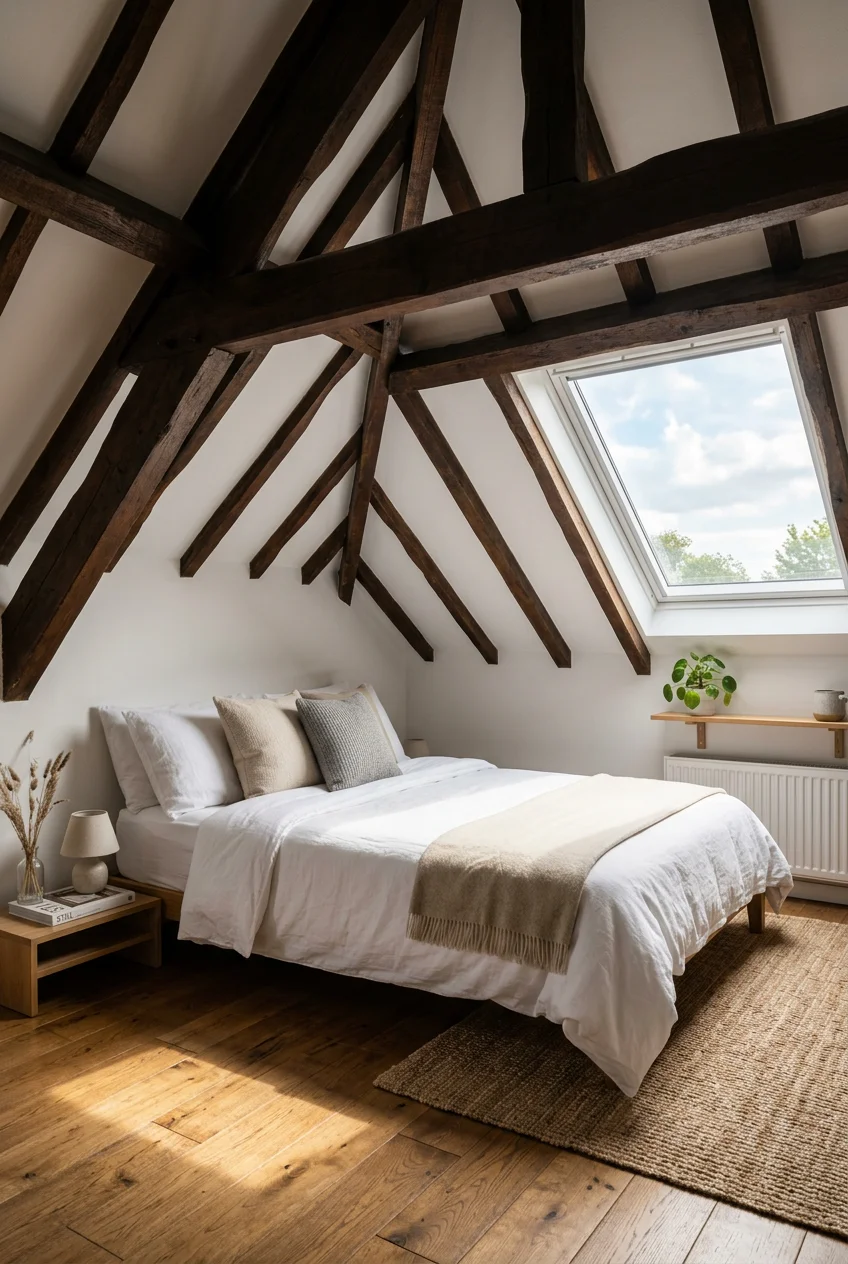
Most people tackle this space by dragging their standard bed frame upstairs. Bad move. A traditional frame with a 12-inch mattress easily hits 30 inches in height. When you push that against a knee wall, you’re forcing whoever sleeps there to smash their forehead into the drywall every morning. The solution is a low-profile platform bed. You want a frame that sits roughly 12 to 18 inches off the floor. Brands like Thuma or budget options from Wayfair (ranging from budget to mid-range) offer solid wood platforms that keep your mattress low. This frees up the taller center of the room for walking. It’s a simple geometry fix that makes the ceiling feel a foot higher. Visually, a low bed grounds the space, too. Keep the bedding simple with a linen duvet to match the minimalist profile.
Best for: Rooms with knee walls under 4 feet tall.
The catch: Low beds are tough to get out of if you have knee or back issues. I learned that the hard way.
2. Maximize Storage with Modular Built-ins

Custom cabinetry gets expensive, often costing up to $750 per linear foot. If you’re outfitting a 12-foot knee wall, that bill gets out of hand fast. Honestly, the cheaper version is the smarter buy. Using modular systems like IKEA SEKTION cabinets provides a great way to build out storage under sloped walls. Each base cabinet is about 30 inches by 15 3/8 inches by 30 inches, and they usually run under $200 per unit. You can line these up along the lowest part of the wall, add a painted 3/4-inch MDF top from Home Depot, and create a smooth built-in look for a fraction of the cost. This turns dead zones into high-capacity storage for bulky sweaters or extra blankets. It’s a practical approach that doesn’t require a master carpenter.
The catch: You’ll still need basic carpentry skills to cut filler pieces for the gaps between the cabinets and the angled ceiling.
3. Strategic Color Palette for Spaciousness

Painting an attic stark white is a rookie move. Most people think white paint equals a larger room, but without enough natural light, bright white just looks like gray primer. Instead, use warm neutrals like soft creams or very pale lavender. A common mistake is using cool-toned grays with daylight bulbs. That makes an attic feel like a sterile hospital basement. Paint your walls with a warm base, like Sherwin Williams Alabaster (budget to mid-range per gallon), and pair it strictly with 2700K amber LED bulbs. This lighting temperature casts a cozy glow that complements the warm paint. To finish, grab a 6 oz lavender and cedar candle from Whole Foods to add a sensory layer. The smell—that earthy, floral, cedar-wood scent—matches the cozy aesthetic perfectly. No exaggeration.
Best for: North-facing attics that receive very little direct sunlight.
The catch: Warm paint colors can look dingy or yellowed at night if your lamps aren’t positioned correctly.

upsimples Floating Shelves for Wall
If you want something that just works, upsimples Floating Shelves for Wall is a safe bet (47 reviews, 4.5 stars).
4. Implement Layered and Warm Lighting

Attics are hard to light because standard overhead fixtures rarely work on sharp angles. Skip the flush-mount boob lights. A better approach is to hang a woven rattan or wicker pendant light from the highest point of the ceiling apex. You can find excellent textured pendants at Target or West Elm, ranging from mid-range to premium prices. Dropping a 20-inch wide pendant from the peak draws the eye upward and adds texture. Supplement this with energy-efficient LED strip lights hidden behind exposed beams or along bookshelf ledges. This creates a layered wash of light rather than a single harsh beam. It’s the only way to light the room evenly.
The catch: Hanging a heavy fixture from the exact apex of a sloped ceiling requires specialized angled mounting brackets and tricky ladder work.
5. Smart Window Treatments for Skylights

Skylights are great for light, but they turn an attic into a greenhouse by mid-July. Standard curtains won’t work on an angled window. You need genuine VELUX blackout blinds. The DKL, DKU, or DBL models feature thermal fabric that blocks heat transfer, reducing the room temperature by several degrees in summer. These usually range from $80 to $200 depending on your window size. For standard vertical dormer windows, install cellular shades from a brand like Graber. The honeycomb structure provides superior insulation against winter drafts and summer heat. It’s a functional necessity that happens to look clean.
Best for: Attics in climates with extreme summer heat or harsh winters.
The catch: Manually operating a blackout blind on a skylight 10 feet high requires keeping a long, clunky control rod leaning against your wall. You might also like: 16 Teen Boys Bedroom Ideas for Every Budget
6. Utilize IKEA PLATSA Systems for Sloped Ceilings

Finding a wardrobe that fits under a 45-degree ceiling pitch feels nearly impossible. The IKEA PLATSA system solves this. Its modular frames allow for precise height adaptation, meaning you can step the units down to match the angle of your roofline. A combination featuring 3 doors and 6 drawers (roughly 118 inches by 22 inches by 71 inches) gives you massive storage capacity without fighting the architecture. It’s a brilliant alternative to hiring a contractor. You just stack the boxes like building blocks until they hit the ceiling slope. The white finish blends cleanly into light-colored walls, keeping the visual weight minimal. You might also like: 20 Dreamy Bedroom Ideas Girl (2026) – Create Your Perfect Sanctuary
The catch: The PLATSA system is often out of stock, so you might wait months to complete your specific configuration. You might also like: 19 Cozy Aesthetic Bedroom Ideas You Need to See

Venusmiles Floating Shelves for Wall 24 inch Long
Venusmiles Floating Shelves for Wall 24 inch Long is sturdier in person than the photos suggest — over 412 buyers gave it 4.5 stars.
7. The Wallpaper Box Trend for Attic Bedroom Decor

Accent walls look outdated in small spaces. The current move is the wallpaper box, where you wrap the entire room, including the sloped ceiling, in a single continuous pattern. This creates a theatrical, cocoon-like effect that blurs the harsh architectural lines. Choose unexpected designs like sketched botanicals or tonal stripes from a retailer like Spoonflower (mid-range pricing per roll). When the pattern continues smoothly from the wall onto the ceiling, your brain stops registering the low clearance. It feels intentional rather than cramped. It’s an aggressive design choice that pays off in tight quarters.
The catch: Installing wallpaper on an angled ceiling is a miserable, gravity-fighting task that requires two people and a lot of patience.
8. The Power of Oversized Floor Mirrors

Attics often suffer from a lack of square footage. Placing a massive floor mirror opposite a window is the easiest way to fake depth. You want a mirror that’s at least 65 inches tall and 30 inches wide. Target sells arched floor mirrors that fit these dimensions perfectly, usually under $150. When positioned correctly, the glass bounces light back into the darkest corners. It’s a visual trick that doubles the perceived space instantly. The arched top also breaks up the rigid, straight lines of the sloped ceiling.
Best for: Small, dark rooms with only one window.
The catch: Heavy floor mirrors leaning against sloped walls require heavy-duty wall anchors, or they pose a tipping hazard.
9. Combat Heat with Proper Ventilation

You can’t decorate your way out of a 95-degree room. Neglecting temperature control is the fastest way to ruin an attic space. Ensure your ceiling has high R-value insulation, but more importantly, install a solar attic fan. These mount to the roof and pull trapped hot air out before it bakes your drywall. You can find solid models at Home Depot (mid-range pricing). Supplement this with a high-velocity circulating fan on the floor. Moving air makes a hot room tolerable. If you ignore the HVAC situation, your decor won’t matter because you won’t want to spend any time up there.
The catch: Roof-mounted solar fans require cutting a hole in your shingles, which absolutely requires hiring a professional roofer to prevent leaks.

AMADA HOMEFURNISHING Floating Shelves
A dependable everyday pick — AMADA HOMEFURNISHING Floating Shelves pulls in 117 ratings at 4.5 stars. Not flashy, just solid.
10. Floor Bed Setups for Maximum Clearance

If your knee walls are exceptionally low, even a platform bed might be too tall. In this scenario, a floor bed is the only logical choice. We aren’t talking about a bare mattress like a frat house. Use a low slatted base that sits 2 to 4 inches off the ground, paired with a high-quality 8-inch mattress. This keeps the total height under 14 inches. You can find simple slatted bases at Lowe’s or online for a budget-friendly price. This guarantees maximum head clearance, making it impossible to hit the ceiling when you sit up. It’s a minimalist approach that leans into Japanese-inspired design.
The catch: Sleeping this close to the floor means you’re in the path of settling dust and cold drafts during the winter.
11. Embrace Exposed Beams as a Feature

If you have original structural beams, don’t cover them with drywall. Hiding character is a mistake. Instead, highlight the wood by bleaching it or sanding it down to its natural finish. Use a 2-part wood bleach kit from a hardware store (under $50 for a 32 oz set) to strip away years of yellowing or dark stain. Lightening the wood prevents the heavy beams from crushing the small room while maintaining the structural texture. It’s the perfect contrast against crisp white or soft cream walls.
The catch: Chemical wood bleaching releases toxic fumes, requiring industrial-grade ventilation and respirators.
12. Color Drenching for Visual Flow

When a room has a dozen angles, painting the walls, trim, and ceiling different colors creates visual chaos. Your eye stops at every single line. The solution is color drenching. Paint the skirting boards, walls, and sloping ceilings in the exact same color and finish. A flat or matte finish from Benjamin Moore (premium pricing per gallon) works best to hide drywall imperfections. This technique softens harsh lines and makes the space feel larger because the boundaries disappear. It’s a sophisticated look that requires very little extra effort.
The catch: Matte paint is hard to clean, meaning any scuffs from moving furniture or bumping the low ceilings will be permanent.

Govee RGBIC LED Strip Lights
A dependable everyday pick — Govee RGBIC LED Strip Lights pulls in 252 ratings at 4.5 stars. Not flashy, just solid.
13. Anchor the Space with an Illustrated Statement Rug

A large expanse of basic carpet makes an attic feel like a rental unit. Anchor the sleeping area with an illustrated statement rug featuring abstract shapes or brush-stroke art. Ruggable offers washable options featuring line-drawn faces that sit in the budget to mid-range tier. For an attic, you want an 8×10 foot rug with a light base color to avoid sucking all the light out of the room. Slip a 1/4-inch felt rug pad underneath to add plushness over hard subfloors. It’s an easy way to inject personality without hanging art on awkwardly angled walls.
Best for: Renters who can’t change the existing flooring.
The catch: Bold, illustrated patterns can easily overwhelm a small space if your bedding and wall art aren’t kept minimalist.
14. Wall Sconces Over Floor Lamps

Floor lamps look awkward when shoved under a sloped ceiling. The pole highlights the lack of space, and the shade usually ends up resting against the drywall. Skip them. Install hardwired wall sconces on the flat gable walls instead. Sconces from Crate & Barrel (mid-range to premium) provide reading light without taking up floor space. Position them roughly 36 inches above the mattress for optimal reading. This keeps the floor clear and provides a high-end look.
The catch: Hardwiring sconces requires cutting into your drywall and running new electrical lines, which means patching and repainting.
15. Surprising Outdoor Shade Nets for Cooling

If your attic gets blasted by afternoon sun, interior blinds won’t stop the heat from baking the roof. A low-budget fix is covering the exterior roof or sun-facing wall with a shade net. A heavy-duty, UV-blocking shade cloth from Costco (under $100 for a large roll) can reduce the surface heating of your roof by up to 50 percent. This creates a massive drop in the internal temperature. It’s an industrial solution, but when the summer heat hits triple digits, you won’t care how it works as long as it keeps the room cool.
The catch: Exterior shade nets look like construction scaffolding, impacting the curb appeal of your home.

50×70 Inch Rust Throw Blanket – Soft & Fluffy Fleece
50×70 Inch Rust Throw Blanket – Soft & Fluffy Fleece has been one of the most consistently praised picks in this category. 14 reviewers averaged 4.5/5.
16. Build Deep Window Seats in Dormers

Dormer windows create awkward pockets of space that are too small for a bed but too large to leave empty. The smartest use of this square footage is building a custom window seat. Frame out a 24-inch deep bench using 2×4 lumber and top it with a hinged plywood lid for hidden storage. Paint it to match the walls. This creates a dedicated reading nook while hiding extra pillows. It’s a classic architectural detail that makes an attic feel purposeful.
The catch: Having a custom 4-inch thick foam cushion sewn to fit your new bench will likely cost more than the lumber to build it.
17. Floating Shelves on the Gable End

The flat, triangular wall at the end of your attic (the gable end) is prime real estate. Don’t waste it. Install thick floating shelves to hold books, small plants, or a 12 oz bag of coffee beans if you set up a mini morning station. Use heavy-duty concealed brackets from Lowe’s (under $40 a pair) to support solid wood planks. Space the shelves 14 inches apart vertically to accommodate standard hardback books. This draws the eye to the highest point in the room, emphasizing the vertical space you have.
The catch: True floating shelves have a strict weight limit, so you can’t overload them without risk of tearing the brackets out of the drywall.
How we chose these ideas: We evaluated these design strategies based on renter-friendliness, cost, effort, and visual impact. Priority was given to solutions that address architectural challenges like sloped ceilings and poor ventilation, rather than generic decor advice.
Turning a dusty top floor into a functional bedroom requires working with the architecture, not against it. Stop fighting the low ceilings and start using modular storage and low-profile furniture to your advantage. If you execute the lighting and temperature control correctly, you’ll end up with the coziest room in the house. Pin this list for your next weekend project and start measuring those knee walls. It took me years to figure out these tricks.
Frequently Asked Questions
How do you light an attic bedroom with sloped ceilings?
Skip floor lamps that highlight awkward angles. Install hardwired wall sconces on the flat vertical walls and hang a textured pendant light from the highest apex. Use 2700K warm LED bulbs to prevent the space from feeling cold.
What is the best bed for an attic?
A low-profile platform bed measuring between 12 and 18 inches high is optimal. This keeps your mattress close to the floor, maximizing head clearance when tucked under a sloped ceiling or low knee wall.
How do you fix temperature issues in an attic bedroom?
Start with blackout thermal cellular shades on skylights to block heat transfer. Add an exterior shade net over sun-facing roof sections and install a solar attic fan to exhaust trapped hot air before it bakes the drywall.
Can you put wallpaper on a sloped attic ceiling?
Yes. Wrapping the entire room, including the sloped ceilings, in a single wallpaper pattern creates a smooth, cocoon-like effect. It hides awkward architectural transitions. Stick to small or sketched patterns to avoid overwhelming the tight space.
