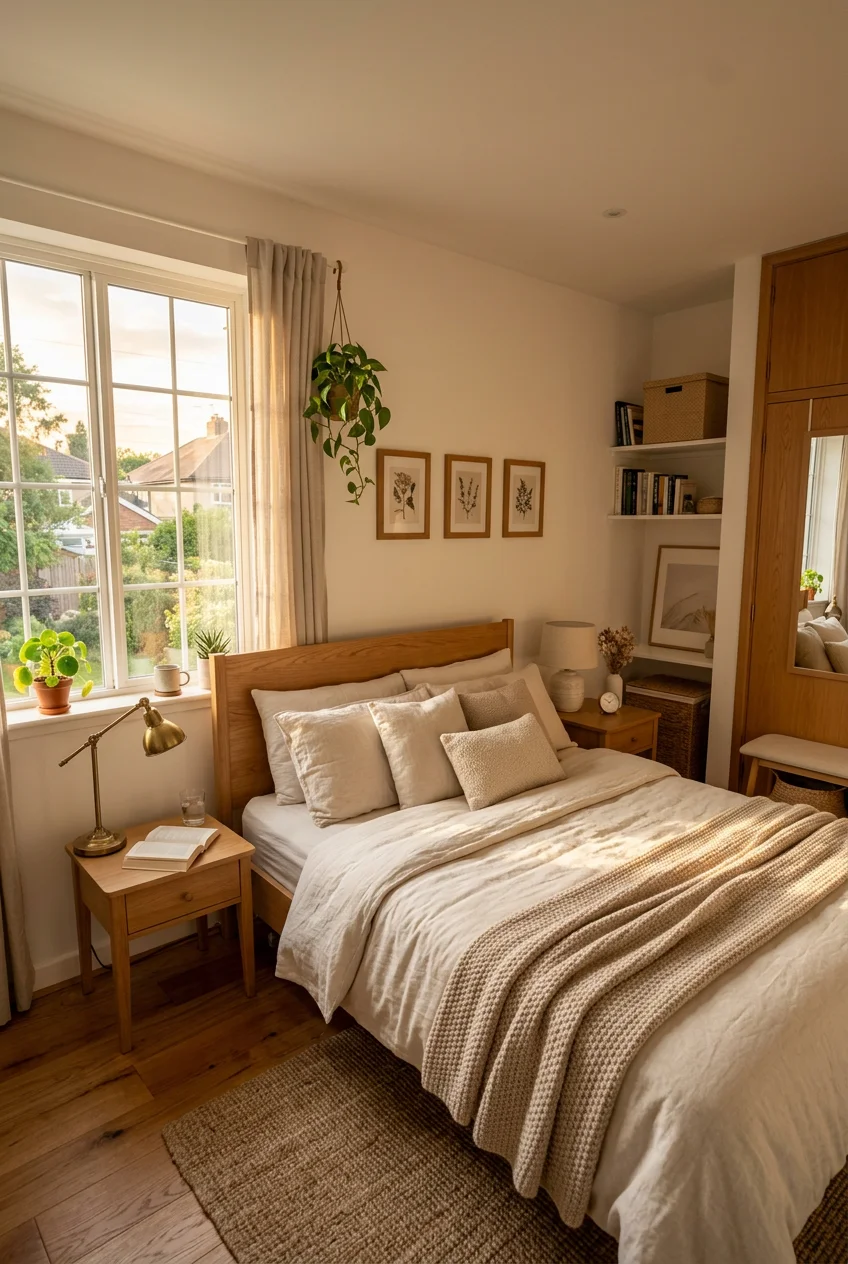
What’s Inside
- Embrace “Cocooning” with Warm Neutrals and Layered Textiles
- Maximize Vertical Storage with Wall-Mounted Solutions
- Invest in Multi-Functional Furniture with Hidden Storage
- Optimize Bed Placement and Size
- Use Mirrors for Visual Expansion
- Implement Layered Lighting
- Choose Light and Reflective Color Palettes
- Utilize Under-Bed Storage
- Embrace Custom Built-Ins
- Soundproof for Privacy
- Incorporate Floating Desks or Wall-Mounted Nightstands
- Avoid Over-Decorating
- Use Fine Scale Wallpaper
- Consider a Loft Bed for Extreme Space Saving
- Integrate Smart Home Devices
Most couples shove a massive king bed against three walls and wonder why their room feels like a padded cell. Small bedrooms require ruthless editing and a total disregard for standard furniture layouts. A tight floor plan forces you to think vertically, prioritize function, and accept that a standard dresser just won’t fit. Stop trying to copy the oversized master suites you see on Pinterest and start working with the space you actually have. If you only try one idea from this list, make it #6. Layered lighting fixes the harsh, flat shadows that make tiny rooms feel like storage closets. Trust me.
Skip this list if you have a massive master suite with walk-in closets and plenty of floor space. This advice also won’t work for renters with strict lease agreements that forbid drilling into walls. These strategies require modifying the space to gain every square inch, which usually means putting a few holes in the drywall.
1. Embrace “Cocooning” with Warm Neutrals and Layered Textiles

The 2026 “cocooning” trend is about creating warm, enveloping spaces rather than sterile white boxes. When a room is tiny, leaning into the coziness works better than trying to fake space with stark white paint. Opt for a palette of creamy taupes, dusty blush, warm terracotta, or deep sage to foster intimacy. Layer your bedding with tactile, textured fabrics like heavy linen and crushed velvet. A flat cotton quilt just won’t provide that high-end look.
For example, look into Fabdivine’s block print throw pillow covers in dusty rose or sage green (typically ranging from $30 to $60 each). Choose the 26×26 or 24×24 sizes. This “statement size” trend looks more intentional than a pile of tiny 18-inch pillows. Layer them in odd numbers for balance. Always buy inserts that are two inches larger than the cover to ensure a plump, structured look. I learned that the hard way. A common mistake is buying matching size inserts, which leaves the corners looking sad and floppy.
The catch: oversized pillows have to go somewhere when you sleep. In a tiny room, they usually end up on the floor, which becomes an annoying nightly chore.
2. Maximize Vertical Storage with Wall-Mounted Solutions

Floor space is your most valuable asset. Free it up by using your walls for storage. Traditional nightstands with four legs consume too much physical space. Install wall-mounted shelves or floating nightstands instead. This simple swap lets your eyes travel all the way to the baseboards, creating an illusion of more floor space.
The IKEA SKÅDIS pegboard system (starting around $20) is a versatile bedside organizer. You can attach small trays, hooks, and cords to hold glasses, chargers, and lip balm, freeing up whatever surface area you have left. Alternatively, consider thick custom floating shelves made from solid walnut or oak. You can source brackets from Home Depot and order custom-cut wood online. Mount them directly into the studs for maximum weight capacity.
Best for: renters who need modular storage that doesn’t require permanent built-ins.
The catch: open vertical storage requires constant tidying. A pegboard covered in tangled cords and random receipts looks like a messy garage workbench.
3. Invest in Multi-Functional Furniture with Hidden Storage

When two people share a tiny room, clutter multiplies fast. Avoid open shelving for clothing and choose pieces that serve dual purposes with hidden compartments. An ottoman bed with hydraulic lifts or a platform bed with integrated deep drawers can store seasonal clothing, linens, or heavy shoes. This eliminates the need for bulky dressers that block walkways.
If you have a few feet at the foot of the bed, IKEA’s MACKAPÄR storage bench with sliding doors (budget around $99) offers excellent hidden storage. The sliding doors are crucial. Furniture with doors that swing outward requires clearance you likely don’t have. You can stash extra blankets inside and use the top as a seat. If you want something more upscale, West Elm offers similar low-profile storage benches, though they typically run upwards of $400.
Most people buy standard beds and try to shove plastic bins underneath later. Buying a bed with integrated, flush drawers looks significantly cleaner. It took me years to figure that out.
The catch: sliding doors on budget furniture often jump their tracks or stick over time, requiring frequent readjustment.

Yieach Bedside Shelf for Dorm Bed,Rv
A dependable everyday pick — Yieach Bedside Shelf for Dorm Bed pulls in 117 ratings at 4.5 stars. Not flashy, just solid.
4. Optimize Bed Placement and Size

A massive mistake couples make is choosing a bed that is too large for the room. A king-size bed might sound luxurious, but if you have to shimmy sideways against the wall just to reach the closet, the room will feel cramped. Realistic mattress sizing is key. Assess if a standard queen (60 by 80 inches) or even a full-size bed would allow for better daily circulation.
Position the bed against the longest solid wall to maximize open floor space. You need at least 24 inches of clearance on each side of the bed for a couple to get in and out comfortably. Pushing one side of a bed flush against a wall is a nightmare for the person sleeping on the inside, as they have to crawl over their partner every morning.
If you must downsize your mattress, invest in the quality of the bedding to compensate for the lost width. Look for bed frames with a slim profile. Bulky upholstered headboards with thick side rails can easily steal six inches of floor space.
The catch: a smaller mattress means you’ll feel your partner tossing and turning, which can disrupt sleep for light sleepers.
5. Use Mirrors for Visual Expansion

Strategically placed mirrors remain the oldest trick in the book for a reason. They can make a small room appear larger and double your natural light. Hang a large, frameless mirror on a wall opposite your main window to reflect the outdoors and create an illusion of depth.
The IKEA HOVET mirror (typically around $130) is an affordable option. It measures roughly 78 inches tall and provides a massive reflective surface without the clutter of a heavy frame. You can lean it against the wall or mount it horizontally above a low headboard to stretch the perceived width of the room. If you prefer a framed look, CB2 offers sleek matte black or brass floor mirrors, though you should budget between $300 and $500.
A common mistake is placing mirrors where they reflect a messy closet or desk. A mirror doubles whatever it sees, so ensure it reflects something pleasing, like a piece of art or a window.
The catch: a large mirror placed across from an east-facing window will blast blinding morning glare into your eyes at sunrise. You might also like: 18 Aesthetic Posters For Bedroom That Actually Work
6. Implement Layered Lighting

Relying on one harsh overhead light is a guaranteed way to make a small room feel flat and uninviting. Instead, layer ambient, task, and accent lighting. Use warm-toned bulbs (strictly 3000K or lower; anything higher looks like a hospital cafeteria) to create a soft, relaxing environment. You might also like: 17 Minimalist Bedroom Ideas Worth Trying
Ditch the bulky table lamps that eat up your nightstand. Install wall-mounted fixtures instead. Swing-arm wall lamps (brands like Target’s Threshold collection offer great options typically ranging from $30 to $60) are practical. They provide task lighting for reading and can be swiveled out of the way. You can mount them to the drywall using basic anchors. Position them 30 to 36 inches above the mattress for the ideal reading angle. You might also like: 19 Aesthetic Cozy Bedroom That Actually Work
Best for: couples with different sleep schedules where one person reads while the other sleeps.
The catch: plug-in wall sconces leave a visible cord dangling. Hardwiring them looks cleaner but requires an electrician, which increases the cost.

Acovy 30in Long Floating Shelves for Wall Set of 2
A dependable everyday pick — Acovy 30in Long Floating Shelves for Wall Set of 2 pulls in 8 ratings at 4.5 stars. Not flashy, just solid.
7. Choose Light and Reflective Color Palettes

Dark colors absorb light, which makes the walls feel like they’re closing in. In a tiny room, this can feel suffocating. Designers recommend light colors like soft white, warm cream, or light greige for walls, as they reflect light and make a room appear larger. You want a paint with a high LRV (Light Reflectance Value).
For 2026, warm, sandy neutrals are trending over the sterile cool grays of the past decade. Sherwin-Williams’ Universal Khaki is an excellent example of a 2026 Color of the Year contender. It offers an earthy neutral base that provides warmth without overwhelming the limited square footage. Pair this with bright white ceilings to draw the eye upward.
Avoid dark, heavy wood furniture like mahogany or dark cherry. These pieces act like visual black holes. Opt for light oak, birch, or painted finishes instead. A common mistake is painting the walls white but filling the room with dark, heavy furniture, which negates the expanding effect of the paint.
The catch: light-colored walls and furniture show every scuff, fingerprint, and dust bunny, requiring frequent cleaning.
8. Utilize Under-Bed Storage

The space under your bed is prime real estate. Shoving loose shoes and bags under there is a recipe for a dusty, chaotic mess. You need a systematic approach using shallow bins or crates with wheels, ideally 6 to 8 inches tall, depending on your bed frame’s clearance.
IKEA’s SKUBB storage boxes (budget around $10 to $15 each) are popular for this. They are lightweight, zip closed to keep dust out, and slide easily on carpet or hard floors. For bulky seasonal clothes, use vacuum-seal bags. SpaceSaver Vacuum Storage Bags (found on Amazon for $20 to $40 for a multi-pack) compress massive items down to a fraction of their size before you place them into the under-bed containers.
Best for: couples who rotate their wardrobe seasonally and lack hallway closet space.
The catch: vacuum-sealing fabrics for six months causes stubborn wrinkles that require heavy steaming to remove.
9. Embrace Custom Built-Ins

For a truly optimized small bedroom, freestanding furniture rarely cuts it. Custom-built cabinetry allows every awkward corner to be used efficiently. You can design internal shelves, rods, and hidden drawers tailored to your specific wardrobe needs. Built-ins can run floor-to-ceiling, drawing the eye up and making the ceiling feel higher.
While this is a higher investment (pricing typically ranges from $1,000 to $5,000+ depending on materials and labor), custom cabinetry integrates wardrobes into the architecture of the room. You can even build storage around the headboard, creating a bridge of cabinets over the bed. Specify a depth of 15 to 20 inches rather than the standard 24 inches if you only need to store folded clothes. This saves crucial floor space.
Most people rely on modular wire shelving, which looks cheap and leaves your clutter exposed. Closed cabinetry provides visual calm.
The catch: custom built-ins are permanent. You can’t take them with you when you eventually move.
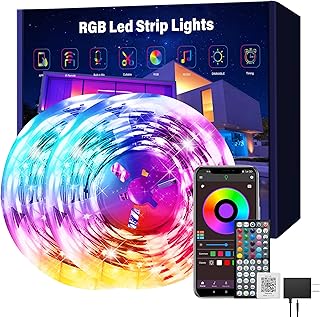
Ledagic Led Lights for Bedroom 150 ft (2 Rolls of 75ft)
Ledagic Led Lights for Bedroom 150 ft (2 Rolls of 75ft) has been one of the most consistently praised picks in this category. 14 reviewers averaged 4.5/5.
10. Soundproof for Privacy

In a tight living situation, privacy is a major concern. Thin walls can make a small bedroom feel exposed. While ripping down drywall to install resilient channels is an extensive renovation, there are less invasive options to dampen noise.
Start by sealing the air gaps around your door frame and windows. Sound travels through air, so blocking drafts blocks noise. Use acoustic caulk and basic weatherstripping (like Gorilla Glue Sealant, typically around $10). Next, address the windows. Hang heavy, sound-dampening curtains. NICETOWN Thermal Insulated Blackout Curtains (ranging from $30 to $70 per panel) add dense fabric mass over the glass, which helps absorb street noise. You can also mount decorative, fabric-wrapped acoustic panels on shared walls to reduce echo.
Best for: couples living in older apartment buildings with thin shared walls.
The catch: true acoustic curtains are heavy. You must install heavy-duty metal curtain rods anchored into the wall studs, or the weight will rip the hardware out of the drywall.
11. Incorporate Floating Desks or Wall-Mounted Nightstands

If one or both partners need a workspace, cramming a traditional four-legged desk into a tiny bedroom is a bad idea. It creates visual clutter and blocks paths. Instead, opt for floating desks or wall-mounted nightstands that keep the floor clear.
A floating desk, like the Prepac Floating Desk (typically priced between $100 and $200), provides a sturdy workspace without occupying floor space. You mount it directly to the wall at your preferred height. For the bedside, look for wall-mounted nightstands from sellers on Etsy (usually $50 to $150). These often feature a drawer for essentials and a flat top for a lamp. The empty space beneath these pieces makes the room feel airy.
A common mistake is mounting these pieces using only basic drywall anchors. They will eventually sag.
The catch: floating furniture has strict weight limits. You can’t lean heavily on a floating desk or sit on it, or it will tear straight out of the wall.
12. Avoid Over-Decorating

Interior designer Kelly Hoppen advises against overcrowding a small space with excessive furniture or busy decor. The goal is to keep the scheme minimal, relying on clean lines to create a sense of openness. A lack of adequate, hidden storage leads to surface clutter, which makes a room feel chaotic.
Stick to the 60-30-10 rule for color and decor. Sixty percent of the room should be your dominant neutral base, thirty percent a secondary texture or color, and only ten percent dedicated to accent pieces. Stop buying tiny, knick-knack decor items. Instead, invest in one or two large, impactful pieces of art. A single large canvas above the bed looks intentional; a gallery wall of fifteen tiny frames in a small room just looks crowded.
Best for: chronic over-buyers who struggle to edit their belongings.
The catch: strict minimalism is hard to maintain daily. Leaving out a single pair of shoes or a coffee cup immediately disrupts the clean aesthetic.

200 FT Led Lights for Bedroom (2 Rolls 100 FT)
200 FT Led Lights for Bedroom (2 Rolls 100 FT) has been one of the most consistently praised picks in this category. 869 reviewers averaged 4.5/5.
13. Use Fine Scale Wallpaper

While massive, bold wallpaper patterns can overwhelm tight square footage, fine-scale wallpaper is a trending approach for 2026. A delicate, repetitive pattern adds depth and texture without demanding too much visual attention. If wallpaper feels too permanent, a dedicated accent wall featuring a large textile hanging or a block-print fabric panel adds personality.
Look into peel-and-stick options from brands like Spoonflower (budget around $40 to $90 per roll). Applying a subtle, textured grasscloth or a tiny geometric print to the wall behind your headboard anchors the bed and creates a focal point. This draws the eye to the back of the room, creating an illusion of depth. Keep the remaining three walls painted in a matching, solid light neutral to maintain balance.
Most people hang art way too high, leaving an awkward gap between the headboard and the frame. Wallpaper solves this by extending the visual interest from the floor to the ceiling.
The catch: even peel-and-stick wallpaper is tedious to install perfectly flat, and air bubbles will ruin the seamless look you want.
14. Consider a Loft Bed for Extreme Space Saving

For rooms with incredibly tight dimensions, especially if you need a dedicated home office or sitting area, a loft bed is the ultimate space-saving maneuver. By elevating the mattress, you reclaim the footprint of the bed for daytime use.
The IKEA VITVAL loft bed frame (typically $200 to $300) is a popular, modern option that doesn’t look like bulky dorm furniture. It features clean metal lines and a guardrail. You can easily fit a compact desk, a reading chair, or a bank of dressers underneath. This setup creates two distinct zones within a single room. Ensure you measure your ceiling height carefully; you need enough clearance above the mattress to sit up in bed without hitting your head.
Best for: apartments with exceptionally high ceilings (9 feet or higher) but limited floor space.
The catch: climbing down a metal ladder in the dark at 3 AM is annoying, and changing the fitted sheet on a lofted mattress is a sweaty, frustrating workout.
15. Integrate Smart Home Devices

When researching small bedroom ideas, don’t overlook the impact of technology. In 2026, smart home integration is about practical efficiency. A cramped room feels more luxurious when you can control the environment without getting out of bed to flip a switch.
Use smart lighting, like Philips Hue smart bulbs (ranging from $15 to $50), to adjust brightness and color temperature. Set them to a crisp, bright white for getting dressed in the morning, and dim them to a warm, amber glow for winding down at night. Place a compact smart speaker, like an Amazon Echo Dot (around $50), on a floating shelf. It acts as an alarm clock, a white noise machine to block out street sounds, and a music player, replacing three separate bulky devices.
Smart plugs can also control fans or space heaters, eliminating the need to navigate a dark, cramped room.
The catch: smart bulbs default to their brightest, harshest white setting after a power outage, which can jolt you awake in the middle of the night.
How we chose these ideas: We evaluated these concepts based on their realistic renter-friendliness, cost accessibility, and installation effort. Priority was given to functional solutions that solve actual structural storage deficits rather than purely aesthetic decor trends, ensuring these ideas work for floor plans under 150 square feet.
Navigating a tiny shared space requires patience and vertical thinking. Ditch the bulky dressers, mount your lights to the wall, and reclaim the space under your bed. If you found these tips helpful, be sure to save this article or pin it to your bedroom inspiration board for your next weekend project.

Leeleberd Led Lights for Bedroom 100 ft (2 Rolls of 50ft)
Leeleberd Led Lights for Bedroom 100 ft (2 Rolls of 50ft) Music Sync C has been one of the most consistently praised picks in this category. 205 reviewers averaged 4.5/5.
Frequently Asked Questions
What size bed is best for a very small couples bedroom?
A standard queen size (60×80 inches) is usually the best compromise for couples in small rooms. It provides enough sleeping space while leaving the mandatory 24 inches of clearance on each side for walking. King beds often overwhelm tight floor plans.
How can we add storage to a small bedroom without dressers?
Utilize vertical space and hidden compartments. Install wall-mounted floating shelves, use 6-8 inch under-bed storage bins on wheels, and opt for a storage bench with sliding doors at the foot of the bed instead of bulky traditional dressers.
What colors make a small bedroom look bigger?
Light, highly reflective colors with a high Light Reflectance Value (LRV) make rooms feel larger. Warm neutrals, soft whites, and light greiges reflect natural light. Avoid dark wood furniture, which absorbs light and makes the room feel enclosed.
How do you light a small bedroom properly?
Avoid relying on a single overhead fixture. Layer your lighting by using wall-mounted swing-arm sconces for reading and warm-toned bulbs (3000K or lower) to eliminate flat, harsh shadows and free up valuable nightstand surface area.
