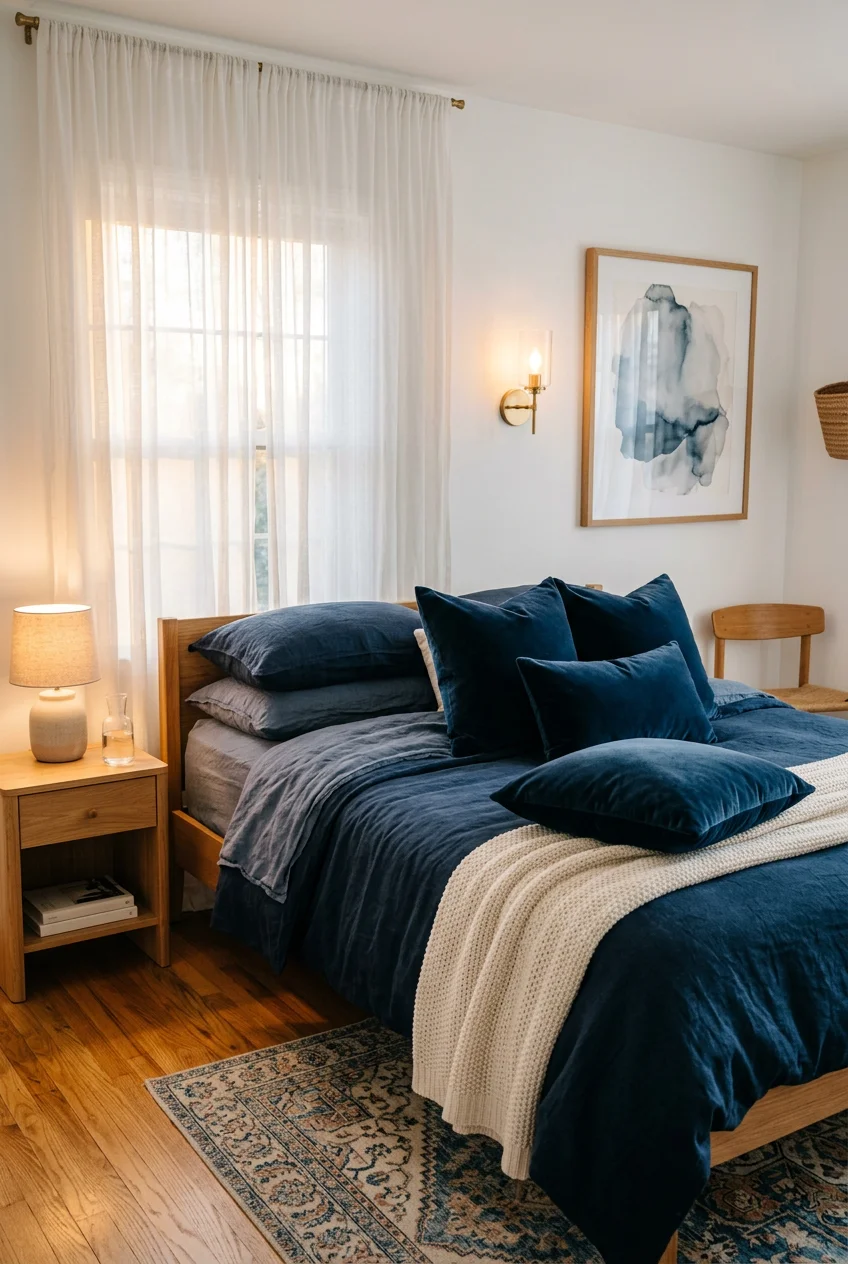
What’s Inside
- Embrace Layered Blues for Depth
- Choose a “Not-Quite Navy” Wall Color
- Incorporate Warm Metals to Prevent Coldness
- Invest in High-Quality Linen Bedding
- Create a Feature Wall with Paneling
- Soften Dark Blues with Creamy Whites
- Use Blue on the Ceiling for an Unexpected Sky Effect
- Integrate a Transformative Teal Accent
- Avoid Over-Accessorizing for a Calm Vibe
- Use Smart Lighting to Adjust Ambiance
- Introduce a Pop of Contrasting Color
- Ground the Room with a Large Blue Rug
- Consider Built-in Storage in a Muted Blue
- Hang Heavy Navy Velvet Curtains
- Opt for a Blue Upholstered Headboard
- Execute a Two-Tone Painted Wall
- Source Blue Glass Table Lamps
- Curate a Monochromatic Blue Art Gallery
- Refresh Vintage Nightstands with Navy Paint
Most people slap a coat of navy paint on their walls, toss a white duvet on the bed, and wonder why the room feels like a nautical-themed dentist waiting area. Nailing blue bedroom decor takes more than picking a paint chip at Lowe’s. You’ve got to manipulate light, texture, and undertones so the space feels restful rather than freezing. If you only try one idea here, make it #7. Painting the ceiling a pale blue mimics the open sky and completely changes how cramped a room feels.
Skip this list if your bedroom faces north and only gets a tiny sliver of gray daylight. Heavy blues in naturally dark, cold rooms just look like bruised shadows. You’re better off with warm terracottas or creamy yellows to fake the sunlight you don’t actually have. I learned that the hard way.
1. Embrace Layered Blues for Depth

A huge mistake is matching the walls exactly to the bedding. It flattens the room. Instead, layering various blue tones from light to dark creates a sophisticated gradient. It’s a rising trend for 2026. Picture painting the walls a soft, muted tone like Sherwin-Williams Sleepy Blue (it has an LRV of 58, so it reflects a decent amount of light). Then, anchor the bed with a deep navy duvet cover. Finish it off by tossing a couple of 20×20 inch throw pillows in a lighter sky blue and a rich teal on top. This contrast keeps the eye moving. You can easily find inexpensive tonal pillows at places like Target or HomeGoods to build this look without spending a fortune. The catch: mixing too many different undertones (like a purple-blue next to a green-blue) looks messy. Stick to blues with similar gray bases so they blend properly.
2. Choose a “Not-Quite Navy” Wall Color

Best for: rooms with large windows.
Going straight for a pitch-black navy is a rookie move that usually turns a bedroom into a cave. For a sophisticated yet inviting feel, opt for a deep blue that holds onto its color pigment even in low light. Farrow & Ball’s Hague Blue is a brilliant choice because it brings strong true blue tones, while Benjamin Moore’s Van Deusen Blue (HC-156) offers a deeper navy-blue base with distinct gray undertones. These shades add elegance without swallowing the room, especially when you balance them with lighter furnishings like a pale oak dresser or crisp white baseboards. Painting a room this dark requires flawless wall prep, though. Every single dent or bad drywall seam will show up instantly under a dark satin finish. The catch: dark paint absorbs light, so you’ll likely need to double your artificial lighting budget to keep the room functional at night.
3. Incorporate Warm Metals to Prevent Coldness

A common mistake is letting blue rooms feel cold or sterile by pairing them with brushed nickel or chrome hardware. Blue is inherently a cool color. To counteract the chill, you have to introduce warm metallic accents. Antique brass, unlacquered brass, or aged gold tones are the smartest choices here. Swap out standard builder-grade drawer pulls for heavy brass hardware, or flank the bed with antique brass bedside lamps. A solid pair of 24-inch tall brass lamps typically ranges from $80 to $150 each at stores like CB2 or West Elm. The yellow undertones in the metal strike a perfect contrast against a blue wall, highlighting the paint’s depth while adding a necessary luxurious touch. It’s a simple swap that changes the room’s temperature. The catch: mixing too many different metal finishes looks chaotic. Pick one warm metal and commit to it.

Govee RGBIC LED Strip Lights, Smart LED Lights for Bedroom
If you want something that just works, Govee RGBIC LED Strip Lights is a safe bet (252 reviews, 4.5 stars).
4. Invest in High-Quality Linen Bedding

Best for: hot sleepers.
Linen bedding is dominating bedroom trends because its natural, slightly rumpled texture brings a calm, vacation-like vibe to an otherwise formal space. Crisp cotton percale can sometimes make a blue room feel too stiff or hotel-like. Consider a blue linen duvet cover set from brands like BOKSER HOME or Bare Home. A Queen size set in these brands typically ranges from $100 to $240 depending on sales. The French Linen and Cotton Duvet Cover Set by BOKSER HOME is a highly specific, comfortable option that blends the breathability of linen with the softness of cotton. The heavy texture of the fabric casts tiny shadows across the bed, making a solid blue color look much more dynamic than a flat, shiny sateen weave. The catch: pure linen wrinkles constantly. If you demand a perfectly smooth, military-tucked bed every morning, this fabric will drive you crazy.
5. Create a Feature Wall with Paneling

Wall paneling or heavily textured wallpaper in blue is a strong architectural trend for 2026. A pale blue paneled accent wall behind the bed extends the vertical silhouette of the room and adds necessary visual interest, especially in smaller, boxy spaces. Installing a simple board and batten grid using 1×3 MDF trim from Home Depot, then painting it all a cohesive medium blue, upgrades a basic drywall box. Alternatively, a delicate geometric blue wallpaper can provide intrigue without overwhelming the space. The texture of the paneling catches light differently throughout the day, ensuring the blue color never looks flat. It’s a weekend project that pays off massively. The catch: feature walls can sometimes make a room feel lopsided if the other three walls are left bare. You have to balance the visual weight with heavy curtains or substantial furniture on the opposite side. You might also like: 15 Boys Bedroom Decor for Every Budget
6. Soften Dark Blues with Creamy Whites

To ensure deep blues feel cozy rather than stark, you have to pair them with creamy white trim, oat-beige upholstery, or light oak floors. Pure, stark white against dark navy often creates a jarring, high-contrast maritime look that feels out of place in a relaxing bedroom. Layering natural, earthy textures like rattan, chunky woven wool, and unfinished wood prevents the room from feeling like a sterile museum. For instance, placing a woven rattan headboard against muted blue walls creates a perfectly balanced composition. The organic materials break up the heavy blocks of cool color. You can easily find woven accents at places like Target or World Market to soften the edges of a deeply saturated room. The catch: leaning too heavily into rattan and unfinished wood can accidentally push the room into a cheap coastal theme. Keep the furniture lines clean and modern. You might also like: 19 Modern Teen Boy Bedroom You Need to See

Leeleberd Led Lights for Bedroom 100 ft (2 Rolls of 50ft)
Leeleberd Led Lights for Bedroom 100 ft (2 Rolls of 50ft) Music Sync C has been one of the most consistently praised picks in this category. 205 reviewers averaged 4.5/5.
7. Use Blue on the Ceiling for an Unexpected Sky Effect

Best for: rooms with low ceilings.
A surprising tip is to paint the ceiling a very light, airy blue. Farrow & Ball’s Borrowed Light (No. 235) is an exceptional choice for this. It creates an immediate sense of openness and makes the room feel incredibly cool and peaceful. When the morning sunlight peaks in, it reflects off the blue ceiling, mimicking a classic English Garden conservatory feel. Most people default to ceiling-white out of the can, which usually reads as a dull, shadowy gray in corners. A pale blue ceiling draws the eye upward, faking extra height in rooms with standard 8-foot ceilings. You just need to ensure your wall color is neutral enough to let the ceiling be the star of the show. The catch: painting ceilings is a physically miserable task that requires meticulous taping, and a blue ceiling limits your future wall color choices. You might also like: 18 Teen Girls Bedroom Ideas You Need to See
8. Integrate a Transformative Teal Accent

WGSN named Transformative Teal as a major color of the year for 2026. It’s a complex fusion of deep blue and aquatic green that brings incredible energy to a space. You don’t need to drench the whole room in it. Incorporate this vibrant shade through a single, heavy velvet accent chair placed in a reading nook. A decent quality teal velvet armchair typically costs between $200 and $500 at retailers like Wayfair or Article. Teal naturally complements both warm and cool palettes, acting as a bridge between stark blues and warmer wood tones. If a chair is too much, a large piece of abstract artwork featuring heavy teal brushstrokes does the exact same job. It adds a necessary layer of depth that keeps a standard blue bedroom from looking predictable. The catch: teal is a dominant, attention-grabbing color. If you place a teal chair in the corner, it’ll immediately become the focal point.
9. Avoid Over-Accessorizing for a Calm Vibe

While layering textures is beneficial, a massive mistake is over-accessorizing. Piling on fourteen different blue throw pillows, blue patterned rugs, blue curtains, and blue knick-knacks makes a bedroom feel chaotic. The fundamental rule of a relaxing space is restraint. You should use soft textures and minimal decor. Too many extras break the mood and create visual clutter. Focus on three or four standout pieces that reinforce the blue palette without competing for attention. A solid blue duvet, one piece of blue-toned art, and a blue ceramic lamp are plenty. Let the negative space on the walls and the flat surfaces of the dressers breathe. A cluttered nightstand covered in blue trinkets just gives the eye nowhere to rest. The catch: a minimalist approach means every single item you do display has to be high quality.

Govee RGBIC LED Strip Lights
Govee RGBIC LED Strip Lights has been one of the most consistently praised picks in this category. 252 reviewers averaged 4.5/5.
10. Use Smart Lighting to Adjust Ambiance

Best for: tech-savvy homeowners.
Paint colors change drastically depending on the light hitting them. A blue wall that looks gorgeous at 2 PM might look like a dismal gray at 9 PM under standard LED bulbs. Installing smart lights allows you to shift the color temperature between cool daylight and warm amber tones on demand. The Philips Hue starter kits, which typically run around $100 to $200, are the gold standard for this. Pushing warm, yellow-toned lighting onto bold blue walls at night prevents the room from feeling cold and creates a deeply inviting, moody glow. You can set the bulbs to gradually shift warmer as it gets closer to bedtime, which helps signal your brain to wind down. It’s a functional upgrade that alters how the blue paint behaves in the space. The catch: smart bulbs require constant Wi-Fi connectivity and a hub to function properly.
11. Introduce a Pop of Contrasting Color

While blue is inherently calming, a room entirely devoid of contrast quickly becomes sleepy and one-dimensional. A small, deliberate pop of a contrasting color adds necessary energy. Look directly across the color wheel from blue: oranges, yellows, and warm reds. Consider adding a lumbar accent pillow or a small decorative ceramic tray in soft mustard yellow, burnt orange, or even a muted coral. You can easily grab these small, inexpensive accents at stores like Target or Walmart. This tiny injection of warmth creates a vibrant atmosphere without overwhelming the serene blue base. It proves the room was intentionally designed rather than just bought as a matching set. The contrast actually makes the blue tones appear richer. The catch: the ratio is strictly 90/10. If you add too much, it looks like a sports team locker room.
12. Ground the Room with a Large Blue Rug

For a cohesive look, especially if you have lighter neutral walls or bare hardwood floors, you must anchor the space with a large blue area rug. A tiny rug floating at the foot of the bed is a classic error that makes the room look cheap. For a standard Queen or King bed, you need a rug measuring at least 8×10 feet. The rule is that the rug must extend 18 to 24 inches beyond both sides and the foot of the bed. This massive block of blue on the floor grounds the furniture and adds a crucial layer of texture. A faded, overdyed vintage-style blue rug from a retailer like Rugs USA or Wayfair hides stains brilliantly while tying the room’s color palette together. The catch: an 8×10 or 9×12 rug is heavy, expensive, and difficult to clean under. You’ll need to move the entire bed frame every time you want to vacuum.

Ultra Soft Cozy Sherpa Throw Blanket
If you want something that just works, Ultra Soft Cozy Sherpa Throw Blanket is a safe bet (46 reviews, 4.5 stars).
13. Consider Built-in Storage in a Muted Blue

Best for: small, cluttered bedrooms.
Freestanding dressers and wardrobes eat up valuable floor space and often make a room feel cramped. Designing custom built-in wardrobes around the bed or along an empty wall, then painting them a cohesive muted blue, solves the storage problem while acting as a massive decor statement. Painting the built-ins the exact same blue as the walls (color drenching) makes the bulky cabinets visually disappear, tricking the eye into thinking the room is much larger. You can achieve a high-end custom look on a budget by hacking basic IKEA PAX wardrobes and adding custom trim before painting them. Finish the doors with those warm brass pulls mentioned earlier for a polished look. The catch: true built-in cabinetry is a permanent installation. If you decide you hate the layout a year from now, tearing them out ruins the drywall and the flooring underneath.
14. Hang Heavy Navy Velvet Curtains

Flimsy, sheer white curtains do absolutely nothing for a bedroom’s aesthetic. Hanging heavy, dark navy velvet curtains adds immense luxury and practical value. You want curtains that are lined for total blackout, which drastically improves sleep quality by blocking streetlights and morning sun. Hang the curtain rod as close to the ceiling as possible, and ensure the fabric kisses the floor. Most people hang the rod right on the window casing, which visually chops the wall in half and makes the ceiling feel low. The heavy texture of velvet absorbs sound, reducing echoes in rooms with hard floors, and the deep navy fabric acts as a striking vertical column of color against lighter walls. You can find surprisingly decent velvet options at IKEA or Half Price Drapes for a mid-range budget. The catch: velvet is a magnet for pet hair and dust. Trust me on this.
15. Opt for a Blue Upholstered Headboard

A wooden headboard is fine, but an upholstered headboard in a rich blue fabric instantly makes the bed the undeniable focal point. Whether you choose deep navy velvet, a casual blue linen, or a textured blue tweed, the soft surface provides a comfortable backrest for reading while anchoring the room’s color scheme. A tall, channel-stitched or deeply tufted headboard adds architectural interest without requiring any construction or paint. It’s a brilliant way to inject a massive block of blue into a rental apartment where you aren’t allowed to paint the walls. Retailers like Pottery Barn or Wayfair offer countless variations, typically ranging from $300 to $800 depending on the fabric and size. The headboard sets the tone for the entire bedding arrangement. The catch: upholstered headboards absorb hair oils and sweat over time. They require regular vacuuming and occasional professional steam cleaning to stay fresh.

AMADA HOMEFURNISHING Floating Shelves
AMADA HOMEFURNISHING Floating Shelves punches above its price — 117 buyers rated it 4.5 stars. The kind of pick people reorder.
16. Execute a Two-Tone Painted Wall

Best for: rooms with existing chair rail molding.
If painting an entire room dark blue feels too intimidating, the two-tone wall technique is the perfect compromise. Paint the bottom third or half of the wall a deep, grounding blue, and leave the top section a crisp, bright white or soft cream. This technique grounds the room, hides scuff marks near the floor, and keeps the upper half airy so the space doesn’t feel closed in. If you have existing chair rail molding, use that as the natural dividing line. If not, use a laser level and high-quality painter’s tape to create a razor-sharp line right at the 36-inch or 42-inch mark. It’s a classic, slightly traditional look that works beautifully with modern furniture. The catch: getting a perfectly straight, bleed-free paint line on textured drywall is frustrating. If your walls have a heavy orange peel texture, the paint will bleed under the tape.
17. Source Blue Glass Table Lamps

Sometimes, the best blue bedroom decor ideas aren’t about paint or fabric. Large table lamps with translucent blue glass bases add a layer of color that literally glows when the light is switched on. A solid ceramic lamp blocks light, but a glass base catches the ambient light in the room, creating a watery reflection. Look for chunky, oversized glass bases in a deep sapphire or a muted sea-glass blue. Paired with a crisp white linen drum shade, these lamps provide excellent task lighting while serving as sculptural art pieces on your nightstands. You can often find excellent glass lamps at HomeGoods or Target for under $100 a piece. They bring a subtle coastal or modern elegance without being overly literal. The catch: glass lamps are fragile and show every speck of dust and fingerprint. They require constant wiping down with glass cleaner.
18. Curate a Monochromatic Blue Art Gallery

Blank walls make a bedroom feel unfinished, but a random assortment of colorful art can clash with a carefully planned blue palette. Curating a gallery wall using strictly blue-toned artwork solves both problems. Gather a mix of abstract blue watercolors, indigo botanical prints, and black-and-white photography. Frame them all in identical thin black or light oak frames for cohesion. Hanging a grid of six or nine identically sized frames above a long dresser creates a massive visual impact that looks expensive. You can source affordable digital downloads from Etsy and print them locally, keeping the entire project budget-friendly. The monochromatic theme ensures the art enhances the room’s color scheme rather than fighting it. The catch: measuring and hanging a perfectly spaced gallery wall is a math-heavy nightmare. If one frame is off by a quarter of an inch, the entire grid looks sloppy.
19. Refresh Vintage Nightstands with Navy Paint

Buying brand new, high-quality solid wood nightstands is shockingly expensive. A smarter, more budget-friendly approach is to find a pair of sturdy, beat-up vintage nightstands at a thrift store or on Facebook Marketplace and paint them a glossy navy blue. Using a durable cabinet paint, like Sherwin-Williams Emerald Urethane Trim Enamel, ensures a hard, factory-like finish that won’t chip when you set a water glass down. Swap out the old wooden knobs for sleek brass pulls to complete the transformation. This allows you to inject a custom shade of blue into the room while keeping solid, well-built furniture out of the landfill. It’s a weekend DIY that yields custom results you can’t buy in a big-box store. The catch: proper furniture painting requires exhausting preparation. You have to clean, sand, degloss, and prime the wood before you even open the blue paint. Skipping the prep work guarantees the paint will peel off in sheets.
How we chose these ideas: We evaluated these concepts based on their visual impact, accessibility for varying skill levels, and adaptability across different budgets. The focus remained on practical applications that manipulate light and texture rather than relying on expensive, single-use decor items.
Blue is a powerful color, but it demands respect. Treat the undertones carefully, balance the cool walls with warm metals, and don’t be afraid to paint the ceiling. Pin this list for your next weekend room refresh, and start planning your paint swatches.
Frequently Asked Questions
What colors go best with blue bedroom decor?
Warm whites, creamy beiges, mustard yellow, and brass are ideal companions for blue. These warm tones counteract the natural coolness of blue, preventing the room from feeling sterile or uninviting.
How do you keep a blue bedroom from looking too dark?
Use smart lighting with adjustable color temperatures, incorporate large mirrors to bounce natural light, and paint the ceiling a pale, reflective shade. Layering lighter blue textiles also helps break up heavy, dark walls.
Is blue a good color for a small bedroom?
Yes, but you have to use it strategically. Painting the walls and built-ins the same muted blue (color drenching) blurs the room’s edges, tricking the eye into thinking the space is larger than it actually is.
What is the best blue paint for a bedroom?
Muted blues with gray or green undertones work best for bedrooms because they feel restful. Farrow & Ball’s Hague Blue and Sherwin-Williams’ Sleepy Blue are excellent choices that adapt well to changing light conditions.
