What’s Inside
- Master the Two-Thirds Rule for Sizing Above Furniture
- Hang Art at the Exact Right Eye Level
- Plan the Layout with Paper Templates
- Keep Consistent Spacing in Gallery Walls
- Embrace Soothing Neutrals and Nature Themes
- Make a Massive Statement with Oversized Art
- Integrate Digital Art Displays for Dynamic Decor
- Fix the Common Mistake of Art That Is Too Small
- Install Dedicated Art Lighting
- Combine Aesthetics and Acoustics with Art Panels
- Implement a Flexible Picture Rail System
- Layer Art on Picture Ledges for Depth
- Protect Your Prints from Direct Sunlight
- Curate a Cohesive Color Palette
- Leave Intentional Breathing Room
- Mix Frame Textures for Visual Weight
- Lean Large Canvases Instead of Hanging
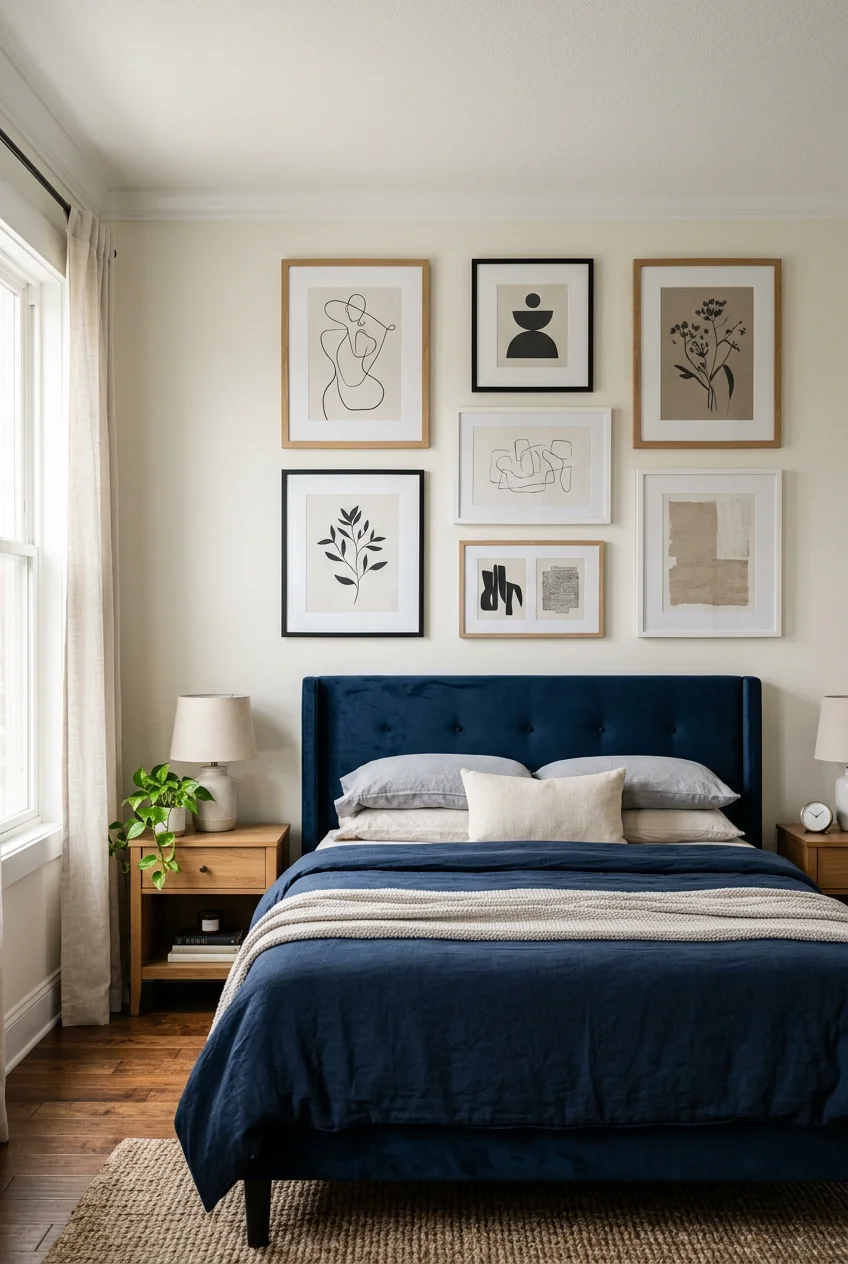
Most folks stare at a blank wall above their headboard, panic, and hammer one tiny frame smack in the middle. The result? A bedroom art wall that looks like an afterthought. Hanging art demands real math, careful spacing, and a sense of visual weight. If you only try one idea here, make it #6. Anchoring the room with one massive piece solves the scale problem instantly and requires just one nail, saving you the headache of a complex gallery layout. Trust me on this.
Skip this guide if you’re a strict minimalist who needs bare walls to sleep. These tips are about adding weight, texture, and color to your sleeping space. If seeing anything other than flat white paint stresses you out, this layered look isn’t for you.
1. Master the Two-Thirds Rule for Sizing Above Furniture

People hang a tiny 8×10 frame over a huge king bed and wonder why the room feels off. The fix is simple math. When hanging art above a bed or dresser, make sure the piece covers about two-thirds to three-quarters of the furniture’s width. That’s 60 to 75 percent of the horizontal space. A standard king bed is 76 inches wide, so your art needs to be 50 to 57 inches across to anchor the wall properly. A queen bed is 60 inches wide, needing 36 to 45 inches of art. You can hit this with one big piece or a tight grid of three smaller ones. If you’re shopping at places like Target or Costco, remember to measure the total width of the frames plus the 2-inch gaps between them to hit that 50-inch mark. I learned that the hard way.
Best for: large primary bedrooms with wide furniture.
The catch: store-bought frames rarely hit these exact dimensions, often forcing you to pay for custom framing or custom mats.
2. Hang Art at the Exact Right Eye Level

Hanging art too high is the #1 mistake in home design. It forces people to crane their necks and makes the ceiling feel lower. The center of a piece—or the middle of a gallery wall—should sit at eye level, roughly 57 to 60 inches from the floor. If you’re hanging it over furniture, keep the bottom edge of the frame 6 to 8 inches above the headboard or dresser. This keeps the art anchored to the furniture instead of letting it float toward the ceiling. Measure twice and mark the wall with a pencil before you reach for the hammer.
The catch: this formula falls apart if your bedroom has low, slanted ceilings or tall antique headboards that take up all the wall space.
3. Plan the Layout with Paper Templates

Hammering nails without a plan guarantees a crooked display. Before you touch a tool, trace your frames onto butcher paper or old newspaper. Cut these templates out to the exact size of your art. Use painter’s tape to stick the paper blocks to your wall. This lets you play with spacing, swap the order, and check the balance from the doorway. You can mark the nail spot right on the paper, hammer through it, and tear the paper away. It’s a foolproof way to manage complex grids.
Best for: beginners trying their first gallery wall.
The catch: tracing, cutting, and taping adds at least two hours of prep work before you even start the installation.

Acovy 30in Long Floating Shelves for Wall Set of 2
Acovy 30in Long Floating Shelves for Wall Set of 2 is sturdier in person than the photos suggest — over 8 buyers gave it 4.5 stars.
4. Keep Consistent Spacing in Gallery Walls

A gallery wall becomes chaotic if the gaps between frames vary. For a clean, professional finish, aim for exactly 2 to 3 inches between every frame. This uniform gap creates a rhythm, letting each piece stand out without feeling crowded. For huge walls with frames bigger than 16×20, you might bump that gap up to 4 inches. To keep it consistent, cut a block of wood or cardboard to your exact measurement and use it as a spacer as you hang each piece.
The catch: older homes rarely have perfectly flat walls, so a rigid spacer can still lead to crooked frames if the wall bows.
5. Embrace Soothing Neutrals and Nature Themes

Design trends for 2026 lean toward calming vibes in the bedroom. Go for neutral tones like warm beige, soft gray, dill green, olive, or wet sand. Look for subtle textures, nature-inspired imagery, and simple shapes to create a sanctuary. Abstract art with flowing lines in these palettes works great above a bed. Avoid neon colors or aggressive patterns that keep your brain wired when you’re trying to wind down. Adding raw linen mats or unbleached canvas brings necessary texture to these quiet schemes. You might also like: 15 Aesthetic Bedroom Inspo You Need to See
The catch: an all-neutral palette can look washed out and like a bland hotel room if you don’t add enough texture. You might also like: 15 Inspiring Master Bedroom Wall Decor to Transform Your Space
6. Make a Massive Statement with Oversized Art

A major trend for 2026 is XXL wall art. Instead of messing with a gallery wall, pick one huge statement piece. A 40×60 inch canvas above your bed anchors the room and adds instant personality. It looks striking against plain walls. Large-scale art commands attention and makes a standard bedroom feel grand. You can find large prints from independent artists or print high-res public domain paintings on canvas. You might also like: 17 Minimalist Bedroom Ideas Worth Trying
Best for: minimalists who hate visual clutter.
The catch: a 40×60 inch framed canvas is bulky and fragile, making it a nightmare to move if you change apartments often.

upsimples Floating Shelves for Wall
A dependable everyday pick — upsimples Floating Shelves for Wall pulls in 47 ratings at 4.5 stars. Not flashy, just solid.
7. Integrate Digital Art Displays for Dynamic Decor

Smart digital photo frames are taking over 2026 bedroom designs. The Meural Canvas II ($400 to $700) has a matte finish that looks like real paint. The Samsung The Frame TV (starts around $500) sits flush against the wall and shows classic art when off. For a smaller footprint, the Aura Aspen ($199 to $249) offers high-res displays. The SwitchBot AI Art Frame uses an e-ink screen that lasts months on one charge. These screens let you swap your art based on your mood or the season.
The catch: hiding the black power cord means cutting holes in your drywall or settling for ugly plastic cord covers.
8. Fix the Common Mistake of Art That Is Too Small

Hanging art that’s too small makes it look lost and the room feel cheap. If you have a tiny 5×7 print you love, trick the eye into thinking it’s bigger. Put that print inside a 16×20 frame with a massive, thick white mat. You can find cheap, oversized frames at Walmart or the seasonal aisle at Kroger. If you’re on a tight budget, some decorators frame vintage-looking paper bags from Trader Joe’s, Whole Foods, or Sprouts. Cutting out a botanical print from a Sprouts bag and putting it in a big matted frame creates large-scale art for pennies. No joke.
Best for: tight budgets and empty walls.
The catch: buying thick, custom-cut mats to fit small art into large frames often costs more than the cheap frame itself.
9. Install Dedicated Art Lighting

Lighting changes everything. Enhance your art with dedicated overhead lights. Picture lights, like the House of Troy Slim-Line ($150 to $300), highlight individual pieces with a moody glow. Or, try LED strips behind larger canvases or under picture ledges for a soft halo effect. This draws eyes to your display and gives you a great low-light option for reading in bed.
The catch: hardwiring a light needs an electrician, while battery-powered versions eat through AA batteries in days.
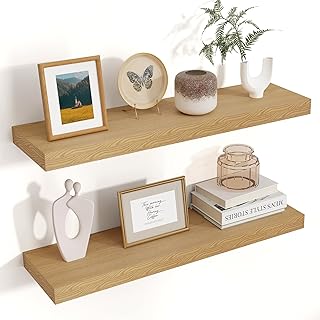
Venusmiles Floating Shelves for Wall 24 inch Long
If you want something that just works, Venusmiles Floating Shelves for Wall 24 inch Long is a safe bet (412 reviews, 4.5 stars).
10. Combine Aesthetics and Acoustics with Art Panels

Bedrooms with hardwood floors often echo. For a functional fix, use decorative acoustic panels that double as art. Brands like GIK Acoustics, Audimute, and Overtone sell custom-printed panels that absorb sound while showing off high-res art. These run from $40 to over $500. They cut down on echo and muffle street noise, looking just like a standard canvas.
The catch: these panels are filled with dense foam, so they stick out further from the wall than a regular frame.
11. Implement a Flexible Picture Rail System

If you’re always swapping art, nailing new holes ruins the drywall. Invest in a professional picture rail system. The STAS Minirail ($50 to $100 for a 6-foot rail) mounts near the ceiling. It lets you hang, slide, and rearrange art using transparent cords without drilling more holes. AS Hanging Display Systems has similar options. It’s what galleries use and is perfect for indecisive decorators.
Best for: renters who face fines for drywall damage.
The catch: the vertical hanging wires are always slightly visible, which breaks the illusion of floating art.
12. Layer Art on Picture Ledges for Depth

Create a dynamic look by mounting shallow picture ledges above the bed. The IKEA MOSSLANDA ($10 to $20) is perfect for leaning frames, small objects, or plants. This allows for deep layering. Put a tall 24×36 frame in the back and overlap it with an 8×10 in the front. It creates a collected look and lets you rotate your favorites without committing to a permanent spot.
The catch: leaning art on a ledge creates a surface that collects a visible layer of dust every week.

AMADA HOMEFURNISHING Floating Shelves
If you want something that just works, AMADA HOMEFURNISHING Floating Shelves is a safe bet (117 reviews, 4.5 stars).
13. Protect Your Prints from Direct Sunlight

A common mistake that ruins art is hanging it across from an unshaded, south-facing window. UV rays cause prints and canvases to fade, yellow, and deteriorate. Position your best art on walls that get ambient light but stay out of direct sun. If you have to hang a piece in a sunny spot, pay the extra for frames with UV-protective museum glass to block the damage.
The catch: true museum-grade UV glass is reflective and can easily triple the cost of framing one piece.
14. Curate a Cohesive Color Palette

To make an art wall feel intentional, pick pieces that share a strict color palette. Choose 2 to 3 dominant colors from your existing decor, like the navy from your duvet or the terracotta from your rug. Only buy art that uses these hues. This creates visual harmony and makes the space feel pulled together, even if the styles vary from abstract to photography.
The catch: sticking to a rigid palette means you’ll have to skip great art that doesn’t match your bedding.
15. Leave Intentional Breathing Room

While floor-to-ceiling gallery walls look cool in a living room, they often feel suffocating in a bedroom. Avoid overcrowding. It’s vital to leave negative space around your art to let it breathe. Leave at least 12 to 18 inches of blank wall near the corners and the ceiling. This empty space creates calm and stops the room from feeling like a cluttered antique shop.
The catch: leaving wide margins feels wrong to collectors who want to show off their entire collection at once.

BAYKA Floating Shelves for Wall
BAYKA Floating Shelves for Wall is sturdier in person than the photos suggest — over 96 buyers gave it 4.5 stars.
16. Mix Frame Textures for Visual Weight

Matching black frames are clean, but they can look flat. To add depth, mix your materials. Pair a chunky, 2-inch raw oak frame with a sleek, 1/2-inch brushed brass frame. Add a matte black metal frame for contrast. This mix of material and thickness adds visual weight. It makes the collection look like it was curated over decades rather than bought in one go from a big-box store.
Best for: eclectic or vintage-inspired bedroom designs.
The catch: mixing too many textures without a unifying element backfires, making the wall look like a messy thrift store bin.
17. Lean Large Canvases Instead of Hanging

If you have an empty corner or a stretch of wall next to your nightstand, skip the hammer. Take a massive 40-inch tall framed canvas or a heavy floor mirror and just lean it against the wall. This creates a relaxed, bohemian vibe that feels chic. It works great with heavy, ornate vintage frames that are too risky to hang on basic drywall. Layer a smaller print on the floor leaning against the larger one for more dimension.
The catch: floor-leaning glass frames are a safety hazard in homes with large, energetic dogs or curious toddlers.
How we chose these ideas: We looked at these bedroom art strategies based on renter-friendliness, cost, effort, and visual impact. We focused on accessible materials and techniques that need minimal tools.
Your bedroom should be the one room in the house that helps your blood pressure drop. Take a weekend, measure your space, and get that art out of the closet and onto the wall. I recommend starting with the paper template method if you’re nervous about making holes. Pin this list to your board so you have the measurements handy when you’re standing in the frame aisle.
Frequently Asked Questions
How high should I hang my bedroom art wall?
The center of your art arrangement should sit at eye level, roughly 57 to 60 inches from the floor. If hanging directly above a headboard, leave a 6 to 8 inch gap between the furniture and the bottom of the frame.
How wide should art be over a king bed?
Art should span two-thirds to three-quarters of the bed’s width. For a standard 76-inch king bed, your art or gallery grouping should measure between 50 and 57 inches wide to look balanced.
How far apart should frames be on a wall?
Maintain a strict 2 to 3 inch gap between frames for a cohesive look. For oversized art pieces larger than 16×20 inches, you can expand this gap to 4 inches.
Can I hang art without damaging drywall?
Yes. Renters can use picture rail systems that mount near the ceiling, allowing art to hang from adjustable cords. Picture ledges are also great for leaning multiple frames with minimal drilling.
