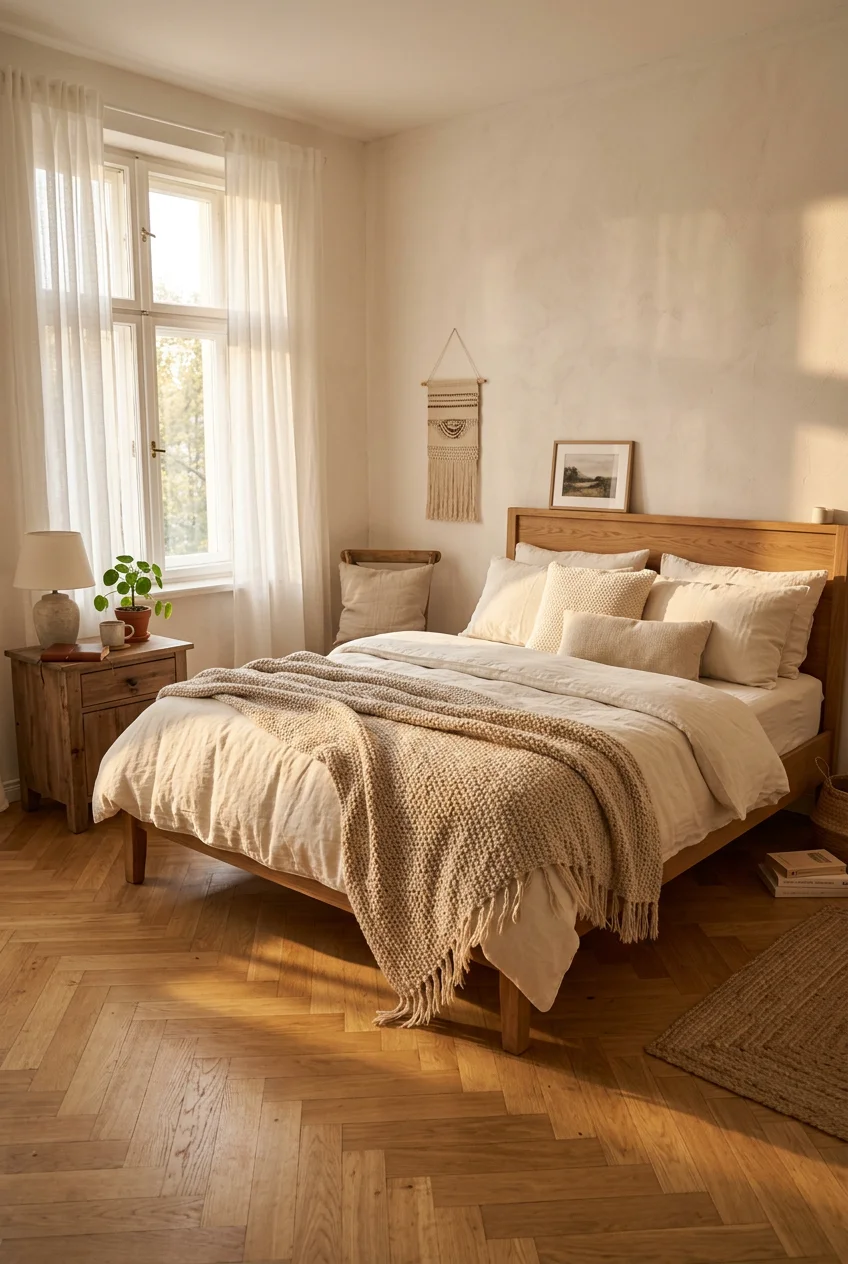
What’s Inside
- Master Layered Lighting with Warm Tones
- Incorporate Tactile Minimalism with Linen
- Ground the Space with an Oversized Wool Rug
- Introduce Sense-Scaping with Essential Oils
- Upgrade to Heavyweight Velvet Curtains for a Cosy Bedroom Aesthetic
- Add Live Greenery from Unexpected Places
- Swap Standard Pillows for European Squares
- Install a Dedicated Reading Sconce
- Layer Chunky Knit Blankets at the Foot
- Switch to a Low-Profile Upholstered Bed Frame
- Implement a No-Tech Zone with Analog Clocks
- Create Depth with Matte Wall Paint
- Add Woven Storage Baskets for Clutter
- Incorporate a Dedicated Seating Nook for a Cosy Bedroom Aesthetic
- Upgrade the Hardware on Your Nightstands
- Introduce Soundscaping with a White Noise Machine
Last November, I sat on my bare mattress under a harsh fluorescent bulb and cried. My room felt like a hospital ward. I realized a truly cozy bedroom needs more than ten random pillows thrown on a bed. It’s about sense-scaping and tactile minimalism, not just buying whatever looks good on Instagram. I wasted months trying the all-white trend before realizing it just makes a room feel cold. You have to layer textures, control the light, and engage your senses to actually want to be there. This guide breaks down how to fix a sterile space using specific pieces and measurements. I’ll walk you through my own changes and the mistakes that cost me money, so you don’t have to learn the hard way. Let’s get into the mechanics of building a room that helps you sleep. It works, trust me.
1. Master Layered Lighting with Warm Tones

Combine ambient, task, and accent lighting. You need three to five light sources to make a room feel dimensional. Most people rely on one overhead fixture. I did this for years; it casts awful shadows that make everything look flat. I switched to Philips Hue White Ambiance bulbs. They’re $49.99 for a two-pack, but dialing the temperature down to 2700K makes a huge difference. You want a soft, amber glow in the evening to signal it’s time to sleep. I once bought generic $5 LED bulbs, but they had a constant hum that drove me nuts when it was quiet. Stick to quality bulbs in table and floor lamps. Keep the overhead light off after 7 PM. Also, dust your bulbs monthly. A layer of dust dims the light and shifts the color temperature.
2. Incorporate Tactile Minimalism with Linen

Tactile minimalism focuses on rich textures, not patterns. Start with your bedding. Skip the cheap polyester blends. They feel like plastic. I learned that the hard way after a microfiber set left me waking up in a sweat every night. Now I use Kirkland Signature 680 Thread Count Cotton Sheets from Costco. A queen set is $69.99, and the fabric feels substantial without trapping heat. It gets softer with every wash. If you like a relaxed look, 100 percent French flax linen works, but it wrinkles like crazy. I prefer the crispness of heavy cotton percale. Layering a linen duvet cover over cotton sheets gives you that textured look while keeping smooth cotton against your skin. Buy a duvet insert one size larger than your cover for a plush, full look. Wash sheets weekly to keep them crisp.
3. Ground the Space with an Oversized Wool Rug

A cold floor ruins a relaxing vibe. You need a large rug to anchor the bed and provide a soft landing for your feet. A common mistake is buying a rug that’s too small. I bought a 5×7 rug years ago; it looked like a postage stamp under my queen bed. You need an 8×10 for a queen or a 9×12 for a king. I use the Threshold Woven Wool Area Rug from Target. It’s $149 for an 8×10. The wool blend insulates and dampens sound. Avoid synthetic rugs made of pure polypropylene if you can. They off-gas a chemical smell for weeks and never lay flat. Wool or cotton blends add real warmth. Make sure two-thirds of the bed sits on the rug. Vacuum without the beater bar to keep the wool loops from fraying.

50×70 Inch Rust Throw Blanket – Soft & Fluffy Fleece
50×70 Inch Rust Throw Blanket – Soft & Fluffy Fleece punches above its price — 13 buyers rated it 4.5 stars. I would buy it again.
4. Introduce Sense-Scaping with Essential Oils

Sense-scaping means designing for all five senses. Scent changes how your brain perceives comfort. I used to buy plug-in air fresheners, but they gave me headaches and smelled fake. Now I use natural oils. Last Tuesday at Whole Foods, I grabbed a 0.5 oz bottle of Aura Cacia Lavender Essential Oil for $7.99. I put five drops into a ceramic ultrasonic diffuser an hour before bed. The scent grounds the space. You can mix it with cedarwood or bergamot for something woodsy. Don’t run the diffuser all night, or you’ll get condensation on your furniture. Use a 60-minute timer. The subtle scent creates a boundary between the chaos of your house and your bedroom. Wipe the diffuser with white vinegar weekly to prevent mold.
5. Upgrade to Heavyweight Velvet Curtains for a Cosy Bedroom Aesthetic

Window treatments define your space. Flimsy sheer curtains let in too much light and offer no insulation. You need heavy curtains. I use Ikea Sanela cotton velvet drapes. They’re $39.99 for a pair of 98-inch panels. The velvet absorbs sound and blocks the morning sun. Hang your rod as close to the ceiling as possible, extending six to eight inches past the window frame. I hung my rods too low in my first place, which made the ceilings feel cramped. The 98-inch length lets the velvet just kiss the floor. If you buy standard 84-inch panels, they’ll look like high-water pants. The heavy drape adds luxury and enclosure. Use a handheld steamer after hanging to remove packaging creases.
6. Add Live Greenery from Unexpected Places

Plants bring life to a static room. You don’t need a jungle, just one or two well-placed greens. I used to buy expensive plants from boutiques, but they always died. Now I buy them at the grocery store. I found a great Monstera Deliciosa in a 6-inch pot at Trader Joe’s for $12.99. It sits on a wooden stool by the window. The organic shapes break up the rigid lines of the furniture. A big mistake I made early on was overwatering; check the soil with your finger and only water when the top two inches are dry. Put the plastic grower pot inside a decorative basket so you can drain it in the sink. Wipe the leaves with a damp cloth every few weeks so they can breathe. You might also like: 16 Small Closet Organization Bedroom for Every Budget

Bedsure GentleSoft White Throw Blanket for Couch
Bedsure GentleSoft White Throw Blanket for Couch – Cozy Soft Fleece Su punches above its price — 236 buyers rated it 4.5 stars. I would buy it again.
7. Swap Standard Pillows for European Squares

Standard pillows look flat when you make the bed. To build height, you need European square pillows at the back. They’re 26 by 26 inches. I bought two heavy feather-fill Euro inserts at Kroger for $14.99 each. The feather fill is key. Polyester inserts turn lumpy and won’t hold their shape. With feather inserts, you can give them a karate chop to make them look tailored. I wrap them in washed linen shams. Two Euro squares fit a queen bed, while a king needs three. Don’t sleep on these. They’re for propping yourself up while reading. Toss them on a chair at night. Throw them in the dryer with tennis balls monthly to restore their loft. You might also like: 20 Brilliant DIY Bedroom Wall Decor for Every Budget
8. Install a Dedicated Reading Sconce

Table lamps take up valuable nightstand space. If you want room for a book and water, move the lighting to the wall. I installed the Globe Electric Novogratz plug-in brass sconce. It’s $42.50 on Amazon. The plug-in feature means no electrician needed. You just mount it with two screws and plug it into the outlet behind your bed. I mounted mine 30 inches above the mattress. This keeps the bulb from shining in my eyes when I sit up to read. I used a table lamp for years but kept knocking it over. Wall sconces provide intentional, custom-feeling light. Ensure the inside of the shade is white to reflect light properly. Use clear adhesive cord clips to run the wire neatly down the wall. You might also like: 15 Stunning Modern Bedroom Lighting to Transform Your Space
9. Layer Chunky Knit Blankets at the Foot

A flat bed looks boring. You need textural contrast at the foot of the bed. I use a heavy, chunky knit wool throw. I found my favorite one at Sprouts during a seasonal sale for $39.99. It’s 50 by 60 inches. The oversized yarn loops add a great tactile element. Don’t fold it perfectly. Grab it by the center and drape it casually across the bottom corner. I used to fold blankets into tight, hotel-style rectangles, which felt too formal. The casual drape softens the look. Avoid acrylic knits if you plan to use the blanket; they pill and shed. Stick to wool or cotton blends for warmth. If you buy real wool, remember it needs dry cleaning.

HOMZ 2-Pack Snaplock, Small Clear Plastic Storage Organizer
HOMZ 2-Pack Snaplock punches above its price — 56 buyers rated it 4.5 stars. I would buy it again.
10. Switch to a Low-Profile Upholstered Bed Frame

Sharp corners on wood or metal frames disrupt a relaxed vibe. I stubbed my toe on a heavy footboard for three years before I got rid of it. I replaced it with the Zinus Lottie Upholstered Platform Bed. It’s $215 for a queen. The padded headboard is great for reading, and the fabric absorbs noise. I chose a low-profile frame that sits 10 inches off the floor. Lowering the bed makes the ceilings feel taller. The gray fabric adds another layer of texture. If you have a box spring, you’ll need to ditch it for a platform bed, or the mattress will sit too high. A fabric-wrapped frame anchors the room without dominating it. Vacuum the headboard monthly to remove dust.
11. Implement a No-Tech Zone with Analog Clocks

Glowing screens ruin a relaxing environment. Blue light hurts your melatonin, and notifications cause anxiety. I went phone-free in my room last year. I charge my phone in the kitchen. To wake up, I use a Braun Classic Analog Alarm Clock. It’s $32 and has a silent sweeping second hand, so there’s no annoying ticking. The act of pressing a button to silence an alarm feels much better than swiping a screen at 6 AM. I used to spend my first twenty minutes scrolling emails in bed. Removing digital devices changed the whole energy of the space. Keep the digital clutter out of your sanctuary. Put the clock across the room so you have to get up to turn it off.
12. Create Depth with Matte Wall Paint

Glossy paint reflects too much light and shows every drywall imperfection. For a soft environment, you need a flat or matte finish. It absorbs light and makes walls look velvety. I painted my room with Behr Premium Plus in Swiss Coffee, using a matte finish. A gallon is $34.98 at Home Depot. The warm, creamy tone keeps the room from feeling like a box. I previously used satin paint because someone said it was easier to clean. It looked shiny and cheap, like plastic. Matte paint gives walls a rich, chalky depth. If you have kids or pets, eggshell is a decent compromise, but matte is better for texture. Use a high-quality roller to avoid streaks. Always buy an $8 sample pot first to test the color under your lighting.

Amazon Basics Bedroom Closet Organizer with 5-Fabric
Amazon Basics Bedroom Closet Organizer with 5-Fabric Storage Drawers f has been one of the most consistently praised picks in this category. 41 reviewers averaged 4.5/5.
13. Add Woven Storage Baskets for Clutter

Visual clutter is mental clutter. You can’t relax if you’re staring at a pile of clothes. I use large woven seagrass baskets to hide the mess. I bought a Better Homes & Gardens woven hyacinth basket from Walmart for $19.98. It sits in the corner by my dresser. Every night, I toss my decorative Euro pillows and the throw blanket into the basket. It keeps them off the floor and maintains a tidy look. I used to dump extra pillows on an accent chair, making it unusable. Woven materials like seagrass or jute add organic warmth. Make sure you buy a basket with a rigid wire frame inside, or it’ll slouch under the weight of heavy blankets. Use a microfiber duster on the basket weekly.
14. Incorporate a Dedicated Seating Nook for a Cosy Bedroom Aesthetic

A bed should be for sleeping. If you spend hours sitting on your mattress to scroll or put on shoes, your brain stops associating it with rest. To fix this, you need a secondary seating area. I carved out a nook by the window using a Threshold Boucle Accent Chair from Target. It’s $150. The looped fabric adds a nubby texture that contrasts with the smooth bedding. I paired it with a small wooden side table. I sit there to drink coffee on Saturdays instead of staying in bed. Don’t buy a chair that’s too big, or it’ll swallow the corner. A small, structured armchair makes the space feel like a complete suite. Add a lumbar pillow to the chair to tie in your bedding colors.
15. Upgrade the Hardware on Your Nightstands

Builder-grade furniture often comes with cheap pulls that drag down the whole look. You don’t need new nightstands to get a custom look. I bought basic white nightstands five years ago, and they were boring. Last month, I ordered solid unlacquered brass drawer pulls from Etsy for $4.50 each. I swapped the silver knobs in ten minutes with a screwdriver. The heavy brass adds vintage warmth and feels substantial. Measure the distance between the holes before ordering. Mine needed 3-inch center-to-center pulls. I once ordered handles without measuring and had to drill new holes and fill the old ones with putty; it looked awful. Small, tactile details like heavy metal hardware improve the daily experience of using the room. Unlacquered brass will develop a beautiful patina over time.

Govee RGBIC LED Strip Lights
A dependable everyday pick — Govee RGBIC LED Strip Lights pulls in 249 ratings at 4.5 stars. Not flashy, just solid.
16. Introduce Soundscaping with a White Noise Machine

The final layer of sense-scaping is auditory. Total silence can be distracting; house creaks and street noise get amplified. I use the Hatch Restore. It’s $129, which is an investment, but it combines a sound machine with a sunrise alarm. I set it to pink noise. It has deeper, lower frequencies than white noise, sounding more like a rushing waterfall than static. I tried a free app on my phone, but the audio looped awkwardly, and the speaker sounded tinny. The Hatch fills the room with a rich, masking sound that blocks out the neighbor’s dog. Controlling your acoustic environment is just as important as the lighting when you’re building a space for rest. Keep the volume around 40 decibels so it masks noise without becoming a nuisance.
Building a space that feels restorative takes planning, but the payoff is massive. You don’t have to buy everything at once. Start by changing your lightbulbs and upgrading your sheets; you’ll immediately feel the difference. I spent years sleeping in a room that stressed me out before I learned to layer these elements. No exaggeration. If you implement half these changes, your room will feel completely different by next weekend. Pin this guide to your mood board so you can reference the measurements and products when you start your own redesign.
Frequently Asked Questions
What is tactile minimalism in a bedroom?
Tactile minimalism focuses on rich, physical textures like heavy wool, washed cotton, and velvet rather than busy visual patterns. It creates a calm, uncluttered space that still feels warm and inviting to the touch.
How do I layer lighting properly?
You need three to five distinct light sources. Skip the harsh overhead fixture and use warm 2700K LED bulbs in table lamps, floor lamps, and wall sconces to create a soft, amber glow.
What is sense-scaping?
Sense-scaping means designing for all five senses. In a bedroom, this involves using essential oil diffusers for scent, white noise machines for sound, and soft textiles for touch, rather than just focusing on how the room looks.
What size rug do I need for a queen bed?
You need an 8×10 foot rug for a queen bed. A smaller 5×7 rug will look disproportionate and fail to provide a soft landing pad for your feet on both sides of the mattress.
