What’s Inside
- Embrace Verticality with Smart Storage Solutions
- Master the Art of Multifunctional Furniture
- Scale Down the Nightstands
- Install Wall Sconces Instead of Table Lamps
- Use Rugs to Define the Sleeping Zone
- Mount Curtains High and Wide
- Optimize Under-Bed Space Methodically
- Swap the Footboard for a Storage Bench
- Choose Paint Colors with Low Light Reflectance
- Hang a Large Mirror Opposite the Window
- Implement Floating Shelves for Decor
- Pick Low-Profile Bed Frames
- Utilize Over-the-Door Storage
- Layer Bedding for Texture Not Bulk
- Opt for Built-In Wardrobes When Possible
- Limit the Color Palette to Three Shades
- Integrate Plants
- Keep Window Treatments Minimal
- Hide Cords and Clutter Systematically
- Focus on Lighting
Last November, I tripped over a pile of sweaters in my 10×10 bedroom and bruised my knee on a bulky dresser. That physical pain forced me to finally figure out some functional small bedroom ideas that actually work. I’m not a minimalist by nature, but living in a cramped space requires ruthless editing. You can’t just shove another piece of furniture into the corner when you run out of room. I’ve spent the last six months testing different layouts, buying and returning organizers, and drilling holes in my drywall. Most of the advice online tells you to just buy a smaller bed. I’m not giving up my queen mattress. Instead, I found structural and decorative solutions that maximize the square footage I actually have. Here are the exact strategies, products, and measurements I used to fix my chaotic bedroom.
1. Embrace Verticality with Smart Storage Solutions

In a tight space, floor square footage is a finite resource. You can’t just add another dresser when you run out of drawer space. Instead, use the walls. I bought a white SKÅDIS pegboard from IKEA for $22.99 last Tuesday. I mounted it right next to my bed frame. It holds my glasses, a 4 oz bottle of CeraVe moisturizer, and my phone charging cable. Before this, I kept knocking my water glass over because my nightstand was too crowded. Interior designers note that a common mistake is ignoring the masses of vertical space in small bedrooms. By shifting everyday items to a wall-mounted system, you free up the floor. It looks clinical at first, but once you add your actual belongings, it functions perfectly. Make sure you use heavy-duty drywall anchors. I used standard screws the first time, and the pegboard ripped out of the wall under the weight of a heavy book. Learned that the hard way.
2. Master the Art of Multifunctional Furniture

Every single piece of furniture in a compact room needs two jobs. I learned this the hard way after buying a standard velvet armchair from Target for $150.00. It just became a massive dumping ground for clean laundry. I replaced it with a 15-inch round storage ottoman from Walmart that cost $34.88. Now I have a place to sit while putting on shoes, plus it holds exactly four rolled-up queen-size blankets inside. When you’re dealing with limited space, a bed can’t just be a bed. It needs drawers underneath. A desk needs to double as a vanity. If a piece of furniture only serves one purpose, it’s wasting valuable real estate. Evaluate every item in your room right now. If it doesn’t solve two problems simultaneously, it doesn’t belong in your space.
3. Scale Down the Nightstands

Most people buy bulky nightstands that measure 24 inches wide. That’s a massive waste of space next to your bed. I swapped my heavy wooden nightstands for a pair of 12-inch wide floating shelves I found at Lowe’s for $19.98 each. The installation took twenty minutes with a stud finder and a drill. Because they attach directly to the wall, the floor underneath remains completely clear. I can slide a small woven basket from HomeGoods under there to hold my current reading stack. The negative here is that you lose hidden drawer space, so you have to keep the surface tidy. A cluttered floating shelf looks messy immediately. But the visual lightness it brings to the room is worth the strict organization habit. I wipe mine down every Sunday to prevent dust buildup.

Bedsure GentleSoft White Throw Blanket for Couch
Bedsure GentleSoft White Throw Blanket for Couch – Cozy Soft Fleece Su punches above its price — 236 buyers rated it 4.5 stars. I would buy it again.
4. Install Wall Sconces Instead of Table Lamps

Table lamps consume at least 6 to 8 inches of surface area. In a tiny bedroom, you need that space for your water glass or a book. I installed two plug-in brass wall sconces from Amazon (the Permo vintage style, $49.99 for a set of two). I positioned them exactly 30 inches above the mattress. This specific height prevents the bulb from glaring directly into my eyes when I’m reading. You don’t need an electrician to hardwire them if you buy the plug-in versions. Just use a cord cover to hide the wire dropping down the wall. I tried a cheap battery-operated puck light first, but it died after three days of use. Stick to plug-in sconces. They provide reliable light without eating up your nightstand surface.
5. Use Rugs to Define the Sleeping Zone

A rug anchors the bed and tricks the eye into seeing distinct zones. I placed a 5×8 foot Safavieh wool rug ($112.50 at Overstock) under the bottom two-thirds of my queen bed. It extends about 18 inches on the sides and the foot. Before I did this, my bed just looked like a giant mattress floating aimlessly on bare hardwood. The texture of the wool adds warmth when I step out of bed in the morning. Don’t buy a rug that’s too small. A 3×5 rug looks like a bath mat and actually makes the room feel smaller. You want the front legs of your nightstands or the bottom half of the bed resting on it. It grounds the furniture and softens the hard angles of the room effectively.
6. Mount Curtains High and Wide

Window treatments dictate how large a room feels. I used to hang my curtain rods exactly on the window trim. It made the ceiling look about seven feet tall. Last month, I bought a 72-inch matte black rod from Target for $28.00. I mounted it four inches below the ceiling line and extended it eight inches past the window frame on each side. I hung two 96-inch linen panels from IKEA ($34.99 per pair). The fabric barely grazes the floor. This vertical line draws the eye up immediately. The window appears twice its actual size. One mistake to avoid is buying panels that are too short. If they stop at the windowsill, they chop the wall in half visually. You need floor-to-ceiling fabric for this trick to work properly. You might also like: 17 Boho Bedroom Decor You Need to See

Ultra Soft Cozy Faux Fur Throw Blanket
A dependable everyday pick — Ultra Soft Cozy Faux Fur Throw Blanket pulls in 1 ratings at 4.5 stars. Not flashy, just solid.
7. Optimize Under-Bed Space Methodically

Shoving random cardboard boxes under your bed creates a dust trap. I bought four 28-quart clear plastic storage bins from The Container Store ($14.99 each). They measure 6 inches high, sliding perfectly under my standard metal bed frame. I use one for winter sweaters, one for extra sheets, and two for shoes. I labeled the outward-facing side of each bin with a black Sharpie on masking tape. This methodical approach means I’m not pulling out three bins just to find my heavy wool socks. If you don’t use bins with latching lids, spiders and dust bunnies will ruin your clothes. I lost a good cashmere sweater to moths because I left it in an open basket under the bed. Seal your storage tightly to protect your belongings. You might also like: 15 Bedroom Dresser Decor That Actually Work
8. Swap the Footboard for a Storage Bench

Footboards are purely decorative and block your path in a tight room. I removed the wooden footboard from my bed entirely. In its place, I put a 36-inch tufted storage bench from Costco that cost $89.99. It sits slightly lower than the mattress. I keep my extra pillows and a heavy 15-pound weighted blanket inside it. This swap gave me a place to sit while getting dressed and added three cubic feet of storage. Make sure the bench is at least four inches narrower than your mattress width so you aren’t bumping your shins on the corners when you walk past. I bruised my thigh twice on an oversized trunk before realizing proportions matter here. Keep the edges soft and the width narrower than the bed. You might also like: 15 Brilliant Bedroom Light Fixtures You Haven’t Thought Of
9. Choose Paint Colors with Low Light Reflectance

People always say to paint small rooms white. That’s terrible advice if your room only has one small window. White paint in a dim room just looks dingy and gray. I painted my walls a deep charcoal green (Sherwin Williams Pewter Green, $64.00 a gallon). The dark color blurs the corners of the room, making it hard to tell where the walls end. It creates a moody, cave-like atmosphere that’s ideal for sleeping. The finish matters immensely. I used an eggshell finish. A flat finish shows every single fingerprint, and high gloss highlights every drywall imperfection. Dark walls absorb the shadows rather than fighting them. It completely shifted the atmosphere from a cramped box to a deliberate, cozy retreat without feeling claustrophobic. Trust me on this.

50×70 Inch Rust Throw Blanket – Soft & Fluffy Fleece
Honestly, 50×70 Inch Rust Throw Blanket – Soft & Fluffy Fleece surprised me — sturdier than it looks in the photos, and over 13 buyers gave it 4.5 stars.
10. Hang a Large Mirror Opposite the Window

Mirrors bounce natural light around and create an optical illusion of depth. I bought a 30×40 inch gold-framed mirror from HomeGoods for $59.99. I hung it directly across from my single east-facing window. In the morning, it catches the sunlight and reflects it into the darkest corner of the room. Don’t use a cluster of small mirrors for this. A gallery wall of tiny mirrors chops up the reflection and looks cluttered. You need one large, uninterrupted piece of glass. I secured mine with a 50-pound drywall anchor because leaning it against the wall took up four inches of floor space I couldn’t spare. Wall-mounting it keeps the floor clear while doubling the visual depth of the space effectively.
11. Implement Floating Shelves for Decor

Decorating a small room is tricky because knick-knacks consume flat surfaces quickly. I installed three 24-inch white floating shelves from IKEA (the LACK series, $19.99 each) in the dead space above my bedroom door. I put my trailing pothos plant up there, along with five hardback books I’ve already read. It draws the eye upward and adds personality without cluttering my dresser. You have to dust them every two weeks, which is annoying. I use a Swiffer duster with an extension handle. Keep the decor minimal. If you pack the shelves full, it feels like the items are looming over you. A few strategic pieces of decor on a high shelf add character while preserving your usable surface area below for things you actually use daily.
12. Pick Low-Profile Bed Frames

A massive wooden bed frame dominates a room. I sold my bulky sleigh bed on Facebook Marketplace and bought a Zinus 14-inch metal platform frame on Amazon for $85.00. It has zero headboard and zero footboard. The mattress sits completely flush with the edges of the frame. This simple change made my room feel two feet wider. A low-profile frame leaves more empty space between the mattress and the ceiling, which prevents the room from feeling top-heavy. The downside is that your pillows might slide off the back if the bed isn’t pushed firmly against the wall. I fix this by using two firm 26×26 inch Euro shams propped against the drywall as a makeshift headboard. It works perfectly and takes up zero horizontal space in the room.

Cozy Bliss Faux Fur Throw Blanket for Couch
Cozy Bliss Faux Fur Throw Blanket for Couch punches above its price — 3 buyers rated it 4.5 stars. I would buy it again.
13. Utilize Over-the-Door Storage

The back of your bedroom door is a blank canvas for organization. I bought a heavy-duty over-the-door rack with six wire baskets from The Container Store (Elfa system, $142.00). It holds my belts, small purses, scarves, and a 12 oz bottle of Febreze fabric refresher. Before I bought this, these items were crammed into a dresser drawer, making it impossible to close. A cheap plastic shoe organizer won’t work here. I tried a $10.00 plastic one from Walmart, and the pockets ripped after two months of holding heavy leather belts. Invest in a metal rack that screws directly into the door so it doesn’t bang against the wood every time you open it. It reclaims unused space efficiently and keeps your accessories visible.
14. Layer Bedding for Texture Not Bulk

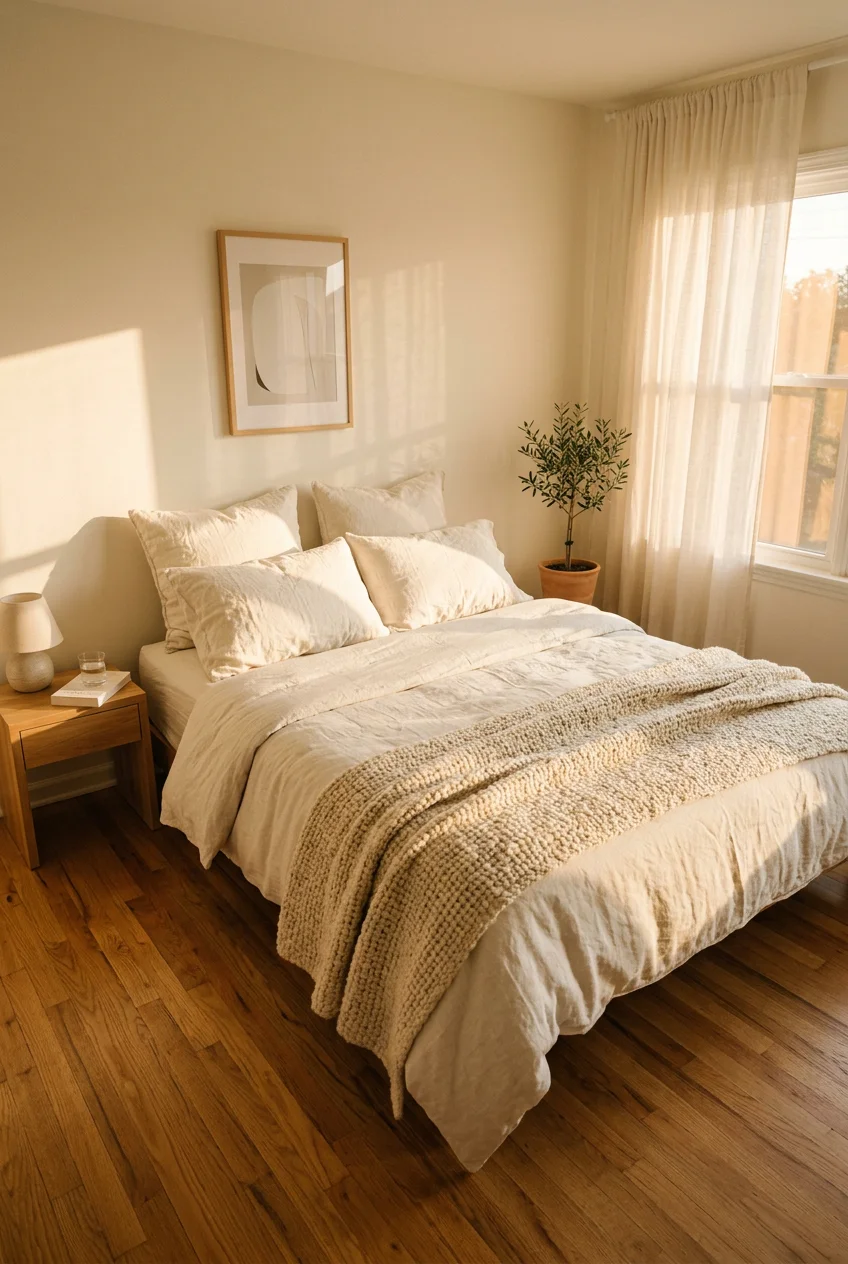
Thick, puffy comforters make a small room look like a marshmallow exploded. They take up too much visual weight. Instead, I use thin layers. I start with 100% cotton percale sheets from Target (Threshold brand, $55.00 for queen). Then I add a thin cotton quilt, and finish with a folded waffle-knit blanket at the foot of the bed. This method provides plenty of warmth without the visual bulk of a massive duvet. I bought a chunky knit throw from Whole Foods last winter for $39.99, and it adds just enough texture. The flat layers keep the bed looking tailored and crisp. When the bed looks neat and streamlined, the entire room feels significantly larger and cleaner. Avoid velvet or faux fur blankets, as they look too heavy.
15. Opt for Built-In Wardrobes When Possible

Freestanding wardrobes leave awkward gaps between the furniture and the wall. If you own your home, build the storage into the architecture. I hired a local carpenter to install floor-to-ceiling MDF cabinets along one 10-foot wall. It cost $1,200.00, which isn’t cheap, but it eliminated the need for dressers entirely. The cabinets are painted the exact same color as the walls, so they blend in perfectly. I store my clothes, a 10-inch oscillating fan, and my vacuum cleaner in there. If you rent, you can mimic this look by pushing three tall IKEA PAX wardrobes tightly together and adding trim at the top. It creates a smooth, unbroken line that’s much less visually chaotic than mismatched freestanding dressers scattered around the perimeter.
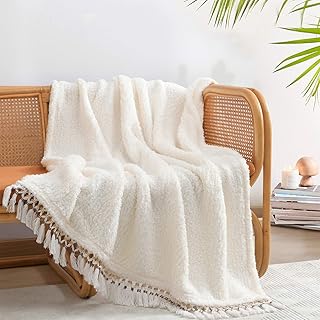
Ultra Soft Cozy Sherpa Throw Blanket
If you want something that just works, Ultra Soft Cozy Sherpa Throw Blanket is a safe bet (45 reviews, 4.5 stars).
16. Limit the Color Palette to Three Shades

A busy color scheme fragments a small room. I stick to a strict 60-30-10 rule. In my room, 60% is a soft taupe (walls and rug), 30% is crisp white (bedding and trim), and 10% is matte black (hardware and picture frames). When I first moved in, I had blue curtains, a red rug, and yellow pillows. It looked like a circus tent and made me anxious. By restricting the palette to three cohesive shades, the room feels unified and calm. I buy my matte black spray paint from Home Depot for $6.98 a can to ensure all my mismatched picture frames match the 10% accent color. Consistency in color prevents the eye from stopping at every individual item, making the room feel more expansive.
17. Integrate Plants

Plants bring life into a sterile room, but large floor planters consume too much space. I focus on hanging plants. I bought a 6-inch hanging macrame planter from Sprouts for $14.99. I put a spider plant in it and hung it from a ceiling hook in the corner near the window. It draws the eye up and adds organic texture without touching the floor. I killed my first three plants because I put them on top of a dark bookshelf where they got zero sunlight. You have to place them where they actually thrive. A trailing plant on a high shelf or a hanging basket in a window corner softens the hard architectural lines of a small bedroom perfectly. Just ensure the pot has a drip tray.
18. Keep Window Treatments Minimal

Heavy drapes with valances and tassels belong in a Victorian mansion, not a 120-square-foot bedroom. I use simple, clean-lined treatments. I installed a cordless cellular blackout shade from Home Depot ($64.00 for a 34-inch width). It sits inside the window frame and practically disappears when pushed up during the day. At night, it blocks 100% of the streetlights. I pair it with sheer white curtains on the outside just to soften the edges. I used to have thick velvet blackout curtains, but they bunched up on the floor and gathered dog hair constantly. The cellular shade provides the darkness I need for sleep without the heavy, dusty fabric weighing down the room. It looks tailored and requires zero daily maintenance.
19. Hide Cords and Clutter Systematically

Visual clutter is the enemy of a small space. A tangle of black charging cords on a white wall looks terrible. I bought a 15-foot roll of white cable concealment raceways from Amazon for $18.99. I ran it along the baseboard to hide the thick black cord for my space heater. I also use a wooden cable management box ($24.99 from Target) on the floor to hide the power strip that charges my laptop and phone. Before I did this, the corner of my room looked like a server closet. Hiding the mechanics of your electronics makes the room feel like a deliberate sanctuary rather than a makeshift home office. It takes twenty minutes to install the raceways, and the result is instant.
20. Focus on Lighting

Overhead lighting is harsh and flattens a room. I never use the main ceiling fixture in my bedroom. Instead, I rely on three distinct light sources placed at different heights. I have the wall sconces by the bed, a small 10-inch amber glass table lamp on my dresser ($29.99 from Target), and a warm LED strip light behind my headboard ($15.99 from Walmart). I bought a 3-pack of smart plugs for $22.00 so I can turn them all on from my phone. This layered lighting eliminates harsh shadows in the corners. I tried using a bright 100-watt bulb in the ceiling fixture once, and it made my bedroom feel like a hospital waiting room. Stick to 40-watt equivalent warm bulbs (2700K) in your lamps to create a relaxing atmosphere. No exaggeration.
I’ve spent years moving furniture around tiny apartments, and these strategies are the ones that actually stuck. You don’t need a massive budget to make a small room functional. Start with the lighting and the vertical storage, and you’ll notice a difference immediately. I recommend tackling one corner at a time so you don’t overwhelm yourself. Pin this list for your next weekend project, and don’t be afraid to get rid of furniture that isn’t working for you.
Frequently Asked Questions
How do I arrange furniture in a small cozy bedroom?
Push the bed against the longest wall to open up floor space. Use tall, narrow dressers instead of wide ones. Mount floating shelves for nightstands to keep the floor clear. Every piece of furniture should ideally serve two purposes to maximize efficiency.
What paint colors make a small bedroom feel cozy?
Dark, low-reflectance colors like charcoal green or navy blue blur the corners of a room, creating a cave-like atmosphere. Use an eggshell finish instead of flat to avoid showing fingerprints while maintaining a soft, moody aesthetic that promotes sleep.
How can I add storage to a tiny bedroom?
Utilize the vertical space by installing wall-mounted pegboards and floating shelves. Swap your footboard for a storage bench and use latching clear bins under the bed. An over-the-door metal rack is perfect for organizing belts, scarves, and small accessories.
What are the best lighting ideas for small bedrooms?
Skip harsh overhead lighting and table lamps that consume surface area. Install plug-in wall sconces 30 inches above the mattress. Layer this with a small amber table lamp and LED strip lights behind the headboard using warm 2700K bulbs.
