What’s Inside
- Embrace Floating Furniture to Liberate Floor Space
- Invest in a Storage Bed for Hidden Organization
- Go Vertical with Wall-Mounted Storage Solutions
- Opt for Multifunctional Furniture Pieces
- Layer Your Lighting to Create Depth and Ambiance
- Choose a Light, Warm Color Palette for Single Bedroom Ideas for Small Rooms
- Strategically Place Mirrors to Expand the Room
- Ditch Traditional Nightstands for Wall-Mounted Ledges
- Maximize Closet Space with Smart Organizers
- Incorporate Natural Materials for a Cozy Feel
- Use a Large Rug to Define and Expand the Space
- Consider a Compact Desk Nook for Multifunctionality
- Avoid Over-Furnishing and Embrace Curated Minimalism
- Utilize the Back of Doors for Extra Storage
- Don’t Shy Away from Oversized Art (More Single Bedroom Ideas for Small Rooms)
Shoving a queen mattress against the wall of a 10×10 box is a recipe for claustrophobia. If you want a small bedroom that actually looks good, stop following the standard catalog layouts. Most people cram in matched bedroom sets and wonder why the place feels like a storage unit. Let’s fix that. If you only try one idea from this list, make it #2. Here’s why: utilizing the dead zone under the mattress solves 90 percent of small-space storage problems in one move.
Skip this list if you have a sprawling master suite or refuse to part with a massive California King sleigh bed. These strategies rely on scaling down furniture and maximizing vertical space. That won’t work if your priority is keeping oversized, bulky heirloom pieces.
1. Embrace Floating Furniture to Liberate Floor Space

Most people buy chunky nightstands that eat up floor space and create visual roadblocks. Swapping those heavy pieces for floating furniture creates breathing room. A simple wall-mounted drawer or a floating shelf from Target (usually under $40) gives you just enough surface area for a phone, a 4-ounce glass of water, and a paperback book. The floor underneath stays visible, tricking the brain into thinking the room is wider than it is. You can even slide a pair of slippers or a woven basket underneath. The visual difference is immediate. When the floor stretches to the wall, the room feels lighter. A common mistake is hanging these shelves way too high. Keep them level with the top of your mattress. The catch: these require finding a wall stud or heavy-duty drywall anchors, and they won’t hold the weight of a heavy brass lamp or a stack of textbooks.
2. Invest in a Storage Bed for Hidden Organization

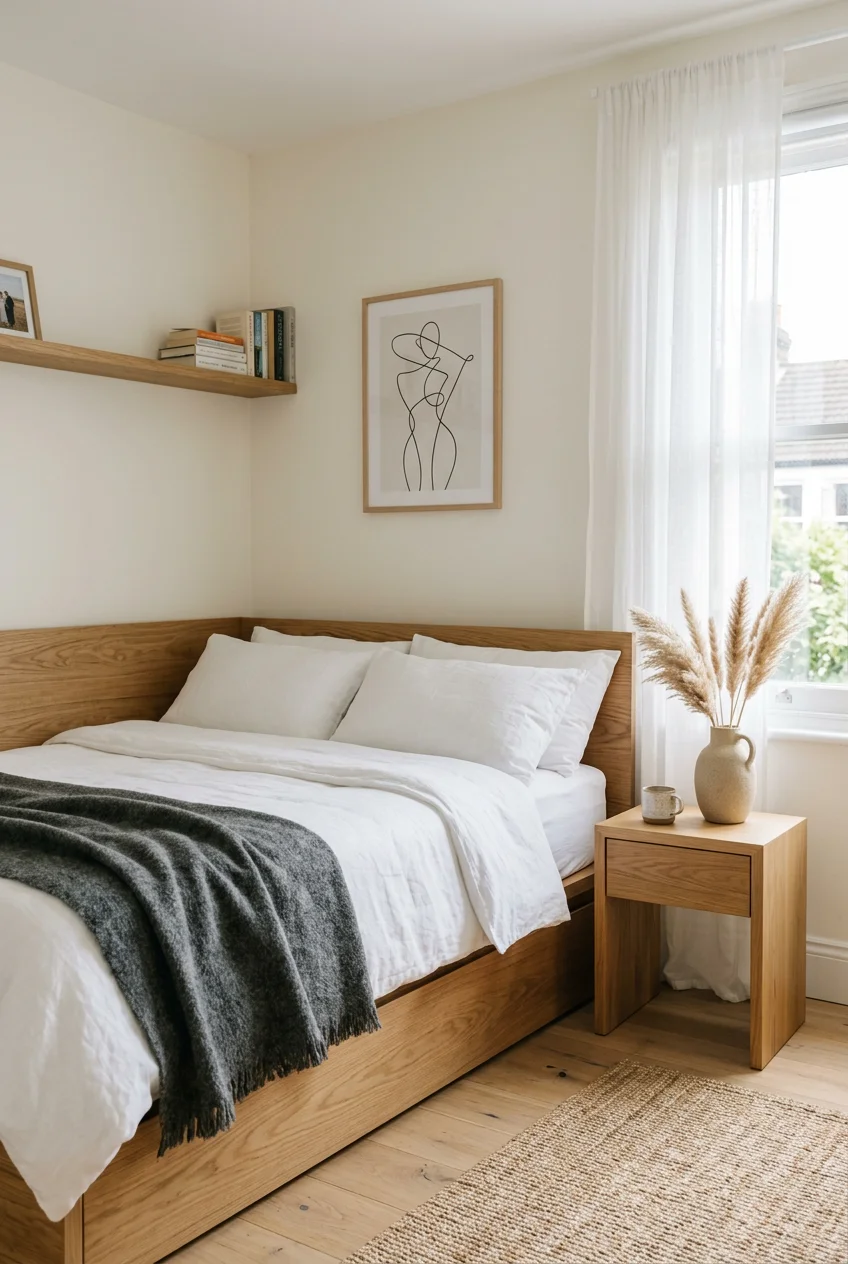
A standard bed frame leaves a massive 60-by-80-inch footprint of wasted air. A storage bed reclaims that real estate. Furl ottoman beds are a great example, offering deep storage that acts like a horizontal closet. You lift the mattress, and suddenly you have space for bulky winter coats, spare duvets, and seasonal shoes. If a high-end hydraulic bed isn’t in the budget, basic bed risers from Walmart (typically under $15) lift a standard frame just enough to slide in 6-inch plastic bins. Most people get this wrong by buying cheap fabric bins that gather dust. Stick to hard plastic containers with latching lids. The catch: hydraulic ottoman beds are heavy and tough to disassemble if you move often, and traditional drawer beds require side clearance to open. Best for: renters with tiny closets who desperately need space for out-of-season clothing.
3. Go Vertical with Wall-Mounted Storage Solutions

Leaving walls blank while complaining about a lack of floor space makes no sense. Wall-mounted storage systems force the eye upward, making 8-foot ceilings look taller. The IKEA BOAXEL system is a functional choice, usually running between $100 and $200. You can mount rails directly to the drywall and snap in shelves, wire baskets, and hanging rods. It turns a blank wall into an open closet. For smaller items like jewelry, sunglasses, or a 2-ounce bottle of hand cream, the IKEA SKÅDIS pegboard (around $20 to $40) mounts flat against the wall. A pro tip: paint the pegboard the same color as your wall so it blends in rather than looking like a garage tool rack. The catch: you’re putting holes in the drywall, which means you’ll be patching and sanding when your lease ends.

Bedsure GentleSoft White Throw Blanket for Couch
A dependable everyday pick — Bedsure GentleSoft White Throw Blanket for Couch – Cozy Soft Fleece Su pulls in 24 ratings at 4.5 stars. Not flashy, just solid.
4. Opt for Multifunctional Furniture Pieces

Single-use furniture is a luxury small rooms can’t afford. Every piece needs to pull double duty. A standard accent chair just takes up space, but a storage ottoman from HomeGoods (usually in the $50 to $80 range) provides a place to sit, a spot to drop a bag, and a hidden compartment for a thick wool throw. For the ultimate space-saver, companies like Expand Furniture make Murphy beds integrated with front-facing sofas or fold-down desks. You pull the bed down at night, and during the day, the room functions as an office. This changes the footprint completely. The catch: mechanical furniture like Murphy beds or convertible desks have hinges and springs that can wear out, and they often require professional installation. Best for: studio apartments where the bedroom is also the primary living room.
5. Layer Your Lighting to Create Depth and Ambiance

Relying on a single ceiling fixture casts harsh shadows and makes a small room feel like a sterile waiting room. Layering your lighting creates depth. You need three distinct sources: ambient, task, and accent. Ditch the table lamps that crowd your tiny nightstand. Install hard-wired swing-arm sconces, like the brass options from onefortythree (budget around $95 to $130), directly into the wall above the bed. Add a warm LED strip light behind the headboard for a soft glow, and keep a small task light on your desk. This combination lets you adjust the mood instantly. A common mistake is buying bulbs with a cool, blue color temperature. Always look for bulbs labeled 2700K to 3000K for a warm feel. The catch: hardwiring sconces requires an electrician, which adds cost. If you’re renting, you’ll have to settle for plug-in sconces, which means dealing with visible cords. You might also like: 15 Bedroom Dresser Decor That Actually Work
6. Choose a Light, Warm Color Palette for Single Bedroom Ideas for Small Rooms

Stark, hospital-white walls are out. The 2026 trend leans into warm minimalism. Colors like sandy beige, muted olive, and soft clay reflect natural light while adding a layer of coziness. Benjamin Moore’s White Dove OC-17 is a reliable choice. It has subtle yellow and gray undertones that prevent the walls from looking cold. Swiss Coffee OC-45 is another excellent option for a creamy finish. These warm tones make the walls recede, giving the illusion of a wider room. Avoid dark charcoal or navy paints in a tiny room unless you want a moody, cave-like vibe. Dark colors absorb light aggressively. The catch: lighter, warm paints show scuff marks and fingerprints far more easily than darker colors, requiring frequent touch-ups with a magic eraser. Best for: north-facing rooms that receive cool, indirect sunlight. You might also like: 15 Beautiful Mirror Behind Nightstand Ideas You’ll Love

YUFLINX 16’’White Floating Shelves for Wall Set of 4
YUFLINX 16’’White Floating Shelves for Wall Set of 4 is sturdier in person than the photos suggest — over 658 buyers gave it 4.5 stars.
7. Strategically Place Mirrors to Expand the Room

A large mirror is an old design trick, but most people use it wrong. Hanging a tiny, 12-inch decorative mirror above a dresser does nothing. You need a massive, floor-to-ceiling mirror positioned opposite a window. This bounces natural light back into the room and acts like a second window. A simple, thin-framed floor mirror from Target or Walmart (typically $60 to $100) works perfectly. If wall space is non-existent, mirrored closet doors are a functional alternative. They reflect the room without requiring extra drywall. A pro tip: make sure the mirror is reflecting something attractive, like a window or a neat piece of art, rather than a pile of laundry. The catch: massive mirrors are heavy, fragile, and require constant cleaning. A single smudge ruins the illusion. You might also like: 15 Lovely Cool Bedroom Ideas Worth Trying This Year
8. Ditch Traditional Nightstands for Wall-Mounted Ledges

Traditional nightstands with three deep drawers encourage hoarding. You end up stuffing them with old receipts and dead batteries. Swapping a bulky table for a slim, wall-mounted ledge forces you to keep only what you need. The IKEA EKET cabinet, which usually costs around $20 to $30 per cube, can be mounted right next to the mattress. It gives you a 13-inch surface for a charger and a glass of water, plus one small cubby for a book. Alternatively, a C-table from West Elm (around $100 to $150) can slide its base under the bed, hovering the tabletop over the mattress. This eliminates the need for floor space beside the bed. The catch: without closed drawers, your bedside items are on display. If you are naturally messy, a floating ledge will just look like a floating pile of garbage.
9. Maximize Closet Space with Smart Organizers

A tiny bedroom usually means a tiny closet. Maximizing that hidden space means you don’t need a bulky freestanding dresser. Start by replacing every thick hanger with slim velvet hangers from Amazon (usually $20 to $30 for a 50-pack). This swap can increase your hanging capacity by 30 percent. Next, install a tension rod halfway down the closet to create a second tier for hanging short items. A hanging fabric organizer from The Container Store (typically under $40) can act as a substitute dresser for folded sweaters and jeans. By moving all your clothing storage into the closet, you free up the main bedroom area. The catch: these organizers don’t magically create more volume. If you own too many clothes, no amount of velvet hangers will stop the closet from feeling cramped.

QEEIG Floating Shelves for Wall Bathroom Shelf Bedroom
QEEIG Floating Shelves for Wall Bathroom Shelf Bedroom Kitchen Living has been one of the most consistently praised picks in this category. 46 reviewers averaged 4.5/5.
10. Incorporate Natural Materials for a Cozy Feel

Small rooms can feel like sterile boxes if you fill them with cold materials like metal, glass, and plastic. Bringing in natural textures softens the angles and makes the space feel grounded. Think light oak wood tones, woven seagrass baskets, and textured cotton or linen bedding. A washed linen duvet cover from Zara Home or Crate & Barrel (usually $120 to $200) adds a relaxed, rumpled texture. Woven baskets are perfect for hiding unsightly items like extra cables or a 16-ounce bottle of body lotion. These organic textures absorb light differently than synthetic surfaces, creating visual richness. The catch: natural materials require more maintenance. Genuine linen wrinkles the second you look at it, and woven seagrass baskets can snag delicate clothing if you aren’t careful.
11. Use a Large Rug to Define and Expand the Space

Most people buy a tiny 3×5 rug and drop it at the foot of the bed. This is a mistake. A small rug chops up the floor visually, making a room look even smaller. You need a rug large enough that the bed and nightstands sit on top of it, or at least one that extends two feet beyond the sides and foot of the bed. An 8×10 rug from Wayfair or Ruggable (expect to spend $150 to $350) draws the eye outward. This continuous pattern tricks the brain into perceiving a wider floor plan. It also provides a soft landing pad for your feet on cold mornings. The catch: large rugs are expensive, heavy to move, and difficult to clean underneath without shifting all your furniture. Best for: renters dealing with ugly, damaged laminate floors.
12. Consider a Compact Desk Nook for Multifunctionality

Working from a tiny bedroom is a reality, but shoving a massive executive desk into the corner ruins the vibe. A compact desk nook is the solution. Look for a wall-mounted drop-down desk, like the wooden options from Woodensure (typically $150 to $250). When open, it provides enough space for a 15-inch laptop and a cup of coffee. When closed, it folds flat against the wall, projecting only a few inches. Pair it with a slim, armless dining chair that can slide out of the way. Add a single floating shelf above it for office supplies. The catch: a drop-down desk means you can’t leave your laptop and papers spread out at the end of the day. You have to pack everything away. Best for: hybrid workers who only need a home workspace a few days a week.

Amazon Basics Bedroom Closet Organizer with 5-Fabric
If you want something that just works, Amazon Basics Bedroom Closet Organizer with 5-Fabric Storage Drawers f is a safe bet (41 reviews, 4.5 stars).
13. Avoid Over-Furnishing and Embrace Curated Minimalism

Cramming every souvenir, book, and pillow you own into a tiny bedroom creates visual chaos. A small space demands curated minimalism. This doesn’t mean the room has to be empty; it means every item must be intentional. Limit your decorative objects to a few high-impact pieces. A single ceramic vase from Anthropologie or a sleek clock from Muji (usually under $50) is enough. Keep the top of your dresser or nightstand 80 percent clear. Stick to a strict palette of three colors to maintain harmony. When a room isn’t fighting for your attention, it feels larger and more restful. A common mistake is using too many small, distracting patterns on bedding. Stick to solids or large-scale, subtle prints. The catch: maintaining curated minimalism requires discipline. You can’t leave a stack of mail or a dirty coffee mug out, or the aesthetic falls apart.
14. Utilize the Back of Doors for Extra Storage

The back of your bedroom door and closet door represent roughly 15 square feet of unused vertical space. Putting this area to work is an efficient way to hide clutter. A basic over-the-door shoe organizer from Bed Bath & Beyond or Target (usually around $15 to $25) can hold way more than just shoes. Use the clear pockets for rolled-up belts, winter scarves, a 6-ounce can of dry shampoo, and spare chargers. For clothing, the Yamazaki Smart Clothes Rack (around $30 to $50) hooks over the top of the door and provides a fold-down arm to hang tomorrow’s outfit or air out a damp jacket. It keeps clothes off the bed. The catch: filling the back of a door with bulky items means the door won’t open flush against the wall anymore. If your door opens into a tight corner, a thick organizer might restrict the entryway.
15. Don’t Shy Away from Oversized Art (More Single Bedroom Ideas for Small Rooms)

A persistent myth is that small rooms require small art. In reality, covering a wall in a dozen tiny, mismatched frames creates a cluttered look that makes the walls close in. A single, oversized piece of art anchors the room. A large 30×40-inch canvas or a framed print from Minted (typically $150 to $300) draws the eye immediately, distracting from the tight dimensions. Alternatively, applying a high-quality, fine-scale wallpaper from a brand like Farrow & Ball to the wall behind the headboard achieves a similar effect. It adds personality without taking up physical space. The catch: large-scale art and premium wallpaper are significant financial investments. Furthermore, hanging a massive, heavy frame requires proper wall anchors to ensure it doesn’t crash down onto your bed.
How we chose these ideas: I evaluated these strategies based on renter-friendliness, cost, and immediate visual impact. The focus was strictly on solutions that maximize vertical space, improve lighting, and eliminate floor clutter without requiring major renovations or expensive contractor work.
A tiny bedroom doesn’t have to feel like a holding cell. By ditching the bulky furniture, utilizing your walls, and controlling the visual clutter, you can create a space that feels relaxing. I’d recommend starting with the lighting and the storage bed. Those two changes alter the entire geometry of the room (took me years to figure out). Pin this list for your next weekend room refresh, and start reclaiming your square footage.

upsimples Floating Shelves for Wall
If you want something that just works, upsimples Floating Shelves for Wall is a safe bet (47 reviews, 4.5 stars).
Frequently Asked Questions
How can I make a small single bedroom look bigger?
Use a large floor mirror opposite a window to bounce natural light around the space. Painting the walls a warm, light color like soft beige or creamy white also helps the walls visually recede, making the room feel wider.
What is the best bed for a small room?
A storage bed or an ottoman bed is the most efficient choice. By utilizing the dead space under the mattress for seasonal clothing or extra bedding, you can often eliminate the need for a bulky freestanding dresser.
How do I add storage without taking up floor space?
Go vertical. Install wall-mounted shelves, use tall, narrow bookcases, or add a pegboard system. Utilizing the back of your bedroom and closet doors with hanging organizers also provides significant storage without eating into your square footage.
Should I use a rug in a small bedroom?
Yes, but avoid small rugs that chop up the floor. Use a large 8×10 rug that extends well beyond the sides and foot of the bed. This draws the eye outward and tricks the brain into perceiving a larger floor plan.
