What’s Inside
- Prioritize Blackout Fabrics For Real Rest
- Embrace Layering For Versatility
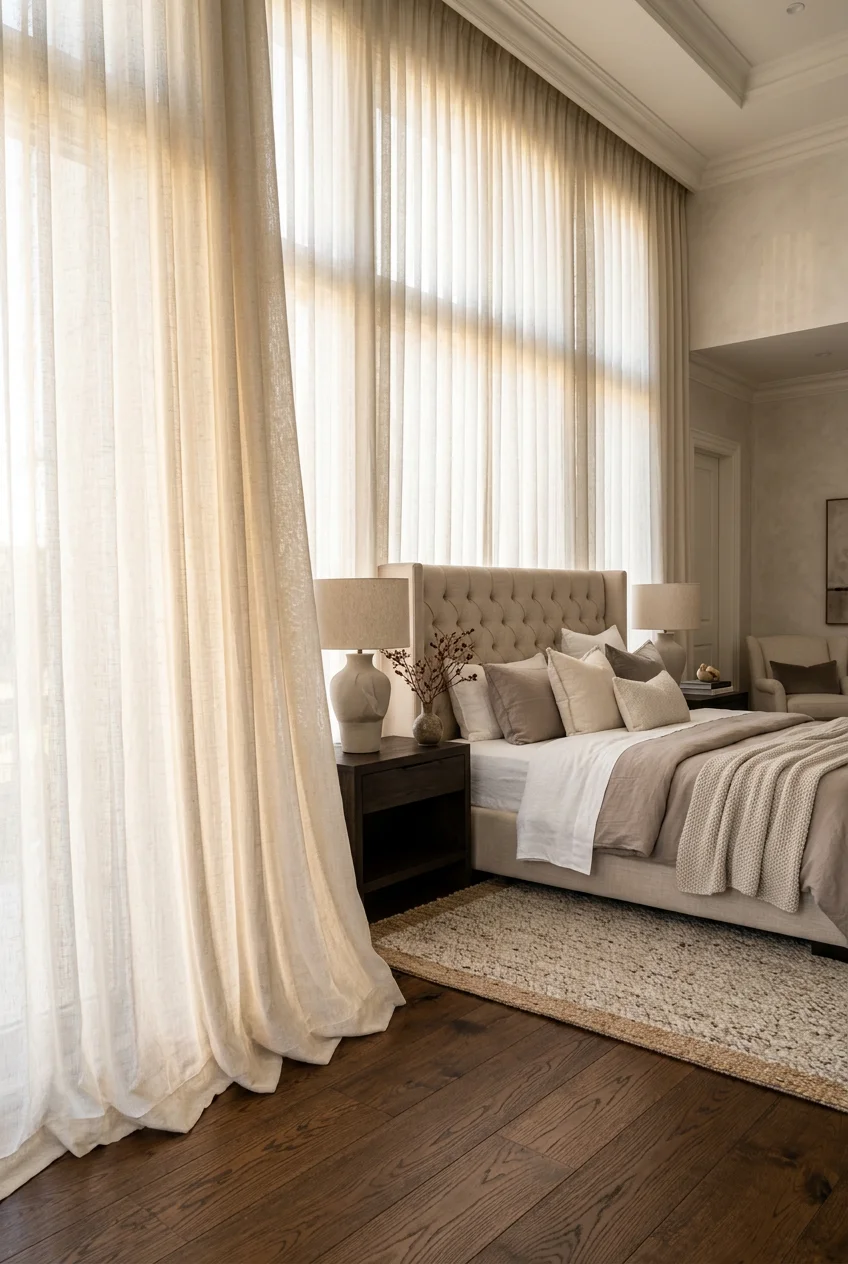
- Go High And Wide With Your Bedroom Curtains Master Layout
- Ensure Ample Fullness For A Luxurious Look
- Opt For Floor-Length Or Slightly Puddled Hems
- Choose Natural, Tactile Fabrics
- Anchor The Room With Warm Neutrals
- Install Sound-Dampening Curtains For A Peaceful Retreat
- Invest In Quality Hardware To Prevent Sagging
- Upgrade To Tailored Headers
- Soften The Space With A Ruffle-Top Valance
- Budget For Custom Curtains For A Perfect Fit
- Integrate Smart Technology For Effortless Control
- Create A Canopy Or Bedroom Curtains Master Headboard
- Match The Fabric Color To Your Walls
I’ve seen people hang their curtains right against the top trim and wonder why the room feels like a cramped box. Getting your bedroom window plan right fixes this instantly. How you handle fabric around your windows dictates the architectural feel of the whole room. Most people buy cheap, narrow panels and hang them way too low. If you only try one idea from this list, make it #3. Here’s why: moving the rod up and out changes the room’s proportions completely for the cost of a few drywall anchors. It’s a total transformation, trust me. You might also like: 15 Vintage Aesthetic Princess Bedroom Worth Trying
Skip this guide if you’re outfitting an ultra-modern industrial loft with exposed brick and floor-to-ceiling glass. These concepts focus on softness, light control, and traditional textile layering. If you want raw, bare windows, these textile-heavy approaches aren’t for you. You might also like: 17 Bedroom Ideas on a Budget That Transform Your Space
1. Prioritize Blackout Fabrics For Real Rest

Your sleep space needs total darkness. When streetlights or early sun bleed through thin fabric, your melatonin production drops. For a functional setup, high-quality blackout panels are non-negotiable. Brands like NICETOWN 100% Blackout Curtains use a triple-weave Plylux fabric that blocks light and adds thermal insulation. They usually run $25 to $55 per panel. You’ll see similar options at Target or Walmart, but the triple-weave construction is what actually stops light from seeping through. That heavy fabric adds visual weight and anchors the window. Old blackout fabric used to feel like stiff plastic shower liners. Modern versions have a soft, brushed face that drapes naturally without that awful crinkling sound. If your room faces east, this one change stops the 5 AM wakeups. Just make sure the panels overlap in the center by at least three inches so you don’t get that annoying laser beam of light hitting your pillow. The catch: these heavy fabrics trap heat during the summer if you leave the windows open behind them. They block airflow almost as well as they block light.
2. Embrace Layering For Versatility

Sticking to one layer of fabric forces a choice between total darkness or zero privacy. Layering solves this. Start with a lightweight sheer panel against the glass. Thin cotton or loose-weave linen diffuses harsh afternoon sunlight into a soft glow while keeping neighbors from seeing in. Over that, install a heavier drape for nighttime privacy and insulation. You can find excellent double-rod brackets at hardware stores like Home Depot or Lowe’s that make this setup simple. The contrast between a breezy sheer and a heavy velvet or thick canvas creates a sophisticated, hotel-like aesthetic. That tactile difference makes a room feel finished. Running your hand past a crisp, airy sheer to grab a dense, heavy drape feels luxurious. I learned that the hard way—don’t skimp on the quality of the sheer, or it’ll look cheap. Plus, the sheer layer protects the more expensive heavy fabric from UV fading. When the heavy drapes are pulled back, the framing effect adds depth to flat walls. Best for: rooms that get harsh direct sunlight. The catch: double rods protrude further from the wall, meaning you lose a few inches of floor space, and the hardware costs more than a single rod setup.
3. Go High And Wide With Your Bedroom Curtains Master Layout

This is the most common mistake people make. Hanging the rod directly on the window trim shrinks the room visually. To execute a proper layout, mount the rod 6 to 12 inches above the window frame. If you have the ceiling height, go even higher. Then, extend the rod 4 to 12 inches beyond the window frame on each side. When the panels are open, they should rest entirely on the wall, not blocking the glass. This simple placement trick creates the illusion of massive, custom windows and taller ceilings. It’s a visual trick that costs nothing extra but completely alters the room’s proportions. You can grab extended rods at West Elm or Pottery Barn that handle this width easily. Don’t rely on the cheap plastic anchors that come in the hardware packet. When you extend a rod that far out, the leverage puts extra strain on the brackets. Use heavy-duty drywall anchors or find the studs. The visual payoff is massive. The wall looks expansive, and natural light floods in without fabric obstructing the glass. Best for: small rooms with low ceilings. The catch: you’ll need to buy longer curtain panels (usually 96 or 108 inches instead of 84), which drives up the fabric cost.

upsimples Floating Shelves for Wall
upsimples Floating Shelves for Wall has been one of the most consistently praised picks in this category. 47 reviewers averaged 4.5/5.
4. Ensure Ample Fullness For A Luxurious Look

Skimping on fabric width makes the entire setup look cheap. A flat sheet of fabric pulled taut across a window looks like a college dorm room. For a full, pleated appearance, the total combined width of your curtain panels needs to be at least 1.5 to 2.5 times the width of your window. If you have a standard 60-inch window, you need 90 to 150 inches of total fabric width. For sheer fabrics, push that ratio to 2.5 or 3 times because thin materials look sad when stretched flat. Stores like Crate & Barrel sell double-wide panels for this reason. The extra fabric creates deep, rich folds that catch the light and cast shadows, adding texture. The sound of pulling a heavy, pleated drape closed is entirely different from sliding a flat, tight panel. It’s a quiet, heavy swoosh instead of a scrape. When the panels are open, that extra fabric stacks tightly on the sides, creating thick columns of color that frame the view perfectly. The catch: buying double the fabric means doubling your budget, and narrow panels are a mistake you’ll notice every time you close them.
5. Opt For Floor-Length Or Slightly Puddled Hems

I’m telling you, high-water curtains are a massive design mistake. If there is a visible gap between the bottom hem and the floor, the room feels unfinished. For an elegant look, the fabric should either just kiss the floor or puddle by 1 to 2 inches. This length is a major trend for 2026, making walls appear taller and the fabric look heavier. Puddling adds a relaxed, romantic vibe that suits a sleeping space perfectly. You can easily find 96-inch or 108-inch lengths at retailers like CB2 or Anthropologie to achieve this. The texture of a linen puddle on a hardwood floor looks sophisticated. It breaks up the rigid straight lines of baseboards. If you’re going for the kiss method, measure your drop height after you’ve installed the rod and rings. Fabric stretches over time, especially velvet, so a curtain that kisses the floor on day one might puddle slightly by month six. Best for: uneven floors where a straight hem would highlight the slant. The catch: puddled curtains collect dust and pet hair instantly, and they get in the way of robotic vacuums.
6. Choose Natural, Tactile Fabrics

Synthetic, shiny fabrics look cheap under bedroom lighting. The shift toward natural materials like organic cotton, linen, and jute is strong. These fabrics offer breathability, softness, and a subtle texture that synthetics can’t replicate. They drape beautifully and contribute to a quiet luxury aesthetic. Heavy linen has a satisfying, nubby texture, while cotton velvet absorbs light and creates deep, rich color tones. You can source gorgeous natural fiber options from stores like Quince or West Elm (usually $60 to $150 per panel). The tactile experience of grabbing a natural fiber drape feels superior to touching polyester. The way sunlight filters through unlined linen highlights the organic weave, showing off the tiny imperfections that make the material interesting. Synthetics look like flat plastic when backlit. If you want the heaviness of a winter drape, a thick cotton velvet dampens echoes and feels plush. It took me years to figure out that natural fibers are worth the extra cash. The catch: natural fibers wrinkle easily. Linen requires steaming to look presentable, and cotton can shrink significantly if you wash it at home instead of dry cleaning.

200 FT Led Lights for Bedroom (2 Rolls 100 FT)
200 FT Led Lights for Bedroom (2 Rolls 100 FT) is sturdier in person than the photos suggest — over 854 buyers gave it 4.5 stars.
7. Anchor The Room With Warm Neutrals

Bright, aggressive patterns belong in a living room, not where you sleep. The ideal color palette leans toward calm, earthy tones. Think off-white, beige, light gray, taupe, soft sage, olive green, and terracotta. These shades create a harmonious atmosphere that lowers visual noise. A soft sage or terracotta panel brings just enough color to keep the room from looking clinical. You can find these muted tones in the everyday collections at Target or World Market. The goal is to create a soft perimeter around the room that blends with your bedding and rugs. The visual weight of a warm taupe or light olive green grounds the room without making it feel cave-like. When the morning sun hits a terracotta curtain, it casts a warm, flattering glow across the entire bedroom. Avoid pure, stark white unless your walls are also pure white; otherwise, the contrast is too sharp for a relaxing environment. The catch: light-colored neutral fabrics show dirt and fingerprints much faster than dark or patterned fabrics, making them high-maintenance if you open them manually every day.
8. Install Sound-Dampening Curtains For A Peaceful Retreat

Light isn’t the only thing disrupting your sleep. Street noise, sirens, and loud neighbors bleed straight through standard window panes. Sound-dampening curtains are an effective solution. Brands like Moondream engineer specific soundproof curtains that can drop external noise by 7 to 15 decibels. That is the difference between hearing a car drive by and hearing complete silence. Other solid options include Pony Dance Blackout Insulated Soundproof Curtains and BGment Insulated panels, which use multiple dense layers to absorb sound waves. You’ll typically find these specialty panels online or at home stores in the $40 to $100 range. The thick construction creates a cocoon effect. The acoustic difference is noticeable the second you close them. The room loses that hollow, echoey quality and feels muffled and intimate. The multiple layers of acoustic lining also provide incredible thermal insulation, blocking drafts from old windows during the winter. It’s a functional upgrade that improves physical comfort. Best for: apartments facing busy streets. The catch: these curtains are heavy. You must use heavy-duty wall anchors and a thick, sturdy rod, or the weight will rip the hardware out of the drywall.
9. Invest In Quality Hardware To Prevent Sagging

Flimsy hardware ruins the look of expensive fabric. A common mistake is buying heavy velvet or lined blackout panels and hanging them on a thin, adjustable tension rod. The rod bows in the middle, the curtains sag, and the whole setup looks sloppy. Your curtain rod needs a substantial diameter (at least 1 inch to 1.5 inches) to visually balance the weight of the fabric and support it without bending. Solid wood poles or thick steel rods from retailers like Rejuvenation or CB2 are worth the investment. The rings should glide smoothly over the metal without catching on the telescoping joint. The tactile experience of opening curtains on a cheap rod is awful. The rings scrape, the rod flexes, and the fabric binds up. A thick, sturdy rod with well-made rings allows the heavy fabric to glide silently with a gentle pull. Pay attention to the finials as well. Simple, geometric end caps look much more modern and tailored than the ornate, swirly iron designs from a decade ago. The catch: high-quality, solid-piece hardware is expensive, often costing more than the fabric panels themselves.

Govee RGBIC LED Strip Lights
Govee RGBIC LED Strip Lights is sturdier in person than the photos suggest — over 251 buyers gave it 4.5 stars.
10. Upgrade To Tailored Headers

The way the fabric attaches to the rod dictates how it falls. Standard rod-pocket or grommet-top curtains look casual and often messy because the folds don’t stay uniform. Tailored headers, specifically the pinch pleat, double pleat, or Euro pleat, are the standard for a high-end finish. These headers use sewn-in pleats and drapery hooks to force the fabric into deep, uniform folds that hang perfectly straight. It looks custom. You can order pre-pleated panels from stores like Half Price Drapes or West Elm. The structured look contrasts beautifully with soft, relaxed fabrics like washed linen. Pushing drapery pins into the back of a pleated header is tedious, but the result is undeniable. When you open the curtains, the pleats stack neatly against the wall, taking up much less visual space than bunched-up grommet panels. The Euro pleat offers a modern, streamlined silhouette that looks sharp in a contemporary space. The catch: pleated curtains require specific hardware, which takes more time and patience to install than simply sliding a rod through a pocket.
11. Soften The Space With A Ruffle-Top Valance

Valances usually conjure images of dusty, outdated 1990s living rooms, but they’re making a return. The modern take is a ruffle-top valance styled with relaxed, semi-sheer fabrics like raw linen. When paired with contemporary, organic furniture, it adds a touch of whimsy without feeling stuffy. It’s a great way to hide ugly roller blind hardware or awkward window trim. You can find modern, relaxed valances at boutique shops or Etsy creators. The soft gathering of the fabric at the top of the window draws the eye upward and adds a layer of romantic texture. The trick to pulling this off is keeping the fabric light and the installation simple. A raw, unlined linen valance that filters the sunlight looks intentional and breezy. It softens the hard right angles of the window casing. This works well in older homes with quirky architectural details where a sleek, motorized track would look out of place. Keep the colors muted to maintain that organic, relaxed aesthetic. The catch: if you pair a ruffle-top valance with heavy, dark fabrics or ornate furniture, the room will cross the line from modern whimsy to outdated Victorian parlor.
12. Budget For Custom Curtains For A Perfect Fit

Off-the-rack panels rarely fit perfectly. They’re either two inches too short, slightly too narrow, or made with cheap linings that degrade in the sun. Custom curtains solve these issues. While ready-made options run $20 to $250 per window, custom treatments range from $200 to $1,500+ per window. It’s a steep upfront cost, but they’re a long-term investment. Custom panels are tailored to the exact millimeter of your ceiling height and window width. The linings are thick, the hems are weighted so they hang straight, and they typically last 10 to 15 years. Local drapery workrooms or online custom shops like The Shade Store handle this level of detail. The difference in quality is obvious the moment you touch them. Custom drapes have lead weights sewn into the bottom corners, forcing the fabric to hang in straight, crisp lines. The blackout lining is usually a separate, detached layer rather than a sprayed-on foam backing, which means the face fabric moves naturally and breathes better. It’s the difference between a tailored suit and an off-the-rack t-shirt. Best for: windows with unusual shapes, arched tops, or massive sliding glass doors. The catch: the lead time for custom drapery is usually 4 to 8 weeks, meaning you’ll be living with temporary paper blinds for a month or two.

Fixwal Black Floating Shelves for Wall
If you want something that just works, Fixwal Black Floating Shelves for Wall is a safe bet (46 reviews, 4.5 stars).
13. Integrate Smart Technology For Effortless Control

Waking up to natural light gradually filtering into the room is the ultimate luxury. Motorized tracks integrated with smart home systems are becoming a standard requirement for modern spaces. You can program the hardware to open the panels at sunrise and close them at dusk. Brands like SwitchBot or IKEA’s smart blind systems offer accessible entry points into this tech, usually ranging from $150 to $400 for the hardware. It eliminates the need to yank on fabric or tangle with messy pull cords. The motors are whisper-quiet and hide discreetly behind the fabric header. The convenience factor is massive, especially if you have a wide bank of windows or heavy, double-lined drapes that are physically difficult to pull across a long rod. Being able to hit a button on your phone from bed to let the morning sun in changes your entire morning routine. Plus, when you’re out of town, you can set the curtains on a schedule to make the house look occupied. The catch: motorized tracks require a power source. If you don’t have an outlet near the top of your window, you’ll have to rely on battery-powered motors that require periodic recharging, which is annoying if your ceilings are high.
14. Create A Canopy Or Bedroom Curtains Master Headboard

Window treatments don’t have to stay on the windows. Using your bedroom curtains plan to create a soft headboard effect behind the bed is a brilliant way to add texture to a blank wall. You can mount a rod directly behind the bed and hang heavy velvet or thick linen panels to create a dramatic, acoustic backdrop. Alternatively, draping fabric across the ceiling to form a canopy adds a cocoon-like atmosphere that feels safe and cozy. You can source inexpensive, lightweight sheer fabric by the yard from stores like JOANN Fabrics for the ceiling drape. This technique is effective in rental apartments where you can’t paint the walls or install a permanent headboard. A wall of fabric absorbs sound, making the sleeping area feel isolated and quiet. If you’re doing the ceiling canopy route, keep the fabric loose and draped rather than pulled tight. The soft, sweeping curves of the material contrast beautifully with the sharp right angles of the mattress and nightstands. The catch: hanging fabric on the walls or ceiling traps a massive amount of dust right where you breathe while sleeping, requiring you to wash it frequently.
15. Match The Fabric Color To Your Walls

High-contrast curtains chop a room up into visual blocks. If you have a small room, hanging dark panels against light walls makes the space feel smaller and more cluttered. For a harmonious, expansive feel, match your curtain shade directly to your wall color. A seamless look tricks the eye into seeing one continuous surface, making the room feel wider and taller. If your walls are painted Benjamin Moore’s Swiss Coffee, find a creamy off-white linen panel to match. You can bring a paint swatch into a store like Crate & Barrel to find a close tonal match. The texture of the fabric provides enough visual interest without breaking the color line. If you can’t get an exact match, aim for a shade slightly darker or lighter than the wall paint to create a subtle, monochromatic layered effect. This tone-on-tone approach is a staple of high-end interior design. It allows your furniture, artwork, or bedding to stand out instead of the window treatments screaming for attention. The seamless color wrap feels soothing, which is exactly the vibe a sleeping space requires. The catch: finding an exact color match between flat wall paint and dyed textile fabric is difficult, and a near-match often looks like a mistake.
How we chose these ideas: We evaluated these concepts based on renter-friendliness, overall cost, installation effort, and their direct impact on sleep quality and visual aesthetics. The focus remained on practical light control, acoustic benefits, and timeless material choices rather than fleeting seasonal fads.
Getting your window treatments right completely alters the mood of the space. It’s not just about blocking the sun; it’s about adding texture, warmth, and quiet. I’d highly recommend starting with the hardware placement before upgrading your fabrics. Pin this guide so you have the exact measurements handy the next time you’re standing in the hardware aisle staring at drywall anchors.

QEEIG Floating Shelves for Wall Bathroom Shelf Bedroom
QEEIG Floating Shelves for Wall Bathroom Shelf Bedroom Kitchen Living punches above its price — 46 buyers rated it 4.5 stars. The kind of pick people reorder.
Frequently Asked Questions
How high should I hang my bedroom curtains master rod?
Mount the rod 6 to 12 inches above the window frame. If you have tall ceilings, you can go even higher. This placement draws the eye upward and makes the entire room feel significantly larger.
What is the best fabric for blocking morning sun?
Look for 100% blackout panels with a triple-weave construction or a dedicated detached blackout lining. Heavy materials like velvet or thick canvas work best. Avoid unlined cotton or thin synthetics if you need total darkness.
How wide should curtain panels be compared to the window?
The total combined width of your fabric panels needs to be 1.5 to 2.5 times the width of the window. For a 60-inch window, you need 90 to 150 inches of fabric to ensure deep, luxurious folds.
Should bedroom drapes touch the floor?
Yes. Curtains should either barely brush the floor (a ‘kiss’ hem) or puddle by 1 to 2 inches. Curtains that stop above the floor look awkward and make the ceiling feel lower.
