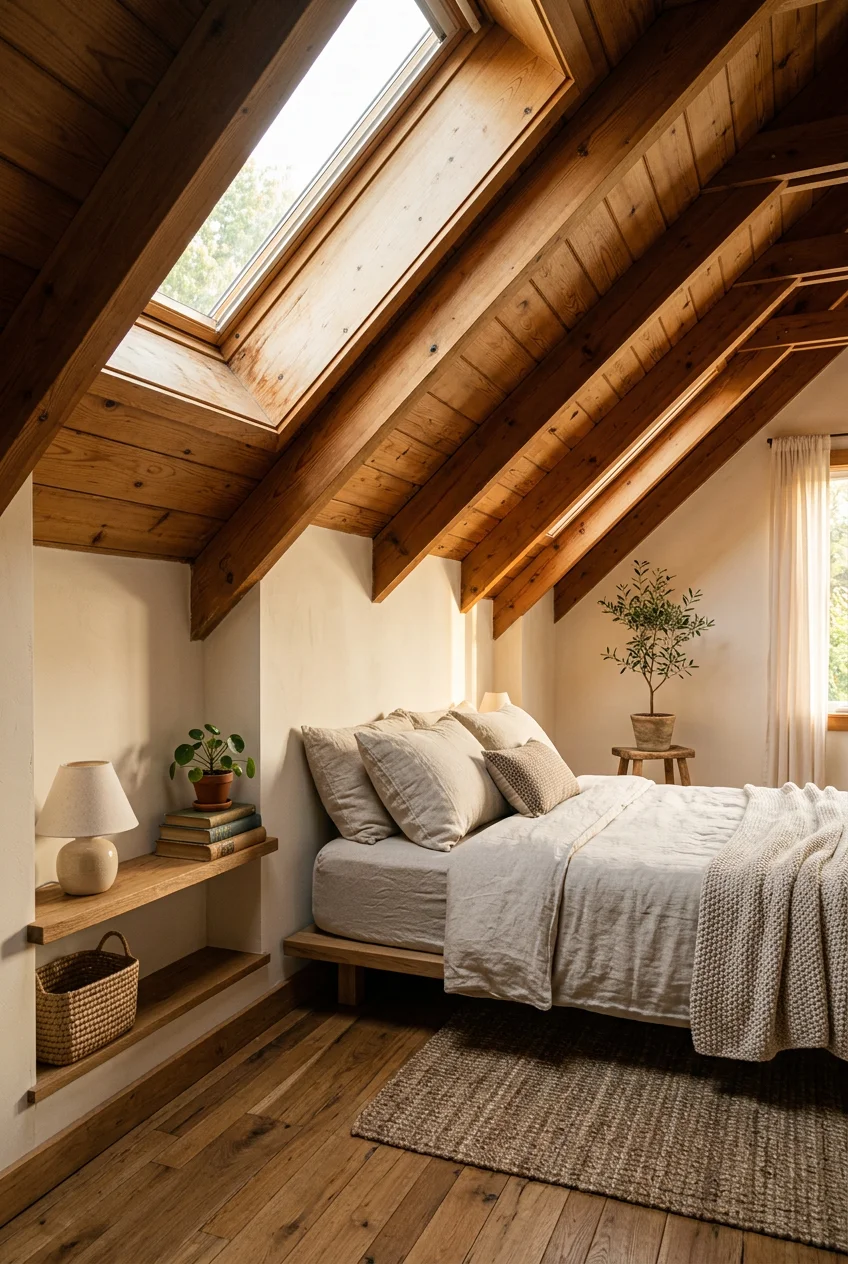
What’s Inside
- Embrace Low-Profile Bed Frames for Maximum Headroom
- Strategically Place Your Bed Under the Slope
- Utilize Built-In Storage Under Eaves
- Install Directional Recessed Lighting
- Embrace Pendant Lights with Adjustable Lengths
- Layer Lighting with Wall Sconces and Floor Lamps
- Choose Light Paint Colors for an Expansive Feel
- Consider a Two-Tone or Ombré Paint Approach
- Install Custom Window Treatments for Angled Windows
- Create Cozy Nooks and Reading Corners
- Incorporate Mirrors and Art Strategically
- Don’t Underestimate the Power of Skylights
- Avoid Over-Furnishing and Heavy, Bulky Pieces
- Use Vertical Lines to Draw the Eye Upward
- Consider a “Faux Canopy” for a Dreamy Touch
- Position Dressers Under the Lowest Eaves
- Use Wallpaper on the Ceiling to Blur Lines
- Add Rugs to Anchor the Walking Path
Most folks walk into an attic space and shove the tallest piece of furniture against the only flat wall, ruining the room’s flow. Finding the right decor for a slanted ceiling means working with those weird angles rather than fighting them. It’s a common mistake to treat a sloped room like a standard square box, which is why these spaces end up feeling cramped and awkward. You’ve got to rethink your lighting, storage, and furniture placement to make the architecture work for you. If you only try one idea here, make it #3. Why? Utilizing the dead space under the lowest eaves for built-in storage gets rid of the need for bulky dressers. It doubles your usable floor space. No exaggeration.
Skip this list if your room has 1920s plaster walls that crack when you look at them wrong. Heavy built-ins need solid studs and modern framing to hold the weight. Renters who can’t drill deep anchors or touch the wiring should also pass on the structural and hardwired lighting tips here.
1. Embrace Low-Profile Bed Frames for Maximum Headroom

Most people force a bulky box spring into an attic room and wonder why they keep bumping their heads. Opt for bed frames that sit low to the ground to increase visual breathing space, especially where the ceiling is lowest. Brands like Floyd offer The Platform Bed (usually $1,000 to $1,500) which has a sleek, modern look that hugs the floor. If you’re on a tighter budget, the Zinus 6-inch Suzanne Platform Bed is a solid pick often under $200. Another smart option is the Amerisleep Upholstered Platform Bed, which gives you 5.5 inches of under-bed clearance. A low bed changes the room’s geometry. It stretches the distance between the mattress and the ceiling, making the space feel taller. Best for: rooms with low knee-walls. The catch: getting out of a 6-inch bed every morning requires decent knee mobility and core strength.
2. Strategically Place Your Bed Under the Slope

A common mistake is forcing the bed into the center of the room. It eats up the only area where you can stand up straight. For a cozy feel, put your bed under the lowest part of the slope. This frees up the taller areas for walking, getting dressed, or placing tall storage. If you like reading in bed, put the headboard against the tallest straight wall so you have space behind you. Tucking the bed into the slope creates a natural, intentional nook. You’re basically using the architecture as a built-in canopy. Just leave at least 30 inches of clearance above the mattress so you don’t wake up in a panic. The catch: making a bed wedged under a low ceiling means hunching over and wrestling with fitted sheets. I learned that the hard way.
3. Utilize Built-In Storage Under Eaves

The triangular space where the ceiling meets the floor is useless for walking. It’s perfect for storage. Maximize this wasted space by installing custom drawers, open shelves, or short wardrobes directly into the angled walls. This creates a tailored look that hides clutter. Professional custom work costs $1,000 to $5,000+ depending on the materials. For a budget-friendly route, IKEA’s PLATSA system is modular and fits sloped ceilings, with units usually starting around $50 to $200. Building into the eaves keeps the main floor clear of freestanding furniture. Best for: homeowners looking to add value and organization. The catch: custom carpentry eats up a huge chunk of your renovation budget before you even order materials.

Leeleberd Led Lights for Bedroom 100 ft (2 Rolls of 50ft)
Leeleberd Led Lights for Bedroom 100 ft (2 Rolls of 50ft) Music Sync C punches above its price — 205 buyers rated it 4.5 stars. The kind of pick people reorder.
4. Install Directional Recessed Lighting

Standard recessed lights point straight down. When you put them on a slant, they shoot light into your eyes instead of the floor. Choose adjustable gimbal lights or angle-cut fixtures to direct light straight down. This cuts down on harsh shadows and keeps the room evenly lit. Put these spotlights at least 3 feet away from walls and 4 to 6 feet apart. You can find basic gimbal trims at hardware stores for $20 to $60 each. Getting the lighting right turns a dark cave into an inviting retreat. The catch: rewiring a finished ceiling means patching and painting drywall, which is a messy, dusty project that usually requires an electrician.
5. Embrace Pendant Lights with Adjustable Lengths

Pendant lights are great for sloped ceilings because gravity keeps them hanging straight. If you’re hanging multiple pendants, vary the cord lengths to keep a consistent height above the floor. A good rule of thumb is adjusting the cord by about 3 inches per foot of ceiling height difference. Dropping an oversized pendant from the highest peak creates a focal point that highlights the unique architecture. You can find stylish options at Target or West Elm for $50 to $300. It’s a brilliant way to bring light closer to the living space without lowering the ceiling. Best for: vaulted ceilings with exposed beams. The catch: hanging pendants too low in traffic zones turns them into expensive, fragile head-bump hazards.
6. Layer Lighting with Wall Sconces and Floor Lamps

Slanted ceilings cast awkward shadows that a single overhead light can’t fix. To balance the room, add wall sconces and tall floor lamps. Swing-arm sconces free up nightstand space and provide task lighting for reading. You can grab simple plug-in sconces from Walmart for under $40 if you don’t want to deal with hardwiring. Use 40-watt equivalent warm bulbs to keep the light soft. This layered approach is crucial for rooms with varying heights, as it pushes light into areas the overhead fixtures miss. The catch: floor lamps with wide, heavy bases eat up valuable square footage in tight corners.

BAYKA Floating Shelves for Wall
A dependable everyday pick — BAYKA Floating Shelves for Wall pulls in 96 ratings at 4.5 stars. Not flashy, just solid.
7. Choose Light Paint Colors for an Expansive Feel

Dark paint absorbs light, making low ceilings feel like they’re pressing down on you. Light colors like soft whites, pale blues, or pastels make a room feel bigger by reflecting natural light. Think about warm neutrals with subtle pink or peach undertones, like Farrow & Ball’s Setting Plaster. A single gallon of premium paint (budget $70 to $130) can change how the room feels. Painting the walls and the slanted ceiling the same light color blurs the lines, making the ceiling height harder to read. It’s the cheapest way to expand a cramped space. The catch: ultra-white paint in a room with only one small north-facing window looks grim and gray rather than bright. You might also like: 17 Aesthetic Black Bedroom for Every Budget
8. Consider a Two-Tone or Ombré Paint Approach

If you hate the all-white look, painting the slanted ceiling a moody color creates a cocooning effect, especially over the bed. Benjamin Moore’s Silhouette AF-655 is a gorgeous blend of burnt umber and charcoal that adds elegance to an angled wall. Alternatively, an ombré effect—fading color from the wall up into the ceiling—can visually lift the room. Start with a saturated color at the baseboards and blend it into white at the peak. This gradient tricks the eye into seeing more height. It’s a bold choice that turns an awkward feature into a statement. Best for: creative spaces or guest rooms. The catch: pulling off a seamless ombré fade requires professional-level spraying skills or an agonizing amount of patience with a blending sponge. You might also like: 17 Vintage Aesthetic Bedroom for Every Budget
9. Install Custom Window Treatments for Angled Windows

Standard blinds won’t fit the quirky, angled windows in dormers. Brands like Hunter Douglas and Norman offer custom solutions like Parkland Wood Blinds or Duette Cellular Shades that can be cut to fit unique angles. Cellular shades are smart because they provide insulation, which is a huge benefit for attic spaces that get hot in the summer and freezing in the winter. Budget $200 to $800+ per window for custom angled treatments. Properly fitted shades look clean, while hacked standard blinds look cheap. Best for: drafty attic conversions that struggle with temperature control. The catch: custom angled cellular shades often cost three times as much as standard off-the-shelf versions. You might also like: 18 Modern Bedroom Ideas That Will Transform Your Space

Yieach Bedside Shelf for Dorm Bed,Rv
Yieach Bedside Shelf for Dorm Bed punches above its price — 117 buyers rated it 4.5 stars. The kind of pick people reorder.
10. Create Cozy Nooks and Reading Corners

Instead of treating the low-clearance areas as dead space, turn them into reading nooks. Toss down a thick 24-inch floor cushion, layer a textured rug, and install low wall-mounted shelves. IKEA’s ALGOT or BOAXEL systems work well under slants (usually under $100 for a basic setup). Add a low-light plant like a snake plant from Trader Joe’s (under $15) to breathe life into the corner. Embracing the low ceiling makes the nook feel snug rather than cramped. It gives the room a purpose beyond just sleeping. The catch: these low-to-the-ground, cushion-filled nooks are hard to vacuum around and collect dust bunnies rapidly.
11. Incorporate Mirrors and Art Strategically

Mirrors reflect light and create the illusion of more space, which is a necessity in small attic rooms. Hang art lower than you would in a standard room—aim for seated eye level. This feels more natural and avoids awkward spacing near the angles. Smaller groupings of 5×7 frames often work better than one massive piece, as they maintain balance without overwhelming short walls. You can find excellent, affordable arched mirrors at Target for $60 to $150 to lean against the taller walls. Placing a mirror opposite a dormer window doubles the natural light instantly. The catch: leaning a heavy floor mirror against a slanted wall creates a distorted, tilted reflection that takes getting used to.
12. Don’t Underestimate the Power of Skylights

If your budget allows for structural changes, install skylights. A standard 2×4 foot skylight floods the room with light, making it feel brighter. It combats the claustrophobic feeling of heavy slanted ceilings. Plus, it offers the charm of stargazing from bed. Installation ranges from $1,000 to $3,000 per window, depending on the roof’s pitch and material. The influx of overhead sunlight changes the dynamic, allowing you to keep plants and use darker paint colors without the space feeling like a dungeon. Best for: dark attics with no dormer windows. The catch: heavy rain hitting a glass skylight directly above a bed is loud and will wake up light sleepers.

Faux Fur Throw Blanket for Couch
Faux Fur Throw Blanket for Couch is sturdier in person than the photos suggest — over 510 buyers gave it 4.5 stars.
13. Avoid Over-Furnishing and Heavy, Bulky Pieces

A massive mistake is cramming heavy furniture into a room that already has imposing architecture. Opt for minimalist furnishings with thin legs to expose more floor space, which tricks the brain into thinking the room is bigger. Multi-functional furniture is your best friend here. The Saatva Amalfi Storage Bed, for example, offers built-in drawers that minimize visual clutter. Keep nightstands small—think floating shelves or wire-frame tables. When you can see the floor underneath your furniture, the room feels airy. Crowding the room with chunky wooden blocks makes the walls feel like they’re closing in. The catch: thin-legged minimalist furniture often has strict weight limits and feels less sturdy than solid wood pieces.
14. Use Vertical Lines to Draw the Eye Upward

Incorporate elements with strong vertical lines to emphasize the height of the room. Installing 4-inch wide shiplap boards or vertical wood paneling on the slanted walls draws the eye upward along the slope. You can pick up primed shiplap boards from Home Depot for an affordable weekend DIY project. If woodwork isn’t an option, vertically striped wallpaper does the same thing. The vertical lines force you to look up toward the peak, celebrating the architecture rather than hiding it. It adds texture to an otherwise plain drywall box. The catch: installing rigid wood paneling on an imperfect, bowed older ceiling leaves gaps at the seams that require heavy caulking.
15. Consider a “Faux Canopy” for a Dreamy Touch

For a whimsical trick, create a faux canopy over the bed. Fasten a simple tension cable, like IKEA’s DIGNITET curtain wire (around $15), to the straight wall and the sloped ceiling, slightly wider than the mattress. Drape a lightweight, sheer textile over the wire to create an intimate sleeping zone. Spritz the fabric with a cheap lavender linen spray from Sprouts to make the space smell incredible. This softens the harsh angles and adds a layer of romantic texture without needing a bulky four-poster frame. Best for: renters on tight budgets looking for high impact without drilling major holes. The catch: draped fabric traps dust and requires frequent washing to keep the room smelling fresh.

AMADA HOMEFURNISHING Floating Shelves
AMADA HOMEFURNISHING Floating Shelves is sturdier in person than the photos suggest — over 117 buyers gave it 4.5 stars.
16. Position Dressers Under the Lowest Eaves

If you can’t afford custom built-ins, standard low dressers are the next best thing for the dead space under the eaves. A wide, low 6-drawer dresser from Costco or IKEA fits perfectly into areas where a person can’t comfortably stand. This keeps your taller walls free for walking paths, mirrors, or doors. Measure the height of your knee-wall before shopping—you want the top of the dresser to sit about two inches below where the ceiling begins to slant to avoid scraping the drywall. Using this dead zone for clothing is the most efficient way to layout an attic bedroom. The catch: pulling out the bottom drawer of a dresser wedged under a low eave requires kneeling on the floor every time you need socks.
17. Use Wallpaper on the Ceiling to Blur Lines

Wrapping a bold wallpaper up the vertical wall and onto the slanted ceiling blurs the transition line where the two surfaces meet. This visual trick makes it hard for the eye to tell exactly how low the ceiling actually is. Brands like Spoonflower offer great peel-and-stick options ($40 to $90 per roll) with botanicals or geometric prints. By treating the slant as an extension of the wall rather than a separate ceiling, you unify the space and make the architecture feel deliberate. It’s a high-impact choice that distracts from the lack of headroom. The catch: applying peel-and-stick wallpaper against gravity on a slanted surface is a frustrating, two-person job that will test your patience. Took me years to figure that out.
18. Add Rugs to Anchor the Walking Path

In a room with weird angles, a large area rug defines the usable floor space and anchors the path. Drop an 8×10 rug in the center of the tallest part of the room. You can find durable, stylish options at Target or Wayfair for under $200. Leave about 18 inches of bare floor exposed around the edges to keep the room from feeling carpeted wall-to-wall. The rug acts as a visual boundary, subconsciously telling people where it’s safe to walk without ducking. Keep the rug clean with a basic carpet foam from Kroger to maintain a fresh texture. It grounds the furniture and adds warmth. The catch: thick, plush rugs prevent low-profile under-bed storage drawers from sliding out smoothly, forcing you to yank them over the pile.
How we chose these ideas: We evaluated these slanted ceiling bedroom concepts based on renter-friendliness, cost, installation effort, and visual impact. Solutions that maximize architectural dead space while requiring minimal structural changes ranked highest on our list.
Decorating an attic bedroom doesn’t have to be a battle against geometry. By leaning into the low clearings and using the awkward angles for storage and cozy nooks, you turn the room’s biggest flaw into its best feature. Pin this list for your next weekend room refresh, and start working with your sloped ceilings instead of fighting them.
Frequently Asked Questions
Where should a bed go in a room with a slanted ceiling?
Place the bed under the lowest part of the slope to maximize headroom in the rest of the room. Alternatively, position the headboard against the tallest flat wall if you prefer sitting up to read without bumping your head.
What colors make slanted ceilings look higher?
Light, reflective colors like soft whites, pale blues, and warm pastels visually expand the space. Painting the slanted ceiling the exact same color as the walls blurs the transition lines, making the room feel taller and less restrictive.
How do you light a bedroom with a sloped ceiling?
Avoid standard recessed lights that cause glare. Use adjustable gimbal spotlights that point straight down, hang pendant lights with varying cord lengths, and layer the room with adjustable wall sconces to eliminate dark, shadowy corners.
How can I use the low space under a slanted ceiling?
The low-clearance areas under eaves are perfect for built-in storage drawers, low dressers, or cozy reading nooks with floor cushions. Keeping furniture in these dead zones frees up the taller center space for walking.
