What’s Inside
- Follow the 20/80 Rule for Furniture Balance
- Install High-Quality Reproduction Lighting
- Layer Garment-Washed Linen Bedding
- Bring Back Dark Brown Wood Furniture
- Paint with Muted Pastel Tones
- Anchor the Floor with a Turkish Kilim Rug
- Build a Gallery Wall with Mixed Frames
- Sneak in Y2K Decor Elements
- Soften Windows with Sheer Canopies
- Display Handmade Studio Pottery
- Position Antique Mirrors to Catch Light
- Avoid the Time Capsule Clutter Trap
- Prioritize Modern Mattress and Bed Frame Comfort
- Perform a Strict Furniture Smell Test
- Use Antique Books as Structural Risers
- Repurpose Glass Trays and Perfume Bottles
- Mix Unlacquered Brass and Aged Bronze Hardware
Three years ago, I tried to create a vintage bedroom and ended up with a space that smelled like an estate sale and looked like a haunted Victorian dollhouse. I bought everything from a local antique mall in one weekend. It was a disaster. The heavy lace curtains collected dust, the 1920s mattress frame squeaked whenever I breathed, and the whole room felt suffocating. Getting this look right requires a formula, not just hoarding old junk in a small space. I spent two years dismantling that room and rebuilding it with stricter rules. Here is how I balance historical charm with actual livability, down to the specific prices, paint colors, and measurements. I’m sharing my mistakes so you don’t waste money on furniture that ruins your clothes or lighting that gives you a headache.
1. Follow the 20/80 Rule for Furniture Balance

To avoid a museum bedroom, stick to a ratio of 20 percent vintage pieces and 80 percent modern elements. I learned that the hard way after stuffing my 12×14 foot room with an antique bed, two heavy nightstands, and a massive steamer trunk. It felt awful. Now, I pair a single genuine piece, like a 1930s mahogany dresser, with a contemporary bed frame. I bought a simple black metal platform bed from Target for $249 last October. The clean lines of the Target bed make the carved wood of the dresser pop. This ratio keeps the space curated rather than trapped in time. If you push past 30 percent vintage, the room looks cluttered. Stick to one or two anchor pieces and let your modern basics do the heavy lifting.
2. Install High-Quality Reproduction Lighting

Authentic vintage lighting needs rewiring, which costs about $100 per fixture, and the old wires are a fire hazard. Skip the originals and buy high-quality reproductions. I use Kichler and Hinkley for era-authentic designs that meet modern safety codes. Last month, I installed a Kichler candle-style chandelier ($215) in my guest room. It has the aged brass finish of a 1920s piece but takes standard E26 LED bulbs. I use 2700K warm white bulbs; anything cooler makes vintage metal look cheap. If you want bedside light, look for reproduction Tiffany glass lamps. A heavy stained glass piece usually runs $85 to $130 online. The glass filters light into warm amber pools, which softens the stark white pages of a book when you’re reading at night.
3. Layer Garment-Washed Linen Bedding

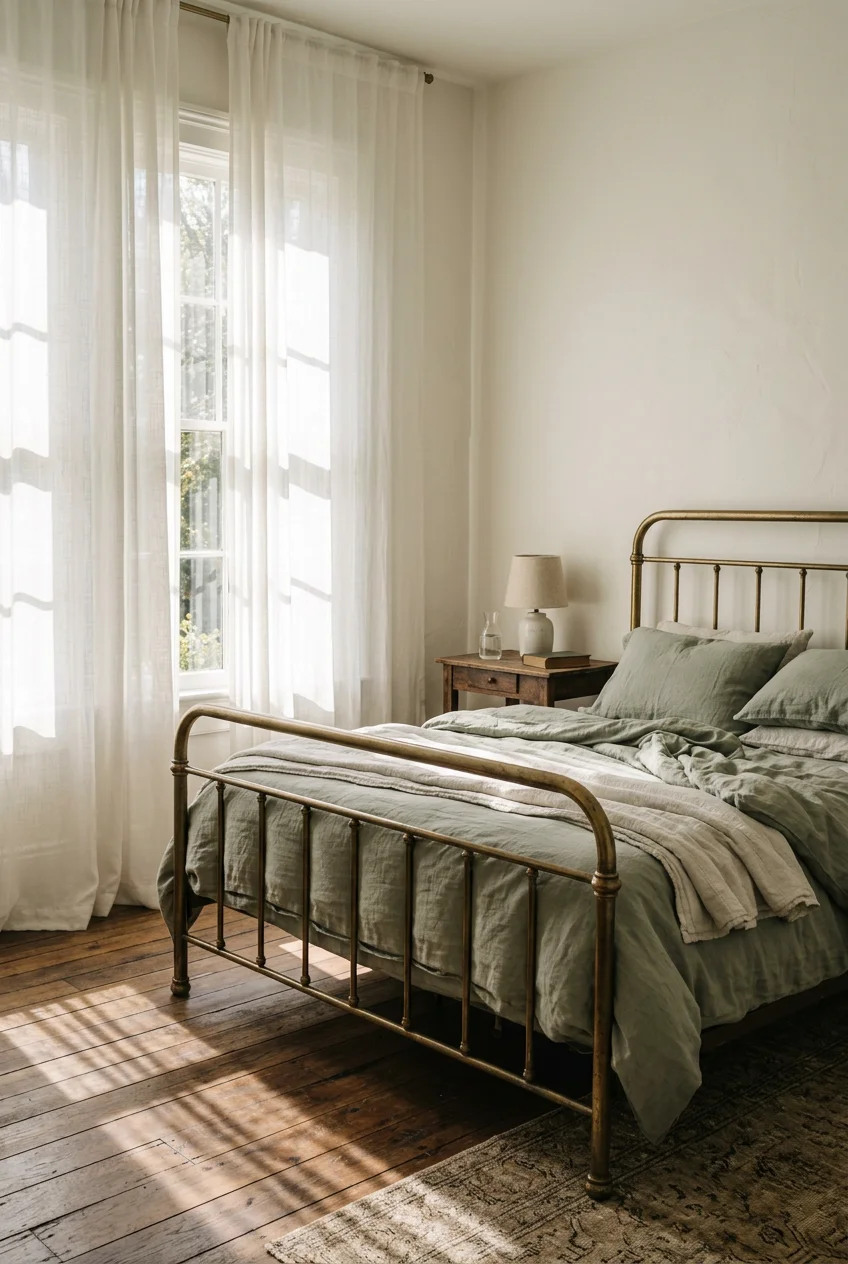
Old bedding is usually stiff, scratchy, and sized for beds that don’t exist anymore. I bought a 1940s lace bedspread once and it felt like sleeping under a fishing net. Instead, I use modern garment-washed linen. I use the Quince European Linen sheet set in terracotta, which costs $129.90 for a Queen. The fabric comes pre-washed, giving it that rumpled, lived-in texture that mimics heirloom textiles. If you want a heritage look, Piglet in Bed makes a collection called A Season of Wonder. Their gingham and stripe patterns look exactly like the ticking fabric used on antique mattresses. I layer a solid linen duvet over a striped fitted sheet. This creates depth without relying on 80-year-old fabric that will tear in the wash.

50×70 Inch Rust Throw Blanket – Soft & Fluffy Fleece
50×70 Inch Rust Throw Blanket – Soft & Fluffy Fleece punches above its price — 11 buyers rated it 4.5 stars. I would buy it again.
4. Bring Back Dark Brown Wood Furniture

After a decade of pale oak, rich woods like mahogany and walnut are back. A solid wood antique armoire offers better storage than most modern built-ins and brings immediate character. I found a 19th-century walnut dresser on Facebook Marketplace for $180 last Tuesday. It weighs about 150 pounds and took two people to get upstairs. The dark wood anchors the room and absorbs natural light, making the space feel grounded. When shopping, check the drawer joints. You want dovetail construction, not staples. I repurposed a vintage vanity as a computer desk. The 30-inch height is perfect for a laptop, and the dark mahogany finish hides coffee rings better than my old Ikea desk ever did.
5. Paint with Muted Pastel Tones

Cottagecore and romantic aesthetics rely on muddy color palettes. Pure white walls make antique furniture look dirty by contrast. Shades like dusty rose, sage green, butter yellow, and faded lavender work best. I painted my primary bedroom with Behr’s Vintage Tea Rose from Home Depot, which costs about $45 per gallon. It has gray undertones, so it reads as a sophisticated neutral rather than bubblegum pink. These tones reflect morning sunlight and soften the sharp corners of dark wood. When testing paint, do a 2×2 foot square right next to your window trim. Muted pastels shift drastically during the day. A sage green that looks perfect at noon might look muddy by 4 PM if you don’t test it first.
6. Anchor the Floor with a Turkish Kilim Rug

A large rug changes a plain room instantly. Vintage Turkish rugs or flatweave Kilims add character through their faded vegetable dyes. You need a rug wide enough to extend at least 24 inches on both sides of your bed so your feet land on softness, not cold hardwood. A genuine vintage Turkish rug ranges from $50 to $150 per square foot. I bought a 5×8 foot Oushak rug for $400 at an estate sale. The wool is worn in the center, which I prefer because it lays flat under my bed frame. If genuine vintage is out of your budget, Revival Rugs sells over-dyed pieces and reproductions starting around $250. Just buy a 1/4-inch felt rug pad ($45 on Amazon) to keep it from sliding. You might also like: 20 Stunning Small Bedroom Wall Decor That Actually Work

Fixwal Black Floating Shelves for Wall
If you want something that just works, Fixwal Black Floating Shelves for Wall is a safe bet (42 reviews, 4.5 stars).
7. Build a Gallery Wall with Mixed Frames

A wall of antique art adds charm, but you have to secure it properly. I once hung a 1920s gold plaster frame with a cheap adhesive hook. It crashed at 3 AM and put a dent in my baseboard. Now I use 30-pound drywall anchors. To build the wall, mix flea market oil paintings with modern reproductions. I buy $15 brass frames from Target and fill them with public domain landscape prints I print at Walgreens for $3.99. The key is a common color palette. I stick to moody greens and gold tones. Space the frames exactly 2.5 inches apart. Any wider and the collection looks disconnected; any closer and it feels overwhelming. You might also like: 20 Cozy Cozy Minimalist Bedroom for Every Budget
8. Sneak in Y2K Decor Elements

Late 1990s and early 2000s items are now officially vintage. You don’t have to stick to Victorian or Mid-Century pieces. I add playful Y2K items to keep the room from feeling too serious. The classic Ikea Jonisk bubble lamp from 2002 is a perfect example. I bought one on eBay for $45, and it sits on my floor emitting a soft glow. Colorful acrylic accessories and chunky resin alarm clocks also break up the heavy wood tones. I have a translucent purple digital clock from 1998 on my nightstand. It cost $12 at a thrift store and adds a weird, synthetic contrast to my linen sheets that I really like.
9. Soften Windows with Sheer Canopies

Flowing fabrics filter harsh sunlight into a soft glow. Heavy velvet drapes make a bedroom feel like a dungeon. I prefer lightweight linen or sheer lace. I bought two sheer white curtain panels from Walmart for $9.98 each. I hung them on a tension rod inside the window frame, then installed a second rod outside for heavier, floor-skimming cotton drapes. This double-layer setup gives you a romantic feel during the day while providing privacy at night. You can also drape a 4-yard length of sheer gauze over a hoop above the bed for a canopy. It costs about $15 in fabric and lowers the visual ceiling, making the sleeping area feel like a private tent. You might also like: 20 Stunning Pink Bedroom Ideas You Need to See

Amazon Basics Bedroom Closet Organizer with 5-Fabric
Amazon Basics Bedroom Closet Organizer with 5-Fabric Storage Drawers f punches above its price — 41 buyers rated it 4.5 stars. I would buy it again.
10. Display Handmade Studio Pottery

Factory-made ceramic vases lack the imperfections that make vintage decor interesting. There is a surge in demand for handmade, slightly wonky studio pottery. I hunt for 1970s stoneware at craft fairs and thrift stores. Last week, I found a speckled brown ceramic vase at Goodwill for $4.99. It has visible thumbprints from the potter near the base. I keep it on my dresser filled with dried eucalyptus. These handmade textures add warmth. You can also look for heirloom needlepoint pillows or crochet blankets. I have a heavy wool crewelwork pillow ($35 on Etsy) on my reading chair. The thick, raised yarn texture contrasts nicely against the smooth cotton slipcover.
11. Position Antique Mirrors to Catch Light

Antique mirrors are usually cheap at flea markets, often $10 to $20. They offer a window into a vintage world and bounce light around small rooms. I hang a heavy brass mirror opposite my south-facing window. It magnifies the afternoon sun and makes my 10×10 room feel twice as large. However, check the glass quality. I bought a 1950s mirror once, but the glass was warped. Catching my reflection in it gave me a headache. If the frame is beautiful but the glass is ruined, have a local glass shop cut a new 1/8-inch mirror pane for about $35. I also use small vanity mirrors as trays on my nightstand to hold my water glass and chapstick.
12. Avoid the Time Capsule Clutter Trap

A frequent error is overfilling the space with items from the same era. If everything is from 1950, you aren’t decorating, you’re building a movie set. I made this mistake early on. My nightstand was covered in an antique lamp, a rotary phone, three old books, and a lace doily. I had no room for my phone charger or a glass of water. Now, I use a minimalist approach. I cleared the nightstand and left only one vintage item: a small 1960s brass alarm clock. The surface is clean. Make style statements with chosen items rather than burying your daily life under artifacts. A room has to function for the year you are living in.

ROMGUAR CRAFT Corner Floating Shelves Wall Mounted Set of 4
A dependable everyday pick — ROMGUAR CRAFT Corner Floating Shelves Wall Mounted Set of 4 pulls in 19 ratings at 4.5 stars. Not flashy, just solid.
13. Prioritize Modern Mattress and Bed Frame Comfort

Vintage bed frames are charming, but they’re a nightmare for sleeping. Antique beds often have non-standard dimensions. I once tried to force a modern Queen mattress onto a 1920s full-size iron bed frame. The mattress hung over the edges and the rails bowed. Never compromise your spine for an aesthetic. I recommend buying contemporary beds with vintage-inspired designs. The Bedmr Oxford 4FT 6 Double Sleigh Bed Frame costs around $550 and gives you a scrolled headboard with actual support. I pair my frame with a 12-inch memory foam mattress from Costco ($499). You get the weight of a classic bed, but your mattress fits perfectly and you won’t wake up with back pain.
14. Perform a Strict Furniture Smell Test

Before you hand over cash for vintage furniture, stick your head inside the drawers and take a breath. Musty odors indicate hidden mold or decades of cigarette smoke. Three years ago, I bought a cedar chest for $75 without smelling it first. It smelled like mothballs. I stored my winter sweaters in it, and the chemical smell ruined $200 worth of wool. No amount of baking soda will remove a deep mold smell from untreated wood. Also, test every drawer. Pull them out and push them back in three times. If they stick, grind, or drop in the back, the wooden runners are worn out. Fixing them costs more than the dresser itself.
15. Use Antique Books as Structural Risers

Antique books add history for just a few dollars. I buy old hardcovers from the clearance bins at Half Price Books for $3 each. I strip off the dust jackets to reveal the cloth covers underneath. I don’t just put them on shelves. I use them as risers to fix the scale of my lighting. If a bedside lamp is too short and casts a glare while reading, stack three vintage books under the base. It raises the light source by 4 inches. Group books of similar colors together. I have a stack of three faded green books on my dresser holding up a jewelry box. It blends the new box into the older furniture easily.

Govee 100ft RGBIC LED Strip Lights
Govee 100ft RGBIC LED Strip Lights punches above its price — 68 buyers rated it 4.5 stars. I would buy it again.
16. Repurpose Glass Trays and Perfume Bottles

Small vintage accessories are the most affordable way to add style. A modern decorative tray from Anthropologie costs $48, but you can find cut-glass antique dresser trays at any antique mall for $12 to $15. I use a 12-inch oval glass tray to corral my daily jewelry and perfume. It keeps my dresser top looking intentional rather than messy. I also collect empty vintage perfume bottles. The heavy glass stoppers and faceted sides catch the light beautifully. Just wash them out with hot soapy water and a bottle brush. Old perfume residue turns into a sticky, brown syrup that smells like rubbing alcohol. I line three clean bottles on my windowsill where they act like tiny prisms.
17. Mix Unlacquered Brass and Aged Bronze Hardware

Swapping out hardware on modern furniture is the fastest cheat code for a vintage look. Standard builder-grade nickel knobs look cheap and date a room to 2015. I replace all my dresser knobs and closet pulls with unlacquered brass. I buy solid brass cabinet knobs from Home Depot for $4.50 each. Because they are unlacquered, the oils from your hands will naturally tarnish the metal, creating a patina that factory-aged hardware can’t touch. I mix this brass with aged bronze hinges on my doors. Matching all your metals perfectly looks too rigid. A house built in 1910 would have accumulated different hardware over decades. Mixing brass and bronze mimics that natural, historical evolution.
Building a room with history takes patience, and you will definitely buy a few pieces that don’t work out. Start with the 20/80 rule, focus on your lighting, and never buy a dresser without smelling the drawers first. If you found these measurements and brand tips helpful, pin this article to your bedroom decor board so you have the prices handy next time you hit the antique mall.
Frequently Asked Questions
How do I create a vintage bedroom aesthetic without it looking cluttered?
Follow the 20/80 rule by using 20 percent vintage items and 80 percent modern elements. Pair one or two antique anchor pieces, like a dark wood dresser, with a modern bed frame and clean surfaces to avoid a museum-like feel.
What colors work best for a vintage bedroom?
Muted pastels are ideal for this style. Look for shades like dusty rose, sage green, butter yellow, and faded lavender. These colors reflect natural light beautifully and soften the heavy look of dark antique wood furniture.
Should I buy an antique bed frame?
It is usually better to buy a modern reproduction. Authentic antique bed frames often have non-standard dimensions that won’t fit modern mattresses, and old wire springs lack proper back support. Buy a modern vintage-inspired frame instead.
How can I tell if vintage furniture is safe to buy?
Always perform a smell test before purchasing. Musty odors indicate mold or trapped cigarette smoke, which is nearly impossible to remove from untreated wood. Also, test all drawers multiple times to ensure the wooden runners aren’t broken.
