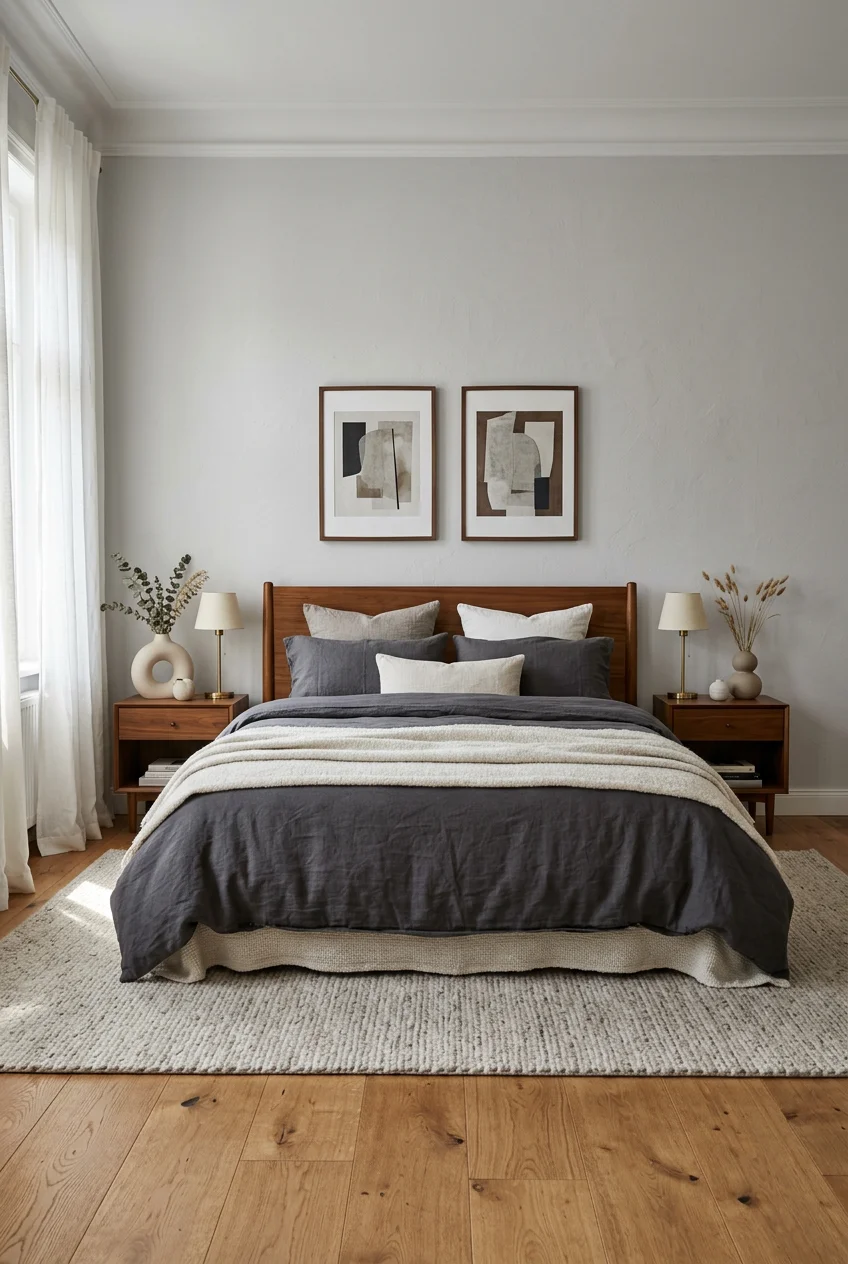
What’s Inside
- Upholstered Wall Panels for a Cocoon Effect
- High-Quality Organic Cotton Bedding
- Properly Sized Area Rugs
- Warm Layered Lighting
- Oversized Statement Artwork
- Smart Plugs for Automated Ambiance
- True Blackout Curtains
- Nightstands with Integrated Features
- Mismatched Furniture Pieces
- Earthy Color Palettes
- Strategic Bed Placement
- Minimalist Furniture Arrangement
- Wrap-Around French Return Curtain Rods
- Sculptural Pendants Instead of Flush Mounts
- Chunky Knit Throws for Texture
- Smart Lighting Bulbs for Color Control
- Extra-Long Lumbar Pillows
- Theater-Grade Noise Reducing Curtains
Walking into a room with bare walls, a metal bed frame, and harsh overhead lighting feels like stepping into an interrogation room. If you want to fix that cold, sterile feeling, you’ve got to pick the right bedroom decor. Upgrading your space doesn’t require a total demolition or a massive budget. It just requires paying attention to textures, lighting, and scale. Most people hang their art way too high, buy rugs that are entirely too small, and wonder why the room feels off. We’re going to fix those issues right now. If you only try one idea from this list, make it #7. True blackout curtains do more for your actual sleep quality than any expensive mattress pad ever will. Here’s why.
Skip this list if you’re living in a temporary dorm room where you aren’t allowed to swap out furniture or change the lighting. These updates require a bit of flexibility, like the ability to hang heavy items on the wall, change out light bulbs, or bring in moderately sized furniture. If your lease forbids even basic adhesive hooks, many of these concepts won’t work for you.
1. Upholstered Wall Panels for a Cocoon Effect

Most people paint an accent wall and call it a day. That leaves the room feeling flat and echoing every footstep. For 2026, designers like Zoë Feldman are pushing the cocoon bedroom trend. This involves installing padded, upholstered wall panels behind the bed and extending them far beyond the headboard. The visual impact is immediate, but the real benefit is acoustic. Materials like washed linen, silk, or heavy mohair absorb noise from the street and soften the room’s acoustics. It creates a quietly tailored finish that paint simply can’t replicate. Custom panels run anywhere from $300 to well over $1,000 depending on the fabric. If you’re looking at budget-friendly options, Target and HomeGoods sell basic peel-and-stick velvet panels usually priced under $100 for a set of four. You attach them directly to the drywall using heavy-duty adhesive strips. The texture adds warmth and makes the space feel incredibly intimate. Trust me.
Best for: Renters dealing with thin apartment walls.
The catch: Dust accumulates on the fabric ledges, meaning you’ll need to vacuum your walls monthly with a brush attachment.
2. High-Quality Organic Cotton Bedding

Sleeping on cheap polyester blends feels like wrapping yourself in a plastic bag. Upgrading your sheets is a functional necessity. The organic modern style trend leans heavily into traceable, natural fibers. Sferra is known for their Giza 45 Egyptian cotton, offering exceptional softness and durability. A full Frette organic collection set runs in the splurge territory of around $4,825. If that isn’t in the budget, Boll & Branch offers 100% traceable, organic cotton options that are praised for getting softer with every wash, typically ranging from $200 to $300. The Citizenry also offers Fair Trade certified stonewashed linen or organic cotton sheets for a more approachable luxury. You spend a third of your life in bed. Skip the scratchy, heat-trapping synthetics and invest in breathable natural fibers.
The catch: Organic cotton and linen wrinkle incredibly easily. If you want a perfectly smooth, hotel-like bed, you’ll have to iron your sheets.
3. Properly Sized Area Rugs

A massive design mistake is placing a tiny 5×7 rug at the foot of a queen bed. It looks like a bath mat lost in a large room. To ground the space properly, you need scale. For a queen bed, opt for a 6’x9′ or 8’x10′ area rug. For a king bed, you need a 9’x12′ or larger. Position the rug so it extends 18 to 24 inches beyond the sides and foot of the bed. This ensures your bare feet actually land on a soft surface when you get up in the morning. Brands like Safavieh or Loloi offer large, textured rugs at stores like Wayfair or Rugs USA, usually ranging from $150 to $400 for an 8×10. A large rug anchors the furniture and stops the bed from looking like it’s floating aimlessly.
The catch: Large rugs are heavy, expensive to ship, and incredibly difficult to clean underneath once a heavy bed is placed on top of them.

Tenmiro Led Lights for Bedroom 100ft (2 Rolls of 50ft)
Tenmiro Led Lights for Bedroom 100ft (2 Rolls of 50ft) Music Sync Colo has been one of the most consistently praised picks in this category. 787 reviewers averaged 4.5/5.
4. Warm Layered Lighting

Relying solely on a single flush-mount ceiling light is a surefire way to make your bedroom look like a doctor’s office. You need layered lighting to create a calm atmosphere. Incorporate dimmable overhead fixtures, bedside table lamps, and a floor lamp or wall sconces. The key is the bulb temperature. Choose warm-toned bulbs ranging from 2700K to 3000K. Anything higher than 3000K starts to look blue and clinical, which disrupts your circadian rhythm before bed. Stores like IKEA and West Elm sell excellent brass or matte black plug-in sconces, usually priced between $40 and $150. Layering light allows you to turn off the bright overheads an hour before sleep and rely on the softer, lower-level lamps to signal your brain that it’s time to rest.
The catch: Layered lighting requires multiple accessible wall outlets. In older homes, you might end up relying on ugly extension cords hidden under rugs.
5. Oversized Statement Artwork

Gallery walls behind beds often look cluttered and chaotic. One of the standout bedroom decor items for 2026 is a single, massive piece of art hung above the headboard. The rule of thumb is that the artwork should be approximately two-thirds to three-quarters the width of the furniture it’s hanging above. For a standard 60-inch wide queen bed, aim for art that is 40 to 46 inches wide. Textural pieces, plaster reliefs, or large-scale black-and-white photography work best. CB2 and Crate & Barrel sell large canvas pieces ranging from $200 to $600. A single large piece creates a powerful focal point without making the room feel busy or noisy.
Best for: Minimalist spaces that need a focal point without added clutter.
The catch: Hanging a heavy 40-inch frame directly over your head requires precise measuring and heavy-duty drywall anchors. A simple nail won’t cut it. You might also like: 19 Kids Bedroom Decor Worth Trying
6. Smart Plugs for Automated Ambiance

Getting out of a warm bed to turn off a lamp across the room is annoying. Smart plugs fix this instantly. The TP-Link Kasa Smart Plug Mini is a tiny device that plugs into your existing wall outlet, usually costing around $15 to $25. You plug your standard lamp into it, and suddenly you can control the light from your phone or set it on a schedule. You can program your bedside lamps to turn on at 20% brightness exactly when your alarm goes off, simulating a sunrise. You can find these at Best Buy or Walmart. It’s a cheap upgrade that makes a standard room feel highly customized. You might also like: 16 Teen Boys Bedroom Ideas for Every Budget
Best for: Tech beginners who want automation without rewiring their house. You might also like: 16 Bedroom Decor Ideas For Women That Actually Work
The catch: These plugs require a stable 2.4GHz Wi-Fi connection. If your router is far from the bedroom, they will disconnect constantly.

Govee RGBIC LED Strip Lights, Smart LED Lights for Bedroom
Govee RGBIC LED Strip Lights is sturdier in person than the photos suggest — over 252 buyers gave it 4.5 stars.
7. True Blackout Curtains

Even low levels of ambient street light can ruin your sleep cycle. Flimsy cotton curtains aren’t doing you any favors. You need actual, heavy-duty blackout curtains. The NICETOWN 100% Blackout Curtains use a triple-weave Plylux fabric with a black liner backing to block light completely. They typically run $25 to $55 per panel at stores like Target or Amazon. To get the full effect, you must hang the curtain rod as close to the ceiling as possible and extend it 4 to 6 inches past the window frame on each side. This prevents light from bleeding through the edges. The thermal insulation also helps keep the room cooler in the summer.
Best for: Light sleepers and shift workers.
The catch: True blackout fabric is thick and stiff. It won’t drape with the light, breezy elegance of sheer linen.
8. Nightstands with Integrated Features

A nightstand covered in a tangled mess of phone chargers, watch cables, and lamp cords looks terrible. Nightstands are becoming much more functional. Look for options with built-in charging stations. The Yoobure Nightstand, often found on Wayfair for $60 to $120, features two built-in USB ports and two standard AC outlets right on the top surface or hidden just inside a drawer. This keeps your devices charged and the cords entirely out of sight. When shopping, prioritize nightstands with at least one closed drawer to hide lip balm, earplugs, and other small clutter. An open shelf nightstand just puts your mess on display. I learned that the hard way.
The catch: You still have a thick power cord running from the nightstand to the wall outlet, which can be tricky to hide if your outlet isn’t directly behind the table.
9. Mismatched Furniture Pieces

Buying a matching 5-piece bedroom set from a big box store makes a room look like a cheap catalog showroom. HomeGoods Style Expert Beth Diana Smith notes that matching sets make a room feel impersonal and flat. Instead, mix your materials. If you have a fabric upholstered bed, pair it with warm walnut wood nightstands. If you have a wood bed frame, use metal or painted nightstands. Mixing textures creates a curated, collected look over time. You can source a vintage wooden dresser and pair it with modern matte black metal side tables from CB2. It takes more effort to source individual pieces, but the resulting depth is worth it.
The catch: Mixing wood tones is difficult. If you pair a cool-toned gray wood with a warm orange-toned cherry wood, they will clash.

upsimples Floating Shelves for Wall
upsimples Floating Shelves for Wall is sturdier in person than the photos suggest — over 47 buyers gave it 4.5 stars.
10. Earthy Color Palettes

Stark white walls are out. They feel clinical and cold. For 2026, earthy hues like warm terracotta, soft moss green, clay tones, and muted browns are taking over. These colors mimic nature, making the bedroom feel peaceful and grounded. You don’t have to paint the entire room. Bringing in these tones through textiles works just as well. A terracotta linen duvet cover or a muted moss green throw pillow adds instant warmth. Brands like Behr at Home Depot offer excellent matte finish paints in these earthy tones, usually ranging from $30 to $50 a gallon. These colors absorb light rather than reflecting it harshly, which is exactly what you want in a space meant for resting.
The catch: Darker earthy tones absorb natural light. If your room only has one small window, painting all four walls a deep moss green will make it feel like a cave.
11. Strategic Bed Placement

Shoving your bed into the corner of the room to save space is a mistake unless you’re in a tiny studio. Interior designer Kathy Kuo emphasizes that bed placement dictates the entire flow of the room. The bed should be centered on the primary wall, allowing at least 24 to 30 inches of walking space on both sides. This makes making the bed easier and prevents the room from feeling lopsided. Ideally, you should position the bed so you can see the bedroom door from the mattress without being directly in line with the doorway. This placement provides a psychological sense of security.
The catch: In awkward, L-shaped rooms or rooms with multiple doors and low windows, centering the bed on a solid wall might be impossible.
12. Minimalist Furniture Arrangement

Cramming a bed, two nightstands, a massive dresser, a desk, and a reading chair into a standard 10×12 bedroom creates visual chaos. Katie Lion, senior interior designer at Kitesgrove, advises that less is more when it comes to bedroom furniture. If you constantly bump your shins on a bench at the foot of the bed, remove the bench. If your dresser blocks half the window, move it to the closet or downsize. A cluttered room raises stress levels. Stick to the essentials: a bed, nightstands, and a dresser only if it fits comfortably without impeding walkways.
The catch: Removing furniture means removing storage. You’ll have to aggressively declutter your wardrobe to survive with less drawer space.
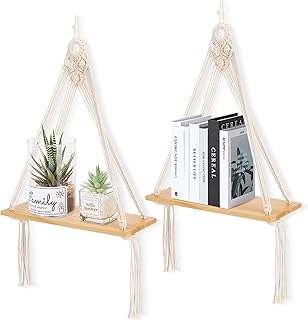
Sunkaioo Macrame Wall Hanging Shelf Set of 2
Sunkaioo Macrame Wall Hanging Shelf Set of 2 punches above its price — 307 buyers rated it 4.5 stars. The kind of pick people reorder.
13. Wrap-Around French Return Curtain Rods

Standard curtain rods leave a one-inch gap between the curtain and the wall, allowing a bright sliver of morning sun to hit you right in the eye. French return rods solve this completely. These rods curve at the ends, attaching flush to the wall. This allows you to pull the curtain fabric all the way back against the drywall, sealing off light bleeds. Target and Walmart sell basic matte black or brass French return rods for about $25 to $45. It’s a minor hardware swap that drastically improves the functionality of your window treatments and gives a high-end, custom look to cheap curtains.
The catch: Because the rod curves tightly to the wall, sliding the last curtain ring past the curve can be stiff and annoying when you try to open them.
14. Sculptural Pendants Instead of Flush Mounts

Builder-grade flush mount ceiling lights, often called boob lights, ruin the aesthetic of any room. Replacing them with a sculptural pendant light draws the eye upward and adds immediate character. Fluted glass or oversized paper lanterns are heavily trending for 2026. A large, 24-inch rice paper shade diffuses light beautifully and softens the glare. You can find high-quality paper or woven rattan pendants at IKEA or West Elm ranging from $30 to $150. Hanging a pendant directly over the foot of the bed or in the center of the room adds a layer of architectural interest that a flat glass dome simply can’t provide.
The catch: If your ceilings are lower than 8 feet, a hanging pendant will become a literal headache as taller people will constantly bump into it.
15. Chunky Knit Throws for Texture

A flat, tightly made bed looks uninviting. You need texture to break up the smooth surface of the duvet. A heavy, chunky knit throw blanket draped casually across the bottom third of the bed adds necessary visual weight. Look for thick cotton or wool blends rather than cheap acrylics, which pill after one wash. Pottery Barn and Target offer great textured throws ranging from $40 to $150. The contrast between smooth sheets and a highly textured, ribbed blanket creates the layered, comfortable look seen in boutique hotels. It also provides a practical extra layer for cold nights without needing to change the entire duvet insert.
The catch: Chunky knits snag easily. If you have cats or dogs with sharp claws, a chunky knit blanket will be destroyed in a matter of days.

Yieach Bedside Shelf for Dorm Bed,Rv
If you want something that just works, Yieach Bedside Shelf for Dorm Bed is a safe bet (117 reviews, 4.5 stars).
16. Smart Lighting Bulbs for Color Control

If you don’t want to install dimmer switches, smart bulbs are the easiest workaround. Brands like Philips Hue or LIFX offer bulbs that screw into your standard lamps. Using an app, you can change the color temperature from a bright, cool white for reading to a deep, warm amber for winding down. They typically cost between $30 and $50 per bulb. Setting your bedside lamps to a dim amber light 45 minutes before sleep helps your brain produce melatonin. You can completely alter the mood of the room without buying new fixtures or dealing with electrical wiring.
Best for: Windowless bedrooms or basement rooms that lack natural light.
The catch: The upfront cost is high. Outfitting four lamps with $40 bulbs gets expensive quickly compared to a standard $3 LED bulb.
17. Extra-Long Lumbar Pillows

Stacking five different square throw pillows on a bed is tedious to arrange and annoying to take off every single night. The modern approach is using one single, extra-long lumbar pillow. A 14×36 inch or 14×48 inch lumbar pillow placed in front of your standard sleeping pillows provides a clean, streamlined look. The Citizenry and CB2 sell beautiful woven or leather lumbar covers ranging from $80 to $150. It gives the bed a finished, styled appearance in five seconds. You just toss one pillow on the bed and you’re done. It’s practical and visually striking.
The catch: Finding the exact right size insert for an extra-long lumbar cover can be difficult, and the inserts often flatten out in the middle over time.
18. Theater-Grade Noise Reducing Curtains

If you live near a busy street, light isn’t your only enemy. Noise pollution ruins deep sleep. While no curtain will soundproof a room completely, theater-grade curtains help muffle street noise. The Sun Zero Oslo Theater-Grade Blackout Curtain uses a dense, heavy fabric lined with fleece to absorb sound waves and reduce heat loss. They usually cost around $30 to $60 per panel at stores like HomeGoods or Walmart. The heavy fabric adds a luxurious, dramatic drape to the window while serving a highly functional purpose. By blocking out the high-frequency sounds of traffic, you create a quieter, more insulated sleeping environment. No exaggeration.
The catch: These curtains are exceptionally heavy. A cheap tension rod won’t hold them; you’ll need a rod securely screwed into wall studs.
How we chose these ideas: We evaluated these updates based on their actual impact on sleep quality, visual aesthetic, and realistic effort levels. We prioritized modifications that don’t require major renovations, focusing heavily on renter-friendly adjustments, functional lighting changes, and accessible price points.
Upgrading your sleeping space doesn’t have to be a massive chore. Pick one or two of these concepts, measure your space accurately, and make the change this weekend. Pin this article so you have the measurements and brand names handy when you’re standing in the aisle at Target trying to remember what size rug to buy.
Frequently Asked Questions
What are the most essential bedroom decor items for better sleep?
The most essential items are true blackout curtains, warm-toned lighting (2700K-3000K), and breathable organic cotton or linen sheets. These elements regulate room temperature, block disruptive light, and signal your brain that it’s time to rest.
What size area rug should I put under a queen bed?
For a queen bed, use a 6’x9′ or 8’x10′ area rug. Position it so it extends 18 to 24 inches beyond the sides and foot of the bed, ensuring your feet land on a soft surface when you wake up.
How can I make my bedroom feel more expensive on a budget?
Replace standard flush-mount ceiling lights with sculptural paper or glass pendants, install French return curtain rods to eliminate light gaps, and use a single extra-long lumbar pillow instead of multiple small throw pillows for a streamlined look.
What is the cocoon bedroom trend?
The cocoon bedroom trend focuses on creating a padded, intimate space. It involves using upholstered wall panels, heavy textured fabrics like washed linen or mohair, and layered warm lighting to absorb noise and create a calming atmosphere.
