What’s Inside
- Anchor the Walls with Sherwin-Williams Tricorn Black
- Soften the Edges with Farrow & Ball Pitch Black
- Layer Textures for Your Black Room Decor Bedroom Aesthetic
- Install Strategic Layered Lighting with Warm Bulbs
- Anchor the Space with a Massive Charcoal Area Rug
- Swap Standard Hardware for Matte Black Fixtures
- Frame the Windows with Heavy Black Velvet Curtains
- Introduce Warm Woods to Break Up the Monochrome
- Add a Dramatic Black Canopy Bed Frame
- Use Oversized Floor Mirrors to Bounce Light
- Incorporate Subtle Greenery in Black Ceramic Planters
- Upgrade to Black Linen Sheets for Breathability
- Create a Focal Point with a Charcoal Upholstered Headboard
- Install Black Floating Shelves for Curated Displays
- Paint the Ceiling a Deep Charcoal for Maximum Coziness
- Finish with Brass Accents
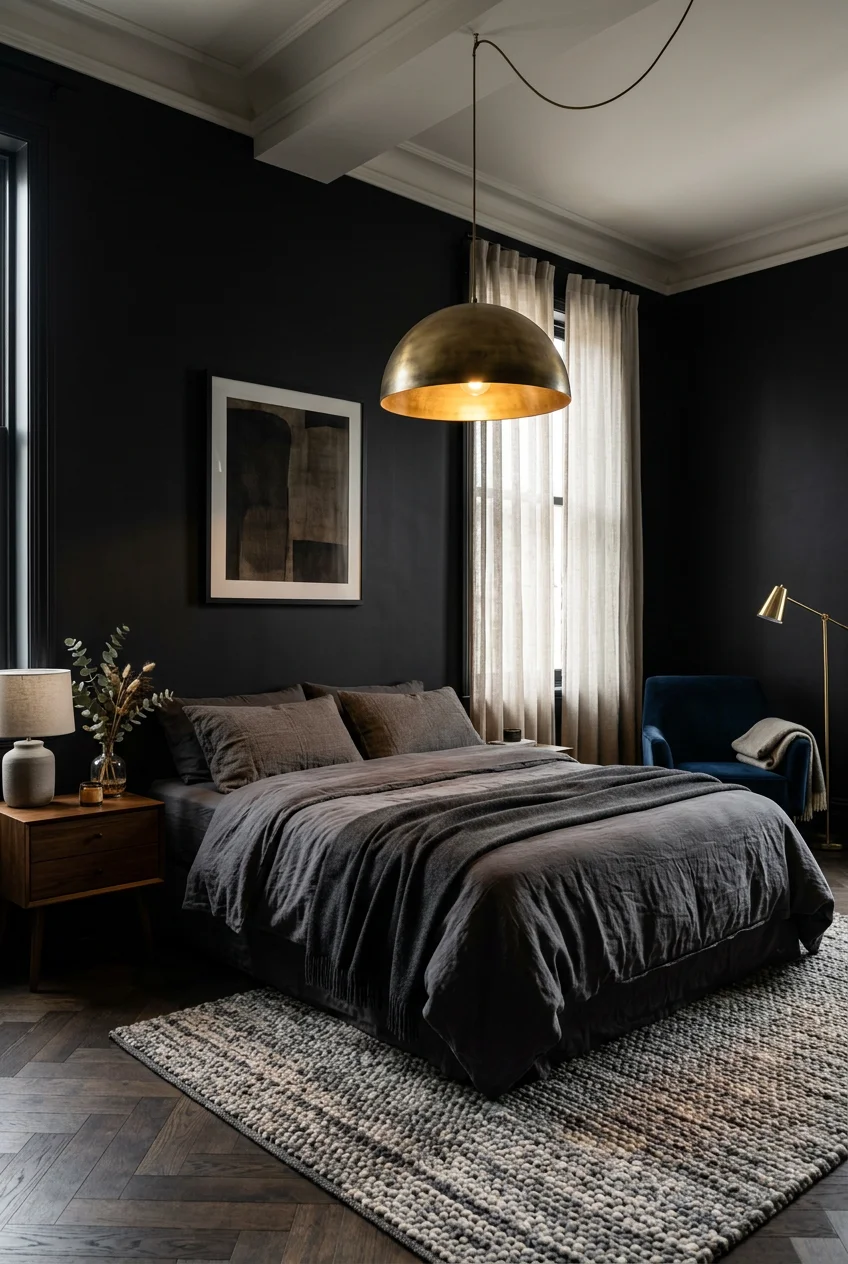
Most people paint four walls dark and wonder why their space feels like a trendy cave instead of a luxury hotel. Getting a black room decor bedroom aesthetic right takes more than just slapping up dark paint. It’s about light, texture, and knowing exactly where to stop. A dark room demands specific styling choices you don’t have to think about in a basic white space. If you only try one idea from this list, make it #3. Here’s why: layering textures is the only thing standing between a sophisticated moody retreat and a room that feels flat and lifeless. Trust me on this.
Skip this trend if your bedroom faces north and has windows smaller than a standard poster frame. Black walls in light-starved rooms don’t look moody. They just look dead. You’re better off with a warm taupe or deep green if natural light is your enemy.
1. Anchor the Walls with Sherwin-Williams Tricorn Black

Not all black paints are created equal. A common mistake is grabbing the first black swatch at the hardware store and ending up with walls that look blue or purple in the afternoon sun. For a true, classic black with minimal undertones, Sherwin-Williams Tricorn Black (LRV 3) is a solid recommendation for a sleek, contemporary finish. It absorbs light well and creates a backdrop for art and furniture. You’ll want to test paint swatches on your walls, as lighting changes how the color appears throughout the day. Paint a 2-foot square next to your window and another in the darkest corner. Check them at noon and at night. Use a high-quality roller with a 3/8-inch nap to ensure a smooth, even application. Cheap rollers leave fuzz behind, which stands out against a dark background. You’ll likely need two coats over a dark tinted primer to get that opaque finish. Expect to budget $70 to $100 per gallon for a premium finish.
Best for: Rooms with abundant natural southern light.
The catch: Tricorn Black shows every single fingerprint, scuff mark, and speck of dust, requiring frequent wipe-downs with a damp microfiber cloth.
2. Soften the Edges with Farrow & Ball Pitch Black

If a stark, true black feels too aggressive for a sleeping space, you need a softer approach. Farrow & Ball Pitch Black is a great choice for a deep, soft black ideal for moody spaces. It lacks the harshness of industrial blacks and brings a subtle warmth to the walls. The matte finish, often called estate emulsion, is crucial here. Glossy black walls belong in a 1980s nightclub, not a modern bedroom. The chalky finish of a high-end matte paint diffuses light rather than reflecting it. Roll this onto the walls, trim, and baseboards for a drenched, cohesive look that makes the ceiling feel higher. Color drenching hides ugly builder-grade trim and makes the room feel like a custom jewelry box. A standard 12×12 bedroom usually requires about two gallons for proper coverage. Always prep the walls with a pole sander first; matte paint hides minor flaws, but a dark color highlights large drywall bumps. I learned that the hard way.
The catch: Farrow & Ball paint is notoriously expensive, often running over $130 a gallon, and touch-ups are difficult to blend.
3. Layer Textures for Your Black Room Decor Bedroom Aesthetic

To prevent a black room from feeling flat, you have to incorporate a variety of textures. Mix plush velvets, chunky knits, smooth silks, and rough-hewn wood. HomeGoods style expert Ursula Carmona suggests using soft textiles like faux fur rugs, textural throw blankets, and velvet pillows to enhance ambiance. Layer a deep charcoal linen duvet with a black velvet throw blanket across the foot of the bed. Add a mix of black leather and patterned silk pillows. Target’s Casaluna line offers excellent heavyweight linen duvets, typically mid-range around $100 to $150, that provide that perfect rumpled, lived-in texture. Without these variations in fabric, dark colors absorb all the visual interest in the room. You want the eye to bounce from the matte linen to the slight sheen of the velvet. It creates a tactile experience that makes the room feel expensive and thoughtfully designed.
Best for: Renters who can’t paint walls but want to achieve a dark, sophisticated vibe through textiles alone.
The catch: Velvet and faux fur trap pet hair instantly, making this a high-maintenance choice for cat or dog owners.

50×70 Inch Rust Throw Blanket – Soft & Fluffy Fleece
50×70 Inch Rust Throw Blanket – Soft & Fluffy Fleece is sturdier in person than the photos suggest — over 14 buyers gave it 4.5 stars.
4. Install Strategic Layered Lighting with Warm Bulbs

Lighting a dark room is entirely different from lighting a white one. You have to combine ambient, task, and accent lighting to create depth and warmth. Use warm white bulbs, around 2700K to 3000K, as their yellowish hue beautifully contrasts with black, fostering a cozy atmosphere. For overhead ambient light, a modern matte black semi-flush mount ceiling light works perfectly. The Lotuspro Modern Farmhouse 14-inch Semi Flush Mount Ceiling Light Fixture is a solid option, typically priced between $50 and $100. Add dimmable bedside lamps and a floor lamp to control the mood. Aim for bulbs emitting around 400 to 800 lumens per fixture to avoid blinding glare. A harsh 4000K daylight bulb will turn a black room into an interrogation cell. Stick to warm tones and put everything on a dimmer switch.
The catch: 2700K bulbs cast a heavy yellow glow that can make crisp white sheets look dingy and unwashed at night.
5. Anchor the Space with a Massive Charcoal Area Rug

A dark room needs a grounded floor. Floating a tiny 5×7 rug under a queen bed is a rookie mistake that chops up the floor plan. You need an 8×10 or 9×12 rug to properly anchor the space. Rugs USA and West Elm offer fantastic distressed charcoal options that blend black, gray, and subtle silver tones. The distressed pattern is vital because a solid black rug acts like a visual void on the floor. Position the rug so at least two-thirds of the bed sits on it, extending outward to give your feet a soft landing spot in the morning. Don’t skip a thick, quarter-inch felt rug pad underneath. It adds crucial cushioning and stops the rug from wrinkling under heavy furniture. Expect to spend anywhere from $200 to $600 depending on the material and size.
The catch: Dark rugs show lint, white pet hair, and crumbs immediately, requiring daily vacuuming to look presentable. You might also like: 17 Cozy Bedroom Decor Worth Trying
6. Swap Standard Hardware for Matte Black Fixtures

Details matter when committing to a dark palette. Standard builder-grade brushed nickel hardware looks cheap and out of place against rich, dark walls or furniture. Swap out your drawer pulls, closet knobs, and door hinges for matte black fixtures. CB2 offers heavy, knurled hex knobs, usually under $15 each, that feel substantial in the hand and add a subtle industrial edge to nightstands or dressers. This is a 30-minute project that requires nothing more than a screwdriver. It unifies the room’s hardware and makes cheap furniture look significantly more expensive. Always measure the center-to-center hole distance before buying replacements. A standard pull is usually 3 or 4 inches, but European furniture often uses metric spacing. You might also like: 17 Aesthetic Black Bedroom for Every Budget
Best for: Budget updates under $50 for those who want a quick weekend project. You might also like: 16 Small Closet Organization Bedroom for Every Budget
The catch: Matte black hardware chips easily if you wear heavy metal rings or accidentally scratch the finish with keys.

BAYKA Floating Shelves for Wall
BAYKA Floating Shelves for Wall has been one of the most consistently praised picks in this category. 96 reviewers averaged 4.5/5.
7. Frame the Windows with Heavy Black Velvet Curtains

Flimsy sheer curtains have no place in a moody, dark bedroom. You need substantial window treatments. Frame your windows with 96-inch or 108-inch heavy black velvet curtains. Hang the curtain rod as close to the ceiling as possible and extend it 10 to 12 inches past the window frame on each side. Most people hang these way too low and wonder why the room feels cramped. IKEA Sanela curtains are budget-friendly, usually under $40 a pair, and offer a surprisingly rich cotton velvet texture. They block out streetlights and add a massive vertical column of texture to the walls. Use clip rings instead of threading the rod directly through the fabric pocket. Clip rings allow the heavy velvet to pleat naturally and slide open effortlessly.
The catch: Black velvet acts as a massive dust filter, requiring regular steaming and lint-rolling to keep the fabric looking clean.
8. Introduce Warm Woods to Break Up the Monochrome

A room that is entirely black and gray quickly feels like a mausoleum. You have to introduce organic materials to bring warmth back into the space. Walnut or acacia wood nightstands are the perfect counterbalance to dark walls. West Elm’s mid-century designs in acorn or walnut finishes provide a rich, honey-toned contrast that pops beautifully against a charcoal or black backdrop. The wood grain adds a natural texture that breaks up the solid blocks of dark color. A solid wood dresser or a pair of wooden bedside tables will keep the room feeling grounded and alive. Keep the styling on these wooden surfaces minimal. A single brass lamp and a stack of three books are plenty.
The catch: Wood tones that are too light, ashy, or gray-washed will clash aggressively with deep black walls and look completely out of place.
9. Add a Dramatic Black Canopy Bed Frame

If you have the square footage, a black metal canopy bed is a stunning architectural addition. It draws the eye upward and creates a room-within-a-room feeling. Brands like Room & Board and Wayfair offer sleek, minimalist iron frames, budget to mid-range $300 to $800, that provide structure without visual bulk. Leave the canopy bare for a modern, structural look, or drape a single piece of charcoal linen across the top rails for a softer, romantic vibe. The thin black lines of the frame look incredible against a lighter gray wall or disappear into a black wall for a subtle textural effect. Pair a canopy bed with a low-profile mattress, around 10 inches thick, so you don’t eat up the negative space between the mattress and the top rails.
Best for: Rooms with ceilings over 9 feet tall that need vertical visual interest.
The catch: Canopy beds dominate the visual space and make standard 8-foot ceilings feel incredibly claustrophobic and cramped.

upsimples Floating Shelves for Wall
If you want something that just works, upsimples Floating Shelves for Wall is a safe bet (47 reviews, 4.5 stars).
10. Use Oversized Floor Mirrors to Bounce Light

Dark walls absorb light. To counteract this, you need large reflective surfaces. A massive 65×22 inch floor mirror leaning against a corner is functional and brightens the space. Target offers heavy, arched metal floor mirrors, typically around $70 to $120, that mimic the look of high-end boutique pieces. Position the mirror opposite your main light source or window. This bounces the available light back into the room, creating the illusion of a larger space. A mirror with a thin black or brass frame integrates perfectly into a dark aesthetic without drawing too much attention to the frame itself. Always anchor a floor mirror to the wall using a heavy-duty anti-tip kit. A 50-pound mirror sliding on a hardwood floor is a disaster waiting to happen.
The catch: A massive mirror reflecting a messy, unmade bed or a cluttered dresser just doubles the visual chaos in a dark room.
11. Incorporate Subtle Greenery in Black Ceramic Planters

Plants bring necessary life to a dark bedroom. The vibrant green leaves provide a sharp, organic contrast to matte black walls and textiles. Use architectural plants like tall Snake plants or ZZ plants potted in 10-inch matte black ceramic pots from Home Depot or a local nursery. These specific plants have deep green, waxy leaves that look incredibly sophisticated against a dark backdrop. Keep the planters simple and unpatterned. The goal is to let the shape of the plant stand out. Place a large floor plant near the window and a small trailing Pothos on a high shelf. Use a well-draining potting mix and a plastic nursery pot inside the ceramic planter. This allows you to remove the plant for watering without ruining the decorative black pot with mineral stains.
The catch: Real plants need adequate natural light, which is often severely lacking in heavily shaded or dark-painted bedrooms.
12. Upgrade to Black Linen Sheets for Breathability

Sleeping in a dark room should feel like a luxurious experience. Ditch the cheap cotton blends and upgrade to high-quality linen. Brooklinen and Quince offer excellent black or deep charcoal linen core sets. Linen has a natural, rumpled texture that looks effortlessly chic even when the bed isn’t perfectly made. It’s also highly breathable, preventing you from overheating at night. Pair silky black pillowcases with a matte black linen duvet and a ribbed throw to avoid the bed looking like a solid, uninviting block of fabric. Wash black linen in cold water with a gentle, liquid detergent. Powdered detergents often leave white residue streaks that are impossible to hide on dark sheets.
The catch: Black linen fades unevenly in the wash, eventually turning a mottled, dusty dark gray after a year of regular laundering.

HOMIDEC Closet Organizers and Storage
A dependable everyday pick — HOMIDEC Closet Organizers and Storage pulls in 81 ratings at 4.5 stars. Not flashy, just solid.
13. Create a Focal Point with a Charcoal Upholstered Headboard

If a canopy bed is too much, an upholstered headboard is a softer alternative. A deeply tufted or vertically channeled headboard in a charcoal fabric anchors the bed and provides a comfortable backrest. Wayfair and Pottery Barn offer excellent options in performance velvet or linen blends. The texture of the upholstery breaks up the flat expanse of the wall behind it. Choose a headboard that stands at least 48 inches tall to ensure it makes a visual impact once the pillows are stacked against it. Keep a velvet brush in your nightstand and give the headboard a quick brush down once a week to keep the pile looking fresh and uniform.
Best for: Readers who frequently sit up in bed and need comfortable back support.
The catch: Dark upholstery absorbs hair oils and skin products over time, leaving a noticeable shiny, greasy spot right where heads rest.
14. Install Black Floating Shelves for Curated Displays

Clutter ruins a dark aesthetic instantly. Instead of piling books on the floor, install sleek floating shelves. Use 24-inch or 36-inch floating shelves from IKEA, the Lack series is a classic budget option. Mount them in a staggered pattern on a blank wall. Use these shelves to display a highly curated selection of items: a few hardcover books, a brass candle snuffer, or a small piece of framed art. Keep the styling minimal. The negative space around the objects is just as important as the objects themselves. Throw away the cheap plastic anchors that come in the box. Use heavy-duty toggle bolts to secure the brackets directly into the drywall if you can’t hit a stud. It took me years to figure out that toggle bolts are the only way to go.
The catch: Floating shelves have strict weight limits and poor anchoring systems. Loading them with heavy hardcovers will cause them to sag instantly.
15. Paint the Ceiling a Deep Charcoal for Maximum Coziness

Most people paint their walls black but leave the ceiling stark white. This creates a harsh, jarring contrast that visually lowers the ceiling. For a truly immersive experience, paint the ceiling a deep charcoal. Sherwin-Williams Iron Ore (LRV 6) offers a mysterious, warm hue with subtle green undertones that works beautifully overhead. It blurs the lines where the walls end and the ceiling begins, making the room feel like a cozy, infinite canopy. Use a flat finish to hide drywall imperfections and minimize light glare from overhead fixtures. Use a high-quality angled brush to cut in the edges where the ceiling meets the wall. A sloppy line ruins the entire effect of a dark ceiling.
The catch: Painting a ceiling black requires professional-level rolling skills to avoid highly visible lap marks when natural light hits the surface.

Fixwal Floating Shelves for Wall
A dependable everyday pick — Fixwal Floating Shelves for Wall pulls in 472 ratings at 4.5 stars. Not flashy, just solid.
16. Finish with Brass Accents

A dark room needs metallic sparks to come alive. Brass is the ultimate companion to black. The warmth of the metal cuts through the darkness perfectly. Finish the room with brass wall sconces, brass picture frames, or a brass tray on the nightstand. Crate & Barrel offers stunning brass decor pieces that feel heavy and substantial. Contrast is key here. You don’t want to overwhelm the space with gold tones. Two or three well-placed brass items are enough to catch the light and add a layer of sophisticated luxury. If you buy unlacquered brass, let it age naturally. The resulting patina adds a layer of moody, historical charm that perfectly suits a dark aesthetic.
Best for: Adding a high-end luxury hotel feel to a basic, builder-grade apartment bedroom.
The catch: Cheap brass finishes look like bright yellow plastic against black walls. You have to invest in real or well-plated brass.
How we chose these ideas: These concepts were selected based on a balance of renter-friendliness, overall cost, effort required, and maximum visual impact. The focus remains on accessible materials and strategic lighting techniques that prevent dark spaces from feeling cramped.
Designing a dark bedroom is an exercise in restraint and texture. It’s not about turning the lights off; it’s about controlling how the light plays against rich, dark surfaces. Stick to warm bulbs, heavy linens, and true blacks. If you’re ready to ditch the boring white walls, save this guide and start gathering your paint swatches. Pin this list to your bedroom mood board so you don’t forget the exact paint colors and bulb temperatures when it’s time to hit the hardware store.
Frequently Asked Questions
Does a black bedroom make the room look smaller?
Not necessarily. Dark colors recede visually, which can actually blur the corners of a room and make it feel endless. The trick is using adequate warm lighting and large mirrors to bounce light around the space.
What color furniture goes with black bedroom walls?
Warm wood tones like walnut, acacia, and teak provide excellent contrast. Brass or gold metal frames add warmth, while charcoal gray or deep olive green upholstery prevents the room from feeling entirely monochromatic.
How do you light a black bedroom properly?
Layer your lighting. Combine a dimmable overhead fixture with warm 2700K to 3000K bulbs, brass bedside sconces for reading, and a floor lamp to illuminate dark corners. Avoid harsh, cool-toned daylight bulbs.
What is the best black paint for a bedroom?
Designers frequently recommend Sherwin-Williams Tricorn Black for a true, neutral black without undertones, or Farrow & Ball Pitch Black for a softer, chalky matte finish that diffuses light beautifully in moody spaces.
