What’s Inside
- Embrace Moody, Grown-Up Color Palettes
- Invest in an Ergonomic, Height-Adjustable Desk
- Prioritize an Ergonomic Gaming Chair
- Modular and Multi-functional Storage Systems
- Incorporate a Weighted Blanket
- Design with Dynamic and Smart Lighting
- Create a Personalized Wall Display
- Integrate Sound-Absorbing Elements
- Choose Durable and Layered Bedding
- Opt for Modular Floor Seating
- Involve the Teen in the Design Process
- Maximize Vertical Space with Loft Beds
- Master Cable Management
- Consider Sensory-Friendly Design Elements
- Choose Industrial Furniture Materials
- Install Floating Wall Shelves for Display
- Mount Blackout Window Treatments
Most parents tackle a boy’s room by slapping up some neon posters and calling it a day. The result usually looks like a chaotic arcade rather than a functional space. Designing a room for a teen boy means balancing his current gaming habits with the reality that he’s growing into an adult. You’re dealing with larger furniture, heavier gear, and a desperate need for privacy. It’s a logistical puzzle. Let’s look at the exact measurements, paint codes, and ergonomic standards you need to build a mature space. If you only try one thing from this list, make it #8 (Sound-Absorbing Elements). Why? Noise control solves the biggest friction point between teens and the rest of the house, making the room instantly more livable. Trust me on this.
Skip this if: You’re designing a shared bedroom for kids under ten. The measurements, ergonomic standards, and dark color palettes here are scaled for adolescent bodies and habits. Younger kids need open floor space for toys, not 48-inch standing desks and acoustic wall paneling.
1. Embrace Moody, Grown-Up Color Palettes

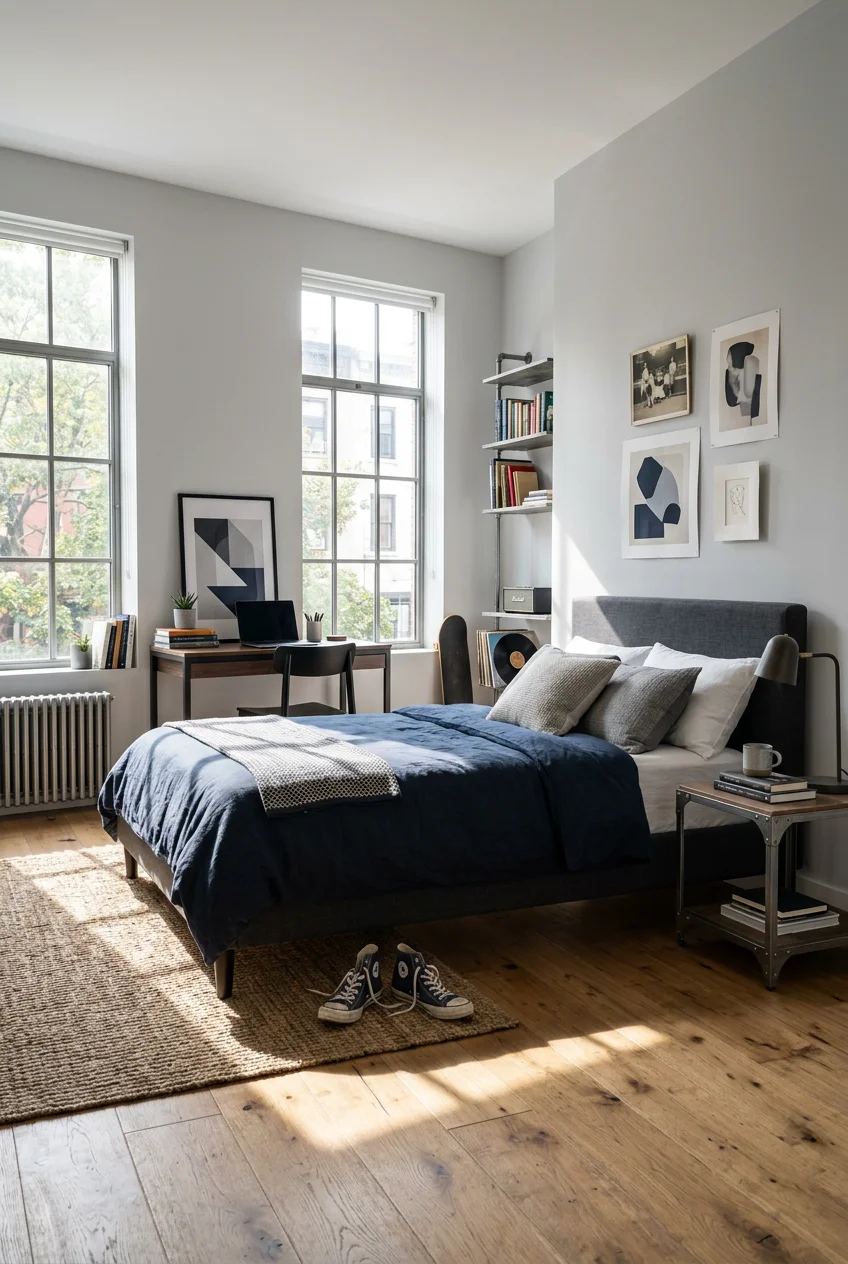
Most people paint teen rooms a stark, generic white and wonder why the space feels clinical. A well-executed room relies on moody, grown-up colors. The 2026 trend forecast points away from primary colors and toward deep navy blues, charcoal grays, and rich forest greens. A bold accent wall in Sherwin Williams Tricorn Black or Benjamin Moore Arctic Seal CSP-15 creates a mature foundation. Dark walls let vibrant accessories or RGB lighting pop without the room looking like a playground. You can grab these at your local Home Depot or Lowe’s. Apply two coats with a 3/8-inch nap roller for a smooth finish. Best for: rooms that get plenty of natural sunlight. The catch: dark paint absorbs light. You’ll need to double your artificial lighting with higher lumen bulbs to keep the space functional at night.
2. Invest in an Ergonomic, Height-Adjustable Desk

Posture matters when teens spend hours at a screen. Skip the tiny, flimsy writing desks. A height-adjustable desk is mandatory. The SHW Electric Height Adjustable Desk (48 by 24 inches) typically ranges from $150 to $250 and gives you enough surface area for a dual-monitor setup. Ensure the desk drops to a seated height of around 60 cm (23.6 inches) and offers a work-surface depth of 60 to 70 cm. This depth keeps monitors at a safe arm’s length (45 to 70 cm away) to prevent eye strain. You can find similar heavy-duty models at Costco during the late summer. Best for: teens who game and study in the same spot. The catch: the motorized steel legs make these desks incredibly heavy. They weigh over 60 lbs, making them a chore to move once assembled.
3. Prioritize an Ergonomic Gaming Chair

Dining chairs and cheap office seats destroy lower backs. A dedicated gaming chair supports the spine during long study or gaming sessions. The Secretlab Titan Evo Nanogen is a premium option between $450 and $550 for smaller sizes, offering targeted lumbar support and high-density foam. For a budget-friendly route, the Razer Iskur V2 X is often under $250. It features breathable fabric, which is crucial for temperature regulation. Don’t buy chairs based on flashy racing stripes rather than specs. Look for a seat pan depth of at least 19 inches and 4D adjustable armrests that align with the desk height. The catch: these chairs have a massive footprint. They take up nearly a 36-inch radius and can easily block closet doors in tight rooms.

50×70 Inch Rust Throw Blanket – Soft & Fluffy Fleece
50×70 Inch Rust Throw Blanket – Soft & Fluffy Fleece is sturdier in person than the photos suggest — over 14 buyers gave it 4.5 stars.
4. Modular and Multi-functional Storage Systems

Teen clutter accumulates fast. I’m constantly seeing standard dressers fail because they aren’t built for heavy gear. Modular storage systems provide the flexibility a teen boy needs. IKEA’s PLATSA or EKET systems offer stackable cubes that adapt to weird room layouts. Alternatively, the ClosetMaid Modular Storage 4-Drawer Unit runs around $50 to $100 at Target and fits inside standard sliding closets. Use 11-inch fabric bins to hide loose cables, controllers, and random hardware. Stacking these vertically draws the eye up and clears the floor. Best for: renters who can’t install permanent built-ins. The catch: modular units are usually particle board. The corners will chip and peel if hit by a vacuum or a heavy backpack.
5. Incorporate a Weighted Blanket

Sleep quality impacts a teen’s focus. A weighted blanket is a functional addition, providing deep pressure to reduce anxiety. Medical recommendations suggest a blanket weighing 5 to 15 lbs, or roughly 5 to 10 percent of body weight. Brands like Gravity Blanket or Bearaby offer breathable cotton options ranging from $100 to $250. The added weight prevents tossing and turning, leading to better sleep. Opt for a 48 by 72-inch size for a twin or full mattress. Best for: teenagers who struggle to wind down after late-night gaming. The catch: weighted blankets over 12 lbs are hard to wash. They can unbalance standard washing machines and take two full days to air dry.
6. Design with Dynamic and Smart Lighting

Overhead lights cast flat, harsh shadows that make a room look cheap. Smart lighting changes the whole mood. Install color-changing LED strip lights, like the Govee RGBIC LED Strip Lights (usually $30 to $60 for a 32.8-foot roll), behind the headboard or desk. Supplement these with smart bulbs, like Philips Hue ($15 to $50 per bulb), in a bedside lamp. This lets the user switch from a cool 4000K white for studying to a dim red or blue for gaming. The catch: smart bulbs rely on stable Wi-Fi. If your router is on the other side of the house, the app connectivity will drop and reset the bulbs to default white. You might also like: 20 Cozy Minimalist Bedroom for Every Budget

Acovy 30in Long Floating Shelves for Wall Set of 2
A dependable everyday pick — Acovy 30in Long Floating Shelves for Wall Set of 2 pulls in 8 ratings at 4.5 stars. Not flashy, just solid.
7. Create a Personalized Wall Display

Taping posters to drywall looks messy and ruins the paint. Create a display with interchangeable art systems instead. The IKEA Skådis pegboard (typically $15 to $30) is an industrial grid that holds hooks, clips, and small shelves. Teens can clip up photos, concert tickets, or headset wires without using glass frames. For a cleaner look, hang three 18 by 24-inch frames from Target with removable backings. This keeps the room organized while allowing decor to evolve. Best for: teens whose hobbies change every six months. The catch: pegboards require precise measuring and heavy-duty anchors. If you miss the studs, the board will hang crooked and pull out of the wall. You might also like: 17 Country Teen Bedroom That Actually Work
8. Integrate Sound-Absorbing Elements

Gaming, loud music, and late-night voice chats create noise pollution. Sound-absorbing elements are a necessity. Install acoustic panels behind the desk or TV. Auralex Acoustics panels run $50 to $200 for a pack of 12 foam squares (12 by 12 inches each). They absorb high-frequency echoes and dampen sound through shared walls. Acoustic panels aren’t a magic fix, but they help. Add a thick 8 by 10-foot high-pile rug from Wayfair to absorb rolling chair noise. For extreme cases, hang a heavy velvet curtain over the door to block hallway leaks. The catch: the adhesive tape used to mount these panels will almost certainly rip the paint off the drywall when you remove them. You might also like: 18 Teen Girls Bedroom Ideas You Need to See
9. Choose Durable and Layered Bedding

Flimsy, bright-colored sheets show every stain and tear. A teen room needs durable, layered bedding built for heavy use. Choose high-quality microfiber or long-staple cotton duvet covers in dark, forgiving tones like charcoal, navy, or olive green. Target’s Room Essentials line offers decent microfiber sets. Layering a medium-weight duvet with a textured 50 by 60-inch waffle-knit throw adds interest and allows for easy temperature control. Wash sheets weekly with 1/2 cup of white vinegar to strip away body oils. Best for: teenagers who eat snacks in bed and skip laundry day. The catch: microfiber is basically woven plastic. It traps heat, which is uncomfortable for hot sleepers in summer.

HOMIDEC Closet Organizers and Storage
A dependable everyday pick — HOMIDEC Closet Organizers and Storage pulls in 81 ratings at 4.5 stars. Not flashy, just solid.
10. Opt for Modular Floor Seating

A mattress shouldn’t be the only place to sit. Modular seating encourages hanging out without dragging dirt onto the bed. Bean bag chairs have evolved past the vinyl monstrosities of the 90s. The Big Joe Dorm Chair, priced between $50 and $100, features a structured back and durable canvas. It measures roughly 32 by 33 inches, making it compact enough for tight corners. You can pick these up at Walmart. Floor cushions are another flexible option for gaming sessions with friends. Best for: rooms that can’t fit a loveseat or armchair. The catch: bean bags filled with beads compress over time. You’ll need to buy a $20 refill bag every eight to twelve months to keep the shape.
11. Involve the Teen in the Design Process

Dictating the decor without input guarantees the teen won’t respect or maintain the space. Involving the teen is a requirement, not a suggestion. Sit down and review paint swatches, layouts, and storage needs together. This creates a sense of ownership. A common mistake is prioritizing a magazine aesthetic over the teen’s actual habits. If they drop their 20-pound backpack in the same corner every day, install a heavy-duty wall hook there instead of fighting it. Function must dictate the layout. The catch: collaborating means compromising. You’ll likely have to accept a few ugly decor pieces or a layout that isn’t perfectly symmetrical.
12. Maximize Vertical Space with Loft Beds

Small floor plans demand vertical solutions. Vertical space is almost always underutilized. A loft bed maximizes square footage by moving the sleeping area toward the ceiling. A solid wood or steel loft frame creates a 50 to 60-inch clearance underneath. Use this space for a gaming zone, a 48-inch desk, or a small futon. The 2026 HGTV Smart Home used this layout to make a 10 by 10-foot room feel spacious. Best for: bedrooms under 100 square feet. The catch: loft beds require 9-foot ceilings. Anything lower, and the user will constantly hit their head on the ceiling when sitting up to check their phone.

Amazon Basics Bedroom Closet Organizer with 5-Fabric
Amazon Basics Bedroom Closet Organizer with 5-Fabric Storage Drawers f punches above its price — 41 buyers rated it 4.5 stars. The kind of pick people reorder.
13. Master Cable Management

Exposed wires look terrible and collect dust. Master cable management to instantly clean up the visual clutter. Start with a D-Line Cable Management Kit (around $20 to $40 at Best Buy or Amazon). Use rigid plastic raceways to run monitor cables down the desk legs, and stick adhesive clips under the desk to route power cords. Buy a 12-inch plastic box to hide the surge protector and power bricks. The catch: proper cable management is tedious. It takes hours of crawling under desks, and you have to undo all your hard work whenever a single mouse or keyboard breaks. Learned that the hard way.
14. Consider Sensory-Friendly Design Elements

Harsh fluorescent lights and hard surfaces create a stressful, sterile environment. Incorporate sensory-friendly elements to build a calming retreat. Stick to soothing earth tones and matte paint to reduce glare. Add a 50 by 60-inch faux fur throw for tactile comfort. A classic liquid lava lamp (under $30 at Target or Spencer’s) provides gentle visual stimulation without the harsh blue light of a computer screen. The catch: highly textured items like faux fur and shag rugs are magnets for dust, cracker crumbs, and pet hair, requiring constant maintenance.
15. Choose Industrial Furniture Materials

Flimsy, flat-pack furniture won’t survive the teenage years. Choose durable materials built for impact. Solid pine, oak, or powder-coated steel hold up far better than standard MDF. When buying upholstered items, seek out commercial-grade microfiber or thick canvas. These fabrics resist spills and heavy abrasion. A metal bed frame from Zinus or a solid wood dresser from a thrift store can withstand daily use. Best for: teens who are notoriously rough on their belongings. The catch: solid wood and heavy-gauge steel are heavy. Moving a solid oak dresser up stairs requires two strong people and an appliance dolly.

AMADA HOMEFURNISHING Floating Shelves
AMADA HOMEFURNISHING Floating Shelves punches above its price — 117 buyers rated it 4.5 stars. The kind of pick people reorder.
16. Install Floating Wall Shelves for Display

Desks shouldn’t be dumping grounds for random collectibles. Install floating wall shelves to display Lego sets, trophies, or books. The Target Room Essentials 24-inch floating shelves are budget-friendly (under $20 each) and have a clean, minimalist profile. Mount them in a staggered pattern above the bed to draw the eye upward. Use a magnetic stud finder and 2-inch wood screws to ensure they don’t rip out of the drywall. Keep the styling sparse to avoid visual clutter. The catch: standard floating shelves use hidden brackets that sag under heavy weight. Most have a strict limit of 10 to 15 lbs, making them useless for heavy textbooks.
17. Mount Blackout Window Treatments

Bright streetlights and early morning sun ruin sleep. Flimsy aluminum blinds are noisy, ugly, and ineffective. Install heavy-duty blackout window treatments instead. Home Depot offers Cut-to-Size Roller Shades that block 100 percent of UV light. They cost between $40 and $80 depending on the window width. This ensures the room stays pitch black, which is vital for teenagers who naturally sleep later. Best for: east-facing bedrooms that get blasted by the sunrise. The catch: spring-loaded roller mechanisms jam. If you pull them down too fast, the internal tension spring will lock up or snap entirely.
How we chose these ideas: Selection criteria focused on long-term durability, ergonomic safety, and realistic budget constraints. Priority was given to renter-friendly modifications and high-impact visual changes that require minimal specialized tools. Every recommendation was evaluated based on standard bedroom square footage and typical adolescent usage.
A boy’s room doesn’t have to be a chaotic mess of cables and laundry. By focusing on ergonomic furniture, mature colors, and heavy-duty materials, you create a space that functions well and looks intentional. I’d suggest starting with the desk setup and working your way out to the walls. Pin this list for your next weekend project, and save the paint codes before you head to the store. No exaggeration, this will save your sanity.
Frequently Asked Questions
How do you decorate a small boy teen bedroom?
Maximize vertical space with a heavy-duty metal loft bed to free up floor area. Place a 48-inch ergonomic desk underneath. Use modular wall storage like IKEA EKET cubes to keep items off the floor, and stick to a cohesive, moody color palette.
What are the best colors for a boy teen bedroom?
The 2026 trends favor dark, mature shades over bright primary colors. Deep navy blues, charcoal grays, and forest greens are excellent choices. Specific shades like Sherwin Williams Tricorn Black provide a sophisticated backdrop that hides scuffs and wear.
How can I fit a gaming setup in a boy teen bedroom?
Choose a desk with a minimum depth of 60 cm to keep monitors at a safe distance. Route all wires through a D-Line cable management kit to reduce visual clutter. Add acoustic panels behind the monitors to dampen noise transmission through shared walls.
What size bed is best for a boy teen bedroom?
A full-size bed (54 by 75 inches) is the most practical choice. It offers enough width for a growing teenager without consuming the entire room like a queen-size frame would. Pair it with layered, dark-toned microfiber bedding for durability.
