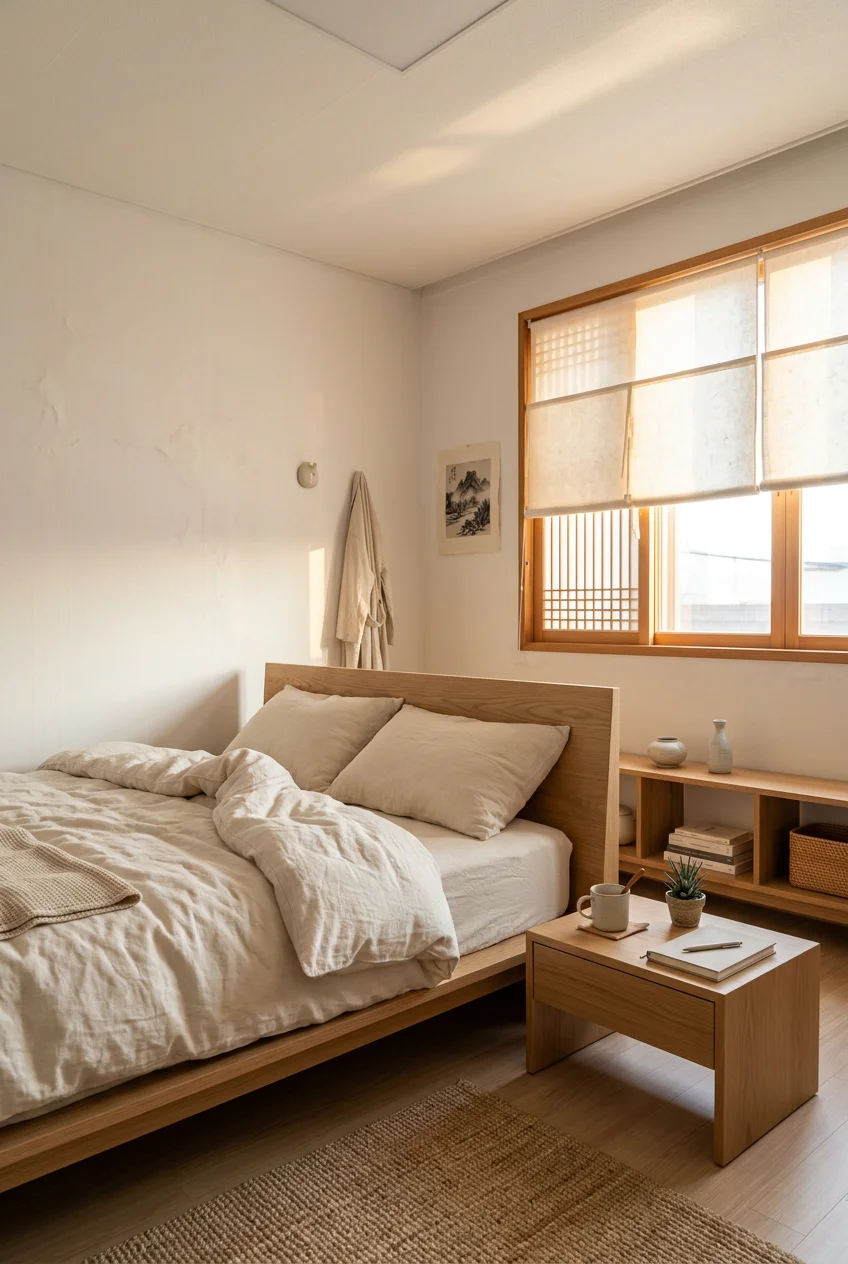
What’s Inside
- Start With A Warm Neutral Base For Your Korean Bedroom Aesthetic
- Drop Your Mattress With Low-Profile Furniture
- Introduce Light Natural Wood Accents
- Layer Soft Diffused Lighting
- Invest In Natural Fiber Bedding
- Swap Heavy Drapes For Sheer Curtains
- Bring In Minimalist Greenery
- Anchor The Space With A Low-Pile Rug
- Hide The Clutter With Smart Storage
- Lean A Full-Length Mirror
- Curate Small Meaningful Wall Art
- Create A Floor Seating Nook
- Blend Slow Living With Japandi Elements
- Stop Overcomplicating Your Color Scheme
- Choose Bedding With Subtle Cultural Motifs For A True Korean Bedroom Aesthetic
- Ditch The TV For A Mini Projector
- Add Texture With Pleated Paper Lamps
- Finish With A Subtle Room Scent
I spent three months sleeping in a room that looked like a sterile hospital ward before I finally figured out the Korean bedroom aesthetic. I painted everything stark white, threw out half my belongings, and ended up with a space that felt freezing and uninviting. The true Korean bedroom aesthetic relies on warmth, texture, and highly intentional choices, not just an empty room. I’m going to walk you through exactly how I fixed my space. You’ll need to focus on specific materials, precise lighting temperatures, and scale. Let’s break down the exact pieces that actually matter. Trust me on this.
1. Start With A Warm Neutral Base For Your Korean Bedroom Aesthetic

Color sets the entire foundation. I initially used a cool-toned builder-grade white, and it made my bedroom feel hostile. The fix is a warm, creamy neutral. I bought a gallon of Benjamin Moore Whisper White for $65 last October. It has subtle yellow undertones that reflect light softly instead of bouncing it around like a mirror. You want to apply two coats over a good primer. The goal is a backdrop that feels like a soft linen shirt. If you use a stark white, your wooden furniture will clash visually. I’ve found that soft beige or very light gray works too. A common mistake is ignoring the ceiling. I painted my ceiling the exact same Whisper White to blur the lines of the room. This makes my eight-foot ceiling feel significantly taller. The paint smell fades in a day, leaving a clean, fresh slate that lets your textiles do the heavy lifting.
2. Drop Your Mattress With Low-Profile Furniture

Standard American beds sit way too high. A massive, tall bed instantly dominates the room and ruins the proportions. I swapped my heavy upholstered frame for the IKEA Malm low bed frame in light oak veneer. It costs exactly $249 for the queen size. Sitting closer to the ground creates a massive amount of negative space above the bed. This visual trick makes small bedrooms feel expansive. The Malm frame sits just 15 inches off the floor. I tried placing my mattress directly on the floor for a week, but the lack of airflow caused moisture buildup underneath. You need a slotted base. The low profile forces you to keep the surrounding area tidy because any clutter on the floor is immediately at eye level. It’s a functional choice that dictates how you interact with the room on a daily basis.
3. Introduce Light Natural Wood Accents

Dark woods absorb light and add a heavy, traditional weight that ruins this look. You need light oak, birch, or bamboo. I purchased a simple bamboo nightstand from Hanssem for $85. The light wood grain adds a subtle visual texture without demanding attention. When I first tried decorating, I mixed a dark mahogany dresser with a light pine bed. It looked chaotic. Consistency in wood tones is critical. If you can’t afford all new furniture, you can sand down existing pieces and apply a clear matte water-based polyurethane. I did this to an old wooden chair I found at Sprouts during a weekend flea market popup. The raw wood finish feels slightly rough to the touch but looks incredibly organic. Keep the wooden elements minimal. The natural wood acts as a bridge between the soft textiles and the rigid walls.

50×70 Inch Rust Throw Blanket – Soft & Fluffy Fleece
50×70 Inch Rust Throw Blanket – Soft & Fluffy Fleece punches above its price — 11 buyers rated it 4.5 stars. I would buy it again.
4. Layer Soft Diffused Lighting

Overhead lighting is a complete disaster for creating a relaxing environment. I haven’t turned on my main ceiling light in two years. You need multiple, low-level light sources. I bought a 10-meter string of warm white LED fairy lights for $14.99 on Amazon and draped them along the back of my headboard. The crucial detail here is the color temperature. You must buy bulbs rated at 2700K to 3000K. Anything higher looks blue and clinical. I also keep a small ceramic table lamp on my nightstand with a 4-watt amber bulb. The light it casts is soft, casting long, gentle shadows across the floor. A harsh 60-watt bulb will expose every flaw in your paint and make the room feel tense. Diffused lighting mimics the soft glow of sunset, signaling to your brain that it’s time to wind down. It’s a biological hack disguised as home decor.
5. Invest In Natural Fiber Bedding

Polyester sheets trap heat and look shiny and cheap. You need 100 percent cotton, linen, or silk. I currently use a pale oatmeal duvet cover from the Korean brand Mumooroom, which cost $120. The fabric has a slightly rumpled, matte texture that looks better when it isn’t perfectly ironed. I appreciate that it’s designed to be naturally wrinkle-resistant. The weight of a cotton duvet cover provides a comforting pressure without causing night sweats. I tried a cheap microfiber set from Target once, and I woke up drenched in sweat at 3 AM. Learned that the hard way. Natural fibers breathe. I layer a thin, waffle-knit cotton throw blanket at the foot of the bed for extra texture. The tactile experience of sliding into crisp, breathable cotton at the end of the day makes a massive difference. It completely changes how you sleep.
6. Swap Heavy Drapes For Sheer Curtains

Thick blackout curtains make a room feel like a cave. The aesthetic relies heavily on filtered natural light. I removed my heavy velvet drapes and installed Walmart Mainstays sheer white panels. They cost exactly $9.88 per panel. The thin fabric diffuses harsh direct sunlight into a soft, milky glow that fills the room. You can actually see the dust motes dancing in the light. If you need darkness to sleep, install a slim roller blind behind the sheers. You can pull the blind up during the day so it completely disappears. I made the mistake of buying patterned sheer curtains a few years ago. If you aren’t careful, patterns cast distracting shadows across the walls. You want solid, untextured white or off-white sheers. The way they gently billow when the window is cracked open adds a subtle, calming movement to the space. You might also like: 20 Inspiring Cozy Aesthetic Bedroom That Make a Real Difference

AMADA HOMEFURNISHING Floating Shelves
AMADA HOMEFURNISHING Floating Shelves punches above its price — 114 buyers rated it 4.5 stars. I would buy it again.
7. Bring In Minimalist Greenery

Plants breathe life into a neutral room, but you can’t turn your bedroom into a jungle. Cluttering every surface with pots destroys the minimalist vibe. I bought a small peace lily at Trader Joe’s for $12.99 last Tuesday. I placed it in a plain white ceramic pot on my dresser. The dark green leaves provide a sharp, organic contrast to the beige walls. Peace lilies are incredibly forgiving. They physically droop when they need water, so you won’t accidentally kill them. I also keep a tiny succulent on my windowsill. I tried keeping a large fiddle leaf fig in the corner, but the massive leaves felt too visually heavy for the space. Stick to small, low-maintenance plants. A touch of green establishes a connection to nature without requiring hours of weekly maintenance. You might also like: 15 Inspiring Master Bedroom Wall Decor to Transform Your Space
8. Anchor The Space With A Low-Pile Rug

Hardwood floors are beautiful, but they echo and feel cold in the morning. A rug softens the acoustics and provides tactile comfort. I use a 5×7 foot low-pile rug from Kocol that I bought for $89. It has a very muted, abstract cloud silhouette. High-pile shag rugs trap dust and look messy after a week of walking on them. The low-pile texture is easy to vacuum and maintains a clean, flat profile. You want the rug to sit partially under the bed, extending out at the foot and sides. This anchors the furniture so it doesn’t look like it’s floating randomly in the room. I originally bought a rug with a loud geometric pattern. It completely overwhelmed the room and fought with the bedding. Stick to pale grays, creams, or soft pastels. The rug should blend into the floor, not scream for attention. You might also like: 15 Lovely Cool Bedroom Ideas Worth Trying This Year
9. Hide The Clutter With Smart Storage

Visual clutter translates directly to mental clutter. You can’t achieve a serene aesthetic if your phone charger, lip balm, and receipts are scattered across your nightstand. I organize everything using Muji PP Storage Cases. They cost $19.90 each. These semi-transparent plastic drawers slide smoothly and stack perfectly. I keep them tucked inside my closet. For daily items, I use a small wooden tray on my dresser to corral my keys and watch. I spent years throwing my clothes on a chair in the corner. Now, I use under-bed storage boxes for out-of-season clothing. If an item doesn’t have a designated hidden home, it doesn’t belong in the bedroom. I also installed a slim floating shelf above my desk. It holds exactly three books and one pen. Keeping surfaces clear requires daily effort, but it’s worth it. You’re buying empty space.

Qukaka Floating Shelves for Wall Decor
Qukaka Floating Shelves for Wall Decor punches above its price — 169 buyers rated it 4.5 stars. I would buy it again.
10. Lean A Full-Length Mirror

Hanging a heavy mirror on the wall feels permanent and formal. Leaning a mirror against the wall feels relaxed and effortless. I bought a 63×24 inch mirror from Target’s Room Essentials line for $60. It has a thin, light oak frame. I propped it up in the corner near my window. The angled glass reflects the natural light from the window and bounces it into the darkest corner of the room. It visually doubles the floor space. I placed a small rubber mat under the bottom edge so it won’t slip on the hardwood floor. I initially tried hanging a heavy, ornate gold mirror. It looked entirely out of place and dominated the wall. The leaning mirror acts as an architectural element rather than just a functional tool. It’s a simple adjustment that instantly modernizes the space without requiring a hammer and nails.
11. Curate Small Meaningful Wall Art

Blank walls can feel a bit too sterile, but a massive gallery wall is too busy. The trick is restraint. I bought a set of 30 Cozy Korean Aesthetic Wall Prints from Venus&Orion for $15. Each print is exactly 15×10 centimeters. I picked just three of my favorites and taped them directly to the wall using small loops of masking tape. No heavy frames, no precise measurements. The unframed paper adds a raw, casual texture. The prints feature muted landscapes and simple line drawings. I previously tried hanging a massive canvas print above my bed. I was constantly worried it would fall on my head while I slept. Small, taped prints feel intimate. You have to walk up close to actually see the details. It rewards attention rather than demanding it from across the room. I change the three prints out every few months when I get bored of looking at them.
12. Create A Floor Seating Nook

This is a distinct cultural element that drastically changes how you use the room. Korean culture heavily utilizes floor space for living and eating. I bought two thick, square floor cushions from Costco for $39.99 each. They are covered in a rough, durable linen blend. I placed them in a corner with a tiny, 12-inch high wooden tray table. I sit here to drink my morning tea instead of sitting in bed. It forces you to stretch your legs and engage your core. I tried using a standard armchair in that corner, but it blocked the light from the window and made the room feel cramped. Floor seating keeps sightlines completely clear. It’s surprisingly comfortable once you get used to it. It makes the floor feel like a deliberate destination rather than just the surface you walk on.

Govee RGBIC LED Strip Lights, Smart LED Lights for Bedroom
If you want something that just works, Govee RGBIC LED Strip Lights is a safe bet (243 reviews, 4.5 stars).
13. Blend Slow Living With Japandi Elements

The 2026 trend heavily features a fusion of Korean slow living and Japandi design. This means embracing slight imperfections and focusing strictly on utility. I stopped buying decorative items that don’t serve a purpose. I keep a single, handmade ceramic mug on my nightstand for water. It has a slightly uneven glaze and a rough, unpolished base. I bought it from a local potter for $28. This approach rejects mass-produced plastic decor. Everything in the room should feel like it was chosen with intention. I used to fill shelves with cheap knick-knacks just to avoid empty space. That was a mistake. Embracing empty space is the core of this fusion style. The emptiness allows the few high-quality items you do own to actually stand out. It’s a very quiet, deliberate way to decorate.
14. Stop Overcomplicating Your Color Scheme

Introducing too many colors will instantly ruin the calm atmosphere. You need a strict palette. My room consists of warm white, light oak, and pale sage green. That’s it. I introduce the green only through my plants and a single throw pillow. I bought a sage green linen pillow cover on Amazon for $12.99. When I first started decorating, I bought navy blue curtains, a pink rug, and yellow pillows. The room felt like a chaotic children’s playroom. Sticking to a two or three-color maximum requires discipline. If I see a beautiful dark red blanket at the store, I force myself to walk away because it won’t fit the system. The restraint is what creates the serenity. You aren’t trying to stimulate your senses with loud patterns. You’re trying to soothe them with predictable, harmonious tones.
15. Choose Bedding With Subtle Cultural Motifs For A True Korean Bedroom Aesthetic

You don’t need heavy-handed traditional decor to acknowledge the cultural roots of this style. Subtle textile details work best. I recently found a duvet cover from Young Rice Drap that features delicate, asymmetrical ruffles along the top edge. It cost $145. The ruffles mimic the folded collar of a traditional hanbok. It’s a tiny detail that most people wouldn’t notice, but it adds a layer of authenticity. Another option is looking for the Bokdang pattern, a simple geometric symbol representing good fortune. I’ve got a small, $18 cotton hand towel with this pattern folded on my dresser. I avoid anything that looks like a cheap souvenir. The cultural elements should be woven into the daily utility of the room. It respects the origin of the aesthetic without turning your bedroom into a museum exhibit. I’ve found that these small details make the space feel much more personal.

HOMIDEC Closet Organizers and Storage
Honestly, HOMIDEC Closet Organizers and Storage surprised me — sturdier than it looks in the photos, and over 8 buyers gave it 4.5 stars.
16. Ditch The TV For A Mini Projector

A giant black plastic rectangle on the wall completely shatters the soft, natural vibe of the room. I sold my 50-inch TV and bought a portable Kodak mini projector for $169. It’s about the size of a thick paperback book. I keep it tucked away in a drawer when I’m not using it. At night, I project movies directly onto the blank white wall opposite my bed. The picture quality isn’t 4K crisp, but the slightly softer, cinematic image feels much cozier. The fan makes a quiet, rhythmic hum that acts like white noise. I used to fall asleep with the harsh blue light of the TV blaring in my face. The reflected light from a projector is significantly easier on the eyes.
17. Add Texture With Pleated Paper Lamps

Lighting fixtures are a great way to introduce unique textures without adding clutter. I found a small, pleated paper table lamp at Walmart for $24.98. The shade is made of thick, folded paper that looks like an accordion. When you turn it on, the folds create a beautiful pattern of light and shadow on the wall behind it. The paper softens the light even further. I knocked it off the nightstand once, and the paper dented slightly, but it just adds to the organic, lived-in feel. I prefer paper over glass or metal because it feels fragile and delicate. It forces you to move carefully around it. You can also find larger, floor-standing paper lanterns at stores like IKEA if you have an empty corner that needs a soft vertical element. It’s cheap, functional art.
18. Finish With A Subtle Room Scent

The aesthetic isn’t just visual. It’s olfactory. A heavy, synthetic candle will give you a headache and clash with the natural vibe. I use a simple ceramic ultrasonic diffuser. I bought a small 4 oz bottle of pure lavender essential oil at Whole Foods for $9.99. I put exactly four drops into the water before bed. The scent is incredibly faint. You only notice it when you first walk into the room. I made the mistake of buying a cheap, overpowering vanilla plugin once. It smelled like a bakery exploded in my room and I couldn’t sleep. The goal is a crisp, clean scent that mimics fresh air or subtle botanicals. Eucalyptus and cedarwood are also excellent choices. It’s the final, invisible layer that ties the entire sensory experience of the room together perfectly.
Designing a space like this takes patience. You can’t just buy a whole matching set from a catalog and expect it to have a soul. I’d recommend starting with your lighting and your bedding, as those dictate how the room actually feels at night. Pin this guide so you can reference the specific paint colors and measurements when you’re standing in the aisle at Target trying to make a decision. Let’s make your bedroom a place you actually want to sleep in.
Frequently Asked Questions
What colors work best for a Korean bedroom aesthetic?
Stick to warm neutrals like creamy whites, soft beiges, and light grays. You can introduce one or two muted accent colors, such as pale sage green or soft blush, but avoid bold, highly saturated colors that disrupt the calm atmosphere.
Why do Korean bedrooms use low furniture?
Low-profile furniture creates a large amount of negative space above the bed, which visually expands the room and makes the ceilings appear taller. It also grounds the space and encourages a tidy, minimalist environment.
What type of lighting should I use?
Avoid harsh overhead lighting. Instead, layer multiple low-level light sources like fairy lights, paper lanterns, and small table lamps. Always use warm bulbs rated between 2700K and 3000K to mimic the soft, relaxing glow of sunset.
How do I add traditional Korean elements?
Focus on subtle details rather than large thematic pieces. Look for bedding with delicate ruffles inspired by hanboks, simple prints of traditional landscapes, or incorporate floor cushions with a low tray table for a cozy seating nook.
