What’s Inside
- Master the Art of Zoning with Area Rugs
- Invest in a Statement Bed with Oversized Proportions
- Carve Out a Dedicated Seating Area
- Embrace Layered Lighting
- Incorporate Trending Wall Treatments for Depth
- Choose Calming, Earthy Color Palettes
- Prioritize Quality, Sustainable Bedding
- Integrate Smart Bed Technology
- Maximize Storage with Built-ins
- Incorporate Oversized Artwork or Murals
- Utilize Verticality with Tall Elements
- Don’t Forget Soundproofing
- Add Biophilic Elements for Wellness
- Avoid Over-Miniaturizing Furniture
- Consider a Wallpaper Box for a Cocooning Effect
- Anchor the Space with Massive Floor Mirrors
- Curate Heavy, Intentional Nightstand Styling
- Build a Fireplace Anchor
- Implement Sophisticated Scentscaping
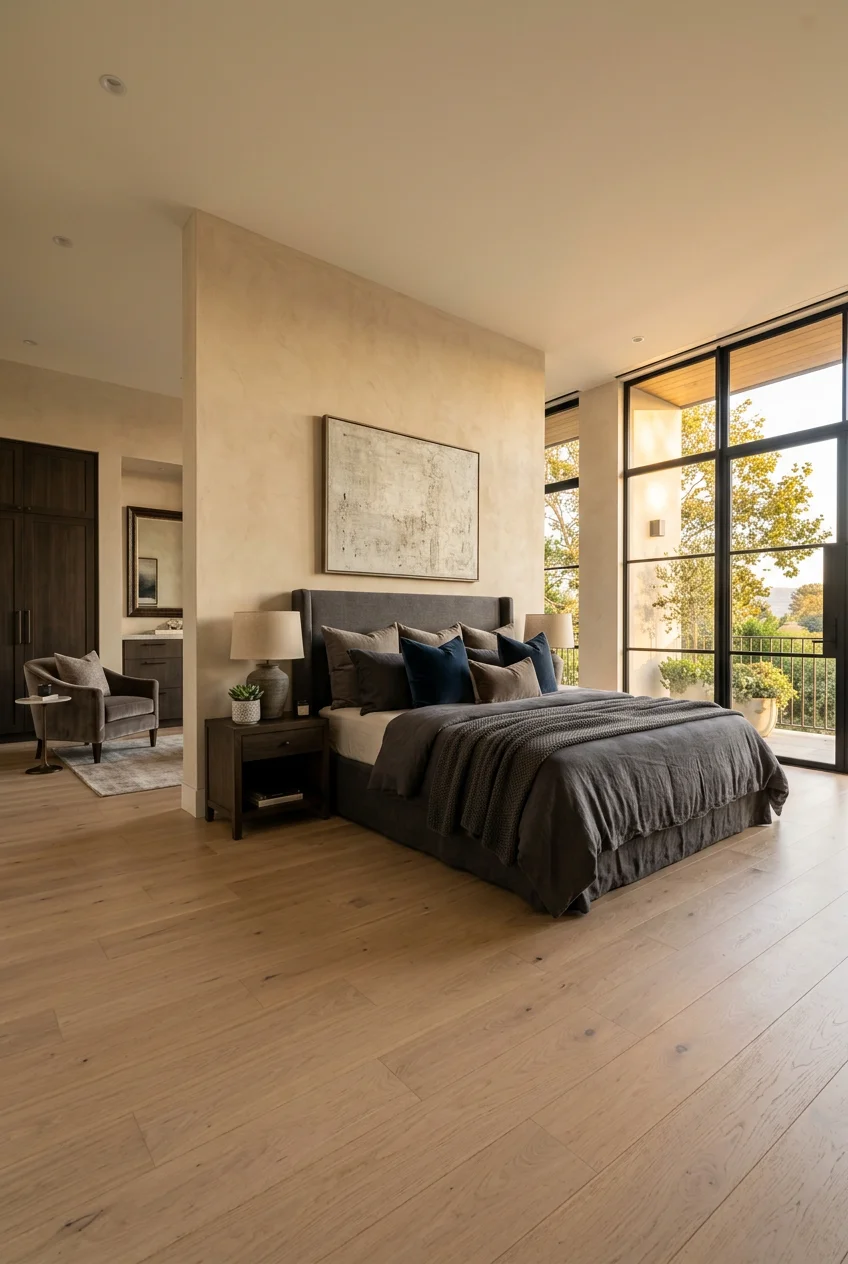
You finally snagged that extra square footage, but now it feels like you’re sleeping in a gymnasium. Most people look at a massive, empty room and immediately shove furniture against the walls. That’s exactly how you ruin a great master suite layout. A giant floor plan isn’t an excuse to line up dressers like soldiers. It takes deliberate zones, big scale, and heavy textures to kill the bowling-alley effect. If you only try one thing, make it #1. Anchoring a massive space with the right rug fixes 90 percent of layout issues instantly.
Skip this list if you’re in a standard 10×12 bedroom or a cozy apartment. These concepts rely on having excess room to play with. Shoving a California King and a seating area into a tight space won’t work; it’ll just feel like a cramped storage unit.
1. Master the Art of Zoning with Area Rugs

Treating a spacious suite as one box makes it feel cold. You’ve got to break the floor plan into functional zones. A 10×14 or 12×15 foot rug is non-negotiable for the sleeping area. You want it extending well beyond the sides and foot of your king bed. Brands like Boutique Rugs and Rugs Direct sell synthetic and wool blends in these massive sizes, running from mid-range to premium depending on the pile. For a seating zone, make sure at least the front legs of your chairs rest on a separate 5×8 rug. This visually cuts the lounge off from the bed. Scale matters. Best for: hard-surface floors that echo. The catch: vacuuming two massive rugs adds serious time to your weekly cleaning. Trust me.
2. Invest in a Statement Bed with Oversized Proportions

Standard furniture looks tiny in a large room. You need pieces with real visual weight. A king bed with a grand, tufted headboard acts as a commanding focal point. Brands like Bernhardt and Century build luxury frames that blend modern lines with a heavy, inviting presence. A minimalist but chunky solid wood frame from Thuma fills the space without the fussy fabric. The goal is to eat up vertical and horizontal wall space so the bed doesn’t look like an afterthought. Budget anywhere from a thousand to several thousand dollars for a high-quality frame. It’s the anchor. The catch: oversized headboards are a nightmare to get up narrow staircases. Learned that the hard way.
3. Carve Out a Dedicated Seating Area

A master suite feels empty without a spot to sit that isn’t the bed. Create a lounge zone with a velvet chaise, a structured loveseat, or two deep armchairs. Sundays and Herman Miller make substantial, comfortable pieces that hold their own in a big room. Put this near a window for morning light or by a fireplace for reading. You need at least 30 to 36 inches of clearance to move comfortably. Don’t just shove two chairs in a dark corner. It needs a side table and a dedicated lamp to function. The catch: seating areas quickly become laundry piles if you aren’t disciplined.

JARLINK Over The Door Organizer Storage
JARLINK Over The Door Organizer Storage punches above its price — 46 buyers rated it 4.5 stars. The kind of pick people reorder.
4. Embrace Layered Lighting

Relying on a single overhead ceiling fan is a rookie mistake. A large suite demands a layered lighting scheme. You need ambient light, task lighting for reading, and accent lights for architectural details. Skip the tiny table lamps. Install heavy brass wall-mounted sconces or drop pendants above your nightstands. This frees up surface space for water and books while adding a structural element. Always use dimmer switches to cut the harshness. You can find beautiful, mid-range hardwired sconces at heavy-hitter lighting stores or even higher-end lines at Target. The catch: hardwiring sconces requires an electrician and drywall patches, which adds hidden costs.
5. Incorporate Trending Wall Treatments for Depth

Flat, plain drywall feels cheap in a massive room. To add depth, skip the paint and install wall treatments. Fluted wood panels and louvre panels create a rich, 3D effect that catches light. If wood isn’t your thing, heavy fabric panels provide a sound-dampening, hotel-like feel. Venetian plaster and microcement offer a subtle, cloudy texture that looks expensive. A popular move is treating the headboard wall with dark microcement, two to four shades darker than the rest. This creates a powerful enclosure without feeling cramped when you’re lying down. Best for: newer builds lacking character. The catch: plaster application requires specialized labor, pushing this into premium budget territory. You might also like: 17 Aesthetic Black Bedroom for Every Budget
6. Choose Calming, Earthy Color Palettes

Cool, sterile minimalism is out. Warm, earthy palettes are taking over. You want colors that absorb light. Sherwin-Williams Sea Salt (SW 6204) offers a blue-green undertone that’s incredibly calming. If you prefer warmth, Benjamin Moore Quiet Moments (1563) is a fantastic alternative. Dusty rose, warm mahogany, and deep sage green are excellent for creating a cozy, cave-like backdrop in an airy room. Darker colors physically bring the walls in, which is exactly what you want with massive square footage. You’ll need a premium primer to get even coverage. The catch: dark, earthy colors highlight every single flaw, nail pop, and uneven seam on your walls. You might also like: 20 Bedroom Design Ideas You Will Absolutely Love

Amazon Basics Bedroom Closet Organizer with 5-Fabric
Amazon Basics Bedroom Closet Organizer with 5-Fabric Storage Drawers f punches above its price — 41 buyers rated it 4.5 stars. The kind of pick people reorder.
7. Prioritize Quality, Sustainable Bedding

The 1000-thread-count marketing gimmick is a trap. It usually just means manufacturers twisted cheap, weak threads together. Prioritize the raw fiber and the weave. Sferra makes incredible Giza 45 cotton, while Boll & Branch focuses on GOTS-certified organic cotton. Coyuchi offers thick, sustainable bedding that gets softer with every wash. For ultimate luxury, Frette is standard in five-star resorts. Their prices range from premium to astronomical, but the heavy feel is undeniable. Skip the cheap synthetic sets that pill after three washes. Best for: hot sleepers who need breathable fibers. The catch: pure linen and organic cotton wrinkle aggressively and need ironing for that crisp look. You might also like: 20 Teen Girl Bedroom Worth Trying
8. Integrate Smart Bed Technology

A large room gives you space for a massive smart bed without feeling crowded. The Sleep Number ClimateCool and Tempur-Pedic ActiveBreeze offer adjustable firmness, temp control, and sleep tracking. The Eight Sleep Pod 5 lets you program temperature drops to match your sleep cycle. You can also pair a TEMPUR-Ergo Smart Base with your current mattress for zero-gravity settings and massage. These bases are heavy, bulky, and need a dedicated 120-volt outlet under the bed. Prices generally fall in the premium bracket, often exceeding several thousand dollars. The catch: these systems need constant Wi-Fi, and the pumps or fans make a low, constant hum.
9. Maximize Storage with Built-ins

Freestanding dressers often look clunky in a grand suite. Custom built-ins utilize awkward corners and high ceilings beautifully. You want floor-to-ceiling cabinetry that matches your wall color. Incorporate hidden storage like toe-kick drawers or nightstands with secret felt-lined compartments. Wall-mounted cabinets above door frames are perfect for out-of-season clothes. Add a heavy, upholstered storage bench at least 48 inches long at the foot of the bed to hide extra blankets. Custom closet companies design these, usually starting in the mid-thousands. Best for: older homes with tiny closets. The catch: built-ins are permanent; you’re locked into that floor plan for the life of the room.

AMADA HOMEFURNISHING Floating Shelves
A dependable everyday pick — AMADA HOMEFURNISHING Floating Shelves pulls in 117 ratings at 4.5 stars. Not flashy, just solid.
10. Incorporate Oversized Artwork or Murals

Tiny 8×10 frames look ridiculous on a 15-foot wall. To fill space without clutter, you need massive artwork or a full scenic mural. A large-scale canvas mounted above the bed links the furniture to the ceiling line. Heavy plaster reliefs, large moody photography, and thick fabric wall hangings are dominating high-end design. You want pieces at least 48 by 60 inches to make a dent. You can find oversized canvases at home decor warehouses or commission a local artist. Expect to pay mid-to-high hundreds for decent prints. The catch: massive art is heavy and needs professional installation to avoid tearing your drywall.
11. Utilize Verticality with Tall Elements

High ceilings are a blessing, but they make the lower half of the room feel cold if you don’t draw the eye up. Bridge the gap between furniture and ceiling. Install floor-to-ceiling drapery, mounting the rod just two inches below the molding. Use tall, vertical wall paneling or a custom headboard that stretches six feet high. This forces the eye to travel up and down, balancing the scale. A low-profile bed with standard 84-inch curtains will make a 10-foot ceiling look awkward. Buy the 108 or 120-inch panels to reach the floor. The catch: extra-long curtains are expensive and need heavy-duty rods to keep from bowing.
12. Don’t Forget Soundproofing

A massive room acts like an echo chamber. Soundproofing is a practical step for a master suite. Blown-in insulation in interior walls cuts noise from the hallway or bathroom. Swap cheap, hollow builder-grade doors for solid core ones. You can also hang thick, decorative acoustic panels disguised as art to absorb echoes. A heavy wool rug and velvet curtains naturally deaden sound. This creates a dense, quiet environment that feels like a retreat rather than an empty gym. Materials for basic dampening fall in the mid-range budget. The catch: retrofitting drywall with insulation is messy and requires repainting.

Homsorout Closet Organizers Bins 6 Packs
If you want something that just works, Homsorout Closet Organizers Bins 6 Packs – Large Closet Shelf Organize is a safe bet (15 reviews, 4.5 stars).
13. Add Biophilic Elements for Wellness

Connecting with nature is a massive design shift. Incorporate large, heavy potted plants like a mature Fiddle Leaf Fig or a Monstera in a heavy ceramic pot. Bring in natural wood furniture from brands like Stickley or Ethan Allen. The grain of solid oak or walnut adds warmth to a large space. Layer textures: jute rugs, nubby linen, and rattan. Maximize natural light by keeping window treatments sheer during the day. A 10-inch potted plant is the minimum size you should consider. Anything smaller looks like clutter. The catch: massive indoor plants require serious maintenance, specific watering, and regular pest checks.
14. Avoid Over-Miniaturizing Furniture

The fastest way to ruin a large bedroom is filling it with a dozen small, delicate pieces. It looks cluttered, unanchored, and cheap. You need fewer, much larger pieces proportionate to the room. Instead of two flimsy nightstands, buy massive, heavy dressers to use as tables. The Bernhardt Prado Large Nightstand is a great example of a piece with enough weight to hold its own next to a king bed. A massive 8-drawer dresser is better than two small 4-drawer chests pushed together. Scale up everything: lamps, rugs, chairs, and art. The catch: oversized furniture is heavy, making it hard to clean underneath or rearrange.
15. Consider a Wallpaper Box for a Cocooning Effect

Wrapping an entire massive room in a subtle pattern is a great way to make it feel intimate. This wallpaper box technique involves covering all four walls and the ceiling in the same paper. It creates a dense, cocooning effect that feels luxurious. Look for sketched botanicals, tonal stripes, or metallic line work. You can pull a secondary color from the wallpaper and match your velvet curtains or bedding to it for a unified environment. It stops the ceiling from feeling like a giant white void. High-end wallpaper rolls cost hundreds of dollars each. The catch: installing wallpaper on a 10-foot ceiling needs scaffolding and two pros, making labor costs high.

HOMIDEC Closet Organizers and Storage
HOMIDEC Closet Organizers and Storage punches above its price — 81 buyers rated it 4.5 stars. The kind of pick people reorder.
16. Anchor the Space with Massive Floor Mirrors

A large room needs elements that reflect light into dark corners. A massive, heavy floor mirror leaning against the wall does exactly that while eating up empty floor space. We are talking 7 feet tall and 4 feet wide. Costco sells massive, heavy-framed floor mirrors seasonally that rival high-end versions for a fraction of the cost. A heavy brass or carved wood frame adds interest. Place it opposite a window to double the light, or behind a seating area to create depth. You can usually find a great mirror in the low-to-mid hundreds. Best for: rooms with minimal light. The catch: leaning a 100-pound mirror is a safety hazard if you have dogs or toddlers.
17. Curate Heavy, Intentional Nightstand Styling

A giant nightstand looks ridiculous if it just holds a tiny lamp and a phone charger. Style it with intention. Stack three heavy, oversized coffee table books as a base. Add a heavy ceramic water carafe. Grab a $5 fresh eucalyptus bundle from Trader Joe’s and drop it into a thick glass vase. The goal is to create varying heights and textures that fill the visual space. Use a marble tray to corral smaller items like lip balm or a watch. Walmart sells fantastic, budget-friendly acrylic bins that fit inside drawers to hide the ugly clutter. The catch: highly styled nightstands leave little room for a glass of water or a laptop.
18. Build a Fireplace Anchor

If your room is large enough, adding a fireplace creates an undeniable focal point and a gathering spot. You don’t need a traditional chimney. Electric inserts and ventless bioethanol fireplaces provide flames and heat without the massive construction costs. Build out a floor-to-ceiling surround using stone veneer or sleek tiles to create an architectural feature. Mount a Samsung Frame TV or art above the mantel. A quality electric insert typically ranges from mid-hundreds to over a thousand dollars, not including the surround. Always consult a contractor before installing a heat-producing appliance. The catch: ventless fireplaces consume oxygen and need proper ventilation to meet fire codes.
19. Implement Sophisticated Scentscaping

A massive room requires a strategic approach to scent. A tiny candle won’t cut it. You need a cold-air diffuser that disperses scent across 500 square feet. Use high-quality essential oils. You can grab a heavy 4 oz bottle of pure lavender or cedarwood from Sprouts or Kroger during your weekly run. Layer the scent by placing matching drawer liners in your dressers and using a linen spray on your bedding. The goal is a subtle, consistent fragrance that hits you the second you walk through the doors. A good diffuser falls in the mid-range price. Best for: pet owners who want to neutralize odors. The catch: high-quality diffusers need regular cleaning with rubbing alcohol to prevent nozzles from clogging. No exaggeration.
How we chose these ideas: We evaluated common layout challenges in master suites over 300 square feet. We prioritized visual impact, functional zoning, and architectural scale, focusing on solutions that anchor massive spaces rather than just filling empty corners. We looked at renter-friendliness, cost, and the physical effort required.
A sprawling master suite is a luxury, but only if you treat the scale with respect. Stop buying tiny furniture and start thinking in zones. Pin this list for your next major bedroom overhaul, and remember that a massive rug is always the best place to start.
Frequently Asked Questions
How do I arrange furniture in a large bedroom ideas master suite?
Start by anchoring the space with a massive area rug under the bed. Divide the room into distinct functional zones, like a dedicated sleeping area and a separate seating lounge. Avoid pushing all your furniture against the walls to prevent an empty, cavernous feeling.
What size rug is best for a large bedroom ideas master suite?
You need at least a 10×14 foot or 12×15 foot rug to properly anchor a king-sized bed in a massive room. The rug should extend significantly beyond the sides and foot of the bed to visually define the primary sleeping zone.
How do I make a large bedroom ideas master suite feel cozy?
Use warm, earthy paint colors and heavy wall treatments like microcement or fluted paneling to visually bring the walls in. Layer heavy textures through wool rugs, velvet curtains, and thick linen bedding to absorb sound and create a dense, intimate environment.
What kind of lighting works for a large bedroom ideas master suite?
A massive room requires a layered lighting approach. Skip standard table lamps and install heavy, hardwired wall sconces or pendant chandeliers above the nightstands. Always use dimmer switches on overhead fixtures to control the ambiance and reduce harsh shadows at night.
