What’s Inside
- Embrace Cocooning Colors with Earthy Neutrals
- Layer Your Lighting and Ditch the Big Light
- Size Your Rug to Actually Anchor the Space
- Hang Floor-Length Curtains High and Wide
- Prioritize Sustainable and Natural Materials
- Invest in a Statement Headboard
- Combat Noise with Decorative Acoustic Panels
- Hide Clutter with Multi-Functional Furniture
- Bring in Biophilic Design with Intentional Greenery
- Stop Buying Matchy-Matchy Furniture Sets
- Try Color Drenching for a True Cocooning Effect
- Hang Oversized Artwork for Visual Impact
- Utilize Vertical Space with Smart Shelving
- Fix Your Bed Placement and Room Flow
- Use Dark Paint to Make Small Rooms Feel Bigger
- Upgrade Bedding Textures for Visual Depth
- Conceal Ugly Cords and Wires
- Position Mirrors to Double Your Natural Light
Last November, I stood in my bedroom holding a $14.99 generic gray throw pillow from Target, wondering why my space felt like a sterile dentist waiting room. I had white walls, a gray duvet, and zero personality. When you search for bedroom ideas, layouts usually look impossibly perfect and totally unlivable. I tried copying a minimalist look I saw online, but it just felt cold. I used to grab random decor while buying groceries at Trader Joe’s or bulk paper towels at Costco. That strategy left me with a pile of junk. Real design requires intention and correct proportions. I spent the last two years testing paint, returning rugs, and figuring out what works. Learned that the hard way. Here are eighteen specific ways I fixed my own bedroom, with the exact measurements and products I used. Let’s fix your space so you can actually relax.
1. Embrace Cocooning Colors with Earthy Neutrals

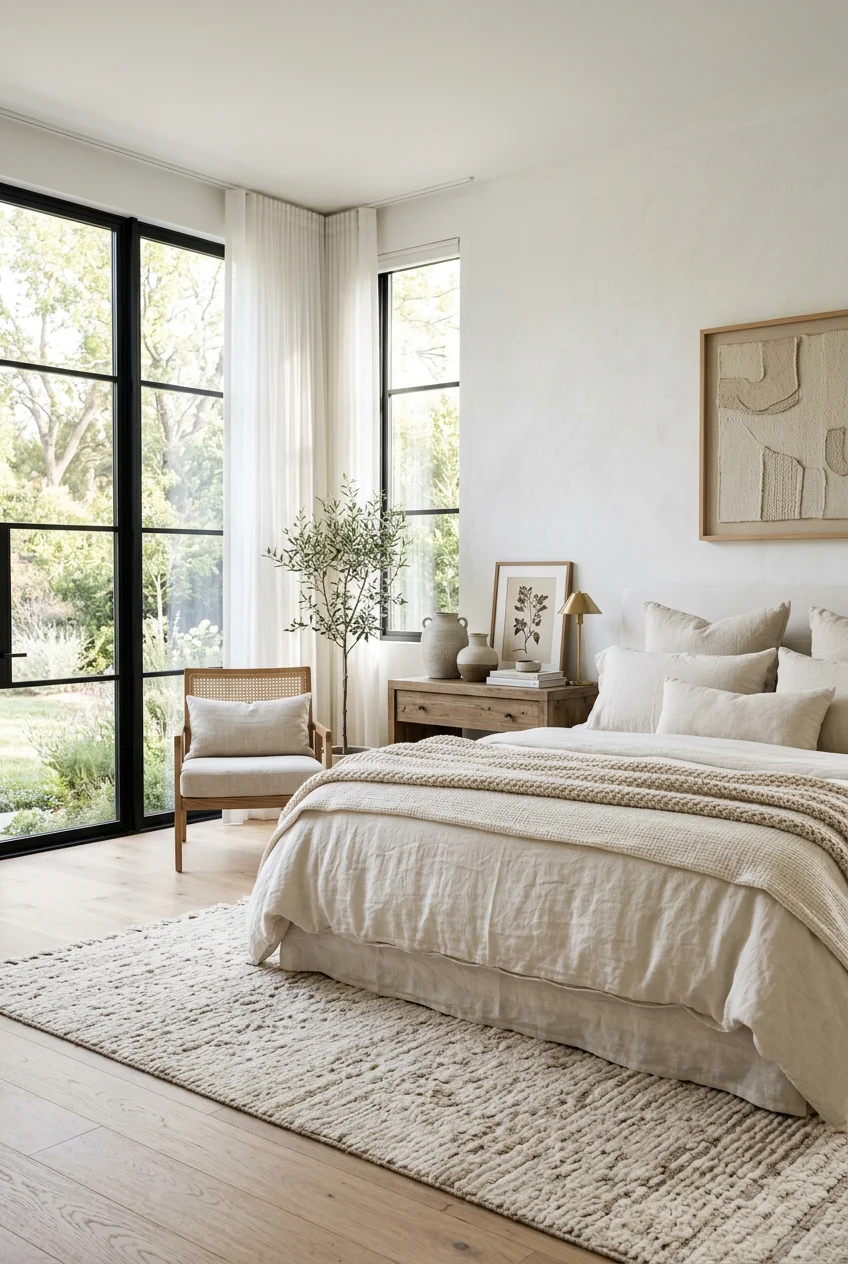
For 2026, stark white walls are out. You want colors that mimic the outdoors. I painted my bedroom with Valspar’s Warm Eucalyptus, which costs about $64 a gallon. It’s a soft gray-green that changes depending on the light. If you prefer warmer tones, Clare Paint makes a shade called Dirty Chai for $69 a gallon. It brings a spiced brown warmth that feels grounding. I tried bright white for months before realizing it made the room feel like a hospital corridor. These earthy neutrals create a soothing atmosphere. The gray-green absorbs shadows instead of reflecting them harshly. You only need two gallons for a standard twelve-by-twelve room. Apply two coats over a good primer. The paint smell fades in a day, leaving you with a space that feels calm.
2. Layer Your Lighting and Ditch the Big Light

Stop using your main overhead light. It casts harsh shadows that make you look exhausted. I learned this after buying a cheap $25 floor lamp from Walmart that flickered whenever a truck drove by. You need a layered scheme instead. Emily Butterill, founder of Glow Lighting, suggests dimmable bulbs in handblown glass fixtures. I installed wall sconces next to my bed last spring. I also bought a Pooky rechargeable cordless lamp for $145. I keep it on my dresser. It provides a warm glow without the clutter of black cords snaking down the wall. The battery lasts ten hours. The 2700K bulbs give off a soft amber light that mimics a sunset. You want light coming from at least three different heights. Trust me.
3. Size Your Rug to Actually Anchor the Space

A common mistake is buying a rug that barely covers the floor at the foot of your bed. I bought a tiny five-by-seven rug on clearance once. It looked like a postage stamp floating on my hardwood. For a queen bed, you need an eight-by-ten foot rug. This size extends eighteen to twenty-four inches beyond the sides and foot of the bed. It allows your nightstands to sit fully on the rug for a cohesive look. Claudia from Ruggable notes that plush, high-pile textures are trending for 2026. I bought the Ruggable Kamran high-pile rug for $399. The sink-in softness under bare feet on a cold January morning makes a huge difference. If you have a smaller room, a six-by-nine rug placed horizontally under the bottom third of the bed works better. A $40 felt pad underneath stops the rug from sliding.

Bedsure 3D Fleece Bubble Blankets for Couch
Bedsure 3D Fleece Bubble Blankets for Couch – Cute Pink Throw Blanket punches above its price — 539 buyers rated it 4.5 stars. I would buy it again.
4. Hang Floor-Length Curtains High and Wide

Curtain placement changes how high your ceiling looks. I used to buy standard eighty-four-inch panels and hang them right on the window trim. They looked like high-water pants. Now, I buy ninety-six-inch panels. I use Half Price Drapes faux linen blackout curtains, which cost $79 per panel. To make your ceilings appear taller, mount the rod four to six inches above the window frame. Extend the rod six to twelve inches beyond each side of the glass. When you open the curtains, they rest on the wall, maximizing your natural light. The fabric should just touch the floor or hover half an inch above it. If you want a traditional look, let the fabric puddle one to two inches. The heavy linen blocks out the morning sun effectively.
5. Prioritize Sustainable and Natural Materials

Biophilic design emphasizes wood, wool, linen, and stone. I used to sleep on a cheap particleboard frame. Skip the laminate stuff. It smells like wet cardboard for months. Now, I look for GREENGUARD Gold certified furniture. Brands like Avocado offer FSC-certified hardwood dressers with zero-VOC finishes. I bought a Thuma bed frame for $1,195. It uses upcycled rubberwood and assembles without tools using Japanese joinery. The solid wood has a grounded presence that cheap metal lacks. You can feel the natural grain when you run your hand along the rail. Look for OEKO-TEX certified fabrics for your bedding to avoid synthetic chemicals. Natural materials age better than plastics. A solid wood nightstand will develop a rich patina over five years, while veneer just chips. You might also like: 20 Small Bedroom Decor Ideas for Every Budget
6. Invest in a Statement Headboard

A bed without a headboard looks unfinished. I slept with my pillows against bare drywall for two years. The paint eventually got a greasy smudge from hair oils. Statement headboards fix this while acting as a visual anchor. Interior designer Stephanie Martin suggests oversized upholstered headboards. I purchased the Article Tessu bed in deep forest green velvet for $899. The velvet feels soft when I sit up to read. The tall, padded backboard absorbs sound and keeps my pillows from slipping. If you’re on a budget, build a DIY channel-tufted headboard using plywood, foam, and three yards of fabric for under $150. A large headboard pulls the room together and provides a barrier between you and the cold wall during winter. You might also like: 19 Cozy Aesthetic Bedroom Ideas You Need to See

upsimples Floating Shelves for Wall
upsimples Floating Shelves for Wall punches above its price — 46 buyers rated it 4.5 stars. I would buy it again.
7. Combat Noise with Decorative Acoustic Panels

This is a functional tip most people ignore. If you live near a busy street, regular drywall does nothing to block sound. I used to hear every garbage truck at six in the morning. Heavy curtains help, but decorative acoustic panels work better. Brands like Acousart sell hand-painted acoustic wall art. A set of three large panels costs about $129. They look like modern canvas paintings, but they contain dense sound-absorbing foam. They can reduce ambient room noise by up to forty percent. I hung a set on the wall facing my street. The room immediately sounded less hollow. The annoying echo of my hardwood floors disappeared. These panels blend into your decor while quietly fixing your sleep environment. You might also like: 19 Modern Luxury Bedroom Design Master Suite for Every Budget
8. Hide Clutter with Multi-Functional Furniture

Overcrowding a bedroom makes it feel like a storage unit. I used to have a laundry chair that just accumulated piles of clothes. I replaced it with a Rackora storage bench for $249. It sits at the foot of my bed. The bench has a padded top for sitting, but the seat lifts to reveal a deep storage compartment. I keep four thick blankets and two extra sets of sheets inside. Beds with built-in storage drawers are another great option if you lack closet space. Just ensure the drawers operate on smooth metal glides. Cheap plastic tracks will stick within a month. Multi-functional pieces keep your floor space clear. A clear floor reduces visual stress when you walk into the room after a long day.
9. Bring in Biophilic Design with Intentional Greenery

Fake plastic plants collect dust and look cheap up close. I finally threw away a plastic fern from Kroger because it looked artificial. Bring the outdoors in with real, oversized plants. A large fiddle-leaf fig or a monstera plant purifies the air and adds organic shapes to a room full of rigid lines. I bought a four-foot fiddle-leaf fig from Sprouts for $65. I placed it in a heavy ceramic pot near my south-facing window. The smell of damp potting soil feels grounding. The broad green leaves filter the harsh afternoon sunlight into soft, dappled patterns. If you lack a green thumb, a snake plant requires water once every three weeks and thrives in low light. Real plants introduce a subtle, living energy.

Tenmiro Led Lights for Bedroom 100ft (2 Rolls of 50ft)
If you want something that just works, Tenmiro Led Lights for Bedroom 100ft (2 Rolls of 50ft) Music Sync Colo is a safe bet (353 reviews, 4.5 stars).
10. Stop Buying Matchy-Matchy Furniture Sets

Buying a complete five-piece bedroom set is a design mistake. Interior designer Beth Diana Smith warns that matching sets make a room feel impersonal and flat. It looks like you live in a catalog showroom. I made this mistake in my twenties, buying a matching cherry wood bed, dresser, and nightstands. The room felt boring. Instead, mix your textures. I paired a warm walnut West Elm mid-century nightstand, which cost $349, with a matte black metal bed frame. The contrast creates visual interest. Try mixing a vintage wooden dresser with modern brass lamps. If your bed is upholstered, choose wooden or mirrored nightstands. Mixing materials forces your eye to travel, making the space feel curated over time rather than purchased all at once on a Tuesday.
11. Try Color Drenching for a True Cocooning Effect

Color drenching involves painting your walls, baseboards, trim, and sometimes the ceiling in one rich hue. Designer Zoë Feldman recommends deep blue-gray or smoky olive green to create a sophisticated retreat. I tried this using Farrow & Ball’s paint in Railings, which is a very dark, inky blue. It costs about $140 a gallon. Painting the trim the same color as the walls erases the sharp visual boundaries. It feels like stepping into a warm, shadowy cave. The ceiling feels higher because there is no stark white line drawing your eye up. I was nervous to paint my baseboards dark blue, but the look is sleek. It makes cheap contractor-grade trim look custom. Use an eggshell finish on the walls and a satin finish on the trim.
12. Hang Oversized Artwork for Visual Impact

A common mistake is hanging a gallery wall of tiny, mismatched frames above the bed. It looks chaotic. One of the best ideas for 2026 is using a single piece of oversized artwork instead. Decorilla designers recommend large-scale photography, fabric wall hangings, or plaster reliefs. I bought a thirty-six-by-forty-eight-inch textured plaster relief from CB2 for $299. The heavy, three-dimensional texture adds depth without loud colors. The large scale draws the eye upward and anchors the bed. If you want a cheaper option, buy a massive canvas and cover it in a mix of joint compound and acrylic paint for a DIY textured look. Hanging one piece requires two nails, whereas a gallery wall requires hours of measuring and patching drywall mistakes. Keep the art simple.

SILFU Neon Rope Lights, 50FT RGB LED Strip Lights
Honestly, SILFU Neon Rope Lights surprised me — sturdier than it looks in the photos, and over 112 buyers gave it 4.5 stars.
13. Utilize Vertical Space with Smart Shelving

If you have a small bedroom, you can’t afford to waste floor space on bulky bookcases. I used to trip over stacks of books next to my nightstand. You need to use your vertical wall space. I installed three IKEA Lack floating shelves, which cost $29 each, in the dead space between my closet door and the corner. Layered shelving or setback shelves built into the drywall are effective. You must style them intentionally. Do not pack them full of paperbacks. I keep one trailing pothos plant, a small stack of three books, and a heavy glass candle from Whole Foods on each shelf. Leaving empty space prevents it from looking messy. Floating shelves draw the eye up, making a cramped room feel taller.
14. Fix Your Bed Placement and Room Flow

You can buy expensive furniture, but if your bed is in the wrong spot, the room will feel terrible. I used to have my bed shoved into a corner to maximize floor space. It made making the bed impossible and felt like a dorm. Interior designer Kathy Kuo recommends centering the bed on the primary wall. You need at least two to three feet of walking space on both sides. You should also have a clear view of the bedroom door and at least one window from the mattress. Kristina Khersonsky of STUDIO KEETA advises against beds that are too large for the room. I downgraded from a king to a queen-sized Zinus mattress, which cost $349. Gaining those sixteen inches of floor space eliminated the claustrophobic atmosphere. I stopped hitting my shins on the bed frame.
15. Use Dark Paint to Make Small Rooms Feel Bigger

This sounds counterintuitive, but dark paint makes a small room feel larger. People assume white paint makes a room look spacious. In a room with poor light, white paint just looks dingy. Rozit Arditi of Arditi Designs suggests shades like deep navy, chocolate brown, or aubergine. Dark colors recede visually. I painted a tiny ten-by-ten guest room in Benjamin Moore’s Hale Navy, which runs about $70 a gallon. Because the dark color absorbs light, the corners of the room blur. You can’t easily tell where the walls end. It creates an illusion of depth. The dark background also makes brass light fixtures and warm wood furniture pop. Just ensure you have layered lighting, as a dark room will require stronger bulbs in your bedside lamps to read comfortably.

upsimples 6 Pack Wooden Floating Shelves
upsimples 6 Pack Wooden Floating Shelves has been one of the most consistently praised picks in this category. 46 reviewers averaged 4.5/5.
16. Upgrade Bedding Textures for Visual Depth

Bedroom aesthetics rely heavily on the texture of your bed. The bed occupies the largest visual footprint in the space. I used to buy cheap, shiny polyester microfiber sheets. They trapped body heat and pilled after three washes. Upgrading to natural linen changed how my room looked and how I slept. I bought the Quince European Linen sheet set for $129. Linen has a rumpled, relaxed texture that looks stylish even when the bed isn’t perfectly made. It breathes well during humid nights. Layering different textures is key. I place a smooth cotton duvet cover over the linen sheets and drape a chunky knit wool throw at the foot of the bed. This mix of smooth, rumpled, and chunky textures makes the bed look inviting.
17. Conceal Ugly Cords and Wires

Nothing ruins a decorated room faster than a tangled mess of power cords spilling out from behind a nightstand. I spent hundreds on decor, only to stare at a dusty surge protector. Managing your wires is a cheap fix with massive results. I bought a D-Line cable raceway kit for $18 on Amazon. These are simple plastic channels that stick to your baseboards and hide the cords inside. You can even paint them to match your wall color. I also swapped my standard nightstand for one with a built-in USB charging hub hidden in the top drawer. Now, my phone and watch chargers stay out of sight. Hiding the visual clutter of electronics makes the room feel more like a restful sanctuary and less like a chaotic office.
18. Position Mirrors to Double Your Natural Light

If your bedroom feels like a cave during the day, you need to strategically place a large mirror. I used to have a tiny vanity mirror that did nothing for the light. I upgraded to a large, seventy-two-inch floor mirror. I bought the Studio McGee arched floor mirror from Target for $120. You must place the mirror on a wall adjacent to a window, or directly across from it. The glass catches the incoming morning sunlight and bounces it deep into the corners. It literally doubles the amount of natural light. A large floor mirror also creates the optical illusion of a doorway, making a cramped bedroom feel twice as large. Make sure the mirror reflects something pleasant, like a piece of art or a window, rather than a messy closet. No exaggeration.
Creating a bedroom you actually want to sleep in doesn’t require a massive renovation budget. It just requires you to stop buying random items on impulse and start making intentional choices about scale, texture, and light. I wasted so much money on cheap decor before I learned to invest in proper lighting and the right rug size. Try implementing just two or three of these changes this weekend. Paint your walls a cocooning shade, or finally hide those tangled nightstand cords. If you found these tips helpful, pin this article to your home decor board so you have the exact paint colors and measurements ready for your next project.
Frequently Asked Questions
What is the best rug size for a queen bed?
An 8×10 rug is ideal for a queen bed. It extends 18 to 24 inches beyond the sides and foot of the bed, allowing your nightstands to sit fully on the rug for a cohesive, anchored look.
How high should I hang bedroom curtains?
Mount the curtain rod 4 to 6 inches above the window frame and extend it 6 to 12 inches beyond each side of the glass. This makes ceilings appear taller and maximizes natural light when open.
What are cocooning paint colors?
Cocooning colors are warm, earthy hues like deep blue-gray, smoky olive, warm eucalyptus, or spiced brown. These shades promote emotional well-being and make a bedroom feel nurturing, calm, and grounded.
How can I make a small bedroom look bigger?
Counterintuitively, painting a small room in a dark color like navy or aubergine blurs the boundaries of the walls, creating an illusion of depth. Pair this with a large floor mirror to bounce natural light.
