What’s Inside
- Choose a “Living Neutral” Sage Green Paint
- Embrace Color Drenching for Cohesion
- Balance Cool Tones with Warm Wood Furniture
- Invest in Quality Linen Bedding
- Layer Textures with Intention
- Incorporate Metallic Accents for Subtle Glamour
- Consider a Sage Green and Blush Pink Pairing
- Strategic Accent Walls or Wainscoting
- Curate with Natural Elements and Greenery
- Optimize Lighting with Warm Tones and Dimmers
- Soften Industrial Elements with Sage Green
- Avoid Over-Matching; Embrace Subtle Variation
- Incorporate a Clay Plaster Accent for Organic Texture
- Accessorize with Thoughtful, Unframed Art
- Consider a Two-Toned Wall with a Neutral
- Ground the Space with an Earthy Area Rug
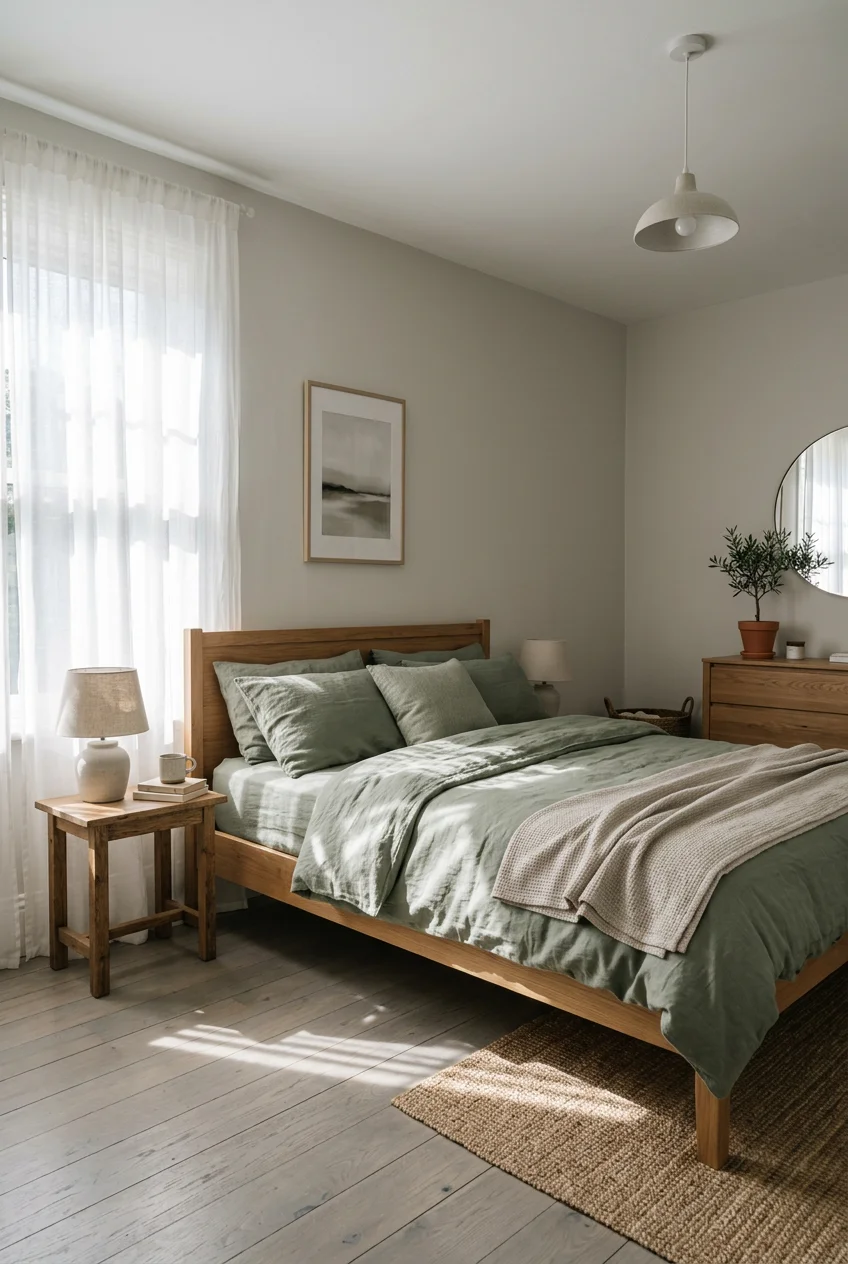
Last October, I tried painting my guest room a dark forest green and ended up with a space that felt like a damp cave. I spent three days priming over it, complaining the entire time. That failure pushed me toward a true sage green bedroom aesthetic, which gives you rich color without sucking all the light out of the room. I spent the next six months testing paint samples, returning stiff linen sheets, and figuring out how to balance cool greens with warm woods. It isn’t just about slapping green paint on a wall. You’ve got to layer textures, pick the right lighting, and avoid the matching sets that make a room look cheap. I’ve made plenty of expensive mistakes—learned that the hard way—along the way. Here are 16 specific ways to get this look right.
1. Choose a “Living Neutral” Sage Green Paint

Finding the right paint is harder than it looks. I bought three different cheap green samples from Walmart before realizing they all looked like mint toothpaste on the wall. For walls, you need a versatile sage green that acts as a “living neutral.” This means it blends with different textures and changes slightly depending on the light. A great choice is Sherwin-Williams Evergreen Fog SW 9130. It costs $45.99 per gallon. It’s got a warm gray-green undertone and a Light Reflectance Value (LRV) of 30. That specific LRV means it reads true in most lighting conditions without turning black in the corners. If you’ve got a traditional home, Benjamin Moore Saybrook Sage HC-114 offers a warmer, slightly more olive tone for $55.99 per gallon. If you’ve got a north-facing room, the light is cooler, so you need a warmer sage. South-facing rooms get warm light, which can make olive tones look too yellow. I learned this when I painted my south-facing office and it looked like split pea soup.
2. Embrace Color Drenching for Cohesion

Painting just the walls often leaves a room feeling disconnected. Instead of stopping at the ceiling line, try color drenching. This means you extend your chosen sage green paint to the baseboards, window trim, and even the ceiling. Rachel Robinson of Dunham Robinson recommends this approach to create an enveloping space without it feeling heavy. I tried this in my own bedroom last spring. I bought three gallons of Behr Premium Plus in a satin finish for $34.98 each at Home Depot and painted everything. It actually makes the ceiling look taller because there isn’t a harsh white line breaking up the visual flow. A common mistake is using different paint sheens for the trim and walls when drenching. Stick to an eggshell or satin finish for the whole room so the light hits the color uniformly. You’ve got to tape off your floors meticulously, though. I skipped using a drop cloth on my hardwood once and spent four hours scraping dried green paint off the oak planks with a plastic razor. No exaggeration.
3. Balance Cool Tones with Warm Wood Furniture

A common mistake is not introducing enough warmth into a green room. If you pair sage walls with gray floors and white furniture, the room feels clinical. You need to balance the coolness of the sage green with warm wood tones. I learned this the hard way when I bought an ash-gray nightstand. It looked terrible against the green paint. I returned it and bought a solid American Walnut platform bed from Walmart for $499.00. The rich, reddish-brown tones in American Walnut or Cherry finishes add a necessary grounded weight to the room. If you can’t afford a new bed, grab a pair of vintage oak nightstands. I found two at a local thrift store for $45.00 each. The warm wood grain breaks up the solid blocks of color. If your dresser has cheap plastic knobs, swap them out for heavy brass or leather pulls. I bought a set of six leather drawer pulls from Amazon for $18.99, and they completely upgraded the look of a cheap wooden dresser I had.

50×70 Inch Rust Throw Blanket – Soft & Fluffy Fleece
50×70 Inch Rust Throw Blanket – Soft & Fluffy Fleece has been one of the most consistently praised picks in this category. 13 reviewers averaged 4.5/5.
4. Invest in Quality Linen Bedding

Cotton is fine, but 100% linen bedding adds a specific wrinkled texture that makes a sage room look lived-in. Brands like 3HLinen, Piglet in Bed, and Bedfolk sell breathable, soft linen duvet covers. I bought a Queen-sized linen duvet cover from Piglet in Bed for $229.00. The fabric has a 165 GSM (grams per square meter) weight, which means it provides year-round comfort. The tradeoff is that linen wrinkles immediately. If you want a perfectly smooth bed, this isn’t for you. I wash mine every Sunday on a cold cycle and tumble dry it on low. It softens up significantly after the third wash. Don’t buy the cheap linen-cotton blends if you want the true temperature-regulating benefits. I bought a $40.00 blend once and woke up sweating at 3 AM because the synthetic fibers trapped all the heat. You also need a heavy insert to make the linen look fluffy. I use a down-alternative insert from Costco that cost $89.99. It fills out the corners perfectly.
5. Layer Textures with Intention

A flat bed looks boring. You need to add depth by layering different fabrics. Combine a sage green duvet with crisp white or cream sheets for contrast. Then, introduce throw pillows and blankets in materials like velvet, chunky knit wool, or cotton. I use a MagicLinen linen-cotton blend throw in off-white that costs $89.00. I drape it over the foot of the bed. I also bought a 20×20 inch ribbed velvet pillow cover for $14.99 at Target last month. The velvet catches the light differently than the matte linen duvet. One negative about chunky wool blankets is the shedding. I bought a thick merino wool throw and it left fibers all over my dark green sheets. Stick to tight-knit cotton or linen throws if you hate using a lint roller on your bed every morning. I also keep a small faux sheepskin draped over my reading chair. I found one at IKEA for $19.99, and it adds that perfect cloud-like softness against the structured linen. You might also like: 20 Fresh Bedroom Ideas to Transform Your Space
6. Incorporate Metallic Accents for Subtle Glamour

Sage green absorbs a lot of light, so you need reflective surfaces to bounce it back. Introduce metallic accents through gold picture frames, brass lamps, or silver decorative objects. These create visual contrast against muted walls. I bought a brass table lamp with a white linen shade for $69.99 at Target. The brass base warms up the cool green wall behind it. You don’t need to match all your metals perfectly. I mix brass lamps with matte black drawer pulls on my dresser. The trick is keeping the finishes brushed or antiqued. High-shine polished chrome looks cheap next to organic colors like sage. I tried a shiny silver mirror first and it completely clashed with the earthy vibe I wanted. I swapped it for an antique brass mirror I found for $35.00, and it fit the room much better. Put your metallic pieces near natural light sources. I placed my brass mirror directly across from the window so it catches the afternoon sun. You might also like: 19 Cozy Aesthetic Bedroom Ideas You Need to See

Bedsure GentleSoft White Throw Blanket for Couch
Honestly, Bedsure GentleSoft White Throw Blanket for Couch – Cozy Soft Fleece Su surprised me — sturdier than it looks in the photos, and over 236 buyers gave it 4.5 stars.
7. Consider a Sage Green and Blush Pink Pairing

The combination of sage green and blush pink is a major trend for 2026 bedroom design. It sounds like a 1980s nightmare, but it works if you keep the tones muted. Introduce blush through your bedding or furniture to create an inviting feeling. I bought a velvet blush pink headboard from Wayfair for $249.00. It measures 62 inches wide and fits my queen bed perfectly. The pink softens the masculine feel of the dark green walls. A huge mistake people make is using a bright bubblegum pink. You need a dusty, muddy blush with gray undertones. I tested a bright pink pillow cover from Walmart ($9.88) and the room instantly looked like a toddler’s nursery. Stick to muted, dusty rose colors and limit the pink to two or three items in the room. If you don’t want a pink headboard, try blush pink linen curtains. I bought a pair of light-filtering blush panels from Target for $34.99 each. They cast a really flattering, warm glow. You might also like: 20 Teen Girl Bedroom Worth Trying
8. Strategic Accent Walls or Wainscoting

If painting all four walls feels too dark for your space, opt for a sage green accent wall behind the bed. Better yet, install custom wainscoting and paint it a moody sage green. I used Behr’s Muted Sage in a satin finish, which costs $42.98 per gallon. I bought 3.5-inch MDF baseboards and chair rail moulding from Lowe’s. The materials cost about $4.50 per linear foot. I installed it exactly 42 inches up the wall. This brings a subtle pop of color and architectural texture without making a small room feel claustrophobic. Just remember to caulk every single seam before you paint. I skipped caulking on my first attempt in 2021, and the dark green paint highlighted every single gap between the wood and the drywall. Use a high-quality angled brush for the trim work. I used a cheap dollar store brush on my first try, and it left horrible streak marks in the satin finish. Spend the $12.99 on a Purdy brush from Home Depot.
9. Curate with Natural Elements and Greenery

You need real plants to enhance the soothing, organic feel of this color palette. Bring the outdoors in with houseplants like a large Pothos or Snake Plant. I keep a 6-inch Snake Plant in a woven seagrass basket on my dresser. I also buy dried eucalyptus stems from Trader Joe’s. They cost $3.99 for a 4 oz bundle. I stick them in a ceramic vase on my nightstand. The shower steam from my attached bathroom hits the eucalyptus and makes the whole room smell amazing. Don’t buy fake plastic vines. I bought a string of plastic ivy from Amazon for $12.99 and it looked incredibly tacky against the sophisticated sage paint. Make sure your planters have drainage holes. I ruined a $45.00 wooden nightstand because a ceramic pot I bought from Target leaked water all over it overnight. Always use a plastic drip tray. If you kill real plants, stick to dried botanicals or high-quality paper flowers. Real organic textures matter in a green room.

Fixwal Floating Shelves for Wall
Fixwal Floating Shelves for Wall has been one of the most consistently praised picks in this category. 431 reviewers averaged 4.5/5.
10. Optimize Lighting with Warm Tones and Dimmers

Lighting completely changes how a sage green bedroom aesthetic looks. If you use cool white bulbs, the walls will look like a dreary, cold gray. You need warm-toned lighting to keep the color rich, especially in the evenings. I installed dimmer switches on my main light fixtures. I also bought a 4-pack of Feit Electric LED warm bulbs (2700K) from Costco for $14.99. The 2700K temperature is crucial. I use a large, woven rattan pendant light from World Market that cost $129.99. It hangs directly over the bed and casts a diffused, textured light across the ceiling. Avoid bare Edison bulbs. I tried one in my bedside lamp, and the harsh glare gave me a headache while reading. You need shades that diffuse the light softly across the green walls. If you want total control, buy smart bulbs. I use Philips Hue bulbs that cost $49.99 for a two-pack. I set them to shift from a bright, cool white in the morning to a deep, warm amber by 8 PM.
11. Soften Industrial Elements with Sage Green

If your bedroom has an industrial edge, sage green softens hard materials like exposed brick or metal pipes. I live in a loft with an exposed brick wall that felt cold and abrasive. I decided to paint the brick using Glidden’s Light Sage, which costs $29.98 per gallon at Walmart. I used a thick 3/4-inch nap roller to get the paint into all the deep mortar lines. It took two full coats and a lot of patience. The green paint bridges the gap between the cold architecture and my cozy linen bedding. Before you paint brick, you’ve got to vacuum it. I didn’t realize how much dust was sitting on the mortar ledges, and my first pass with the roller just smeared gray dirt into the fresh green paint. If you’ve got metal bed frames or exposed ductwork, the earthy green tones neutralize that harsh factory look. Just make sure you use a masonry primer first. I skipped the primer on a small section, and the red brick bled through within a week.
12. Avoid Over-Matching; Embrace Subtle Variation

The fastest way to make your bedroom look cheap is to buy a matching “bed in a bag” set. You should never try to match every sage green item perfectly. Instead, layer different shades of green to add depth and prevent the room from feeling flat. I use a light sage on the walls, a medium olive hue for my duvet, and deep forest green velvet cushions. Last year, I bought a matching sage green rug, curtain set, and bedspread from Target. The room ended up looking like a monochromatic green screen. It was visually exhausting. I returned the rug and swapped it for a cream one. You need visual breaks. Let the wall color be the star, and use slightly darker or lighter greens for your accents so the eye has somewhere to rest. You can also mix subtle patterns. I have a sage green and cream ticking stripe pillow that breaks up the solid blocks of color. I found it at a local boutique for $22.00.

HOMIDEC Closet Organizers and Storage
If you want something that just works, HOMIDEC Closet Organizers and Storage is a safe bet (8 reviews, 4.5 stars).
13. Incorporate a Clay Plaster Accent for Organic Texture

If you want a custom look, skip standard paint and use a hand-applied warm clay plaster finish on an accent wall. This creates subtle organic ridges that catch light differently throughout the day. I used Portola Paints Roman Clay in a custom sage tint. It costs $65.00 for a 4-kilo bucket. The application requires a flexible putty knife and a lot of elbow grease. The materials and application end up costing around $6.50 per square foot if you do it yourself. It makes the room feel expensive and intentional. The downside is that you can’t easily patch it if it chips. I accidentally dinged the wall with a vacuum handle, and fixing the textured plaster was much harder than just dabbing some leftover paint on a drywall scuff. You also need to seal the plaster if you want it to last. I bought a matte topcoat from the same brand for $25.00. It stops the clay from dusting off onto your clothes if you brush against the wall.
14. Accessorize with Thoughtful, Unframed Art

Perfectly framed, symmetrical gallery walls can make a relaxed sage room feel too rigid. Instead of heavy frames, I pin a loose polaroid collage or unframed botanical prints directly onto the wall. I print my digital photos at Walgreens for $0.39 per 4×6 print. I use small brass push pins to hang them in an asymmetrical cluster above my dresser. This keeps the room from feeling overly curated and adds a personal, lived-in touch. I tried doing a formal grid of six identical black frames from IKEA ($14.99 each). It looked like a hotel lobby and completely ruined the soft, organic vibe I was going for. Unframed art feels more authentic. Stick to nature or abstract shapes for the art. I printed some moody, dark green forest photos I took on my phone. Avoid bright, neon pop art because it completely shatters the calming aesthetic. If you hate putting holes in the wall, use small pieces of kneaded eraser or specialized wall putty to stick them up.
15. Consider a Two-Toned Wall with a Neutral

If a fully green room feels overwhelming, paint the lower half of your walls in sage green and the upper half in a complementary neutral. I used Sherwin-Williams Alabaster SW 7008, which costs $45.99 per gallon, for the top half of my walls. I separated the two colors with a simple pine chair rail from Home Depot that cost $12.48 for an 8-foot piece. This creates a balanced look, especially in smaller rooms with low ceilings. The sage grounds the space around the furniture, while the warm white keeps the upper half airy and bright. I initially tried putting the green on top and the white on the bottom. It felt top-heavy, like the ceiling was pressing down on me. Always put the darker color on the bottom half of the wall. You don’t even have to use a chair rail. You can create a modern look by just painting a crisp line. I used FrogTape ($8.99 at Lowe’s) and sealed the edge with a tiny bit of the base color to prevent bleeding.

WOPITUES Wood Floating Shelves Set of 6
If you want something that just works, WOPITUES Wood Floating Shelves Set of 6 is a safe bet (67 reviews, 4.5 stars).
16. Ground the Space with an Earthy Area Rug

A sage room needs a textured foundation. Hardwood floors are great, but a large area rug anchors the bed and adds acoustic softness. I bought a Safavieh natural jute 5×8 rug for $119.99 at Target. The thick, woven jute introduces a rough, organic element that pairs perfectly with the smooth painted walls and soft linen sheets. A major negative of jute rugs is the dirt they trap. I lift mine up every two months, and there is always a pile of fine dust underneath it. You’ve got to vacuum under it regularly. Never skip the rug pad. I bought a 1/4-inch felt pad from Amazon for $45.99. It makes the jute rug feel twice as thick and stops it from sliding around and scratching my hardwood floors. If you hate jute, a low-pile wool rug in a warm beige works too. Skip the shiny polyester shag rugs. I bought a cheap $50.00 fluffy white rug once, and it matted down into a gray, tangled mess within three weeks.
Getting the sage green bedroom aesthetic right comes down to balancing the cool tones with warm woods and layered textures. It takes a little trial and error, but once you nail the paint LRV and swap out your synthetic sheets for real linen, the room completely changes. I won’t paint another room plain white again. If you found these tips helpful, definitely pin this article to your bedroom decor board so you’ve got the exact paint names and prices ready when you head to the hardware store.
Frequently Asked Questions
What is the best sage green paint color for a bedroom?
Sherwin-Williams Evergreen Fog SW 9130 is a highly recommended choice. It acts as a living neutral with an LRV of 30, meaning it adapts well to different lighting without looking too dark or overly minty.
How do you keep a sage green room from looking too cold?
Balance the cool green tones by incorporating warm wood furniture, like American Walnut or Cherry. Adding brass metallic accents and warm 2700K LED lighting will also prevent the room from feeling clinical.
What colors pair well with a sage green bedroom aesthetic?
Warm neutrals like cream and off-white work perfectly. For a more styled look, muted blush pink or dusty rose accents create a beautiful, contrasting aesthetic without looking like a nursery.
Should I paint the trim and ceiling sage green too?
Yes, this technique is called color drenching. Painting the walls, trim, and ceiling the same sage green color creates a cohesive, enveloping space and can actually make the ceiling appear taller.
