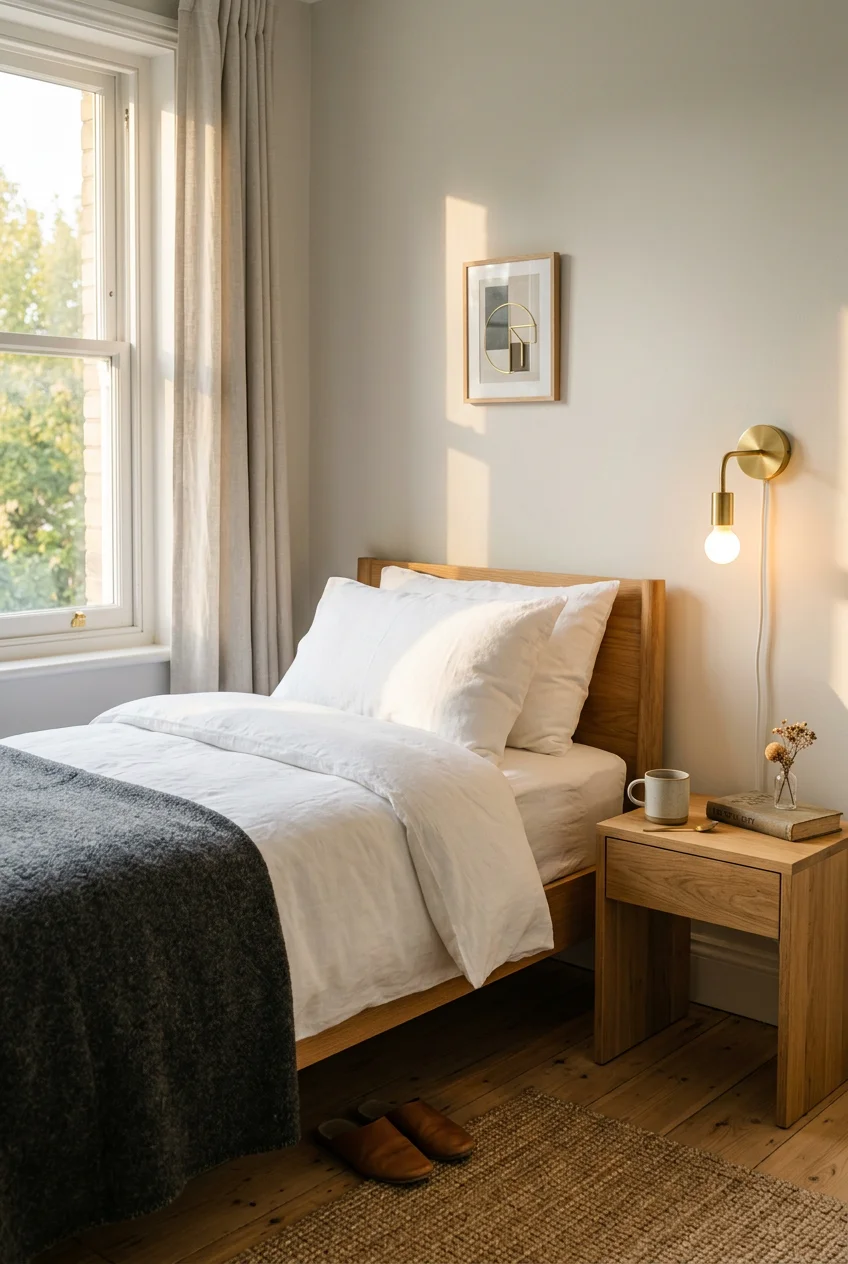
What’s Inside
- Opt for a Storage-Integrated Single Bed
- Embrace Verticality with Loft Beds
- Install Wall-Mounted Floating Nightstands
- Utilize Wall-Mounted Lighting
- Strategically Place Large Mirrors
- Adopt a Light, Cohesive Color Palette
- Color Drench for Boundary Blurring
- Leverage Corner Shelving
- Incorporate Multifunctional Furniture
- Use Slim-Profile Dressers
- Create a Floating Effect with Furniture
- Integrate a Pegboard Wall System
- Choose Fine Scale Wallpaper for Depth
- Maximize Under-Bed Space with Rolling Baskets
- Consider a Fold-Down Wall Desk
Most folks shove a twin mattress into a corner, toss a flat pillow on top, and call it a day. That’s a fast way to make a room feel like a forgotten dorm. When hunting for small bedroom ideas, the goal isn’t just squeezing furniture into a tight square. It’s about building a functional, intentional space that doesn’t feel like a cramped closet. The difference between a cozy retreat and a mess comes down to editing and using your vertical space. If you only try one thing from this list, make it #2. Lifting the bed off the floor changes the math of a tiny room, giving you back 20+ square feet of living space instantly.
Skip this if you’re outfitting a primary bedroom for a couple. These tips are for single-occupancy rooms with twin or twin XL mattresses. If you have the space for a queen, these compact storage tricks will feel way too tight.
1. Opt for a Storage-Integrated Single Bed

The biggest mistake in tiny rooms is ignoring the bed’s footprint. A standard twin takes up about 15 square feet. Leaving that area empty is a waste. Instead, get a frame that does the work for you. Ottoman beds, like the Oscar White Wooden Ottoman Storage Single Bed, use gas struts to reveal hidden storage underneath. Divan beds with drawers, like those from Lamourbeds, usually cost between £300 and £700 and offer deep sections for clothes. The catch: ottoman beds require lifting the mattress, which isn’t great if you have a heavy memory foam topper. Divan drawers need at least 24 inches of clearance to open, so they won’t work if the bed is wedged between two walls. Best for: rooms with no closet. You can fit 4 to 6 large bins of winter gear under a standard single.
2. Embrace Verticality with Loft Beds

Going vertical is the most aggressive way to reclaim space. High loft beds change your floor plan completely. Brands like Maxtrix sell solid wood lofts about 71 inches tall. That leaves 53 inches of headroom underneath. It’s plenty of room for a desk, a reading chair, or a small dresser. The IKEA VITVAL is a cheaper metal alternative with a clean look. Most people put the desk facing the wall, but turning it to face the room makes the area feel less like a dark cave. The catch: climbing a ladder every night isn’t for everyone, and changing sheets on a mattress six feet in the air is a sweaty chore. You’ll need a step stool just to make the bed right. I learned that the hard way. Best for: teens or adults in studios who need a workspace but lack the square footage.
3. Install Wall-Mounted Floating Nightstands

Bulky bedside tables are floor-space killers. A standard nightstand is 20 inches wide and 18 inches deep. That’s a lot of room for something just holding a phone and a glass of water. Slim floating shelves are smarter. The Axeman 10-inch deep shelves sit flush against the wall. Mounting them at mattress height—usually 24 to 30 inches up—keeps things within reach while leaving the floor bare. This trick makes the floor look continuous, fooling the eye into thinking the room is wider. You can even slide slippers underneath. The catch: you lose the hidden drawer space, so your clutter is on display. If you aren’t tidy, a floating shelf becomes a messy focal point. Best for: minimalist setups and tight spaces where a door might hit a standard table.

Yieach Bedside Shelf for Dorm Bed,Rv
Yieach Bedside Shelf for Dorm Bed has been one of the most consistently praised picks in this category. 117 reviewers averaged 4.5/5.
4. Utilize Wall-Mounted Lighting

A table lamp on a tiny nightstand is a waste of surface area. Wall-mounted lighting fixes this. Swing-arm lamps, like the brass options from onefortythree ($95 to $150), provide great task lighting without eating up table space. Placement matters. Most people hang them too high. Mount sconces exactly 66 to 72 inches from the floor. This casts light downward, perfect for reading without blinding you. For ambient light, a 16-foot LED strip behind a headboard creates a soft, diffused glow. The catch: hardwired sconces need an electrician, which isn’t renter-friendly. Plug-in versions solve this, but you’ll have an exposed cord dangling down the wall.
5. Strategically Place Large Mirrors

A common mistake is using a tiny, cheap mirror on the back of a door. It won’t brighten the room. To bounce light and create space, you need scale. A 30×70 inch floor mirror placed near a window acts like a second window. For narrow rooms, hang a long, horizontal mirror across the widest wall to push the boundaries outward. Mirrored closet doors work well, too. The catch: large mirrors are heavy and need solid anchors. They also reflect whatever is opposite them. If you place one across from a messy desk, you’ve just doubled your clutter. Best for: north-facing rooms that get little sunlight. You might also like: 19 Purple Bedroom Decor You Need to See
6. Adopt a Light, Cohesive Color Palette

High-contrast colors chop a small room into tiny blocks. A dark accent wall with bright trim makes the walls feel like they’re closing in. A light, cohesive palette is the fix. Off-white, pale blue, or soft gray reflect light. The trick is to go monochromatic. Paint the walls, trim, and doors the same shade. It erases visual breaks. Stores like Home Depot and Lowe’s carry good lines like Behr Premium Plus. The catch: all-white rooms can feel sterile, like a doctor’s office, if you don’t add texture through bedding and rugs. Dirt also shows up fast on light paint. You might also like: 17 Small Guest Bedroom Ideas That Actually Work

AMADA HOMEFURNISHING Floating Shelves
AMADA HOMEFURNISHING Floating Shelves punches above its price — 117 buyers rated it 4.5 stars. The kind of pick people reorder.
7. Color Drench for Boundary Blurring

If you hate plain white, try color drenching. This means painting the walls, baseboards, window casings, and ceiling in one saturated color. It blurs the room’s lines. When the ceiling matches the walls, your eye can’t tell where one ends and the other begins. This makes the ceiling feel taller. Brands like Farrow & Ball or Sherwin-Williams offer rich, matte finishes for this. Dark greens or deep terracottas look great in tiny spaces. The catch: it takes a lot of prep and 3 to 4 coats to get a solid finish. It’s a big commitment, and a dark ceiling can feel intimidating before the furniture is in. You might also like: 15 Stunning Bedroom Design India Ideas for a Beautiful Space
8. Leverage Corner Shelving

Corners are dead zones. A standard shelf won’t fit, so the space stays empty. Corner floating shelves fix this. The Lotuspro Wall Corner Shelf measures 7.5 by 7.5 by 48.4 inches and holds up to 11 lbs per tier. It turns a 90-degree angle into storage for books or plants. Stacking these from floor to ceiling draws the eye upward. The catch: installing them requires perfectly square walls. Most older homes have walls that bow, meaning the shelf might leave an annoying gap in the back. Best for: small decorative items that don’t belong on your desk.
9. Incorporate Multifunctional Furniture

Single-use furniture is a luxury small rooms can’t afford. Every piece needs to earn its keep. A storage ottoman at the foot of the bed does triple duty. It’s a seat, a step for a high bed, and a bin for winter sweaters. You can find solid options at Target or Walmart for $50 to $150. Another efficient piece is a headboard with shelves. The discontinued IKEA Mandal was famous for this, but similar slatted headboards let you ditch the nightstand. The catch: multifunctional furniture often compromises on comfort. An ottoman isn’t as comfy as a proper chair, and headboard shelves can make it awkward to lean back and read.

Tenmiro Led Lights for Bedroom 100ft (2 Rolls of 50ft)
Tenmiro Led Lights for Bedroom 100ft (2 Rolls of 50ft) Music Sync Colo is sturdier in person than the photos suggest — over 787 buyers gave it 4.5 stars.
10. Use Slim-Profile Dressers

Finding storage in a small room often means sacrificing space. A traditional 6-drawer dresser is 60 inches wide and 20 inches deep. That dominates a small floor plan. Swap it for a tall, slim lingerie chest. These maximize height, not width. A 5-drawer chest might be 24 inches wide but gives you the same storage volume. It keeps the floor open and forces the eye up. Retailers like Wayfair and West Elm carry these in many styles. The catch: tall dressers are top-heavy. If you open more than one drawer at once, the unit can tip. You must anchor these to wall studs with heavy-duty brackets.
11. Create a Floating Effect with Furniture

The instinct in a small room is to shove everything flush against the walls. It seems logical, but it makes the room feel like a stiff waiting area. Pulling furniture an inch or two away from the wall creates a floating effect. It gives pieces breathing room and improves flow. For example, pull a narrow nightstand two inches off the baseboard. It creates a shadow line that makes the room feel deeper. The catch: pulling furniture away from the wall costs you a few inches of floor space. If your room is already so narrow you can barely walk past the bed, this won’t work and you’ll just stub your toes.
12. Integrate a Pegboard Wall System

Pegboards aren’t just for garages anymore. They’re perfect for tiny bedrooms. The IKEA SKÅDIS system is the standard. You can mount a panel next to the bed and attach small shelves, hooks, and cords. It holds jewelry, hats, and cables. If you have a loft bed, a pegboard on the wall acts as a zero-footprint nightstand. It keeps everything off your flat surfaces. The catch: pegboards look chaotic if they aren’t organized. If you just throw random items on the hooks, it looks like a hardware store display. Best for: renters who need storage that changes as their needs shift.

HOMIDEC Closet Organizers and Storage
A dependable everyday pick — HOMIDEC Closet Organizers and Storage pulls in 81 ratings at 4.5 stars. Not flashy, just solid.
13. Choose Fine Scale Wallpaper for Depth

Large, loud wallpaper prints overwhelm a tiny room. Fine scale wallpaper does the opposite. Narrow stripes or small geometric patterns create depth without screaming for attention. Katie Kime’s Timberline Traditional Wallpaper is a great example of a pattern that adds texture without closing in the walls. Applying it to all four walls wraps the room in a cozy, intentional feel. It pairs well with solid bedding. The catch: matching seams on fine scale wallpaper is tedious. A fraction of an inch off and the pattern breaks. Traditional paste wallpaper is a nightmare to remove, so renters should stick to peel-and-stick versions.
14. Maximize Under-Bed Space with Rolling Baskets

If you can’t upgrade to a storage bed, you still need to use the space underneath. Standard single beds usually have 8 to 12 inches of clearance. Don’t just shove cardboard boxes under there. Measure the height from the floor to the rail. Buy low-profile, rolling storage baskets that fit. Wire or woven baskets look better than plastic bins if they peek out. Stores like The Container Store offer canvas bins on wheels at decent prices. The catch: rolling bins get dusty fast. They sit on the floor and collect every dust bunny. You have to pull them out and vacuum regularly, or your sweaters will smell stale by November.
15. Consider a Fold-Down Wall Desk

Squeezing a desk into a small room usually means losing your only open floor space. A fold-down wall desk solves this. When closed, it sits flat against the wall, projecting maybe 6 to 8 inches. When you need to work, the panel drops down to create a 24-inch work surface. Some models even have shelves hidden inside for pens and notebooks. You can find these at Target or Wayfair. The catch: you have to clear the desk every time you want to fold it away. You can’t leave your laptop or a coffee mug sitting out. It forces you to be hyper-organized. Best for: people who only need a desk occasionally.
How we chose these ideas: We looked at these strategies based on renter-friendliness, cost, and visual impact in rooms under 100 square feet. The goal was to maximize space without major renovations.
Small bedrooms don’t have to feel like a punishment. By forcing the eye upward and getting rid of single-use furniture, you can make a tiny footprint feel intentional. I’m a big believer in getting the bed off the floor first, then building the rest of the room around that freed space. Trust me. Pin this list for your next weekend project, and start by measuring the dead space hiding under your mattress.
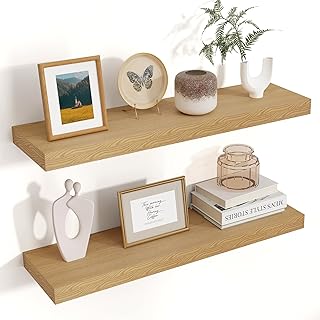
Venusmiles Floating Shelves for Wall 24 inch Long
Venusmiles Floating Shelves for Wall 24 inch Long has been one of the most consistently praised picks in this category. 412 reviewers averaged 4.5/5.
Frequently Asked Questions
How can I fit a desk and a single bed in a small room?
The most efficient way is using a high loft bed, which frees up the entire floor footprint underneath for a desk. Alternatively, a fold-down wall-mounted desk provides a 24-inch workspace that tucks away completely flat when not in use.
What is the best color for a small bedroom with a single bed?
Light, reflective colors like off-white, pale blue, or soft gray make the room feel larger. For a bolder approach, color drenching—painting the walls, trim, and ceiling the same saturated color—blurs room boundaries and creates the illusion of height.
How do I add storage to a small bedroom without bulky dressers?
Swap wide dressers for tall, slim-profile vertical wardrobes. Utilize the space under the bed with rolling storage baskets, or invest in an ottoman bed. Wall-mounted pegboards and corner floating shelves also add vertical storage without touching the floor.
Where should I place a single bed in a tiny room?
Pushing the bed into a corner maximizes open floor space, but pulling it just a few inches away from the wall creates a floating effect that improves visual flow. Avoid blocking natural light sources or swinging doors.
