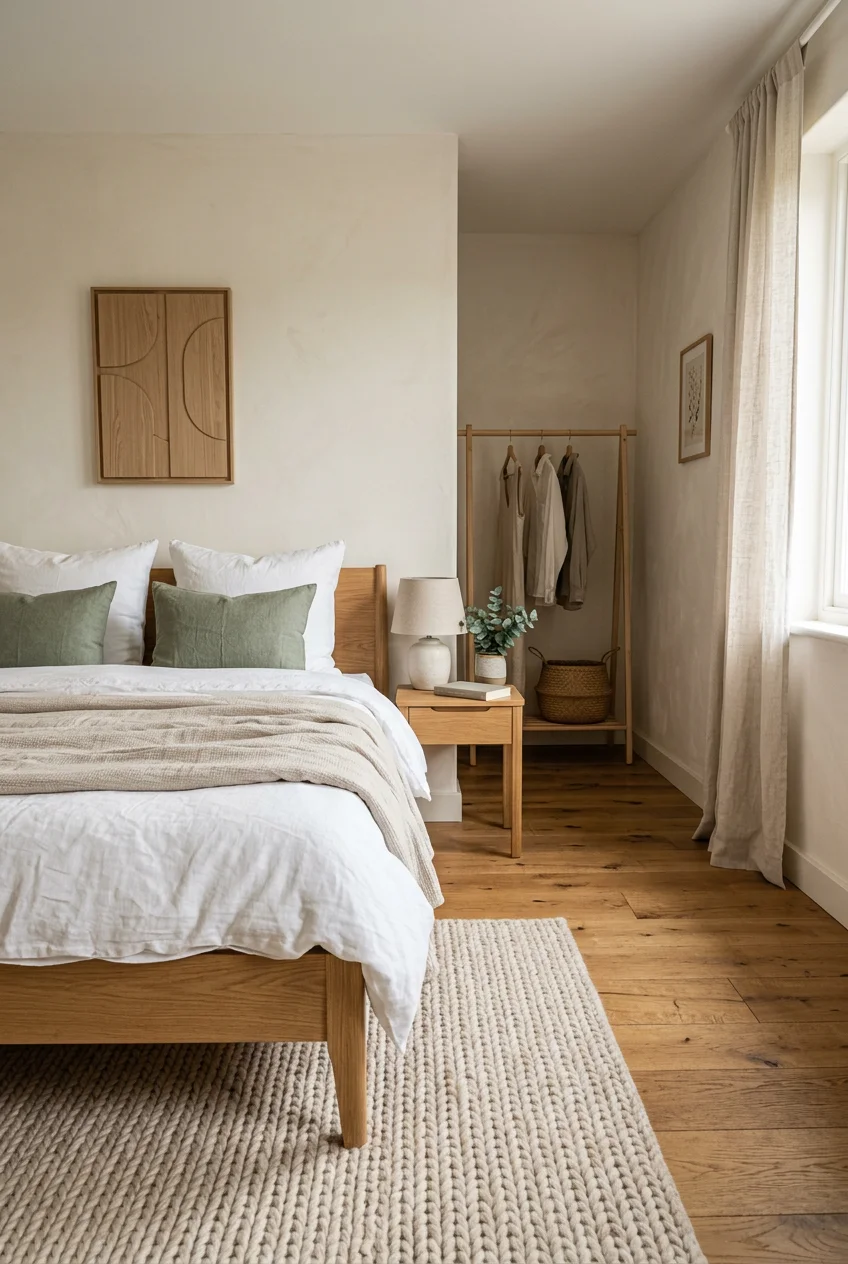
What’s Inside
- Start Your Small Bedroom Makeover Ideas With Floating Furniture
- Maximize Under-Bed Storage With Slim Solutions
- Utilize Vertical Space With Wall-Mounted Shelving
- Choose a Strategic Paint Color Palette
- Incorporate Multifunctional Furniture Pieces
- Ditch the Bulky Dresser for a Customized Closet
- Swap Table Lamps for Plug-In Wall Sconces
- Hang Window Treatments High and Wide
- Lean a Massive Floor Mirror Against the Wall
- Swap Heavy Duvets for Layered Lightweight Quilts
- Implement a Monochromatic Bedding Scheme
- Mount the Television or Ditch It Entirely
- Utilize the Back of the Entry Door
- Opt for Clear Acrylic Furniture Pieces
- Use Appropriately Sized Area Rugs
- Add a Slim Profile Upholstered Headboard
- Install Corner Shelving for Dead Zones
- Paint the Ceiling a Darker Accent Color
Most folks shove a massive queen bed against the wall of a 10×10 room and wonder why it feels like a prison cell. Pulling off a small bedroom makeover requires brutal editing, not just buying smaller furniture. It’s about tricking the eye with scale, color, and placement. I’m always surprised by how many people cram a matching six-piece bedroom set into a 120-square-foot box. It doesn’t work. The geometry fails. Let’s be honest: standard layouts aren’t built for tight urban spaces. I’ve organized these ideas to focus on visual weight and vertical lines, which changes how your brain sees the room’s boundaries. If you only try one idea here, make it #1. Here’s why: getting furniture off the floor instantly reclaims visual square footage, making the tightest floor plan feel breathable. Trust me.
Skip this list if you’re living in a massive suburban home with 400-square-foot primary suites. These tactics are for people dealing with cramped city apartments, awkward lofts, or tiny secondary bedrooms where every inch matters. If you’ve got room for a California King and a sitting area, this advice won’t serve you.
1. Start Your Small Bedroom Makeover Ideas With Floating Furniture

Floating furniture is a major 2026 design trend for a reason. Anchoring heavy wooden nightstands to the floor immediately chops up the walking path and creates visual roadblocks. Wall-mounted nightstands and slim floating shelves build an open, breathable layout by freeing up floor space and cutting down on visual clutter. The “Linear Wall-Mounted Nightstands” from Room & Board typically run $650 to $850 and offer a sleek, architectural look that mimics high-end hotels. For a budget-friendly pick, the “Oak Floating Bedside Table with Drawer” from Target usually sits under $60 and provides just enough space for a phone and a glass of water. Getting furniture off the floor creates visual breathing room. The eye travels further underneath, tricking the brain into perceiving a wider footprint.
Best for: tight floor plans and minimalist aesthetics.
The catch: this requires drilling heavy anchors into wall studs, which is a headache for rentals with strict landlords.
2. Maximize Under-Bed Storage With Slim Solutions

The space beneath your mattress is a massive footprint that usually just collects dust bunnies and lost socks. Leaving this empty is a critical failure in space planning. Instead of blindly stuffing seasonal coats underneath, use modular storage designed for your bed frame’s dimensions. IKEA offers the “SKUBB Storage Case” for roughly $15. It’s lightweight, zips shut, and keeps fabrics dust-free while sliding easily on hard floors. For higher beds, the “MALM Underbed storage box” rolls smoothly on casters. If you want something industrial, Room & Board sells a “Steel Storage Drawer” in the $250 to $350 range. Look for bins measuring exactly 6 to 12 inches high to ensure they slide under a standard metal frame. Using this hidden square footage effectively clears out the need for a secondary dresser.
The catch: accessing these daily is terrible for your back, so reserve them for out-of-season clothes, guest linens, or holiday decor.
3. Utilize Vertical Space With Wall-Mounted Shelving

Ignoring the upper third of the wall is a common mistake. Most people keep all their furniture below waist height, which makes the ceiling feel oppressively low and leaves walls looking stark. Installing floating shelves draws the eye upward, establishing a vertical line that creates the illusion of height. West Elm sells “Slim Floating Shelves” in various lengths from 1 to 4 feet, usually starting around $70. They provide a solid ledge for books, small trailing plants, or photos without eating into the walking path. IKEA’s “LACK” wall shelves are the standard budget option, featuring hidden mounting hardware for a clean profile. Building upward with tall, narrow bookshelves or ledges reclaims the floor space a bulky bookcase would otherwise consume.
The catch: floating shelves require constant dusting, and overloading them with heavy hardcovers can rip the drywall anchors right out if you miss a stud.

Yieach Bedside Shelf for Dorm Bed,Rv
If you want something that just works, Yieach Bedside Shelf for Dorm Bed is a safe bet (117 reviews, 4.5 stars).
4. Choose a Strategic Paint Color Palette

Builder-grade flat white makes a small room feel like a sterile waiting room. While bright whites reflect light, failing to consider the room’s natural sun exposure ruins the effect. Soft white, pale blue, or light blue-green reflect natural light and push walls outward. However, wrapping a room in soft charcoals, deep taupes, or rich jewel tones creates a cozy, cocoon-like feel. This makes a small room feel intentionally designed rather than just cramped. Sherwin-Williams “Creamy” offers a warm off-white that doesn’t read yellow under lamps. Benjamin Moore’s “Pristine OC-75” or “White Dove OC-17” are highly reliable for low-light spaces. Extending the wall color across the ceiling blurs boundaries and disguises corner lines.
The catch: dark, moody colors absorb light, meaning you’ll need to double your artificial lighting budget with extra lamps and sconces.
5. Incorporate Multifunctional Furniture Pieces

Single-use furniture is a luxury small rooms can’t afford. Multifunctional furniture is dominating the 2026 market because urban spaces are shrinking. A bed that just holds a mattress is wasted potential. The “Dalton Storage Bed” from Castlery features hidden hydraulic compartments that lift the mattress, revealing the equivalent of a small closet. For guest rooms or studios, sofa beds are necessary to transition the space from day to night. The “Novogratz Brittany Sofa Futon” typically hovers in the $300 to $500 range on Amazon and features a slim, mid-century profile that escapes the cheap dorm look. Choosing furniture scaled strictly to the room’s dimensions prevents the space from feeling choked by oversized pieces.
Best for: studio apartments and multi-purpose guest rooms.
The catch: hydraulic storage beds are incredibly heavy and notoriously difficult to disassemble when moving.
6. Ditch the Bulky Dresser for a Customized Closet

A standard six-drawer dresser eats up at least 15 square feet and requires another 3 feet of clearance just to open the drawers. It’s an inefficient block of wood that dominates the layout. Moving all folded clothing inside the closet changes the room’s geometry. The Container Store’s “Elfa” system lets you install mesh gliding drawers directly below your hanging shirts, using the dead space near the floor. A basic setup usually costs $300 to $600 depending on the configuration. By using vertical space inside for both hanging and folded items, the main bedroom floor plan opens up. Ditching the dresser is the fastest way to reclaim square footage. You might also like: 20 Fresh Bedroom Ideas to Transform Your Space
The catch: this requires a closet with standard doors; bi-fold doors often block the outer drawer tracks from opening fully. You might also like: 20 Creative Cozy Small Bedroom for Any Style

upsimples Floating Shelves for Wall
A dependable everyday pick — upsimples Floating Shelves for Wall pulls in 47 ratings at 4.5 stars. Not flashy, just solid.
7. Swap Table Lamps for Plug-In Wall Sconces

Table lamps consume the entire surface of a small nightstand. A 12-inch lamp base on an 18-inch table leaves zero room for a phone, a glass of water, or a book. Wall-mounted sconces eliminate this by moving the light source off the horizontal plane. Target offers plug-in brass sconces for under $50 that require zero hardwiring and install in five minutes. West Elm’s “Cylinder Adjustable Sconces” sit in the mid-range budget and provide great reading light. Mounting the light source on the wall frees up the surface and adds a vertical design element, drawing the eye upward. It makes the bedside setup look custom rather than cluttered. You might also like: 20 Wall Decor Ideas For Bedroom Worth Trying
Best for: renters who can’t hardwire new electrical boxes into the wall.
The catch: plug-in sconces leave a visible cord dangling, which requires a plastic cord cover painted to match the wall.
8. Hang Window Treatments High and Wide

Most people mount curtain rods two inches above the window frame and wonder why the room feels squat. This chops the wall in half and highlights the low ceiling. To fake more height, mount the rod at least 4 to 6 inches below the ceiling line and extend it 10 to 12 inches past the window frame on each side. IKEA “RITVA” curtains are a staple for this; they come in 98-inch and 118-inch lengths for under $40 a pair. When curtains hang straight down from the ceiling, they create long vertical lines that trick the eye into believing the window is massive and the ceiling is soaring.
The catch: buying extra-long 118-inch curtains and heavy-duty, extra-wide rods costs more than standard 84-inch panels.
9. Lean a Massive Floor Mirror Against the Wall

Small rooms lack depth and often feel like closed boxes. A large mirror acts as a faux window, bouncing light back into the room and doubling the visual depth. Hanging a tiny 18-inch mirror over a dresser won’t cut it. You need a massive floor mirror leaning against the wall to get the full optical illusion. The Anthropologie “Gleaming Primrose” mirror is the famous high-end option, but Sam’s Club and Costco frequently stock convincing 72-inch brass dupes in the $150 to $200 range. Placing it opposite the window maximizes reflection and breaks up blank drywall, making the room feel twice as large.
The catch: leaning a 70-pound glass mirror is a safety hazard in homes with toddlers or clumsy dogs, requiring heavy-duty wall anchors.
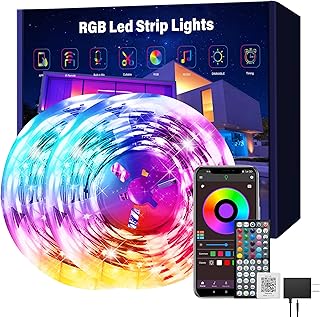
Ledagic Led Lights for Bedroom 150 ft (2 Rolls of 75ft)
Ledagic Led Lights for Bedroom 150 ft (2 Rolls of 75ft) has been one of the most consistently praised picks in this category. 14 reviewers averaged 4.5/5.
10. Swap Heavy Duvets for Layered Lightweight Quilts

A massive, overstuffed down duvet looks luxurious in a primary suite, but in a 10×10 room, it swallows the bed and makes the space feel suffocated. Visual weight matters as much as physical dimensions. Swapping a thick, puffy duvet for a tailored, lightweight quilt keeps the bed profile sleek and low. Brooklinen and Parachute offer lightweight cotton and linen quilts in the $150 to $250 range that drape cleanly. Layering a thin quilt with a folded blanket at the foot provides texture without the overwhelming bulk of a heavy insert. The bed looks crisp, flat, and appropriately scaled. I learned that the hard way.
The catch: thin quilts provide less insulation, meaning you’ll likely need a space heater or extra thermal layers during winter.
11. Implement a Monochromatic Bedding Scheme

Busy floral patterns and high-contrast prints on a bed draw the eye immediately, making the mattress the loudest object in the room. This visual noise shrinks the perception of space and creates a chaotic atmosphere. A monochromatic bedding scheme allows the bed to blend into the background, reducing its visual footprint. Target’s “Casaluna” line offers heavyweight linen blends in muted earth tones, usually under $100 for a queen set. Matching the bedding closely to the wall color reduces visual friction. When the eye isn’t stopping to process three different loud patterns, the room feels calmer and inherently larger.
Best for: minimalist designs and cluttered environments where visual quiet is needed.
The catch: without varying textures like waffle knit, washed linen, or chunky cotton, a perfectly matched monochromatic bed just looks like a cheap motel setup.
12. Mount the Television or Ditch It Entirely

Placing a television on a media console in a small bedroom eats up at least 15 inches of depth, choking the walking path at the foot of the bed. If you absolutely must have a screen, mount it flush to the wall. The Samsung “The Frame” TV is popular because it displays art when off, sitting flat like a picture frame. However, the smartest move is ditching the TV entirely. Using an iPad on a sleek, adjustable bedside stand achieves the same late-night Netflix binge without dedicating a massive black rectangle to your limited wall space.
The catch: wall-mounting a TV requires drilling into studs and hiding cables behind the drywall, a messy weekend project that many renters aren’t allowed to tackle.

Leeleberd Led Lights for Bedroom 100 ft (2 Rolls of 50ft)
Leeleberd Led Lights for Bedroom 100 ft (2 Rolls of 50ft) Music Sync C punches above its price — 205 buyers rated it 4.5 stars. The kind of pick people reorder.
13. Utilize the Back of the Entry Door

The back of the bedroom door is 15 square feet of prime real estate that usually goes ignored. In a room where floor space is scarce, this plane is crucial for storing bulky items like robes, winter coats, or shoe collections. Walmart sells standard over-the-door shoe organizers for under $20 that hold 24 pairs. The Container Store offers more structured, customizable wire racks that won’t swing and bang every time you close the door. Moving accessories out of the closet and onto the door frees up hanging space for actual clothing, maximizing the utility of a tiny closet.
The catch: hanging bulky items prevents the door from opening flush against the wall, which can restrict the entryway and make the room feel cramped.
14. Opt for Clear Acrylic Furniture Pieces

Solid wood furniture stops the eye dead in its tracks. Clear acrylic furniture allows the eye to travel straight through, minimizing the object’s visual footprint to near zero. Replacing a chunky wooden bedside table with a clear acrylic one gives you surface area without the visual weight dragging down the corner. CB2’s “Peekaboo” acrylic tables are a staple for this, usually $200 to $300. The transparent material bounces light around and virtually disappears against the wall. It’s a highly effective optical illusion for cramped spaces where you still need a place to set a water glass or a book.
Best for: ultra-modern aesthetics and extremely tight corners where heavy furniture looks suffocating.
The catch: acrylic scratches easily; a single swipe with a rough paper towel will leave permanent cloudy swirl marks.
15. Use Appropriately Sized Area Rugs

A common mistake is buying a tiny 4×6 rug and floating it at the foot of the bed. This chops the floor into disjointed zones, making the room feel like a cramped dollhouse. You need an area rug large enough to anchor the space and push the boundaries outward. An 8×10 rug placed beneath a queen bed, extending outward on the sides and foot, unifies the furniture into a single zone. Ruggable offers washable 8×10 rugs in the $300 to $450 range perfect for tight spaces. Costco also routinely stocks massive, high-quality rugs for under $200. Covering the majority of the floor creates a continuous surface that expands the room’s perceived footprint.
The catch: wrestling an 8×10 rug under a heavy mattress in a tiny room is an exhausting, sweat-inducing two-person job.

Amazon Basics Bedroom Closet Organizer with 5-Fabric
Amazon Basics Bedroom Closet Organizer with 5-Fabric Storage Drawers f has been one of the most consistently praised picks in this category. 41 reviewers averaged 4.5/5.
16. Add a Slim Profile Upholstered Headboard

Massive sleigh beds or thick tufted headboards push the mattress a full foot away from the wall. In a room where every inch matters, giving up 12 inches for a decorative headboard is a terrible trade-off that ruins the floor plan. Swap it for a slim headboard that mounts directly to the wall or attaches cleanly to a metal frame. Wayfair and Target sell simple, flat upholstered headboards that are only 2 inches thick, usually under $150. You get the comfort of leaning back to read without sacrificing the crucial walking path at the foot of the bed.
The catch: a 2-inch thick headboard provides less padding than a tufted version, so you’ll need thick Euro shams to prop yourself up comfortably.
17. Install Corner Shelving for Dead Zones

Corners are the dead zones of interior design. Standard rectangular furniture rarely fits, leaving awkward triangles of wasted space that gather dust. Installing custom-cut corner shelves reclaims this vertical territory. You can buy pre-made floating corner brackets on Amazon for under $20 or cut a 1/2-inch piece of MDF from Home Depot to fit the angle of your walls. These small shelves are perfect for holding a trailing pothos plant, a small speaker, or a stack of books. Utilizing the corners pulls the eye outward to the absolute edges of the room’s footprint, making it feel wider.
The catch: installing corner shelves requires perfectly square walls, and most older homes have bowed, uneven drywall that makes a flush fit nearly impossible.
18. Paint the Ceiling a Darker Accent Color

We established earlier that extending wall color to the ceiling blurs lines, but painting the ceiling a darker accent color is a bold trick specifically for rooms with high, narrow proportions. If your room feels like an elevator shaft, a dark ceiling visually lowers the plane, making the room feel wider and more grounded. Farrow & Ball’s “Hague Blue” or a deep charcoal works perfectly for this illusion. One gallon covers a standard small ceiling. It draws the eye upward immediately, creating a dramatic canopy effect that distracts from the narrow floor plan below. It’s an aggressive design choice that pays off by changing the room’s proportions. No exaggeration.
The catch: painting a ceiling requires meticulous taping, drop cloths on every surface, and a high tolerance for neck pain during the hours of rolling overhead.
How we chose these ideas: I’ve organized these concepts based on renter-friendliness, overall cost, and the actual visual impact on tight floor plans. We prioritized solutions that alter the geometry and visual weight of a room rather than just suggesting you buy miniature furniture. The focus remained on accessible materials and realistic budgets for standard urban apartments.
Implementing small bedroom makeover ideas isn’t about perfectly replicating a magazine spread with unlimited funds. It’s about ruthless geometry and editing. I’d suggest tackling the lighting and the vertical storage first, as those alter the room’s DNA the fastest with the least amount of heavy lifting. Stop letting that bulky dresser dictate your floor plan and start pushing the boundaries of your square footage upward. Pin this list for your next weekend project, and approach your tiny room with a plan, not just a credit card.
Frequently Asked Questions
How can I make a small bedroom look bigger?
Focus on vertical lines and visual weight. Mount your nightstands to the wall, hang curtains close to the ceiling, and use a massive floor mirror to bounce natural light around the room.
What colors are best for small bedroom makeover ideas?
Soft whites like Sherwin-Williams Creamy or pale blue-greens reflect light and push walls outward. Alternatively, dark jewel tones can create a cocoon effect, but require excellent artificial lighting.
How do I add storage to a tiny bedroom?
Maximize the hidden footprint under your bed with 6-inch to 12-inch slim storage bins. Ditch the bulky dresser and install a customized mesh drawer system inside your existing closet.
Are floating shelves a good idea for small bedrooms?
Yes, they draw the eye upward and reclaim floor space. Install them near the ceiling for books or trailing plants, but ensure they are properly anchored into wall studs.
