What’s Inside
- Embrace Warm Neutral Color Palettes for an Expansive Feel
- Invest in a High-Quality Storage Bed
- Utilize Vertical Space with Wall-Mounted Solutions
- Strategic Mirror Placement to Amplify Light and Space
- Choose Slim-Profile and Floating Furniture
- Layer Your Lighting, Avoiding a Single Overhead Source
- Opt for Floor-to-Ceiling Storage
- Ditch Traditional Bedside Tables Completely
- Consider a Loft Bed or Murphy Bed
- Curate, Don’t Clutter: Embrace “Curated Minimalism”
- Hang Curtains High and Wide
- Don’t Underestimate the Power of a Large Rug
- Surprising Tip: Go for Darker, Color-Drenched Walls
- Utilize the Back of Doors and Corners
- Prioritize Visual Flow and Intentionality
- Swap Solid Chairs for Clear Acrylic Furniture
- Use Multi-Purpose Seating at the Foot of the Bed
- Keep the Air Fresh with a Slim Diffuser
- Hide the Cords Completely
- Bring in Trailing Plants for Vertical Greenery
I spent three years sleeping in a room so small I had to turn sideways just to open my closet door. Figuring out tiny bedroom decor wasn’t a fun weekend project. It was a desperate attempt to stop hitting my shin on a sharp metal bedframe every morning at 6 AM. I tried cramming a standard dresser in there for months before I realized it was suffocating the space. Skip the oversized, bulky furniture. It makes the room feel like a storage unit and smells like stale, trapped air. If you want your shoebox to actually feel like a home, you’ve got to get strategic. Let’s be real, you can’t just buy a bunch of floor decor and expect it to work. I learned that the hard way. Here are 20 tiny bedroom decor ideas that actually function.
1. Embrace Warm Neutral Color Palettes for an Expansive Feel

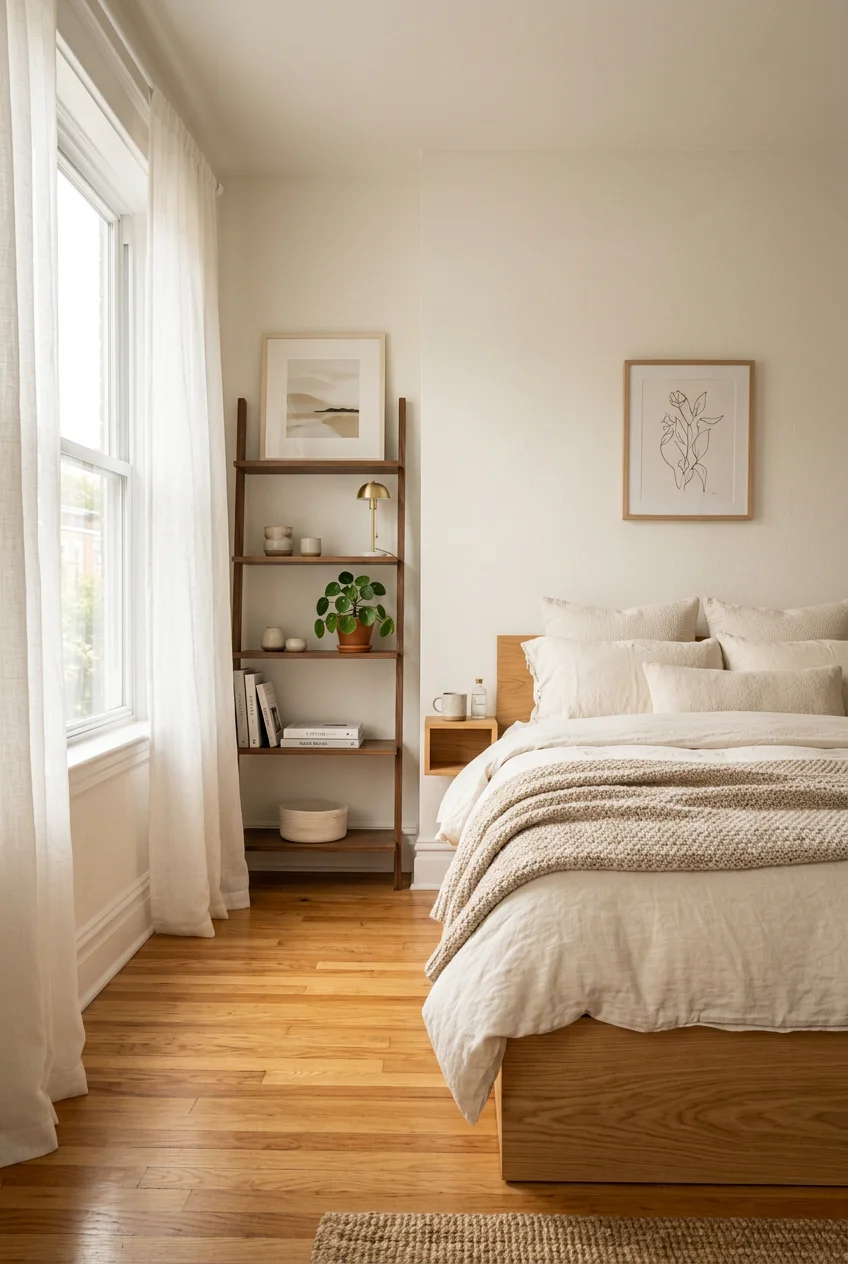
When I first moved into my cramped apartment, I painted the walls a stark, hospital white. I thought it would make the room look massive. Big mistake. It just looked cold and sterile, like a doctor’s waiting room. In 2026, the trend of warm minimalism is everywhere, and for good reason. Soft clay tones, sandy beiges, and muted olives actually blur the corners of a room so your eye doesn’t immediately register where the wall ends. I repainted using Farrow & Ball’s “Wimborne White” ($120 per gallon). The warm undertones make the walls recede. I picked up the paint at a local hardware store after getting frustrated with cheap brands that required four coats. Adding texture through a linen duvet cover from Target ($69.99 for a Queen) keeps the room airy while adding enough visual weight so it doesn’t feel empty. You don’t need bright colors to make a statement. You just need intentional, warm layers that invite you to actually sleep.
2. Invest in a High-Quality Storage Bed

A common mistake is underutilizing the largest piece of furniture in the room. I used to shove those cheap plastic bins under a standard metal frame. They got covered in gray, fuzzy dust bunnies, and pulling them out ruined my cheap rug. Opt for a bed with integrated storage to reclaim valuable floor space. The Saatva Halle Storage Bed costs around $2,195 for a Queen, but it features a platform that lifts to reveal a generous 7.7-inch high storage space. It holds my bulky winter comforters and extra pillows out of sight. For a more budget-friendly option, the IKEA Brimnes Bed Frame with Storage ($349 for a Queen) has four massive integrated drawers. I helped my sister build this exact frame last Tuesday, and the amount of clothing it holds is staggering. You eliminate the need for a standalone dresser entirely, which instantly gives you back at least six square feet of walking room.
3. Utilize Vertical Space with Wall-Mounted Solutions

People fill the floor first and ignore the walls completely. I did this. I had a bulky bookshelf taking up a corner that could’ve fit a reading chair. Instead of floor furniture, look upwards. Install floating shelves at varying heights to store books or act as a slim bedside table. I bought three of the IKEA LACK wall shelves ($14.99 each, 43 1/4 inches long) and staggered them above my desk. They hold my heavy hardcover books without bowing. I also mounted a SKÅDIS pegboard ($22.99) directly above my nightstand area. It holds my reading glasses, phone charger, and a small trailing plant. By moving these small items off a flat surface and onto the wall, the room physically functions better. You aren’t constantly knocking things over when you’re reaching for a glass of water in the pitch dark. Trust me on this.

Macrame Wall Hanging Shelf
If you want something that just works, Macrame Wall Hanging Shelf – Boho Shelves Bedroom Decor | Macrame Wall is a safe bet (275 reviews, 4.5 stars).
4. Strategic Mirror Placement to Amplify Light and Space

Mirrors are the oldest trick in the book for a reason, but hanging a tiny 8×10 mirror over your dresser won’t do anything. You need scale. I bought a cheap, warped mirror from a thrift store once, and it gave me a headache every time I looked at it. Skip the flimsy ones. Place a large, frameless mirror opposite your only window to reflect natural light and create the illusion of depth. I bought the NeuType Arched Full Length Mirror (65×22 inches) on Amazon for $119. I leaned it in the darkest corner of my room. The reflection of the window makes it look like there’s a second light source. Mirrored closet doors are also an excellent two-in-one solution if you rent and can’t drill heavy anchors into the drywall. Just make sure you clean the glass weekly. A dusty mirror immediately makes a room feel neglected.
5. Choose Slim-Profile and Floating Furniture

Avoid large, boxy pieces that absorb light and dominate the room. I used to have a heavy oak nightstand that went straight to the floor. It blocked the AC vent and made the corner feel incredibly heavy. I swapped it for a floating nightstand. Brands like Homary make sleek, wall-mounted drawers (around $115) that are only 15 inches wide. Because you can see the floor underneath, your brain registers the room as being wider than it is. Exposed legs on a small accent chair do the same thing. I found a slim metal-framed chair at Walmart for $55 that fits perfectly in my corner without blocking the walkway. When you keep the floor clear, the space feels expansive. Vacuuming is also significantly easier when you aren’t trying to jam the nozzle around chunky wooden furniture legs.
6. Layer Your Lighting, Avoiding a Single Overhead Source

Relying on one harsh overhead light casts shadows that shrink the space. My old apartment had a single ceiling fixture that made my bedroom look like an interrogation room. In 2026, layered lighting is essential for small bedrooms. You need light at different heights to create depth. I installed a hard-wired swing-arm lamp from onefortythree ($95) right above my headboard. It pulls out 18 inches from the wall for reading, then folds flat when I’m done. I also added a Philips Hue LED light strip ($49.99 for 80 inches) behind the headboard for a soft evening glow. Finally, a small ceramic table lamp from Target ($35) sits on my floating shelf. This combination creates warmth and functionality. You don’t have to get out of bed to turn off the main switch, and the multiple light sources wash the walls, making them feel further away.

QEEIG Floating Shelves for Wall Bathroom Shelf Bedroom
QEEIG Floating Shelves for Wall Bathroom Shelf Bedroom Kitchen Living has been one of the most consistently praised picks in this category. 46 reviewers averaged 4.5/5.
7. Opt for Floor-to-Ceiling Storage

A common mistake is stopping your storage a foot below the ceiling. That 12-inch gap just becomes a graveyard for dusty shoeboxes and old luggage. Maximize your capacity by choosing wardrobes that reach all the way up. I finally ripped out my standard wire closet rack and installed an IKEA PAX system ($650 total). I built it to 93 inches tall, leaving just an inch of clearance below my ceiling. Brands like Habitat also offer modular shelving units (around $250) that emphasize vertical space. By taking the storage all the way up, I added roughly forty percent more usable space without increasing the furniture’s footprint on the floor. I keep my out-of-season clothes in fabric bins on the very top shelf. It looks built-in, custom, and significantly cleaner than staring at a pile of random boxes stacked haphazardly above a short dresser. You might also like: 18 Modern Bedroom Ideas That Will Transform Your Space
8. Ditch Traditional Bedside Tables Completely

If space is extremely tight, eliminate traditional nightstands entirely. I tried to squeeze a 20-inch wide table between my bed and the wall, and I ended up scraping my knuckles every time I made the bed. It isn’t worth the frustration. Consider a headboard with integrated shelving, or simply mount a small floating shelf directly to the wall. I bought a 12-inch deep floating ledge from West Elm for $60. It holds exactly what I need: a glass of water, my phone, and a 4 oz bottle of lavender pillow spray. This frees up crucial floor space and maintains a clean, minimalist aesthetic. If you don’t even have room for a shelf, I’ve seen people use a fabric pocket caddy that tucks under the mattress (around $15 on Amazon). It holds a book and a remote without taking up a single inch of the room’s footprint.
9. Consider a Loft Bed or Murphy Bed

For very small rooms, standard beds are space hogs. A loft bed frees up the entire floor space underneath for a desk, seating, or additional storage. I helped a friend set up the IKEA VITVAL loft bed ($249) in her 8×10 studio, and we fit an entire home office underneath it. If climbing a ladder isn’t for you, Murphy beds are making a massive comeback. Brands like Resource Furniture offer models that pull down effortlessly over a sofa. Bonbon Compact Living sells hardware kits (starting around $800) if you want to build your own cabinet. A Murphy bed allows a room to physically transform, reclaiming the open floor area when the bed is closed. This is a significant trend for maximizing functionality in compact homes. Just be aware that you have to make the bed every single morning before folding it up, or the mechanism won’t latch properly. You might also like: 17 Home Decor Ideas Bedroom You Need to See

upsimples 6 Pack Wooden Floating Shelves
If you want something that just works, upsimples 6 Pack Wooden Floating Shelves is a safe bet (46 reviews, 4.5 stars).
10. Curate, Don’t Clutter: Embrace “Curated Minimalism”

In a smaller room, every item is in your line of sight. Your brain keeps reopening those mental tabs, resulting in low-grade stress and decision fatigue. I used to have a collection of twenty different perfume bottles on my dresser. In a tiny room, it just looked like a messy drugstore counter. Minimalism in 2026 is softer. It combines clean layouts with cozy styling. Instead of overcrowding, display only a few meaningful items. I keep one large framed print, a sculptural lamp, and a textured rug. Everything else goes into hidden storage. I bought three Water Hyacinth Baskets from The Container Store ($24.99 each) and slid them onto my closet shelves. They hide my hair tools, extra chargers, and workout bands. When the visual noise is gone, the room instantly feels larger and you actually want to spend time in it. You might also like: 19 Home Decor Bedroom for Every Budget
11. Hang Curtains High and Wide

Hanging curtains right on the window frame makes the window look tiny and the ceiling look low. I lived with this mistake for a year before someone pointed it out. To create the illusion of taller walls, position your curtain rod closer to the ceiling—specifically 4 to 6 inches above the top of the window frame. Then, extend the rod 6 to 12 inches beyond the window’s width on each side. I bought a matte black French return rod from Target for $35 and hung it almost at the ceiling. I added two heavy linen panels from Half Price Drapes ($80 per panel, 96 inches long). When the curtains are open, they don’t block the glass at all, maximizing the natural light. The fabric going wall-to-wall visually stretches the architecture of the room. It feels like a boutique hotel instead of a cramped rental.
12. Don’t Underestimate the Power of a Large Rug

A common mistake is buying a tiny 3×5 rug and floating it at the foot of the bed. It chops up the floor visually and makes the room feel like a dollhouse. You need a large rug that extends under your furniture to draw the eye wider. A rug that covers most of the floor area anchors the space. I put an 8×10 ft Ruggable Kamran rug ($399) in my 10×12 ft bedroom. It slips under the bottom two-thirds of the bed and reaches almost to the walls. Because the pattern extends so far, your brain perceives the floor as a single, large, continuous surface. I chose Ruggable because you can peel off the top layer and wash it. In a tiny room, you track dirt everywhere quickly, and spot-cleaning a heavy wool rug in a tight space is a nightmare.

Tenmiro Led Lights for Bedroom 100ft (2 Rolls of 50ft)
A dependable everyday pick — Tenmiro Led Lights for Bedroom 100ft (2 Rolls of 50ft) Music Sync Colo pulls in 353 ratings at 4.5 stars. Not flashy, just solid.
13. Surprising Tip: Go for Darker, Color-Drenched Walls

Counter-intuitively, painting a small room in a deep, dark color can actually blur the boundaries of the space. I was terrified to try this, assuming it would feel like a cave. But designers are doing this everywhere now. Painting the walls, baseboards, trim, and even the ceiling the exact same dark shade removes the harsh lines that tell your eye where the room ends. I used Farrow & Ball’s “Railings” (a deep, moody blue-black, $120/gallon) in a small guest room. It completely transformed the space. The corners just disappear into the shadows, making it feel much larger and infinitely cozier. Skip the flat finishes, though. I used an eggshell finish so the faint sheen bounces the limited natural light around. It feels incredibly rich and dramatic, proving that tiny rooms don’t automatically require white paint to look good.
14. Utilize the Back of Doors and Corners

Don’t ignore the back of your bedroom door or the tight corners. I used to throw my jackets on a chair until the pile grew so large the chair tipped over. Now, I use the back of the door for heavy-duty storage. I installed an Elfa over-the-door organizer from The Container Store ($90). It has metal baskets that hold my belts, small bags, and extra toiletries. It takes up zero square footage. For empty corners, consider a corner hanging bar. CB2 sells a sleek brass corner bar for around $50. I mounted one in the dead space between my window and the wall. It holds my tomorrow’s outfit and a few heavy sweaters on wooden hangers. Maximizing these awkward spaces keeps the main walls clear for art or a mirror, and prevents the dreaded clothing chair from taking over your room.
15. Prioritize Visual Flow and Intentionality

Interior psychologists emphasize that a sense of control over your environment reduces anxiety. In small spaces, this means ensuring clear pathways. If you have to turn sideways to walk past the end of your bed, the room is failing you. I bought a bulky upholstered bench once, and my shins were constantly bruised. I sold it and left the foot of the bed completely empty. The visual flow improved instantly. Once a room is well planned, you forget about its size. I organize my small vanity items using clear acrylic drawers from Muji ($12 each). Because they are transparent, they don’t add visual weight to the dresser top. Make intentional choices about every single item. If a piece of furniture or decor doesn’t serve a specific purpose or bring you peace, it doesn’t belong in a tiny bedroom.

upsimples Floating Shelves for Wall
If you want something that just works, upsimples Floating Shelves for Wall is a safe bet (46 reviews, 4.5 stars).
16. Swap Solid Chairs for Clear Acrylic Furniture

If you absolutely need a desk chair or a corner seat in your bedroom, avoid heavy, upholstered armchairs. They swallow up the visual space. I swapped my clunky wooden desk chair for a clear acrylic Ghost Chair. I found a great replica on Wayfair for $90. Because you can see straight through it, the chair essentially disappears into the background. It takes up physical space but zero visual space. I also use a small, clear acrylic C-table ($65 on Amazon) as a laptop stand when I’m working from bed. It slides right over the mattress and practically vanishes when I push it aside. It’s a simple optical illusion, but in a room where every square inch matters, tricking the eye with transparent materials makes the space feel significantly less cramped than it actually is.
17. Use Multi-Purpose Seating at the Foot of the Bed

If you have just enough room at the foot of your bed, don’t waste it on a purely decorative bench. Everything in a tiny bedroom must pull double duty. I bought a Threshold Storage Ottoman from Target for $85. It’s 36 inches long and upholstered in a neutral boucle fabric. I sit on it every morning to tie my shoes, but more importantly, the top lifts off. Inside, it holds two thick winter blankets and my extra bed sheets. Before this, those blankets were shoved onto the top shelf of my closet, constantly falling on my head. A storage ottoman gives you seating, a place to set your laundry basket, and hidden organization all in one footprint. Just make sure the width of the ottoman is at least a few inches narrower than your bed frame so it doesn’t stick out awkwardly.
18. Keep the Air Fresh with a Slim Diffuser

Tiny bedrooms trap smells quickly. If you eat a snack in bed or keep your laundry hamper in the closet, the whole room smells like it within an hour. I used to buy cheap plug-in air fresheners at Kroger, but they smelled like synthetic chemicals and gave me a headache. Now, I use a high-quality essential oil diffuser. I bought the Vitruvi Stone Diffuser ($123) in a matte terracotta finish. It’s only 3.4 inches wide, so it fits perfectly on my narrow floating shelf. I run it with 10 drops of eucalyptus oil every evening. It doubles as a piece of sculptural decor, so it doesn’t look like an ugly plastic appliance sitting out. Scent is a huge part of how a room feels. When your tiny bedroom smells like a high-end spa, you stop noticing the square footage and just enjoy the atmosphere.
19. Hide the Cords Completely

Nothing ruins the look of a carefully decorated tiny bedroom faster than a tangled mess of black cords snaking down the wall. In a small space, visual clutter is just as bad as physical clutter. I had a power strip sitting on the floor with five different chargers plugged into it, and it looked awful. I finally bought a D-Line Cable Raceway kit on Amazon for $18. These are slim, paintable plastic channels that stick to your baseboards or walls. I tucked my lamp cord and phone charger inside, snapped the cover shut, and painted it the same “Wimborne White” as my walls. The cords completely vanished. I also mounted my power strip to the underside of my nightstand using heavy-duty Velcro strips ($5 at Home Depot). Getting those ugly wires out of sight instantly made the room look cleaner and more intentional.
20. Bring in Trailing Plants for Vertical Greenery

Plants breathe life into a room, but large floor planters take up too much precious real estate. I bought a massive Monstera plant at Whole Foods once, and within a month, its leaves were blocking my closet door. I had to give it away. Instead, use the vertical space near your windows for trailing plants. I picked up a Golden Pothos at Sprouts for $14.99 and hung it from a simple ceiling hook in a macrame planter. The vines drape down 40 inches, drawing the eye upward and adding vibrant color without touching the floor. Pothos are incredibly forgiving if you forget to water them, which happens. I also have a small string of pearls plant sitting on my top bookshelf. Adding greenery high up makes the room feel fresh and vibrant without sacrificing a single inch of walking space.
Decorating a tiny bedroom doesn’t mean you have to sacrifice style or live out of a suitcase. It just requires you to be ruthless about what you bring in and strategic about where it goes. I still sleep in a small room, but after implementing these changes, it finally feels like a retreat instead of a closet. Start by tackling your storage bed and fixing your lighting. Those two changes alone will completely shift how the room functions. If you found these tiny bedroom decor ideas helpful, pin this article for your next weekend project. You’ll thank yourself when you stop stubbing your toe in the dark. No exaggeration.
Frequently Asked Questions
How can I maximize storage in a tiny bedroom?
Ditch the standard frame and invest in a platform storage bed with deep drawers. Utilize vertical space by taking wardrobes all the way to the ceiling and adding wall-mounted floating shelves instead of bulky nightstands.
What colors make a tiny bedroom look bigger?
Skip stark white. Warm neutral color palettes like soft clay, sandy beige, and muted olive blur the edges of the room. Alternatively, color-drenching the room in a dark shade like navy hides harsh corners.
Where should I put a mirror in a small bedroom?
Place a large, frameless arched mirror directly opposite your main window. This reflects natural light back into the room, creating the optical illusion of a second window and instantly doubling the visual depth.
How do I decorate a tiny bedroom without cluttering it?
Embrace curated minimalism by keeping surfaces clear. Use closed storage like woven baskets for daily items, mount your lighting to the wall to free up nightstands, and limit decor to one large art piece and a textured rug.
