What’s Inside
- Anchor the Room With Oversized Statement Art
- Curate a Soft Modern Gallery Wall
- Install Peel-and-Stick Wallpaper for a Patterned Accent
- Hang Texture-Forward Fiber Art
- Create a Moody Accent Wall with Dark Paint
- Mount Floating Shelves for Functional Display
- Integrate Mirrors to Manipulate Light and Space
- Add Ambiance with Indirect Smart LED Lighting
- Bring Nature Indoors with Biophilic Elements
- Incorporate Thick Vintage-Inspired Frames
- Implement a Rotational Art System
- Avoid the Common Mistake of Undersized Art
- Apply the 60-30-10 Color Rule to Your Walls
- Layer Elements for Mindful Maximalism
- Construct a Custom DIY Headboard Wall
- Install Plug-In Sconces as Sculptural Art
I spent three months staring at a blank, slightly scuffed greige wall before finally trying to fix my bedroom decor last Tuesday. I bought a tiny 8×10 print from Target for $12.99, hammered a nail right into the drywall without measuring, and stepped back to realize it looked like a postage stamp on a billboard. Getting your proportions right requires math and specific textures, not just buying random things that look cute in the store aisle. It’s a structural problem. You can’t just slap a frame on a wall and hope for the best. Let’s break down how to fix a boring room this weekend using specific measurements, real prices, and materials that actually work.
1. Anchor the Room With Oversized Statement Art

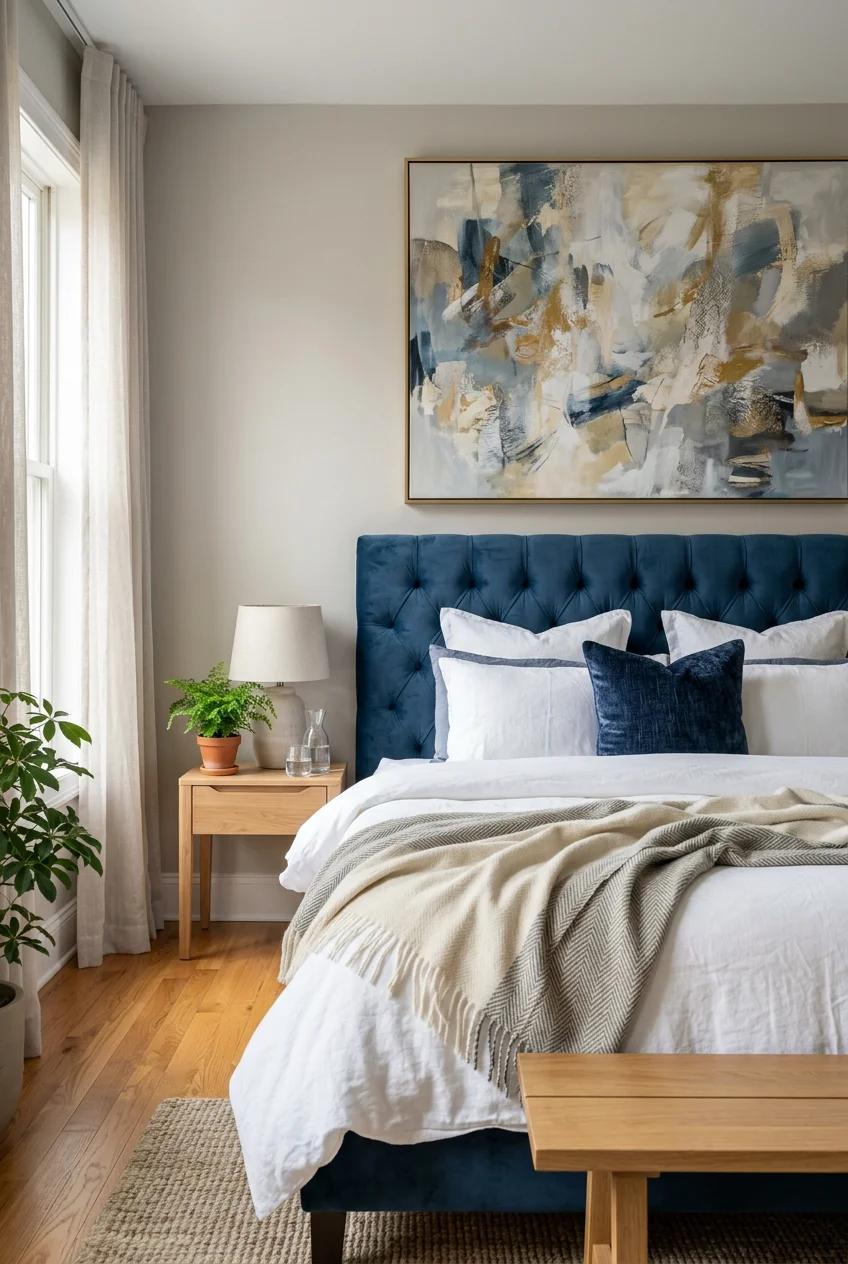
Queen beds are exactly 60 inches wide. A standard 16×20 frame looks ridiculous floating alone above it. You need a piece of art that spans 50 to 75 percent of the bed’s width. For a standard queen, that means buying a 36-inch by 24-inch or 40-inch by 30-inch canvas. This single large piece approach dominates 2026 styling because it requires zero layout planning. I bought a 40×30 framed abstract canvas from GiantArt.com for $215.00 last month. The frame is black metal, 1.5 inches deep. It arrived, I used two heavy-duty drywall anchors, and the room had a focal point. Elephant Stock and Etsy also sell massive canvases in the $150 to $500 range. Skip the cheap rolled canvases that require you to build your own stretcher bars. I tried that to save $40 and ended up with a warped, wrinkled mess that I tossed in the dumpster. Buy it pre-stretched. It’s heavier, but it sits flush against the drywall. If you aren’t willing to measure the width of your bed before buying art, you’re going to end up with a disproportionate wall.
2. Curate a Soft Modern Gallery Wall

Rigid, perfectly aligned grids are out for 2026. A soft modern gallery wall relies on organic spacing and mixed materials. I use a combination of matte black metal, raw timber, and thin brass frames. Artifact Uprising sells excellent brass frames starting at $55.00, while you can grab basic timber ones at Target for $14.99. The critical metric here is spacing. Maintain exactly 2 to 3 inches between every frame, regardless of size. I cut a 2.5-inch block of scrap wood and use it as a physical spacer between frames during installation. The most common mistake people make is hanging the entire grouping far too high. The absolute center of your gallery collection must sit at eye level, which is 57 to 60 inches from the floor. I once hung a gallery wall where the bottom edge was at 65 inches, and it felt like the art was floating away to the ceiling. Mix a 5×7 family photo with an 11×14 abstract print to break up the visual weight and keep the collection grounded. Trust me on this.
3. Install Peel-and-Stick Wallpaper for a Patterned Accent

Accent walls require commitment, but peel-and-stick wallpaper bypasses the mess of traditional paste. Tonal stripes and sketched botanicals are huge for 2026 bedroom updates. I recently applied a muted sage green botanical print from Love vs. Design to the wall behind my guest bed. They let you customize the exact hex codes of the pattern online before ordering. I chose their woven fabric texture over the smooth vinyl because the vinyl reflects overhead light and looks cheap. Fancy Walls is another reliable source. A standard 30-inch by 96-inch panel costs exactly $100.00. You will need a plastic smoothing tool and a sharp utility knife. Don’t use a dull blade. I tried cutting the baseboard edge with an old box cutter and tore a jagged three-inch rip right in the middle of a $100 panel. I learned that the hard way. Buy a fresh $3.99 snap-off blade from Home Depot. Apply it to one single wall to anchor the bed, leaving the remaining three walls painted a solid, coordinating neutral to prevent visual clutter.

Macrame Wall Hanging Shelf
Macrame Wall Hanging Shelf – Boho Shelves Bedroom Decor | Macrame Wall has been one of the most consistently praised picks in this category. 275 reviewers averaged 4.5/5.
4. Hang Texture-Forward Fiber Art

Flat walls need physical texture. Fiber art and thick woven wall hangings introduce necessary softness against hard drywall and wooden headboards. If you’re hanging a macrame piece above a queen bed, the wooden dowel needs to be between 40 and 60 inches wide so it covers at least two-thirds of the headboard’s width. I found a 45-inch wide raw cotton woven piece at a local craft fair for $120.00, but Etsy is flooded with independent makers selling similar pieces in the $80 to $200 range. The heavy texture absorbs sound, which subtly changes the acoustics of the room. When installing these, don’t just hang the string over a single nail. It creates a harsh triangle shape at the top. Instead, install two small brass cup hooks exactly 30 inches apart and rest the wooden dowel directly onto the hooks. It keeps the piece level and hides the hardware. I learned this after my cat tugged on the fringe of a single-nail hanging and pulled the entire 5-pound piece onto my nightstand. You might also like: 19 Modern Luxury Bedroom Design Master Suite for Every Budget
5. Create a Moody Accent Wall with Dark Paint

Deep, saturated paint colors instantly alter the perceived depth of a room. Charcoal, dark forest green, and navy blue are dominating 2026 bedroom color palettes. I painted my primary bedroom wall in Farrow & Ball Hague Blue. A standard gallon costs $130.00, which is steep, but the pigment density is vastly superior to a $35.00 can from a big box store. The dark color recedes visually, making the room feel larger and more intimate. If you’re nervous about painting a whole room, just paint the wall behind your bed. Use a matte or eggshell finish. Semi-gloss paint on a dark wall highlights every single drywall imperfection and roller mark. I made the mistake of using a satin finish in my old apartment, and the glare from the bedside lamps made the wall look wet and bumpy. If dark paint isn’t your preference, install vertical wood paneling painted in a warm taupe or soft white. The physical grooves of the paneling cast subtle shadows, providing visual interest without relying on heavy contrast. You might also like: 16 Aesthetic LED Lights Bedroom You Need to See
6. Mount Floating Shelves for Functional Display

Floating shelves utilize vertical space without eating up floor square footage. The IKEA Lack series remains the most cost-effective option on the market. A 43 1/4-inch shelf costs exactly $14.99 and features hidden mounting hardware. I have two of these stacked vertically next to my bedroom door. They hold a trailing Pothos plant, three hardcover novels, and a small brass clock. The trick to styling floating shelves is varying the heights of your objects. Don’t line up five paperback books of the same size. Place a tall 8-inch ceramic vase next to a short, wide 3-inch candle. You must anchor the metal mounting bracket directly into a wall stud. I ignored this rule in 2019, used cheap plastic drywall anchors, and woke up at 2 AM to the sound of the shelf ripping out of the wall and shattering a ceramic bowl all over the carpet. Use a $10.00 magnetic stud finder. It takes thirty seconds and prevents catastrophic damage to your drywall and your decor.

Mkono Macrame Hanging Shelves Boho Wall Decor Set of 2
Mkono Macrame Hanging Shelves Boho Wall Decor Set of 2 Rustic Wood Flo has been one of the most consistently praised picks in this category. 21 reviewers averaged 4.5/5.
7. Integrate Mirrors to Manipulate Light and Space

Mirrors are functional tools for bouncing natural light around a dark room. Placing a large, 30-inch round mirror directly above a wide dresser acts as a secondary window. Target sells a heavy brass-rimmed round mirror for $70.00 that looks identical to a $300.00 version from Rejuvenation. For a different approach, lean a massive 65-inch tall floor mirror directly against the wall in a dark corner. This adds immediate vertical interest and forces light into the shadows. I bought a 65×22-inch arched floor mirror from Costco for $149.99 last fall. I placed it adjacent to my east-facing window, and it doubled the morning sunlight in the room. Always secure leaning mirrors with an anti-tip kit. A 40-pound sheet of glass resting on carpet will eventually slide forward. I use a heavy-duty nylon strap screwed into a wall stud and attached to the back of the mirror frame. It’s invisible from the front and ensures the mirror won’t crush my dog if he bumps into it. You might also like: 19 Aesthetic Cozy Bedroom That Actually Work
8. Add Ambiance with Indirect Smart LED Lighting

Overhead flush-mount lighting is universally unflattering in a bedroom. Indirect lighting creates a soft, atmospheric glow that makes you want to spend time in the space. I install LED strip lights directly to the back edge of my wooden headboard. Philips Hue is the premium option at $99.99 for a 6-foot base kit, but Govee offers a highly functional Wi-Fi enabled 16.4-foot strip for just $22.99 on Amazon. Both connect to your phone so you can adjust the color temperature. I set mine to a warm 2700K amber tone at 20 percent brightness at night. Clean the back of your headboard or floating shelf with rubbing alcohol before applying the adhesive strip. I skipped this step on my first attempt, and the dust caused the entire LED strip to peel off and fall behind the bed within 48 hours. The adhesive requires a completely clean, dry surface to bond properly. You can also run these strips behind the frame of a large, oversized canvas for a backlit gallery effect.
9. Bring Nature Indoors with Biophilic Elements

Biophilic design is just a fancy way of saying putting plants and natural materials inside your house. It’s a massive shift for 2026. Instead of crowding your nightstands with pots, install wall-mounted ceramic planters. I bought a set of three matte white ceramic wall planters from West Elm for $45.00. I filled them with Philodendron cordatum because they require almost zero maintenance and thrive in low light. I pick up small starter plants from Trader Joe’s for $3.99 each. The vines naturally drape down the wall, adding organic, unpredictable lines to the room’s architecture. If you kill live plants, frame high-resolution macro photography of moody landscapes or muted florals. I also hang small bundles of dried eucalyptus from a hook near the bedroom door. I grab a fresh bunch at Whole Foods for $4.99 every few months. It adds a subtle, minty texture to the wall and smells medicinal and clean when the humidity from the attached master bathroom hits it.
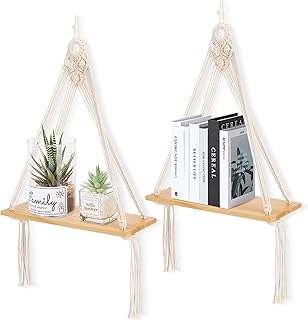
Sunkaioo Macrame Wall Hanging Shelf Set of 2
If you want something that just works, Sunkaioo Macrame Wall Hanging Shelf Set of 2 is a safe bet (305 reviews, 4.5 stars).
10. Incorporate Thick Vintage-Inspired Frames

Minimalist, ultra-thin frames are stepping aside for heavy, ornate vintage profiles. Thick gilded gold or dark walnut frames add necessary visual weight. The contrast of placing a stark, modern black-and-white photograph inside an intricate, 19th-century style gold frame is highly effective. You don’t need to spend hundreds at custom framers. I regularly hunt for heavy, ugly art at Goodwill or local thrift stores just to harvest the frames. Last Wednesday, I bought a terrible faded landscape print in a massive 4-inch wide solid oak frame for $12.00. I ripped out the old canvas, cleaned the wood with Murphy Oil Soap, and inserted a crisp, modern typography print. The heavy wood frame anchors the wall much better than a flimsy plastic edge. When hanging heavy wooden frames, you must use D-rings and picture wire rated for at least 30 pounds. Sawtooth hangers will eventually rip out of old, dry wood. I lost a beautiful vintage frame in 2021 because the tiny sawtooth hanger gave out and it shattered on the floor.
11. Implement a Rotational Art System

Committing to one piece of art for five years is unnecessary. I use a rotational art system to swap pieces based on the season. In October, I display dark, textured charcoal sketches. In April, I switch to lighter, high-contrast botanical prints. The easiest way to do this without turning your drywall into Swiss cheese is by installing a picture rail molding near the ceiling. It costs about $3.00 per linear foot at Home Depot. You suspend your frames from the rail using thin metal cables or nylon cords. You can slide the frames horizontally or adjust their height in seconds without a hammer. If you don’t want to install molding, use large Command Picture Hanging Strips. A 14-pair pack costs $16.48 at Walmart. I use four large strips per frame. The key is pulling the removal tab straight down, slowly, against the wall. If you pull it outward toward your body, it will rip the paper facing right off your drywall. I have a three-inch patch of spackle in my guest room to prove it.
12. Avoid the Common Mistake of Undersized Art

The most frequent error I see in bedrooms is undersized art. A single 11×14 inch frame hung alone above a 60-inch wide dresser looks ridiculous. It gets lost on the vast expanse of drywall. The strict mathematical rule is that your artwork, or your grouping of art, must span roughly two-thirds the width of the furniture it hangs above. If your dresser is 60 inches wide, your art footprint needs to be about 40 inches wide. If you absolutely insist on using smaller, 8×10 or 11×14 pieces, you have to group them together. Hang three 11×14 frames side-by-side with 2 inches of space between them. This creates a combined visual width of 37 inches, which properly anchors the space above the dresser. I spent my early twenties hanging tiny, isolated prints all over my apartment walls because large art was expensive. The rooms always looked cluttered yet oddly empty. Save up for the proper scale, or use the gallery method to build visual mass.

ANROYE 2 Tier Macrame Boho Wall Hanging Shelf
Honestly, ANROYE 2 Tier Macrame Boho Wall Hanging Shelf surprised me — sturdier than it looks in the photos, and over 351 buyers gave it 4.5 stars.
13. Apply the 60-30-10 Color Rule to Your Walls

Wall decor doesn’t exist in a vacuum. It has to interact with the rest of the room. I strictly follow the 60-30-10 interior design rule. Your dominant color takes up 60 percent of the space, which is usually the base wall paint. Your secondary color takes up 30 percent, represented by large furniture like your wooden bed frame and dresser. The final 10 percent is your accent color, which is where your wall decor comes in. If my walls are a soft 60-percent cream, and my furniture is a 30-percent warm walnut, I use my wall art to inject the final 10-percent accent color, like a deep rust red or muted mustard yellow. I buy $5.00 digital prints from Etsy featuring these specific accent colors and print them at a local FedEx Office. If you ignore this ratio and buy art that introduces four new neon colors into a neutral room, the walls will clash aggressively with the furniture. Keep the color math tight and deliberate.
14. Layer Elements for Mindful Maximalism

Mindful maximalism allows you to display dense collections without the room looking like a messy thrift store bin. This 2026 trend relies on tight, intentional layering. Instead of a single piece of art, I layer a large 24×36 inch canvas directly behind a medium-sized table lamp on my nightstand. The lamp physically overlaps the bottom corner of the frame. Then, I flank the art with a pair of brass wall sconces. The overlapping creates immense visual depth. You can also achieve this by hanging a tightly spaced mini-gallery wall directly above a floating wooden shelf filled with trailing plants. The key to making this work is maintaining a strict, cohesive color palette. If you mix twenty different colors with dense layering, it causes visual fatigue. I stick to three colors maximum when layering decor. I tried the maximalist look a few years ago using every color in the rainbow, and my bedroom felt so chaotic that I had trouble falling asleep. Edit the colors, maximize the physical layers.
15. Construct a Custom DIY Headboard Wall

Standard headboards aren’t always big enough to make a real visual impact. Building an extended DIY headboard wall solves the decor problem for the entire lower half of your room. I built one last spring using half-inch MDF boards and cheap polyester batting. I cut the MDF into vertical panels that were 4 feet tall and wide enough to span the entire 12-foot width of my bedroom wall, completely dwarfing the queen bed. I wrapped each panel in batting and a heavy, moss-green velvet fabric I bought at Joann for $14.99 a yard. I used a standard staple gun to secure the fabric to the back of the MDF, then screwed the panels directly into the wall studs. The entire project cost about $250.00. It acts as a massive, textured piece of wall decor that anchors the room far better than a standard store-bought frame. Just make sure you measure your electrical outlets before cutting the MDF. I forgot about an outlet on the left side and had to clumsily cut a hole through the velvet with scissors. No exaggeration.

upsimples 6 Pack Wooden Floating Shelves
If you want something that just works, upsimples 6 Pack Wooden Floating Shelves is a safe bet (46 reviews, 4.5 stars).
16. Install Plug-In Sconces as Sculptural Art

Lighting fixtures are actually three-dimensional wall art. You don’t need to hire an electrician at $150.00 an hour to hardwire sconces next to your bed. Plug-in wall sconces offer the same architectural impact with a simple drywall anchor. I bought a pair of matte black, mid-century style plug-in sconces from CB2 for $129.00 each. They have long, angular metal arms that act as geometric art against my plain white walls. The black cords drop straight down to the floor outlets, which adds a stark, industrial vertical line that I actually like. If you hate exposed cords, you can buy a plastic cord cover channel at Lowe’s for $6.00, stick it to the wall, and paint it the exact same color as your drywall. I prefer the honest look of the exposed cord. Make sure you mount the sconces low enough. The bottom of the shade should sit about 30 inches above the top of your mattress. Any higher, and the bare bulb will blind you when you’re reading in bed.
Upgrading your space doesn’t require a total demolition or a massive budget. Start with one specific project this weekend, whether it’s measuring your existing art to see if it actually fits the 60-percent rule, or finally ordering that 40×30 canvas to replace the tiny prints you’ve tolerated for years. I’d highly recommend tackling the floating shelves first if you’re on a tight budget. Spending $15.00 at IKEA completely changes a blank corner and gives you immediate satisfaction. Pin this guide to your bedroom mood board so you have the exact measurements and spacing rules handy when you’re standing in the middle of Target with a hammer and a frame, wondering exactly where to put the nail.
Frequently Asked Questions
How high should I hang my bedroom wall art?
The absolute center of your artwork or gallery wall should sit exactly 57 to 60 inches from the floor. This places the focal point at natural eye level. Don’t align the bottom edge with this measurement.
What is the correct size for art above a queen bed?
A standard queen bed is 60 inches wide. Your artwork should span roughly 50 to 75 percent of that width. A 36×24 inch or 40×30 inch horizontal canvas provides the correct visual weight.
How do I mix frame styles without it looking messy?
Stick to a strict maximum of three frame finishes. I usually combine matte black metal, raw light timber, and thin brass. Maintain exactly 2 to 3 inches of uniform spacing between every frame to force a cohesive structure.
Can I use dark paint in a small bedroom?
Yes. Dark colors like charcoal or navy actually make walls recede visually, creating the illusion of depth. Always use a matte or eggshell finish, as semi-gloss highlights every drywall flaw under bedside lamp lighting.
