What’s Inside
- Layer Your Ambient Bedroom Lighting Properly
- Lock Down a 2700K Color Temperature
- Install Lutron Caséta Smart Dimmers
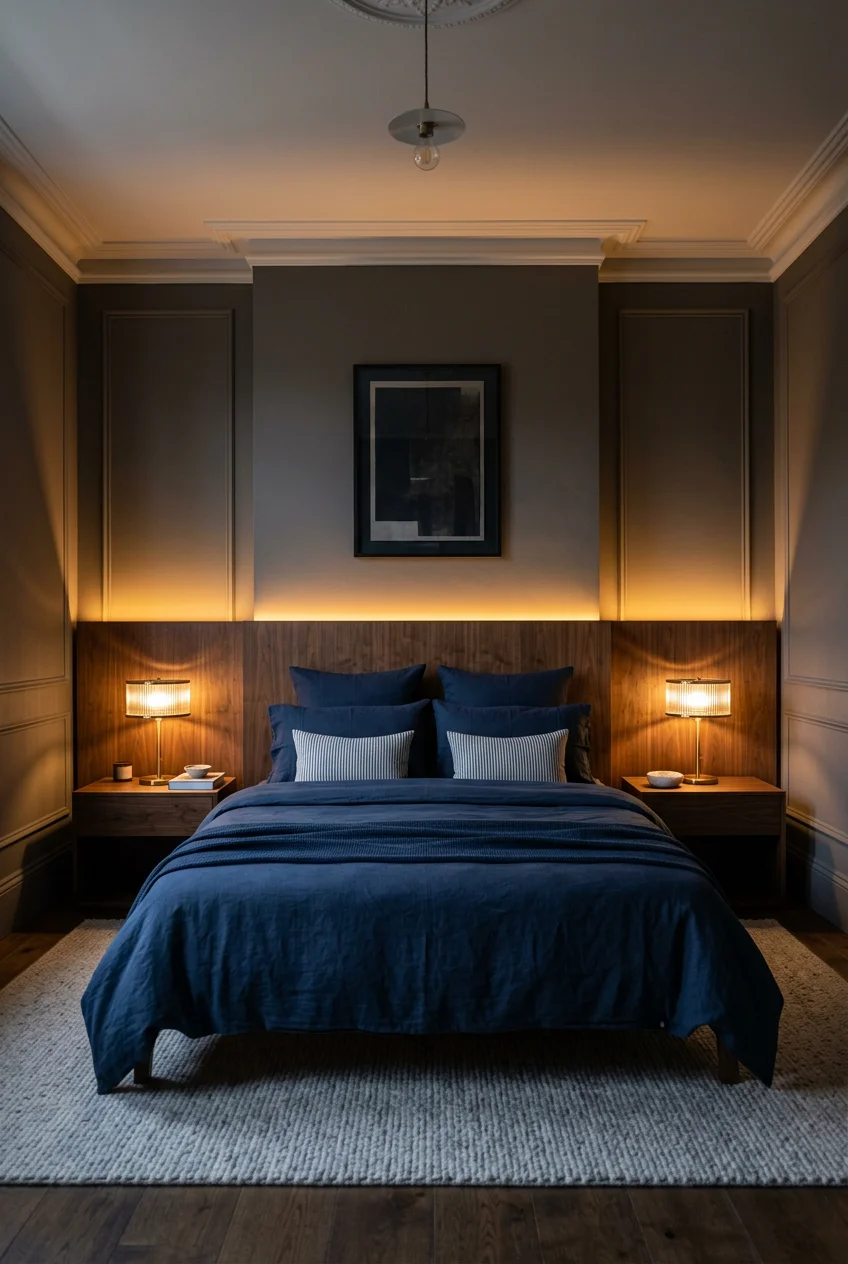
- Fake Architectural Depth with Headboard Backlighting
- Invest in a Philips Hue Starter Kit
- Fix Your Bedside Lamp Height
- Ditch the Single Overhead Fixture
- Automate Circadian Rhythm Shifts
- Backlight Your Floating Furniture
- Switch to 620nm Red Light Before Sleep
- Bounce Light with Strategic Floor Mirrors
- Mount Natural Stone Wall Sconces
- Stop Mixing Color Temperatures
- Scatter Cordless Rechargeable Lamps
- Soften Everything with Linen Drum Shades
- Highlight Dark Corners with Floor Uplighting
- Use Smart Plugs for Dumb Lamps
- Build Fake Cove Lighting
Most folks flip on that single, harsh ceiling fixture and wonder why their room feels like a dentist’s waiting area. Getting your ambient bedroom lighting right takes strategy, not just a brighter bulb. It’s about creating layers, controlling color temperatures, and hiding the light source so you only see the soft glow hitting the walls. Relying on one switch is a sure way to ruin the mood of a space meant for rest. Trust me. If you only try one idea from this list, make it #4 (Fake Architectural Depth with Headboard Backlighting). It changes the architecture of the room for under $30, requiring zero electrical skills or permanent wall changes.
Skip this list if your bedroom doubles as a high-focus workspace requiring surgical precision, or if you prefer daylight-balanced 5000K bulbs. These techniques prioritize relaxation, circadian health, and visual warmth over maximum clinical visibility. If you need to see every microscopic detail on your floor, this approach won’t work for you.
1. Layer Your Ambient Bedroom Lighting Properly

Relying on a single light source flattens a room. To create depth, you need three to five distinct light sources spread across the space. Combine general ambient lighting with specific task lighting for reading and accent lighting to highlight architectural features or plants. Place a floor lamp in one corner, two bedside lamps, and a small picture light over art. Stores like Target offer solid, budget-friendly options (typically $40 to $80) for building these layers without spending thousands. When you spread the light around the perimeter rather than blasting it from the center, the walls visually push outward, making the space feel larger and more inviting.
Best for: Rooms that feel flat or claustrophobic.
The catch: You’ll need multiple available wall outlets, which often means hiding extension cords behind furniture.
2. Lock Down a 2700K Color Temperature

Lighting temperature dictates the mood. For a relaxing atmosphere, you need bulbs that sit between 2200K and 3000K. A 2700K bulb provides that classic, warm, golden glow of traditional incandescent bulbs. Anything above 4000K emits a blue, clinical light that disrupts melatonin and makes your bedroom look like a hospital corridor. You can find standard GE Relax HD 2700K LED bulbs at Walmart or Lowe’s for roughly $10 to $15 per pack. Check the packaging carefully, as manufacturers often hide the Kelvin number in fine print on the back.
The catch: Warm 2700K lighting alters color perception, making it a bad environment for applying makeup or picking out matching navy and black clothes.
3. Install Lutron Caséta Smart Dimmers

Installing dimmers is the most impactful upgrade for existing fixtures. They let you adjust the intensity of your bedroom lighting to match the time of day, supporting your natural circadian rhythm. A common mistake is leaving switches as simple on/off toggles. Lutron Caséta smart dimmer kits (usually $50 to $100 at Home Depot) replace your standard switch and connect to your Wi-Fi. You can gradually dim the overhead lights from your phone while lying in bed, or set a schedule so the lights drop to 20 percent brightness after 9:00 PM.
The catch: Installation requires turning off your breaker and dealing with live electrical wires, which scares many people.

KSIPZE 100ft Led Strip Lights RGB Music Sync Color Changing
KSIPZE 100ft Led Strip Lights RGB Music Sync Color Changing Led Lights punches above its price — 392 buyers rated it 4.5 stars. The kind of pick people reorder.
4. Fake Architectural Depth with Headboard Backlighting

Indirect lighting is popular because it provides illumination without glare. By hiding an LED strip behind your headboard, the light bounces off the wall, creating a soft halo effect that makes the bed look like it’s floating. Govee makes 5-meter RGBIC LED strip lights (usually under $30 on Amazon or at Best Buy) that stick to your furniture. Mount the strip about 2 inches from the edge of the headboard facing the wall. This gives you enough gentle light to navigate at night without shocking your eyes.
Best for: Renters who can’t hardwire new wall sconces.
The catch: The adhesive on cheap LED strips often peels paint if you ever decide to remove them.
5. Invest in a Philips Hue Starter Kit

Smart lighting systems offer total control without replacing any fixtures. A Philips Hue Starter Kit (which includes the Hue Bridge and usually runs between $90 and $130) lets you swap out your regular bedside bulbs for smart ones. You can adjust the color temperature and brightness through their app. Setting a “sunset” routine that slowly fades the lights over 30 minutes helps your brain prepare for sleep. The Bridge handles the connection, so the lights respond instantly without lagging your Wi-Fi.
The catch: It’s an expensive ecosystem, and you have to train your household to stop using the physical wall switches, or the bulbs will disconnect.
6. Fix Your Bedside Lamp Height

Most people place bedside lamps too high, meaning the light shines directly into their eyes while they read. The base of the shade should sit at eye level when you’re propped up in bed. For the average nightstand, the top of the lamp should be about 60 to 66 inches from the floor. If your nightstands are low, you need taller lamps. Look for fixtures with opaque linen or parchment shades, which direct light downward onto your book rather than outward. You might also like: 18 Aesthetic Green Bedroom for Every Budget
The catch: Finding the right math for your nightstand and lamp height often limits your decor options. You might also like: 17 Minimalist Bedroom Ideas Worth Trying

Govee RGBIC LED Strip Lights
If you want something that just works, Govee RGBIC LED Strip Lights is a safe bet (251 reviews, 4.5 stars).
7. Ditch the Single Overhead Fixture

Relying on the “big light” is the fastest way to kill the ambiance. A central ceiling fixture casts harsh downward shadows, highlighting under-eye bags and making the room feel stark. If you must use an overhead light, never use it alone. Supplement it with floor and table lamps. If you’re replacing the fixture, look for semi-flush mounts with frosted glass diffusers (West Elm has options in the $150 to $300 range) that scatter light horizontally across the ceiling instead of pointing it straight down.
The catch: Rooms with zero natural sunlight still need a bright overhead fixture for tasks like cleaning or packing. You might also like: 17 Small Bedroom Layout Ideas You Need to See
8. Automate Circadian Rhythm Shifts

Your body relies on light cues to regulate sleep. Circadian rhythm lighting systems automatically adjust color and intensity throughout the day. In the morning, bulbs emit a cooler 4000K light for alertness. By 8:00 PM, the system shifts to a dim 1800K to 2700K, mimicking a sunset and triggering melatonin. You can set this up using tunable white LEDs from brands like WiZ or Philips Hue. It removes the mental load of manually adjusting your lighting.
Best for: Insomniacs and shift workers struggling with sleep consistency.
The catch: Smart home routines can glitch after router updates, leaving you stuck with bright light at midnight until you reset.
9. Backlight Your Floating Furniture

Like the headboard trick, running LED strips under your bed frame or behind floating nightstands adds visual interest. It creates a low-level wash of light that serves as a perfect nightlight. Flexfire LEDs sells premium strips, but for a simple glow, a $15 strip from IKEA (like their MYRVARV line) works fine. Stick the strip to the inner lip of the bed frame pointing down toward the floor to ensure you never see the individual diodes, just the reflected glow.
The catch: Floor-level lighting highlights every single dust bunny, pet hair, and scuff mark on your floors.

Govee RGBIC LED Strip Lights, Smart LED Lights for Bedroom
Govee RGBIC LED Strip Lights is sturdier in person than the photos suggest — over 251 buyers gave it 4.5 stars.
10. Switch to 620nm Red Light Before Sleep

Blue light suppresses melatonin, but red light (around the 620 to 700nm wavelength) has almost zero impact on your circadian rhythm. It lets you see without waking up your brain. If you use smart color bulbs, set a shortcut on your phone to turn the bedroom lights deep red an hour before you sleep. It feels weird at first, but it helps you fall asleep faster. You can do this with a $40 Philips Hue color bulb.
The catch: Bathing your room in red light looks strange from the outside and makes reading traditional books difficult due to the low contrast.
11. Bounce Light with Strategic Floor Mirrors

Ambient lighting isn’t just about bulbs; it’s about maximizing what you have. Placing a large floor mirror opposite a window or near a warm floor lamp doubles the impact. It bounces light into dark corners. CB2 and West Elm sell oversized leaning mirrors (usually $300 to $600) that act as massive light reflectors. This trick instantly makes a cramped bedroom feel larger and brighter.
Best for: Small, dark rooms with only one tiny window.
The catch: Keeping a massive mirror free of smudges, dust, and pet nose prints is an annoying chore.
12. Mount Natural Stone Wall Sconces

Exposed glass bulbs create glare. For a soft, luxurious glow, look for wall sconces made from materials like alabaster or onyx. The stone acts as a natural diffuser, allowing only a warm, mottled light to pass through. Brands like Letifly sell natural stone sconces ($80 to $150) that look like art even when off. Mount these on either side of the bed to free up nightstand space.
The catch: Real stone fixtures are heavy, requiring solid wall anchors or direct mounting to a stud to prevent them from ripping out.

Amazon Basics Bedroom Closet Organizer with 5-Fabric
Amazon Basics Bedroom Closet Organizer with 5-Fabric Storage Drawers f has been one of the most consistently praised picks in this category. 41 reviewers averaged 4.5/5.
13. Stop Mixing Color Temperatures

A room feels chaotic when bedside lamps glow at a warm 2700K but the overhead light blasts a cool 4000K. Mixing temperatures creates a clash that stops the space from feeling cohesive. Check every bulb in your bedroom, including the closet and en-suite. Ensure they all fall within the same 2700K to 3000K range. Uniformity is the secret to making a cheap setup look intentional.
The catch: Achieving this uniformity usually means tossing out perfectly good bulbs just because they’re the wrong temperature.
14. Scatter Cordless Rechargeable Lamps

Sometimes you need light on a dresser where no outlet exists. Cordless, rechargeable LED lamps fix this. Brands like Zafferano started the trend, but you can find metal, touch-dimmable alternatives on Amazon for $30 to $50. They cast a tight, warm pool of light downward, perfect for creating moody pockets of illumination without trailing ugly extension cords. I learned that the hard way.
Best for: Homes with pets or toddlers who chew on cords.
The catch: You have to remember to plug them in via USB-C every few days, adding another task to your routine.
15. Soften Everything with Linen Drum Shades

The material of your lampshade matters as much as the bulb. Pure white, synthetic shades transmit harsh, bright light. Swapping existing shades for textured linen or burlap drum shades warms up the light. The woven texture disperses light unevenly, creating a softer, organic ambiance. You can buy replacement shades at Target or Lowe’s for $15 to $30 and instantly upgrade a cheap lamp base.
The catch: Fabric shades are magnets for dust and pet hair, and you can’t just wipe them down like glass or metal.

50×70 Inch Rust Throw Blanket – Soft & Fluffy Fleece
50×70 Inch Rust Throw Blanket – Soft & Fluffy Fleece punches above its price — 14 buyers rated it 4.5 stars. The kind of pick people reorder.
16. Highlight Dark Corners with Floor Uplighting

Dark, empty corners make a room feel smaller. Placing a small uplight on the floor behind a large faux olive tree or a floor mirror pushes light up the wall and across the ceiling. IKEA sells basic floor uplights for under $20. By hiding the fixture, you create a column of light that adds verticality. It’s a classic theatrical trick that works beautifully for ambient bedroom lighting.
The catch: Uplighting sharply highlights every single drywall seam, paint drip, and imperfection on your walls.
17. Use Smart Plugs for Dumb Lamps

You don’t need expensive smart bulbs for every fixture. If you have standard table lamps, use smart plugs. Kasa makes reliable, low-profile plugs ($10 to $15 at Best Buy or Walmart) that connect to your phone. Leave the lamp switch in the “on” position and let the plug control the power. Group your bedroom lamps together in the app so you can turn off the whole room with one tap before sleep.
Best for: Tight budgets wanting smart home convenience.
The catch: Most smart plugs are bulky and will block the second outlet on your wall receptacle.
18. Build Fake Cove Lighting

Cove lighting is an architectural feature where light is hidden in a ceiling recess. You can fake this by installing a piece of crown molding a few inches below your ceiling line and laying an LED strip inside, pointing upward. This bounces light off the ceiling, creating soft, diffuse light without a visible bulb. A 16-foot run of trim and a standard LED strip will cost roughly $60 to $100.
The catch: It requires basic carpentry skills, a miter saw, and a weekend of measuring and nailing.
How we chose these ideas: We evaluated lighting strategies based on their impact on circadian health, ease of installation for renters and homeowners, and cost-effectiveness. We prioritized techniques that offer visual warmth and practical functionality without requiring major electrical renovations.
Getting your bedroom lighting right changes how you sleep and relax. I’d recommend starting with the smart dimmers or the red-light trick before investing in expensive new fixtures. Pin this list so you have the exact color temperatures and measurements handy when you’re at the hardware store.
Frequently Asked Questions
What is the best color temperature for ambient bedroom lighting?
For a relaxing bedroom environment, stick to a warm color temperature between 2200K and 3000K. A 2700K bulb is ideal, as it mimics the warm, golden glow of traditional incandescent bulbs and won’t disrupt your sleep cycle.
How many light sources should a bedroom have?
A well-lit bedroom needs a minimum of three to five distinct light sources. Relying solely on a single overhead light creates harsh shadows. You should layer ambient, task, and accent lighting using bedside lamps, floor lamps, and wall sconces.
How tall should my bedside lamp be?
The base of your bedside lampshade should sit exactly at eye level when you are propped up in bed. For most setups, this means the top of the lamp should measure about 60 to 66 inches from the floor.
Are LED strip lights safe for bedroom walls?
Yes, LED strips are perfectly safe and generate very little heat. However, the adhesive backing on cheaper strips can peel off low-quality wall paint upon removal. Renters should stick them to the back of furniture instead of directly to drywall.
