What’s Inside
- Warm Neutrals Over Pure White
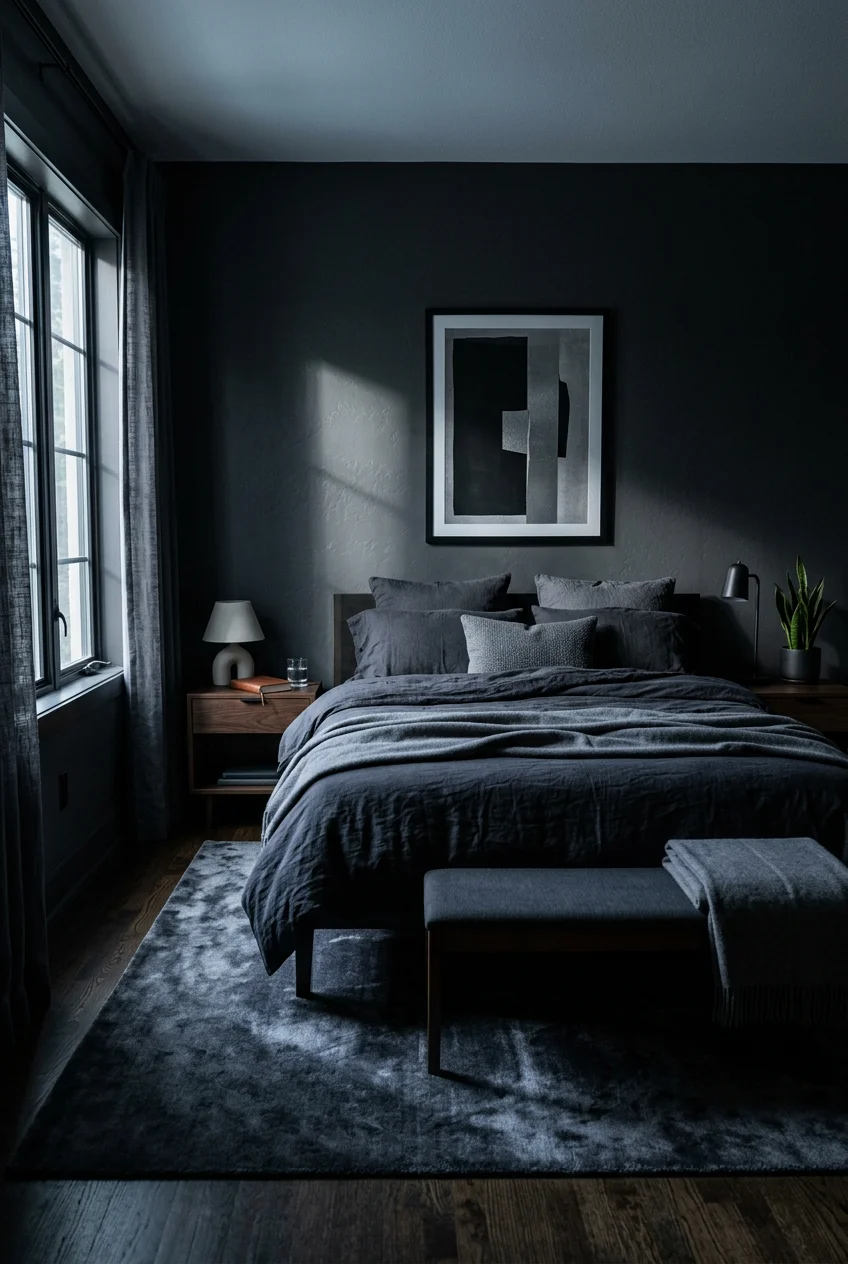
- Moody Charcoals for Small Dark Bedroom Ideas
- Layered Ambient Lighting Triangles
- Oversized Floor Mirrors Opposite the Door
- High-Gloss Ceiling Paint
- Low-Profile Platform Beds
- Floor-to-Ceiling Velvet Drapes
- Clear Acrylic Nightstands
- Wall-Mounted Plug-In Sconces
- Monochromatic Bedding Layers
- Large-Scale, Low-Contrast Art
- Metallic Accents for Light Bouncing
- Floating Shelves Instead of Bookcases
- Warm Wood Tones to Counteract Gloom
- Implementing Small Dark Bedroom Ideas with Rugs
- Ditch the Heavy Upholstered Headboard
- Hidden LED Strip Lighting
Painting a naturally dim room stark white is the quickest way to make it look like a dingy hospital corridor. Most people get small dark bedroom ideas wrong because they fight the lack of light instead of working with it. You can’t magically create square footage or sunshine, but you can manipulate shadows and scale to build a cozy, intentional space. Forget the generic advice about pushing furniture against the walls. Creating a functional, stylish retreat requires specific paint undertones, strategic light placement, and furniture that doesn’t swallow the room whole. If you only try one idea here, make it #4. Bouncing whatever light you have off a massive floor mirror instantly doubles the visual depth of the room without a single drop of paint. Trust me.
Skip this if you’re looking to turn a windowless basement into a sun-drenched atrium. These strategies work with low light, not against it. If you refuse to use lamps or won’t consider anything but builder-grade flat white paint, this list won’t help you.
1. Warm Neutrals Over Pure White

Most people paint a dark room blinding white, thinking it’ll conjure sunlight. It won’t. Without natural light to bounce around, pure white just looks flat and gray. You need a warm-toned neutral to fake that sunshine. Benjamin Moore Simply White OC-117 is a solid choice. It features a subtle yellow undertone that reads as creamy and warm, preventing those depressing shadows in the corners. You can grab a gallon at an authorized dealer for under $70. Apply two coats over a high-quality primer. The soft visual texture immediately softens the harsh edges of a tiny space. The catch: yellow undertones can clash with cool gray flooring. Always buy a half-pint sample first. Paint a 24-by-24-inch square on the darkest wall and check it at noon and midnight before committing.
2. Moody Charcoals for Small Dark Bedroom Ideas

Sometimes the smartest move is leaning into the gloom. If a room gets zero natural light, fighting it is exhausting. Trending colors for 2026 include rich charcoals like Sherwin-Williams Peppercorn SW 7674. Painting the walls, trim, and ceiling this deep, velvety shade blurs the boundaries of the room. When the corners disappear into shadow, the space feels larger and more intimate. A gallon of premium Sherwin-Williams paint usually hits the mid-to-high price range. The matte finish absorbs light, creating a sophisticated, cave-like retreat. Pair this with warm wood furniture to keep it from looking like a tomb. Best for: small rooms with zero natural light. The catch: dust shows up immediately on dark walls, so you’ll need to wipe baseboards more often. Learned that the hard way.
3. Layered Ambient Lighting Triangles

Relying on a single overhead flush-mount fixture is a massive mistake. It casts harsh, unflattering shadows that make a tight space feel like an interrogation room. Create a triangle of light using three sources at varying heights. Start with a pair of bedside lamps, add a floor lamp in the opposite corner, and use warm 2700K LED bulbs. Target’s Up&Up brand sells a 4-pack for under $15. The 2700K temperature mimics the golden glow of old incandescent bulbs, changing the room from sterile to inviting. You want light washing across the walls horizontally, not just blasting down from above. The catch: this setup requires multiple outlets and serious cord management. You’ll likely need cord concealers to keep the room from looking like a messy electronics store.

Yieach Bedside Shelf for Dorm Bed,Rv
Yieach Bedside Shelf for Dorm Bed punches above its price — 117 buyers rated it 4.5 stars. The kind of pick people reorder.
4. Oversized Floor Mirrors Opposite the Door

A tiny, dark room needs visual tricks. Hanging a small mirror above a dresser does nothing. You need an oversized floor mirror placed to bounce artificial light and reflect the doorway, creating the illusion of a hallway. The IKEA Hovet mirror measures roughly 30 by 70 inches and sits in the budget-to-mid-range category. Leaning a massive piece of glass against the wall doubles the visual depth of the room. The aluminum frame is minimal, so it doesn’t add clutter. When positioned correctly, it catches the glow from a bedside lamp and throws it into the darkest corner. Best for: renters who can’t paint or drill holes. The catch: a mirror this heavy needs serious drywall anchors if you have kids or pets, as leaning it unsecured is a major safety hazard.
5. High-Gloss Ceiling Paint

Ceilings are usually ignored and slapped with flat white paint. In a low-light space, you need every surface working. Using high-gloss paint on the ceiling acts like a mirror, reflecting light from your lamps downward. Behr Ultra High Gloss enamel, available at Home Depot for a reasonable price, creates a slick, wet-looking surface. It draws the eye upward, making standard 8-foot ceilings feel taller. The glossy texture adds sophistication and breaks up the monotony of matte walls. It’s a bold choice that pays off in light manipulation. The catch: high-gloss paint highlights every bump and bad drywall tape job. If your ceiling isn’t perfectly smooth, this finish will make it look like a lumpy mess. It also requires multiple coats to avoid visible roller marks. You might also like: 19 Aesthetic Dark Bedroom Worth Trying
6. Low-Profile Platform Beds

Shoving a bulky wooden bed frame into a tight space suffocates the room. The higher the bed, the less wall space you see, which visually shrinks the square footage. A low-profile platform bed leaves more wall space above it, tricking the brain into thinking the ceiling is higher. Zinus metal platform frames, often found at Walmart or online for under $150, offer a clean, 10-inch clearance. The minimalist metal construction doesn’t block the flow of the room. Dropping the mattress closer to the floor shifts the proportions, making walls feel expansive. It’s a simple structural change that modernizes a cramped layout. Best for: tight budgets. The catch: you sacrifice under-bed storage. You won’t be able to slide bulky suitcases underneath a 10-inch frame.

Acovy 30in Long Floating Shelves for Wall Set of 2
A dependable everyday pick — Acovy 30in Long Floating Shelves for Wall Set of 2 pulls in 8 ratings at 4.5 stars. Not flashy, just solid.
7. Floor-to-Ceiling Velvet Drapes

Hanging short curtains that stop below the window sill is a rookie mistake that chops the wall in half. To create height, drapes need to be mounted near the ceiling and brush the floor. Even if your window is tiny, framing it with sweeping fabric makes it appear massive. West Elm offers cotton velvet panels in 96-inch lengths, sitting in the mid-to-premium price tier. The heavy velvet texture absorbs sound and adds a luxurious detail to a plain room. The thick fabric blocks out streetlights at night while framing the window elegantly during the day. The catch: velvet is a magnet for pet hair and dust. If you have a shedding dog or cat, you’ll be running a lint roller over the bottom of these drapes weekly.
8. Clear Acrylic Nightstands

Heavy, dark wood nightstands act like visual black holes. They eat up floor space and block light. Swapping them for clear acrylic tables gives you the surface area you need without the visual weight. Amazon Basics and Wayfair carry 18-by-18-inch clear acrylic side tables, typically under $100. Because light passes through them, they have an invisible footprint. This transparency makes the floor look continuous, which is crucial for making tight quarters feel breathable. The smooth material contrasts nicely with soft bedding. The catch: acrylic scratches easily and shows every fingerprint, water ring, and speck of dust. You can’t toss keys on them carelessly, and they require constant wiping with a microfiber cloth. You might also like: 18 DIY Bedroom Decor Worth Trying
9. Wall-Mounted Plug-In Sconces

Nightstand real estate is precious. Cluttering a bedside table with a bulky lamp base leaves no room for a book or your phone. Wall-mounted sconces solve this. Target’s Threshold line stocks brass-finish, swing-arm plug-in sconces for a budget-friendly price. The brass adds a warm metallic texture, and the swing arm lets you direct light for reading. Because they plug in, you don’t need an electrician. Putting the light source at eye level creates a much cozier atmosphere. Best for: renters who want custom lighting without losing a security deposit. The catch: you have to look at the cord. Unless you buy a cord cover and paint it to match the wall, the exposed wire ruins the look.

Venusmiles Floating Shelves for Wall 24 inch Long
Venusmiles Floating Shelves for Wall 24 inch Long punches above its price — 412 buyers rated it 4.5 stars. The kind of pick people reorder.
10. Monochromatic Bedding Layers

Busy, high-contrast floral or geometric duvet covers demand too much attention. They make the bed look cluttered. A monochromatic bedding strategy keeps visual noise to a minimum. Layering different textures in the same color family adds depth without chaos. Washed linen sheets paired with a chunky knit cotton throw in oatmeal or soft charcoal works perfectly. Brands like Quince offer 100% European linen sets in the mid-range price tier. The rumpled, matte texture of linen looks effortlessly styled. Keeping the bed visually quiet allows the eye to sweep across the room without interruption. The catch: pure linen takes a few washes to stop feeling slightly scratchy. Out of the package, it lacks the silky smoothness of high-thread-count sateen cotton. You might also like: 20 Cozy Minimalist Bedroom for Every Budget
11. Large-Scale, Low-Contrast Art

A gallery wall of fifteen tiny frames looks like clutter in a cramped room. It breaks the wall into too many distracting pieces. Instead, hang one massive piece of low-contrast art. A 24-by-36-inch canvas featuring a misty landscape or abstract shapes acts like a window. You can purchase digital downloads from Etsy or Minted for under $50 and have them printed locally. The large scale anchors the room and gives the eye a single, calming resting place. The low-contrast colors prevent the art from feeling overwhelming. The catch: framing a piece this large is expensive. A custom frame for a 24-by-36-inch print will easily cost three times the price of the artwork, forcing you to hunt for cheap poster frames that might warp.
12. Metallic Accents for Light Bouncing

When you have little light, you need materials that amplify it. Matte finishes absorb light, but metallics bounce it. Swapping out wooden drawer knobs for unlacquered brass pulls, or adding a hammered copper planter, introduces warm reflections. You can find heavy brass hardware at Lowe’s or Home Depot for a few dollars per piece. These metallic touches catch the glow from your lamps and create highlights throughout the shadows. The cold, hard texture of metal provides a necessary contrast to soft bedding, keeping the design from feeling mushy. The catch: mixing too many metals looks chaotic. If you have brass pulls, a silver mirror, and a black iron lamp, the room looks like a hardware store display. Stick to one dominant finish.

Amazon Basics Bedroom Closet Organizer with 5-Fabric
A dependable everyday pick — Amazon Basics Bedroom Closet Organizer with 5-Fabric Storage Drawers f pulls in 41 ratings at 4.5 stars. Not flashy, just solid.
13. Floating Shelves Instead of Bookcases

A standard bookcase eats up floor space and casts a heavy shadow. In tight quarters, getting furniture off the floor is critical. Floating shelves utilize vertical wall space while keeping the floor clear. The IKEA Lack series offers 24-inch wood-veneer floating shelves that are budget-friendly. When you see the baseboards continuing underneath the shelves, the room feels wider. The sleek, bracketless design looks modern. You can display books and plants without adding bulky furniture. Best for: beginners looking for an easy weekend DIY project. The catch: strict weight limits mean you can’t load them with heavy hardcovers. If you stack too many textbooks on a cheap floating shelf, it will sag and eventually rip out of the drywall.
14. Warm Wood Tones to Counteract Gloom

A room painted in dark colors crosses the line from cozy to depressing if you fill it with black or white furniture. You need organic warmth to ground the space. Integrating warm wood tones like walnut, teak, or acacia brings life into the shadows. A solid wood headboard or a mid-century modern dresser from a brand like Article (mid-to-high price range) introduces rich, natural texture. The grain adds movement, and the honey or amber tones counteract the cool gray shadows typical of low-light rooms. It makes the space feel like a sophisticated den. The catch: cheap faux-wood grain stands out terribly in low light. The plastic-like sheen of budget laminate reflects light poorly and cheapens the aesthetic.
15. Implementing Small Dark Bedroom Ideas with Rugs

Dark hardwood or gray laminate flooring absorbs light. Covering a large portion of the floor with a light-colored, textured rug breaks up that dark expanse and bounces light upward. An 8-by-10-foot rug in cream or beige lifts the visual weight of the room. Ruggable offers machine-washable options for a mid-range price. The soft texture makes the room feel plush. A large rug that extends two feet beyond the bed anchors the furniture, making the layout look deliberate. Best for: homes with kids or pets. The catch: light-colored rugs show dirt and lint instantly. You’ll be vacuuming constantly to keep a cream rug looking pristine in a high-traffic area.

BAMEOS Floating Shelves with RGB LED
A dependable everyday pick — BAMEOS Floating Shelves with RGB LED pulls in 161 ratings at 4.5 stars. Not flashy, just solid.
16. Ditch the Heavy Upholstered Headboard

Thick, tufted headboards are comfortable, but they push the bed 4 to 6 inches away from the wall. In a tiny room, losing half a foot of floor space is a sacrifice. Ditching the headboard for a slimmer profile reclaims that walking space. Consider installing individual upholstered wall panels directly onto the drywall, or using a simple, flat wood slat headboard. This keeps the mattress flush against the wall. The streamlined look is less oppressive than a massive fabric headboard looming over the pillows. It tightens the floor plan and makes navigating around the bed easier. The catch: leaning back to read in bed isn’t as comfortable without thick padding. You’ll need firm European reading pillows to support your back.
17. Hidden LED Strip Lighting

Harsh overhead lighting is the enemy of a cozy atmosphere. Hidden, indirect lighting is the secret to making a tight space feel custom. Running a strip of warm white LED lights behind the headboard or underneath the bed frame creates a soft, diffused glow that makes the furniture look like it’s floating. Costco sells multi-packs of 16-foot LED light strips for a budget-friendly price. The indirect light washes over the walls and floor without shining into your eyes. It adds depth to the room, pushing the walls visually outward. It’s an inexpensive trick that alters the nighttime mood. The catch: the adhesive on cheap LED strips usually peels off after a few months. You’ll need to reinforce them with heavy-duty tape to keep them from drooping.
How we chose these ideas: We evaluated these strategies based on renter-friendliness, cost, effort, and visual impact. The focus remained on accessible materials and proven design principles for low-light spaces, filtering out unrealistic renovations.
Making a cramped, gloomy room feel intentional takes planning, but the payoff is a space you actually want to sleep in. Stop fighting the shadows and start using them to your advantage. Save or pin this list for your next weekend refresh. No exaggeration.
Frequently Asked Questions
What colors are best for a small dark bedroom?
Warm-toned neutrals with subtle yellow undertones prevent gray shadows, while rich, dark shades like charcoal or navy embrace the low light to create a cozy, expansive feel. Avoid stark, pure white, which looks dingy without natural light.
How can I light a bedroom with no natural light?
Avoid relying solely on a harsh overhead fixture. Use a layered approach with three points of light—such as bedside plug-in sconces and a floor lamp—equipped with warm 2700K LED bulbs to wash the walls with horizontal light.
Does a large mirror make a small dark bedroom look bigger?
Yes. Placing an oversized floor mirror opposite the door or a light source bounces ambient light around the room and creates the visual illusion of a hallway, instantly doubling the perceived depth of the space.
Should I use dark furniture in a small dark bedroom?
It’s best to avoid heavy, dark furniture that absorbs light and visually shrinks the room. Opt for warm wood tones, clear acrylic nightstands, or low-profile metal frames to keep the space feeling open and grounded.
