What’s Inside
- Embrace Color Drenching with Deep Hues
- Layering Heavy Linen Textures
- Mastering the Moody Bedroom Aesthetic With Low-Level Lighting
- Installing Blackout Velvet Curtains
- Sourcing Vintage Brass Accents
- Incorporating Dark Wood Furniture
- Adding Strategic Wall Molding
- Selecting the Right Matte Paint Finish
- Bringing in Deep Greenery
- Upgrading to Patterned Area Rugs
- Mixing Charcoal and Navy Bedding
- Getting the Moody Bedroom Aesthetic With Textured Wallpaper
- Displaying Desaturated Art Prints
- Using Amber Glass Decor
- Swapping Out Builder-Grade Hardware
- Layering Throw Blankets for Visual Weight
- Hiding Cords and Clutter Completely
Three years ago, I painted my master bedroom black. I thought a dark color would automatically create a moody bedroom aesthetic. Instead, the high-gloss finish caught every flaw in the drywall. It felt like sleeping inside a plastic garbage bag. Fixing that disaster taught me the actual mechanics of a proper dark room. The trick isn’t just buying dark paint. It requires controlling light absorption, layering heavy textures, and managing temperature. If you get it wrong, your room looks like a teenager’s basement phase. If you get it right, the walls recede and the space feels incredibly quiet. I spent six months testing paint finishes and returning rugs to figure out the exact formula. Here’s the methodical breakdown of how to build a dark, comfortable room without making the expensive mistakes I did. Let’s look at the exact steps.
1. Embrace Color Drenching with Deep Hues

Color drenching means painting the walls, trim, doors, and ceiling the exact same color. I tried leaving my ceiling white during my first dark bedroom project. The stark white line at the top of the wall completely ruined the cocooning effect. It drew the eye straight up to the ceiling joints. You need to eliminate those high-contrast visual breaks. I used Behr Premium Plus in the shade Cracked Pepper. A gallon costs $34.98. The LRV (Light Reflectance Value) is 8. This means it absorbs 92 percent of the light that hits it. When you paint the baseboards the same color as the walls, the room loses its strict boundaries. The corners blur into the shadows. You should use a matte finish for the walls and an eggshell finish for the trim. The slight difference in sheen provides just enough architectural definition without breaking the monochromatic rule. The prep work takes twice as long. Skip the cheap painter’s tape. Spend $9.45 on the green FrogTape to prevent bleeding on your floors. Trust me on this.
2. Layering Heavy Linen Textures

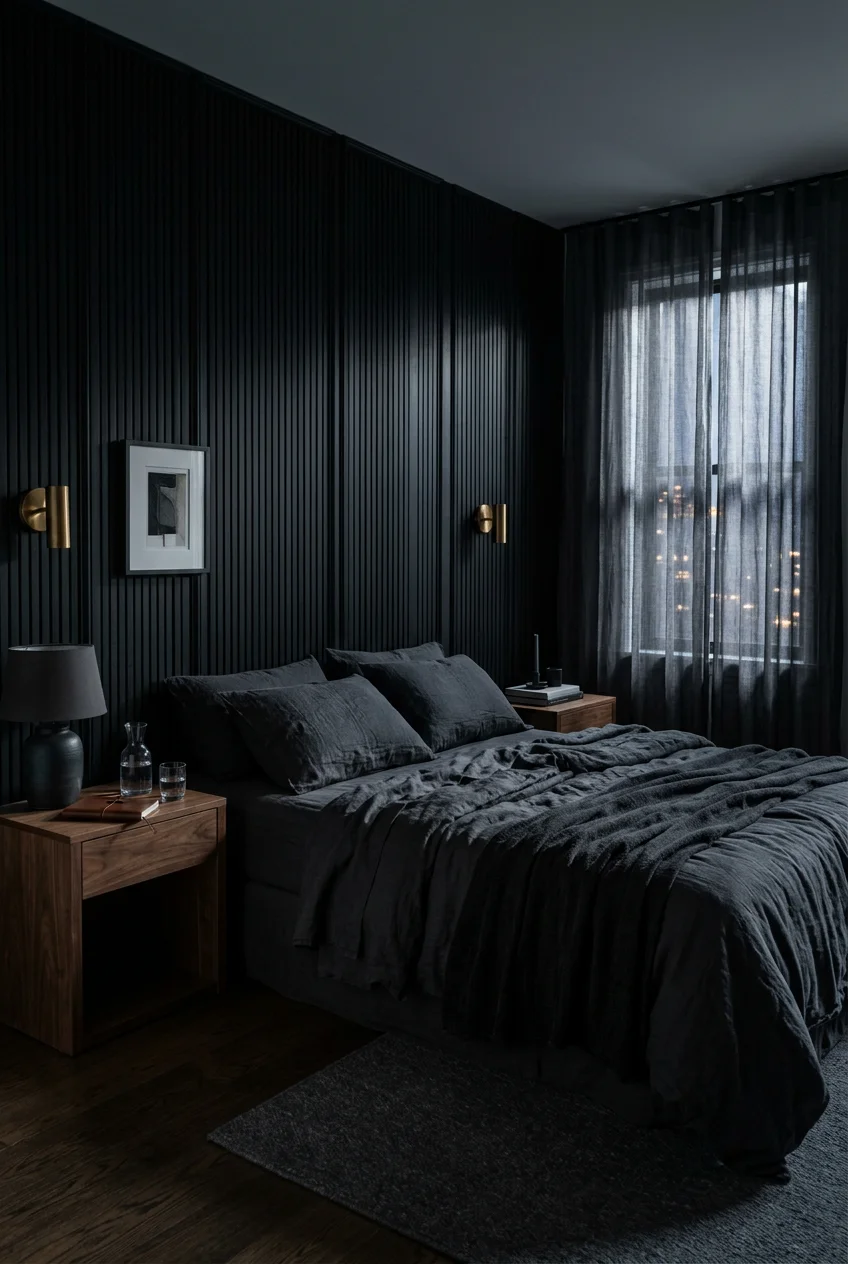
Dark rooms need physical texture to prevent them from looking flat. Smooth cotton sheets look cheap against matte dark walls. You need textiles that cast microscopic shadows. I bought the Casaluna heavyweight linen sheet set from Target last November. The queen set costs $139. The fabric is rough out of the package. It takes about four wash cycles with a cup of white vinegar to soften the fibers. Once broken in, the crumpled texture of the linen absorbs light rather than reflecting it. This matters when you have a bedside lamp turned on. The light hits the folds in the fabric and creates depth. I layer a charcoal linen duvet over a medium gray fitted sheet. The visual weight of the heavy linen grounds the bed in the center of the room. A common mistake is buying synthetic satin or high-thread-count sateen. Those materials reflect light. They create a shiny glare that fights against the matte walls. Stick to pure linen or heavy percale cotton. The wrinkles are part of the structural design. No exaggeration.
3. Mastering the Moody Bedroom Aesthetic With Low-Level Lighting

Overhead lighting destroys a dark room. You need pools of light situated at eye level or lower. I learned this when I flipped on my ceiling fan light after painting my walls dark green. The room immediately looked like a harsh interrogation cell. I unscrewed the ceiling bulbs that same day. Now, I strictly use table lamps and floor lamps. The color temperature of your bulbs dictates the entire atmosphere. I buy the GE Relax LED bulbs at Walmart. A four-pack costs $8.49. These bulbs are 2700K, which produces a warm, amber-toned light. Anything over 3000K emits a blue tint that makes dark paint look sickly and cheap. I place one lamp on each nightstand and a floor lamp in the corner. The 2700K bulbs cast a three-foot radius of light. The areas outside those circles fall into heavy shadow. This intentional shadow play is what actually creates the moody bedroom aesthetic. Don’t buy smart bulbs that change colors. The cheap LED diodes rarely produce a true warm white.

50×70 Inch Rust Throw Blanket – Soft & Fluffy Fleece
50×70 Inch Rust Throw Blanket – Soft & Fluffy Fleece punches above its price — 11 buyers rated it 4.5 stars. I would buy it again.
4. Installing Blackout Velvet Curtains

Flimsy curtains ruin the illusion of a heavy, quiet room. Sheer linen panels look out of place against dark, saturated walls. You need window treatments with significant physical weight. I use the Half Price Drapes signature velvet blackout curtains. A single 50 by 96-inch panel costs $79.99. I hang two panels on each side of the window to double the volume. The heavy cotton velvet does two things. First, the thick pile of the fabric absorbs sound. When I installed these, the street noise from the road outside dropped noticeably. Second, the blackout lining completely blocks external streetlights. A dark room only works if you can control the light sources. Hanging them requires heavy-duty hardware. I tried using a standard tension rod first. The weight of the four velvet panels ripped the rod off the wall within six hours. You must drill a one-inch steel curtain rod directly into the wall studs. Hang the rod four inches below the ceiling line to make the windows appear taller.
5. Sourcing Vintage Brass Accents

A room composed entirely of dark matte surfaces absorbs too much light. You need small, metallic elements to bounce a tiny amount of illumination back into the space. Unlacquered brass is the most effective material for this. Polished chrome looks too modern and cold. Brushed nickel blends into the background. Brass provides a warm, yellow undertone that cuts through navy or charcoal paint. I replaced my hollow wooden nightstand knobs with solid brass pulls. You can find heavy brass hardware at local antique stores for about $4.00 a piece. The metal develops a natural patina over time. The oils from your hands tarnish the brass, leaving the recessed areas dark while the raised edges stay bright. I also keep a brass tray on my dresser to hold my watch and keys. The reflective surface catches the warm light from the bedside lamps. It provides a necessary visual break in the heavy color palette. Avoid the fake, spray-painted gold metal you see in big box stores. The color is too yellow and chips off quickly.
6. Incorporating Dark Wood Furniture

Light oak or whitewashed furniture creates too much contrast in a dark room. The harsh transition from a black wall to a pale ash dresser jars the eye. You need woods with deep, rich undertones to bridge the gap. Walnut, mahogany, and dark-stained cherry are the correct choices. I found a solid walnut mid-century dresser on Facebook Marketplace for $150. The wood grain features streaks of dark brown and black. These natural variations tie into the dark paint on the walls without perfectly matching it. Furniture in a dark room requires constant maintenance. Dust shows up immediately on dark wood surfaces. I buy the Swiffer Heavy Duty Dusters from Kroger. A box of three costs $5.49. I dust the dresser and nightstands every Tuesday morning. If you let the dust settle, the room stops looking intentional and starts looking neglected. When mixing wood tones, stay within the same temperature family. Pair warm walnut with warm cherry. Don’t mix a warm mahogany with a cool, gray-toned reclaimed wood. You might also like: 20 Creative Cozy Small Bedroom for Any Style

Wood Phone Docking Station for Men
Wood Phone Docking Station for Men – 360° Rotating Nightstand Organize punches above its price — 29 buyers rated it 4.5 stars. I would buy it again.
7. Adding Strategic Wall Molding

Flat drywall painted a dark color can sometimes look like a void. Adding physical dimension to the walls breaks up the flat planes. I installed simple picture frame molding in my bedroom last spring. I bought raw pine base cap molding. It costs $1.12 per linear foot. I cut the wood into rectangular frames and nailed them directly to the drywall before painting everything the same dark green. The molding protrudes about half an inch from the wall. When the overhead light is off and the table lamps are on, the raised wood catches the light on one side and casts a sharp shadow on the other. This creates architectural interest without introducing a new color. I tried using the peel-and-stick foam molding first to save time. It was a complete waste of money. The adhesive failed after three weeks, and the foam looked incredibly cheap up close. Take the time to use real wood, a brad nailer, and wood filler. Sand the joints perfectly smooth before applying the paint. You might also like: 20 Stunning Pink Bedroom Ideas You Need to See
8. Selecting the Right Matte Paint Finish

The finish of your paint is just as important as the color. High-gloss or satin finishes reflect light like a mirror. If your drywall has any imperfections, a glossy dark paint highlights every single bump and bad tape joint. You need a matte or flat finish. Matte paint absorbs light, creating a velvety texture that hides drywall flaws. However, standard flat paint is notoriously fragile. If you brush against it, it leaves a chalky white scuff mark. I learned this the hard way when my laundry basket scraped against my freshly painted hallway. I had to repaint the entire lower half of the wall. To solve this, you must buy a high-quality, washable matte formula. The Benjamin Moore Regal Select Matte finish costs about $65 a gallon. It provides the light-absorbing qualities of a flat paint but contains binders that allow you to wipe it down with a damp cloth. Never use a magic eraser on matte dark paint. The abrasive foam sands away the top layer of pigment permanently. You might also like: 20 Inspiring Cozy Aesthetic Bedroom That Make a Real Difference
9. Bringing in Deep Greenery

Plants bring necessary life into a heavy, dark room. Without organic shapes, the space can feel too rigid and imposing. However, you need plants that tolerate low light conditions. A sun-loving fiddle leaf fig will die in a dark bedroom with heavy curtains. I keep a large Monstera Deliciosa in the corner of my room. I bought it at Trader Joe’s last month for $12.99. The deep green leaves blend beautifully with dark charcoal or navy walls. The large, split leaves provide a massive organic shape that breaks up the straight lines of the furniture. I water it once every two weeks. I also keep a small snake plant on the dresser. Snake plants require almost zero natural light and survive on neglect. I put the plastic nursery pots inside heavy terracotta planters. The matte, porous texture of terracotta fits the room’s aesthetic better than shiny ceramic pots. Don’t use fake plastic plants. They collect dust instantly and look noticeably artificial when placed near a warm lamp.

Govee RGBIC LED Strip Lights, Smart LED Lights for Bedroom
If you want something that just works, Govee RGBIC LED Strip Lights is a safe bet (243 reviews, 4.5 stars).
10. Upgrading to Patterned Area Rugs

A dark room needs a textured foundation. If you have light-colored carpet or pale hardwood floors, a large area rug bridges the gap between the floor and the dark walls. I use a vintage-inspired printed rug to anchor the bed. I bought the Loloi II Skye collection rug at Costco. The 8 by 10 foot size cost $149. It features muted brick reds, deep blues, and olive greens. The pattern is heavily distressed, which means it doesn’t demand attention. It simply provides a dark, textured base. You need a rug large enough to extend at least three feet on both sides and the foot of the bed. A common mistake is buying a 5 by 7 rug and shoving it under a queen bed. It looks like a postage stamp. The rug must be large enough to visually hold the furniture. The low pile of the printed rug makes it easy to vacuum. Fluffy shag rugs trap debris and look matted after a few months of foot traffic.
11. Mixing Charcoal and Navy Bedding

Matching your bedding perfectly to your walls creates a monochromatic nightmare. You need slight variations in tone to build depth. If my walls are dark green, I don’t use dark green sheets. I mix charcoal gray and deep navy blue. This combination feels deliberate and layered. I use a heavy navy cotton quilt folded at the foot of the bed. I pair it with charcoal linen pillowcases. The clash of the two dark, cool tones creates a sophisticated friction. When you use stark white bedding in a dark room, the contrast is too aggressive. The bed becomes a massive white rectangle that dominates the space. If you want lighter bedding, use a muted oatmeal or dirty taupe color. I tried using crisp white sheets for a week. They reflected the yellow light from the bedside lamps and looked constantly stained. Switching to dark gray sheets eliminated the glare. Wash dark bedding in cold water only. Hot water strips the dye quickly.
12. Getting the Moody Bedroom Aesthetic With Textured Wallpaper

Paint is flat. Even a high-quality matte paint lacks physical dimension. If you want a truly atmospheric room, install a textured wallpaper on the wall behind the bed. Grasscloth is the best material for this moody bedroom aesthetic. It consists of natural woven fibers attached to a paper backing. The thick fibers cast tiny shadows across the wall. I installed a dark indigo grasscloth in my guest room. A double roll costs about $95 from generic online retailers. The installation process is unforgiving. Grasscloth can’t be wiped clean with a wet sponge. If you get wallpaper paste on the front of the fibers, the paper is ruined. I ruined two panels before I figured out how to apply the paste perfectly to the wall instead of the paper. You also have to accept the visible seams. Grasscloth panels don’t match up perfectly at the edges. The visible grid of seams is part of the traditional look. The acoustic dampening and physical texture completely alter the acoustics of the room.

COOVA Faux Fur Throw Blanket for Couch
If you want something that just works, COOVA Faux Fur Throw Blanket for Couch is a safe bet (12 reviews, 4.5 stars).
13. Displaying Desaturated Art Prints

Bright, high-contrast artwork shatters the calm atmosphere of a dark room. Neon colors or stark white matting pull the eye too aggressively. You need art that blends into the shadows. I look for vintage oil portraits, muted landscapes, or charcoal sketches. I buy digital downloads of public domain art from museum archives. I print them on heavy matte paper at a local print shop for about $15. I frame them without a white mat. I use dark walnut or tarnished brass frames. The art should look slightly faded. A bright white mat acts like a spotlight on the wall. I tried hanging a modern, brightly colored abstract canvas in my dark blue bedroom. It looked like a television screen left on in a movie theater. It was completely distracting. I replaced it with a dark, moody landscape painting of a storm. The deep greens and grays in the painting communicate with the wall color. Hang the art slightly lower than standard height. The center should sit at 57 inches.
14. Using Amber Glass Decor

Scent and subtle lighting complete the physical experience of the room. Clear glass jars look too clinical on a dark nightstand. I exclusively use amber glass for candles and room sprays. The brown glass filters the light and looks heavy and substantial. I buy the Pacifica amber glass candles at Whole Foods. They cost $14.99 each. The amber jar glows with a warm, muted orange light when the candle is lit. It provides a tiny, flickering focal point in the dark room. I also keep a small amber glass spray bottle of essential oil room spray. I found a lavender and cedarwood blend at Sprouts for $7.99. I spray the heavy velvet curtains once a week. The thick fabric traps the scent for days. Cedarwood and sandalwood scents match the heavy, grounded feeling of the dark walls. Citrus or floral scents feel too light and summery. The sensory experience of the room must match the visual weight. The heavy amber glass reinforces the isolation of the space.
15. Swapping Out Builder-Grade Hardware

Standard brushed nickel door knobs and shiny silver hinges ruin the illusion of a custom space. When you paint a door dark charcoal, a cheap silver knob stands out horribly. You have to change the hardware. I replaced my bedroom door knob with an antique bronze lever. The Schlage lever cost $32 at a local hardware store. The dark bronze practically disappears against the dark paint. I also replaced the three door hinges to match. Leaving silver hinges on a dark door is a lazy mistake I see constantly. It takes twenty minutes and $12 to swap the hinges. You just replace them one at a time so the door doesn’t fall off the frame. I also spray-painted the silver strike plate on the door frame with matte black rust-oleum paint. The goal is to eliminate any accidental reflections. Every piece of metal in the room should be a deliberate choice. Remove the cheap plastic switch plate covers. Replace them with matte metal covers painted the exact same color.

Govee 100ft RGBIC LED Strip Lights
Honestly, Govee 100ft RGBIC LED Strip Lights surprised me — sturdier than it looks in the photos, and over 68 buyers gave it 4.5 stars.
16. Layering Throw Blankets for Visual Weight

A bed in a dark room needs to look heavy and substantial. A single flat duvet cover looks unfinished. You build visual weight by folding thick throw blankets at the foot of the bed. I use a chunky knit wool blanket during the winter. The thick loops of yarn create massive texture. I bought a heavy wool throw for $85 from an online artisan shop. It weighs almost eight pounds. The physical weight of the blanket makes the bed look grounded. In the summer, I swap the wool for a waffle-weave cotton blanket. The grid texture of the waffle weave catches the low light from the bedside lamps. I fold the blanket into thirds and lay it across the bottom quarter of the mattress. Don’t drape the blanket casually over the corner. A dark room requires structure and intention. The folded blanket provides a clean, horizontal line. I made the mistake of buying an acrylic knit blanket once. It pilled immediately and produced terrible static electricity. Stick to natural fibers.
17. Hiding Cords and Clutter Completely

Visual clutter destroys a moody aesthetic faster than anything else. A tangle of white phone charging cords hanging off a nightstand completely ruins the atmosphere. Against a dark wall, a white cord looks like a neon sign. I use a black cord concealer box under my nightstand. It cost $19 on Amazon. It hides the power strip and all the bulky plugs. I swapped my white Apple charging cable for a black braided nylon cable. The black cable blends into the shadows behind the dark wood dresser. I also enforce a strict clear-surface rule. My nightstand holds exactly three items: a brass lamp, a book, and an amber glass candle. Everything else goes inside the drawer. Hand lotion, chapstick, and water glasses introduce chaotic shapes and colors. I tried keeping a tray of everyday items out for convenience. The room instantly felt messy and stressful. The calming effect of a dark room relies on emptiness. The shadows need space to stretch across the furniture. Took me years to figure out.
Building a dark room takes methodical planning. You have to control the light, manage the textures, and hide the chaotic elements of daily life. The result is a space that actually forces you to slow down. I plan to keep my walls dark permanently. The quiet isolation of a dark, heavy room changes how you sleep. Save these specific tips and pin the images to your mood board before you buy a single can of paint. Get the lighting right first, then build the textures.
Frequently Asked Questions
What paint finish is best for a moody bedroom aesthetic?
You need a high-quality matte or flat finish. Glossy or satin paints reflect too much light and highlight drywall imperfections. A washable matte paint absorbs light and creates the necessary velvety, cocooning effect without scuffing easily.
What color temperature bulbs should I use in a dark room?
Always use 2700K LED bulbs. This temperature produces a warm, amber light that complements dark paint. Bulbs over 3000K emit a harsh blue tint that makes dark charcoal or navy walls look sickly and cheap.
Does dark paint make a small bedroom look smaller?
No, if you color drench the room by painting the walls, trim, and ceiling the same dark color, the corners blur. This eliminates visual boundaries and actually makes a small room feel expansive and infinite.
What kind of bedding works best in a dark bedroom?
Avoid stark white sheets or shiny sateen. Use heavy, textured materials like pure linen or percale cotton in deep, muted tones like charcoal, navy, or dirty taupe. The physical texture absorbs light and grounds the bed.
